Dynamic Mass Balance Optimization for Spectroscopic Additive Letdown Control in High Contamination Recyclate Streams
Dynamic mass balance optimization matches additive letdown to real-time spectral contamination levels, reducing masterbatch costs and stabilizing melt quality.

Optics

Near Infrared Absorption Bands in Polymer Extrusions
In-line spectroscopic identification of cross-contaminants in post-consumer and post-industrial polyolefin streams depends on discrete overtone absorption regions. Mid-infrared spectroscopy delivers structural specificity through fundamental vibrational modes, yet high optical absorbance restricts transmission paths in molten polymers to film thicknesses under 100 micrometers. Near-infrared (NIR) diffuse reflectance and short-path transmission operate effectively across optical path lengths between 1 millimeter and 5 millimeters.
The primary overtone region for C-H stretching vibrations spans 1650 nanometers to 1800 nanometers, providing distinct signal profiles for aliphatic polypropylene backbones versus polyethylene CH2 sequences. Polymer melt flows constantly.
Contamination by polyethyleneterephthalate (PET) inside a recycled high-density polyethylene (HDPE) stream generates an aromatic C-H stretching band centered at 1685 nanometers alongside a carbonyl second overtone peak near 1915 nanometers. Polystyrene contaminants manifest sharp aromatic C-H stretching absorption at 1680 nanometers and 2160 nanometers. Real-time quantification of these absorbance intensities requires rapid array-based spectrometers capable of acquiring complete spectra within 10 milliseconds to 50 milliseconds.
This temporal resolution prevents spatial averaging across localized contamination surges moving through extruders at linear velocities exceeding 0.5 meters per second.
| Spectroscopic Technique | Wavelength Range | Penetration Depth (mm) | Signal Acquisition Time (ms) | Contaminant Limit of Detection (%) |
|---|---|---|---|---|
| NIR Transmission | 800 ~ 2500 nm | 1.0 ~ 5.0 | 10 ~ 50 | 0.05 |
| NIR Diffuse Reflectance | 1100 ~ 2200 nm | 0.5 ~ 2.0 | 20 ~ 100 | 0.12 |
| Inline Process Raman | 200 ~ 3500 cm⁻¹ | 2.0 ~ 10.0 | 100 ~ 1000 | 0.02 |
| FTIR Attenuated Total Reflectance | 4000 ~ 6500 cm⁻¹ | 0.001 ~ 0.005 | 500 ~ 2000 | 0.50 |

Transmission and Reflectance Spectroscopy in Molten Polymers
Transmission optical arrangements require dual high-pressure optical ports installed directly into the melt pipe or transfer neck located after the extrusion melt pump. Attenuation of the light beam follows the Beer-Lambert relationship, where absorbance correlates linearly with analyte concentration and path length. High particulate loads, carbon black pigments, and trapped gas bubbles introduce strong Mie scattering.
Scattering reduces total photon throughput to the detector element, raising baseline spectral noise and masking lower-amplitude absorption peaks. Refractive index varies continuously.
Diffuse reflectance interfaces bypass dual-port alignment requirements by mounting a single optical probe perpendicular to the flowing extrudate. Photons penetrate the outer melt layer, undergo multiple internal scattering events, and exit through the same optical aperture into collection fiber bundles. Reflectance intensity calculations rely on the Kubelka-Munk transformation to linearize signal output against concentration.
While reflectance probes handle opaque streams containing up to 0.5 percent carbon black by weight, signal calibration shifts when processing recyclate lots with fluctuating pigment concentrations or broad molecular weight distributions.
Dynamic baseline normalization using non-absorbing spectral reference points between 1300 nm and 1350 nm maintains signal linearity during pigment fluctuations in post-consumer melt streams.
Spectral pre-processing algorithms execute continuously within sensor microcontrollers before passing concentration values to downstream letdown automation. Standard Normal Variate (SNV) transformations remove scatter-induced offset shifts, while Savitzky-Golay first and second derivatives isolate overlapping absorption peaks. Second-derivative processing separates the 1720 nanometer aliphatic hydrocarbon peak from adjacent hydroxyl absorption bands at 1705 nanometers caused by oxidized thermo-mechanical degradation products.
Precise separation of oxidation species ensures that additive letdown routines distinguish between un-degraded foreign polymer inclusions and degraded native polymer chains.
Determining whether real-time spectral deconvolution can maintain accuracy when processing mixed post-consumer fractions containing unexpected inorganic fillers alongside organic polymer blends remains an open technical challenge for sensor design.


Probe

High Pressure Optical Interface Mechanics
Sensors operating within polymer melt streams endure severe mechanical and thermal environments. Melt pressures behind the die plate regularly exceed 15 megapascals, reaching 35 megapascals during screen-changer indexing events or high-viscosity recyclate transients. Optical windows constructed from synthetic single-crystal sapphire provide a flexural strength exceeding 400 megapascals alongside an operational temperature ceiling above 400 degrees Celsius.
Sapphire windows resist wear. Metal housings surrounding the sapphire core match the thermal expansion coefficient of the crystal to eliminate microscopic gaps where degraded polymer degrades or leaks under operational pressure cycles.
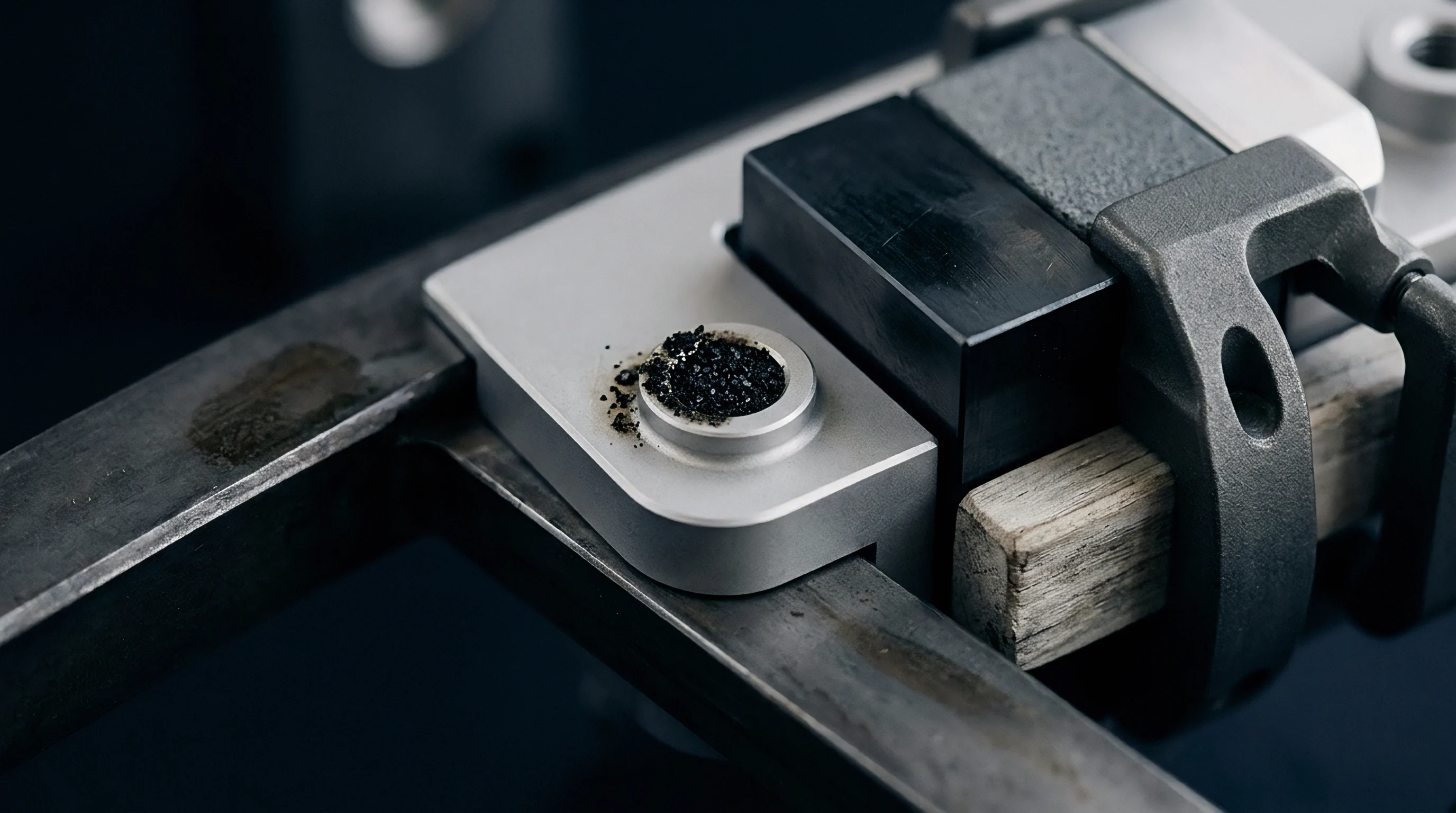
Mechanical integration into the compounding barrel utilizes standard melt transducer port geometries, such as the 1/2-20 UNF threaded aperture. Flush mounting of the optical sapphire surface relative to the interior barrel wall prevents stagnant flow zones. Stagnant polymer layers residing in probe recesses undergo thermal degradation, generating localized carbonization that blind the spectrometer optics over continuous production runs.
Drag flow created by the rotating extruder screw or flowing melt across the flush sapphire face acts as a continuous mechanical wipe, removing soft polymer deposits.
Thermal Management and Sapphire Window Degradation
Thermal gradients across the body of an optical window induce mechanical stress and modify the refractive index of the crystal. Polymer compounders maintain extruder barrel temperatures between 190 degrees Celsius and 280 degrees Celsius depending on the matrix resin. Ambient air temperatures surrounding the external fiber optic junction remain below 70 degrees Celsius to prevent thermal degradation of protective polymer jacketing and optical adhesives.
Active cooling collars circulating compressed air or thermal fluid isolate the delicate spectrometer fibers from the hot melt pipe wall.
Continuous exposure to abrasive particulates, glass fibers, and metallic contaminants in low-grade recyclate streams causes physical erosion of the internal sapphire interface. Surface scratching increases stray light scattering, reducing optical throughput and distorting baseline absorption measurements. Periodical automated baseline verification protocols track overall light intensity reaching the array detector.
When total light throughput drops below 30 percent of the initial reference value, signal-to-noise ratios degrade to levels where small additive fluctuations can no longer be resolved reliably.
- Abrasive Erosion wearing down the polished sapphire optical surface creates diffuse light scatter that artificially elevates calculated polymer baseline absorbance values.
- Thermal Shock Cracking resulting from sudden cold-slug feed events during screen-changer switches creates internal reflections that destroy spectral calibration curves.
- Polymer Carbonization forming an opaque black film over the window face completely attenuates incoming illumination photons within three operational hours.
- Fiber Core Solarization induced by continuous ultraviolet light exposure degrades signal transmission efficiency in NIR wavelengths below 1000 nanometers.
Maintaining a minimum melt shear rate of 50 reciprocal seconds across the sapphire window face prevents high-viscosity recyclate fractions from adhering to the optical interface.
Compounding plants operating without automated sapphire baseline compensation routines risk catastrophic additive over-dosing when dirty windows simulate high contaminant absorbances.


Balance

Differential Mass Transfer Equations for Variable Streams
Dynamic mass balance optimization models the compounding extruder as a continuous plug-flow reactor with axial dispersion. The primary goal involves maintaining a constant active chemical additive concentration CA(t) within the discharged pellet product, despite rapid swings in incoming recyclate contaminant concentration CC(t) and total mass flow rate dotmR(t). The differential mass balance governing the system follows the relationship where total output mass equals the sum of recyclate feed, primary resin feed, and additive letdown feed streams.
Calculating the required masterbatch letdown mass flow rate dotmM(t) requires real-time knowledge of the concentration of active additive XA present within the masterbatch feed. The governing equation adjusts the gravimetric feeder setpoint dynamically according to:
dotmM(t) = fracdotmR(t) · left – dotmR(t) · CA,residual(t)XA – CA,target
Where kS represents the stoichiometric reaction coefficient linking additive consumption to contaminant concentration, and CA,residual(t) represents unconsumed active additive detected in the incoming recyclate feed. Pressure spikes distort measurements.
| Parameter Name | Symbol | Typical Value Range | Optimization Target |
|---|---|---|---|
| System Response Time Constant | τp | 2.5 ~ 8.0 seconds | Feeder Actuation Matching |
| Axial Dispersion Coefficient | Da | 0.01 ~ 0.05 m²/s | Residence Time Smoothing |
| Kalman Measurement Variance | Rk | 0.001 ~ 0.015 | Noise Filter Stabilization |
| Process Noise Covariance | Qk | 0.05 ~ 0.20 | Contaminant Transient Tracking |

When Does Transport Delay Corrupt Recyclate Mass Balance?
Transport delay represents the critical instability factor in real-time additive letdown control loops. Physical distance between the in-line optical sensor, the main feed throat, side-feeders, and the discharge die introduces temporal delays ranging from 10 seconds to over 90 seconds. A feedforward loop measures incoming recyclate properties at the feed throat, calculates the exact additive mass required, and commands the loss-in-weight feeder before the measured polymer volume reaches the side injection port.
Mass balance holds.
Calculating transport lag requires continuous tracking of the volumetric extrudate flow rate V(t) divided by the effective barrel volume VB between measurement and injection points. Extended Kalman Filters (EKF) process noisy spectroscopic signals to estimate the true internal state of contamination while predicting the arrival time at the mixing zone. When the transport delay estimate drifts by more than 1.0 second, additive injection occurs out of phase with the contaminant slug.
Out-of-phase dosing doubles concentration variance in the finished compound, generating localized pockets of under-stabilized resin alongside zones with high masterbatch bloom.
Applying a dead-time compensated Smith Predictor within the mass balance feedback loop eliminates control hunting during low screw-speed operational phases.
Improper setting of process noise covariance matrices inside the state estimator causes the letdown feeder to overreact to high-frequency spectral noise, wearing out feeder motor drives and introducing physical flow oscillations into the extruder barrel.


Feeder

Loss in Weight Gravimetric Response Characteristics
Gravimetric feeders control masterbatch letdown rates by monitoring the decrease in scale weight over time. Loss-in-weight (LIW) systems calculate instantaneous mass flow through the derivative of hopper mass with respect to time. When processing tiny letdown fractions between 0.2 percent and 1.5 percent by weight, scale resolution and mechanical vibration limits dictate response speed.
Sieve trays, vacuum loaders, and extruder motor hum introduce mechanical noise that distorts weight loss derivations over time windows under 500 milliseconds.
Variable speed feeder drives utilize high-resolution digital encoders coupled to twin-screw metering elements to minimize flow pulsation. Screw profile geometry governs the volumetric dispensing accuracy per revolution. Micro-feeder screws equipped with specialized pitch profiles smooth out material discharge, preventing batching behavior where additive enters the extruder in discrete pulses.
Stable gravimetric dosing requires that hopper refill cycles execute rapidly. Refill phases force the feeder control system to temporarily lock its speed in volumetric mode, during which dynamic spectroscopic feedback adjustments must hold constant to prevent mass control divergence.

Transport Lag Compensation in Twin Screw Extruders
Synchronizing additive delivery with spectroscopic readings demands a strict sequence of signal processing and mechanical response steps. The automated control stack executes a deterministic sequence to maintain constant chemical stoichiometry.
- The optical sensor captures raw spectral arrays from the melt stream at 20-millisecond sampling intervals.
- The internal digital signal processor applies baseline corrections and calculates instantaneous contaminant mass fractions.
- The state estimator computes the transport delay time based on current extruder screw speed and melt pump displacement.
- The masterbalance algorithm solves the differential letdown rate required for the projected mass fraction.
- The motor controller updates the loss-in-weight screw drive target speed via high-speed Industrial Ethernet protocols.
- The mechanical feeder screw accelerates or decelerates to deliver the revised additive weight to the side feeder throat.
Feeders lag behind measurements.
Matching the time constant of the gravimetric feeder motor drive to the physical residence time distribution of the extruder barrel prevents high-frequency letdown hunting.
Equipment vendors often claim that loss-in-weight gravimetric feeders respond instantaneously to external dynamic speed commands. Physical reality demonstrates that mechanical inertia, load cell digital filtering, and flight filling dynamics delay actual material discharge changes by 1.5 seconds to 4.0 seconds after the motor drive receives a modified velocity setpoint.

Chemistry

Antioxidant Depletion and Radical Scavenging Kinematics
Thermo-mechanical degradation during repeated processing cycles reduces the molecular weight of polyolefin streams through chain scission, while simultaneously generating cross-linked gels via radical recombination. Primary sterically hindered phenolic antioxidants scavenge alkylperoxy radicals (ROO•), forming stable phenoxy radicals that interrupt the autoxidation cascade. Secondary phosphite hydrolytic processing stabilizers decompose hydroperoxides (ROOH) into non-radical, thermally stable alcohols, preventing rapid molecular weight breakdown inside the compounding barrel.
Post-consumer recyclate streams contain unpredictable residual concentrations of active and depleted antioxidant packages. Spectroscopic detection isolates un-degraded hindred phenols via hydroxyl absorption bands at 3650 cm⁻¹ in the mid-infrared region or through associated overtone combinations in the near-infrared spectrum near 1410 nanometers. Real-time dynamic letdown systems continuously measure residual active antioxidant levels.
When incoming recyclate exhibits zero active antioxidant capability, letdown dosing pumps scale up primary phenolic and secondary phosphite masterbatch additions to build a minimum protective baseline prior to pelletization.
- Hindered Phenolic Antioxidants neutralize peroxy radicals during thermal exposure, requiring letdown ratios scaled directly to incoming hydroperoxide concentrations.
- Phosphite Processing Stabilizers convert hydroperoxides to alcohols inside the melt phase, requiring dosing adjustments based on processing temperature and residence time.
- Thioester Co-Stabilizers provide long-term heat aging performance by decomposing peroxides during low-temperature end-use applications.
- Hindered Amine Light Stabilizers protect structural products against photo-oxidation, requiring dosage scaling matched to UV absorption profiles measured in the incoming flake.
Contamination drops tensile strength.

Viscosity Modification and Chain Extension Dosing
Fluctuating melt flow rates (MFR) in recycled polyolefin streams disrupt thin-wall injection molding and blown film conversions. Polypropylene streams undergo chain scission under thermal shear, causing MFR to rise rapidly. Viscosity modification of high-MFR polypropylene streams utilizes organic peroxides or functionalized bifunctional monomer chemistry to induce controlled chain branching.
Dynamic spectroscopic systems detect structural breakdown and adjust peroxide letdown rates to regulate molecular weight distributions in real time.
Recycled polyethyleneterephthalate (PET) and polyamide (PA) streams suffer from hydrolytic degradation, which reduces intrinsic viscosity and impact resistance. Chain extenders containing multi-functional epoxy, anhydride, or oxazoline groups react with hydroxyl and carboxyl end-groups to rebuild molecular weight. Dynamic spectroscopy quantifies terminal carboxyl group concentrations (COOH) continuously.
Dynamic letdown dosing regulates chain extender masterbatch addition to match carboxyl concentration, preventing unreacted monomer excess that leads to die drool and gel formation.
Under European Standard EN 15343 for plastics recycling traceability, compounders must certify that additive dosing strategies guarantee chemical homogeneity across defined batch volumes.
Over-dosing peroxide modifiers to compensate for sudden MFR spikes can reduce the structural impact performance of polypropylene compounds by up to 40 percent under standard Charpy tests executed at minus 20 degrees Celsius.
Margin

Financial Payback Dynamics in Masterbatch Letdown Control
Masterbatch additives represent one of the highest material costs per kilogram in polymer compounding operations. Specialty antioxidant packages, UV light stabilizers, and functional chain extenders sell at prices ranging from 8.00 USD to over 25.00 USD per kilogram. Traditional compounding operations operate with static, worst-case letdown ratios, dosing additives at fixed levels (often 1.5% to 2.5% by weight) designed to cover the highest anticipated contamination or degradation severity.
Radicals degrade polymer chains.
Dynamic mass balance optimization matches additive expenditure precisely to the chemical demand of the incoming recyclate lot. When processing high-quality post-industrial waste with low contamination levels, the control system reduces masterbatch letdown to minimum protective thresholds (e.g. 0.3% by weight).
During sudden contamination or degradation spikes, dosing scales up dynamically. This approach eliminates masterbatch giveaway while maintaining minimum product quality standards, delivering overall additive cost reductions between 15 percent and 35 percent annually.
| Operational Metric | Fixed Letdown Strategy | Dynamic Mass Balance Strategy | Variance / Savings |
|---|---|---|---|
| Annual Line Throughput (tonnes) | 12,000 | 12,000 | 0 |
| Average Masterbatch Dosing Rate (%) | 1.80 | 1.15 | -0.65% absolute |
| Masterbatch Cost (USD/kg) | 12.50 | 12.50 | 0.00 |
| Annual Additive Expenditure (USD) | 2,700,000 | 1,725,000 | 975,000 USD savings |
| Compound Rejection Rate (%) | 3.50 | 0.80 | -2.70% absolute |
| Scrap Reprocessing Cost (USD/yr) | 210,000 | 48,000 | 162,000 USD savings |

Scrap Reduction and Delivered Compound Consistency
Material rejections in technical compound manufacturing stem primarily from property variance exceeding customer specification bands. Melt flow rate fluctuations, un-stabilized degradation spots, or unreacted chain extender inclusions result in failed lot certifications. Silo drift changes viscosity.
Failed lots require re-compounding or must be sold off as low-tier utility compounds at significant price discounts, often losing 300 to 600 USD per tonne in realized margin.
Dynamic spectroscopic letdown control drastically narrows property distributions across long production runs. Stabilizing melt flow rate and radical activity in real time lowers internal scrap generation while allowing compounders to accept cheaper, higher-contamination raw recyclate feedstocks without compromising target performance specs. Capital expenditure for complete spectroscopic monitoring and dynamic gravimetric dosing arrays typically ranges from 120,000 USD to 220,000 USD per extrusion line.
Simple payback calculations based purely on masterbatch savings and scrap reduction demonstrate full capital recovery within four to eight months of continuous operation.
Landed cost calculations for technical recyclate compounds depend on material throughput, additive unit price, and conversion yield. Integrating inline spectral sensing directly into the compounding control loop changes the financial profile of recyclate compounding, turning variable post-consumer waste into high-margin engineering material.