Screening Benzophenone Derivatives in Recycled Polyolefin Food Packaging Resins
Screening benzophenone in recycled polyolefin resins requires solvent extraction, GC-MS/MS quantification, and diffusion modeling to prove migration safety.


Origin
Post-consumer polyolefin recycling streams contain structural impurities introduced during original package conversion, distribution, and disposal. Benzophenone and its structural derivatives, including 4-methylbenzophenone, 2,4,6-trimethylbenzophenone, and 2-hydroxybenzophenone, function as photoinitiators in ultraviolet-curable printing inks and overprint varnishes applied to flexible films, rigid containers, and paperboard labels. During post-consumer bale collection, printed polyethylene films and printed polypropylene tubs enter mechanical shredding and washing lines together.
The mechanical grinding process reduces printed surface layers into fine flakes, forcing ink compounds into direct physical contact with unprinted resin surfaces. Polyolefins absorb hydrophobic photoinitiators rapidly. Solvent wash stages remove loose surface particulates, but non-polar molecules like benzophenone migrate into the amorphous region of high-density polyethylene and polypropylene matrices during ambient storage and thermal processing.
Inks transfer through mechanical set-off. Roll-to-roll storage during primary converting presses printed outer ink layers directly against the food-contact inner layer under tension. This physical contact transfers photoinitiators into the inner contact layer before the packaging receives any food product.
When these containers enter the post-consumer recycle stream, re-extrusion distributes the trapped photoinitiators homogenously throughout the re-granulated resin batch. Thermal degradation during re-extrusion also generates secondary transformation products. Cleavage of substituted benzophenones under melt processing yields alkylated benzene compounds, benzoic acid derivatives, and hydroxybenzophenone isomers that alter the chemical contamination profile of the recycled resin.
Extraction testing confirms that post-consumer high-density polyethylene flakes retains up to forty-two milligrams of benzophenone per kilogram of resin after standard industrial washing at eighty degrees Celsius.
Contamination levels vary across resin grades due to differences in polymer density and crystallinity. Low-density polyethylene exhibits higher diffusion rates and greater total sorption capacity for aromatic photoinitiators than rigid high-density polyethylene or isotactic polypropylene. Sorting systems based on near-infrared spectroscopy separate polymers by broad chemical class, but these optical sensors cannot detect trace organic additives embedded within opaque or heavily pigmented flakes.
Consequently, non-food packaging fractions containing heavy ink loads enter food-grade recycling streams. Supplier documentation for incoming recycled resin often attributes detected aromatic residues to background environmental contamination or unclassified process aids rather than ink cross-contamination during processing.
Mesh
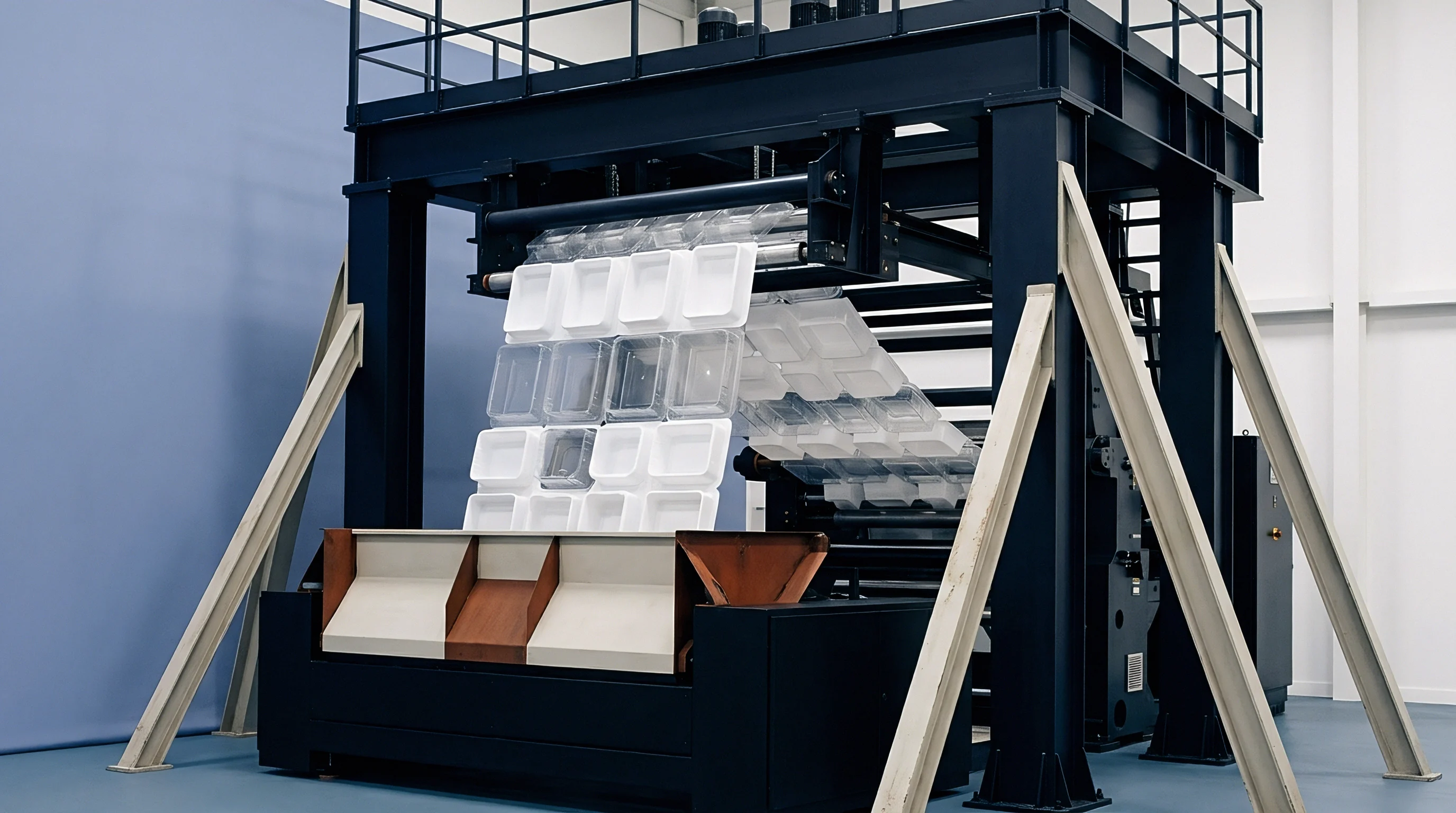
Physical decontamination relies on thermal devolatilization, hot washing, and melt filtration during pelletization. Washing polyolefin flakes in aqueous sodium hydroxide solutions at eighty-five degrees Celsius strips surface-bound ink binders and surfactants. Chemical stripping fails to remove molecules that have migrated past the outer ten micrometers of the polymer surface.
Decontamination efficiency depends on molecular size, matrix density, and the temperature-dependent diffusion coefficient of the target derivative.
Super-cleaning technologies pass washed flakes through continuous vacuum reactors or hot gas stripping columns before melt extrusion. Operating temperatures ranging from one hundred ninety to two hundred twenty degrees Celsius under deep vacuum conditions below five millibars drive volatile organic compounds out of the solid polymer phase. High molecular weight photoinitiators exhibit low vapor pressures, limiting their removal during standard residence times of two to four hours.
Melt devolatilization during extrusion provides a secondary purification step. Vacuum vents mounted on twin-screw extruders pull volatile fractions out of the polymer melt. High temperatures accelerate matrix diffusion.
Melt filtration screens down to forty micrometers capture solid carbonized fragments, but dissolved molecular species pass through liquid filters without resistance.
Decontamination processing creates specific failure points across mechanical recycling steps:
- Incomplete devolatilization occurs when vacuum reactor pressure exceeds ten millibars, leaving high-boiling photoinitiators trapped inside the flake core.
- Thermal degradation of polymer chains during extended residence times creates lower molecular weight degradation products that increase total migration potential.
- Cross-contamination during filtration happens when saturated filter media release accumulated volatile organic compounds back into clean melt streams.
- Flake thickness variation causes non-uniform heating, where thick wall sections retain aromatic compounds while thin sections suffer thermal oxidation.
Purification efficiency drops sharply as the molecular weight of the photoinitiator exceeds two hundred grams per mole.
Decontamination performance scales inversely with the wall thickness of the input flake. Thin films clean rapidly under thermal vacuum, while thick rigid container walls require extended treatment times that risk thermal degradation of the base resin.

Solvent
Screening recycled polyolefin resins for benzophenone derivatives demands complete extraction of target analytes from the solid polymer matrix without degrading the sample. Polyolefins do not dissolve in common polar solvents at room temperature, necessitating sample preparation techniques that either swell the matrix or achieve complete dissolution followed by selective polymer precipitation. Solvent choice governs polymer swell.
Non-polar solvents such as dichloromethane, toluene, and cyclohexane penetrate the amorphous regions of polyethylene and polypropylene, swelling the matrix and enabling the rapid diffusion of trapped additives into the liquid phase.
Pressurized liquid extraction operates at elevated temperatures between one hundred and one hundred forty degrees Celsius under pressures of ten to fifteen megapascals. The elevated pressure maintains the extraction solvent in a liquid state above its atmospheric boiling point, enhancing solubility and accelerating diffusion rates out of the polymer structure. Microwave-assisted extraction achieves comparable extraction efficiencies within shortened timeframes by heating the solvent-polymer mixture directly via dielectric loss.
Polyolefins themselves do not absorb microwave radiation, but polar solvent mixtures containing acetone or isopropanol heat rapidly, forcing matrix swelling.
| Method | Solvent System | Temperature | Contact Time | Polyolefin Recovery |
|---|---|---|---|---|
| Dissolution-Precipitation | Toluene / Methanol | 110 °C | 45 min | 98.5 % |
| Pressurized Liquid Extraction | Dichloromethane / Acetone (1:1) | 100 °C | 20 min | 96.2 % |
| Microwave-Assisted Extraction | Isopropanol / Cyclohexane (1:1) | 120 °C | 15 min | 94.8 % |
| Ultrasonic Reflux | Dichloromethane | 40 °C | 60 min | 88.1 % |
Dissolution-precipitation techniques offer total recovery by completely destroying the polymer matrix structure. The resin sample dissolves in boiling toluene or xylene at one hundred ten degrees Celsius. Adding cold methanol or acetone precipitates the high molecular weight polyolefin chains as a fine powder, leaving benzophenone derivatives and low molecular weight oligomers suspended in the liquid supernatant.
Filtration through a zero-point-two-micrometer polytetrafluoroethylene membrane removes the precipitated polymer before instrumental injection. Matrix dissolution yields higher recoveries. Incomplete polymer precipitation can introduce dissolved low molecular weight polyolefin wax into liquid chromatography columns, causing stationary phase contamination and signal suppression during mass spectrometry analysis.
How do laboratory solvent choices balance full quantitative extraction against matrix disruption during routine batch screening?
Assay
Analytical quantification of benzophenone derivatives relies on hyphenated mass spectrometry techniques paired with gas chromatography or liquid chromatography. Gas chromatography coupled to tandem mass spectrometry with electron ionization operating in multiple reaction monitoring mode provides high selectivity and low baseline noise. Electron ionization at seventy electronvolts fragments benzophenone into a characteristic primary product ion at m/z 105, corresponding to the benzoyl cation, derived from the parent ion at m/z 182.
Substituted derivatives generate distinct transition pairs based on their specific alkyl or hydroxyl substitution patterns.

How Do Gas Chromatography and Liquid Chromatography Protocols Differ When Quantifying Photoinitiators?
Gas chromatography handles volatile and semi-volatile derivatives effectively, but thermally labile or hydroxylated photoinitiators can undergo thermal breakdown in injection ports maintained above two hundred fifty degrees Celsius. Liquid chromatography coupled to triple quadrupole mass spectrometry using electrospray ionization avoids thermal exposure by separating analytes at ambient or moderate column temperatures between thirty and fifty degrees Celsius. Reverse-phase C18 stationary phases separated under gradient elution with water, acetonitrile, and zero-point-one percent formic acid resolve structural isomers such as 2-hydroxybenzophenone and 4-hydroxybenzophenone within ten minutes.
Mass spectrometry confirms fragment structures.
| Target Compound | CAS Number | Ionization Mode | Quantification Transition (m/z) | Limit of Quantitation |
|---|---|---|---|---|
| Benzophenone | 119-61-9 | GC-EI-MS/MS | 182.1 > 105.0 | 0.01 mg/kg |
| 4-Methylbenzophenone | 134-84-9 | GC-EI-MS/MS | 196.1 > 119.0 | 0.01 mg/kg |
| 2,4,6-Trimethylbenzophenone | 954-16-5 | GC-EI-MS/MS | 224.1 > 119.0 | 0.02 mg/kg |
| 2-Hydroxybenzophenone | 117-99-7 | ESI(+) LC-MS/MS | 199.1 > 121.0 | 0.005 mg/kg |
| 4-Phenylbenzophenone | 2128-93-0 | ESI(+) LC-MS/MS | 259.1 > 181.1 | 0.01 mg/kg |
Consider a screening assessment performed on a fifty-tonne lot of recycled high-density polyethylene resin intended for blown film extrusion. Analytical technicians draw representative sample portions totaling five hundred grams from ten distinct octabins across the production lot. Quadruplicate analysis using microwave-assisted extraction followed by gas chromatography-tandem mass spectrometry reveals a mean benzophenone concentration of zero-point-eight-five milligrams per kilogram of resin, with a standard deviation of zero-point-zero-six milligrams per kilogram.
Standard additions correct matrix suppression.
High-resolution mass spectrometry using quadrupole time-of-flight analyzers enables non-target screening for unknown non-intentionally added substances. Recycled resins frequently contain complex mixtures of oligomers, oxidized antioxidant fragments, and photoinitiator breakdown products that co-elute with target compounds. Accurately mass-matching fragment ions within a two-parts-per-million mass error window allows the unambiguous identification of unexpected photoinitiator derivatives without requiring authentic reference standards during initial exploratory screening.
Purchase contracts specifying resin compliance state that batch release requires zero-point-zero-two milligrams per kilogram limit of quantitation verification by an accredited laboratory working under ISO/IEC 17025 standards.

Transfer
Compliance evaluation for food contact materials requires measuring the transfer of residual photoinitiators from the packaging matrix into food or official food simulants. Specific migration testing models real-world storage conditions by placing converted packaging samples in direct contact with selected simulants for defined time periods at controlled temperatures. Standard simulants defined under European Union regulations include ten percent ethanol for aqueous foods, three percent acetic acid for acidic foods, twenty percent ethanol for alcoholic media, and modified polyphenylene oxide, commercially known as Tenax, for dry food contact applications.
Polyolefins interact strongly with lipophilic migrants. Isooctane and ninety-five percent ethanol serve as substitute simulants for fatty foods when vegetable oil contact testing presents analytical extraction difficulties. Tenax simulates dry food contact.
Migration rates depend directly on the diffusion coefficient of the target compound within the polymer matrix (Dp) and the partition coefficient between the polymer and the food simulant (Kp,s). High-density polyethylene exhibits lower diffusion rates than low-density polyethylene due to higher polymer crystallinity, which forces migrating molecules to travel along tortuous paths around crystalline lamellae.
Screening migration compliance relies on a structured evaluation sequence:
- Total content calculation assumes one hundred percent transfer of all residual benzophenone detected in the resin into the contacting food package.
- Mathematical migration modeling applies diffusion algorithms based on the Piringer model to estimate specific migration values using polymer density, thickness, contact area, and temperature.
- Experimental simulant exposure subjects converted monolayer or multilayer articles to physical contact testing in migration cells for ten days at sixty degrees Celsius.
- Instrumental quantification measures migrant concentration in the exposed simulant against calibration standards prepared in the matching solvent matrix.
A ten percent increase in polymer crystallinity reduces the calculated diffusion coefficient of benzophenone by approximately thirty-five percent at room temperature.
Diffusion models predict worst-case transfer. When mathematical modeling demonstrates that total migration remains below regulatory limits even under complete migrant release assumptions, costly analytical contact testing becomes unnecessary.
If an unverified resin lot containing high residual photoinitiator levels enters production, converted food containers risk releasing illegal migrant levels into commercial food products, triggering market recalls, mandatory inventory destruction, and official enforcement sanctions.
Obligation
Placing recycled polyolefin resins into food contact applications imposes strict legal responsibilities on resin producers, converters, and brand owners. European Union Regulation 10/2011 sets a Specific Migration Limit of zero-point-six milligrams of benzophenone per kilogram of food. A group limit applies when total photoinitiator mixtures contain benzophenone alongside substituted derivatives like 4-methylbenzophenone, capping combined specific migration at zero-point-six milligrams per kilogram to prevent additive toxicological exposure.
Under European Union Regulation 2022/1616, recycled plastic materials used in food packaging must originate from suitable decontamination processes capable of reducing chemical contamination to levels that guarantee chemical safety. Challenge tests demonstrate decontamination efficiency by spiking uncleaned flake input streams with volatile and non-volatile surrogate chemicals at concentrations up to one thousand milligrams per kilogram. Decontamination processes must demonstrate a purification efficiency exceeding ninety-nine-point-nine percent for non-volatile organic contaminants to establish that final converted articles will conform with general safety rules.
Assembling a legally defensible food contact compliance file requires completing specific verification steps:
- Obtain full traceability records linking the specific recycled resin batch to accredited super-cleaning process inputs.
- Execute direct analytical screening on representative resin samples to quantify residual photoinitiator concentrations before conversion.
- Perform mathematical diffusion modeling using verified package geometry, contact surface area, and intended shelf-life temperatures.
- Conduct specific migration testing with official food simulants whenever calculated migration values exceed thirty percent of the legal migration threshold.
- Issue a formal Declaration of Conformity detailing residual content, migration test conditions, dual-use additive status, and specific use restrictions.
Customs holds non-compliant resin lots. Importers and converters who introduce recycled polyolefin materials into regulated markets without supporting analytical test reports take full commercial liability for regulatory non-compliance. Regulatory authorities inspect food contact compliance documentation during market surveillance audits, requiring direct proof that non-intentionally added substances and photoinitiator residues have been evaluated using valid scientific principles.
Trace contaminants breach migration limits. Documenting compliance across complex recycling supply chains requires continuous analytical testing of raw input flakes, intermediate pellets, and finished converted articles.