
Bio Based Resin Sourcing and Industrial Composting Compliance
Industrial composting compliance requires verifying bio-carbon via ASTM D6866, disintegration via EN 13432, and total fluorine screening below 100 ppm.
Industrial composting compliance requires verifying bio-carbon via ASTM D6866, disintegration via EN 13432, and total fluorine screening below 100 ppm.

Tuning EPR domains to 0.4-0.8 microns with 45 percent ethylene content ensures sub-zero container shock survival at minus 30 degrees Celsius.

Non-aqueous titration kinetics validate acidic volatile counts in recycled polymers, preventing extrusion screw corrosion and processing degradation.
High temperature non-aqueous titration strips volatile carboxylic acids from hot PE melt into organic media to quantify corrosion risks and thermal stability.
Coupling thermal desorption solvent extraction with non aqueous potentiometric titration quantifies volatile contaminants and acid values in recycled polyolefins.

Solid state polymerization stripping rate is dictated by internal Fickian diffusion limits of condensation by-products and volatiles within rPET pellet cores.

Accurate rPET flake volatile testing pairs ASTM D6980 sensor drying for moisture with ASTM F2013 headspace gas chromatography for acetaldehyde and solvents.

Karl Fischer moisture testing of recycled PET flake requires thermal desorption at 170 C with methanol-free reagents to eliminate volatile interference.

Coupling Arrhenius volatile generation kinetics with dual-exponential sensor adsorption models corrects background current drift in polymer enclosures.

Selective thermal desorption and specialized reagent chemistry eliminate non-aqueous volatile errors during post-consumer recyclate moisture analysis.

Optimize rPET desiccant drying at 160-170°C with -45°C dew point dry air to maintain moisture under 30 ppm and prevent intrinsic viscosity drop.

Dynamic carrier gas velocity sweeps separate trace moisture from catalyst-driven transesterification side-products during coulometric vaporization.

Solid-state ester transesterification reaches absolute thermodynamic limits when glycol partial pressure matches local chemical potential in amorphous channels.

Polyester moisture extraction follows temperature-dependent Fickian diffusion, requiring dew points below minus forty degrees to prevent melt hydrolysis.

Dynamic gravimetric dosing paired with feed throat NIR spectroscopy dynamically adjusts additive letdown ratios to hold recyclate compounds within tight quality specs.

Oxidative induction testing at 200 °C verifies post-consumer polyethylene stabilizer retention to prevent field embrittlement and control restabilization costs.

Determining masterbatch letdown ratios for recycled polyethylene requires MFR matching, antioxidant depletion testing, and gravimetric dosing adjustments.

Polyethylene melt flow rate test load selection matches resin density and molecular weight to standard ASTM D1238 masses of 2.16 kg, 5 kg, or 21.6 kg at 190 °C.

Coulometric Karl Fischer titration with thermal desorption isolates true moisture in bio-polyesters, preventing false readings from monomer breakdown and avoiding melt hydrolysis.

Polyolefin recyclate quality verification relies on multi-temperature melt flow testing, oxidation induction time, and continuous screen filtration tracking.
Cross-border recyclate contracts fail when test protocols omit equipment calibration, sample preparation, and moisture-proof sampling methods across jurisdictions.
Contractual risk allocation for reprocessed resin requires rigid specification bounds, quarantine controls, and clear price deduction mechanics.

Verify post-consumer resin lot conformity by combining core lance sampling, melt flow shear sweeps, and DSC purity screens before unloading silos.

High temperature crystallization elution fractionation resolves branching distributions and polyolefin blend ratios to prevent field failure in recycled compounds.

High-temperature GPC and oscillatory shear rheology reveal chain scission and elasticity losses in regrind that standard melt flow testing consistently misses.

Correcting capillary rheometry data via Bagley and Rabinowitsch protocols is mandatory to prevent up to 50 percent viscosity errors in bimodal HDPE die design.

Resin moisture correlates to air dew point only at thermodynamic equilibrium; diffusion kinetics and hopper dwell dynamics govern actual Karl Fischer values.
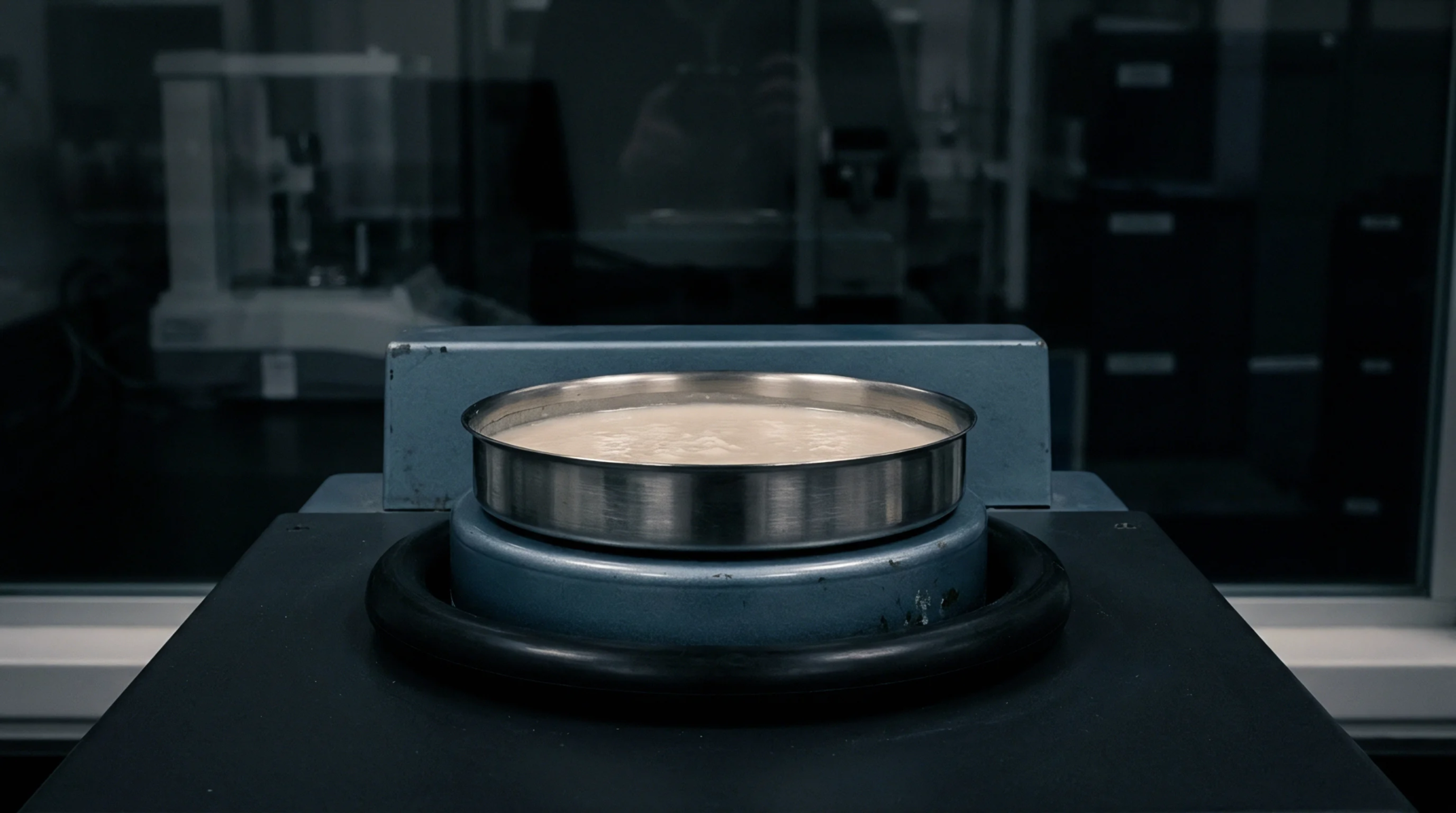
Dynamic low-frequency rheometry identifies thermal degradation in recycled polyolefins that single-point melt flow tests miss entirely.

Undeclared regrind in virgin polymer collapses oxidation stability and broadens viscosity bands, increasing landed cost per good part despite initial pellet discounts.

Proving undisclosed hydrolytic degradation in polyamides requires solution viscometry per ISO 307 and carboxyl end-group titration per ISO 16533.
Expertise is a utility, not a secret. sentiention™ publishes its working knowledge as open reference: intelligence layer covering the materials it sources, the markets it enters, and the reference that serves both.