Meaning
Reclaimed polymer material originates from clean manufacturing scrap produced during the primary moulding or extrusion process. Integrating post-industrial regrind back into the production cycle allows processors to reduce material waste and lower overall raw material costs. This material is typically free from consumer contaminants, making it easier to process than post-consumer resins.
Material Recovery
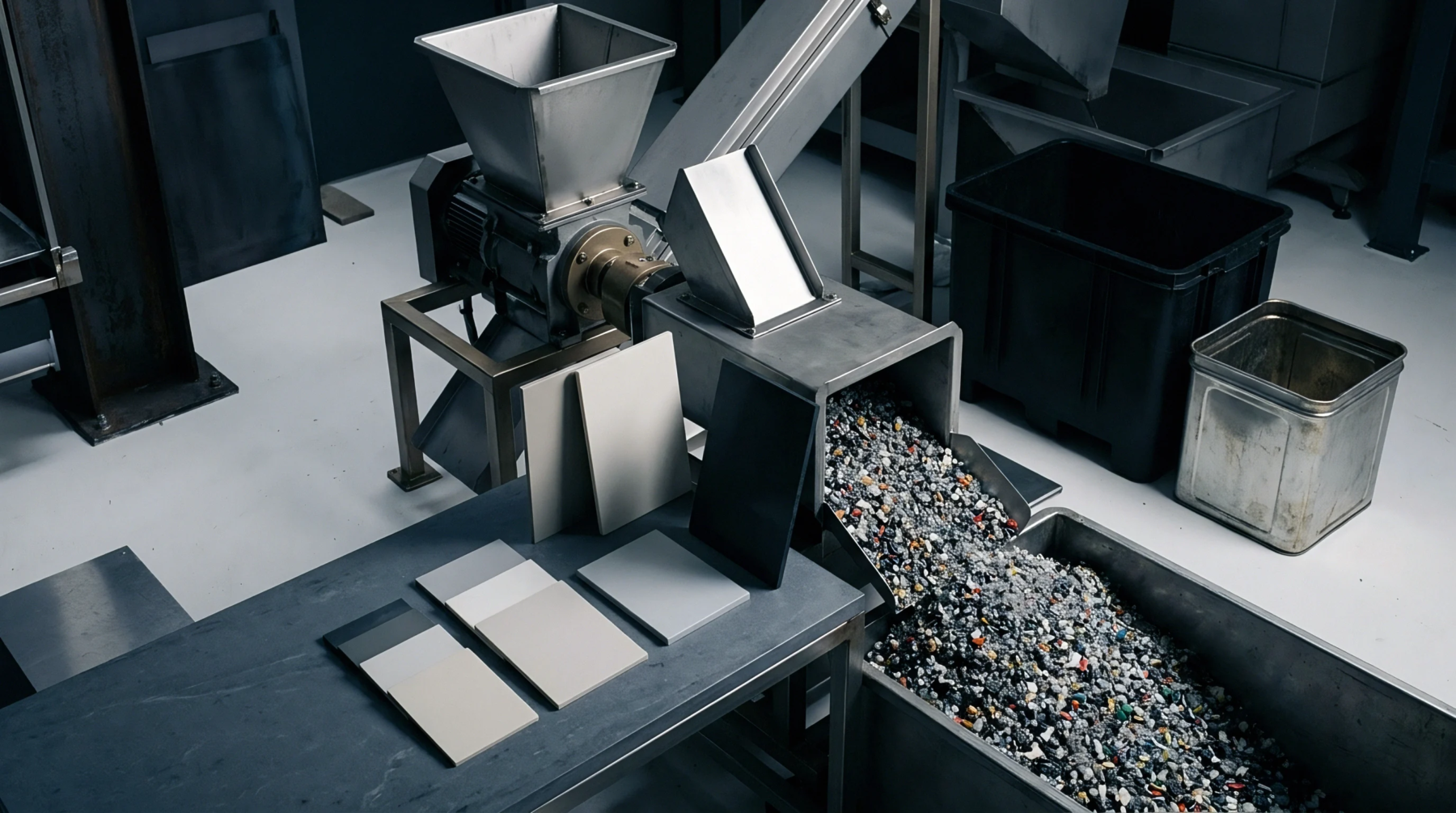
Sprues, runners, and rejected parts are granulated on-site and mixed with virgin resin at a controlled ratio. This recovery process is most efficient when the granulator is located next to the moulding press, allowing for immediate reuse. By reclaiming these scraps, the moulder reduces the volume of material sent to landfills.
Molding Stability
Reheating and re-granulating the polymer can cause thermal degradation, which reduces the molecular weight and alters the melt flow rate. If the regrind ratio is too high or inconsistent, the injection moulding process suffers from viscosity fluctuations. These fluctuations can lead to dimensional instability, short shots, and part weight variation during the production run.
To mitigate these issues, moulders typically limit the regrind concentration to twenty percent and use automated blenders to ensure a highly consistent mix of virgin and recycled material.
Economic Yield
Using manufacturing scrap directly improves the material utilization rate and reduces the average cost per kilogram of the processed resin. The economic return depends on the cost of the granulating equipment and the energy required to operate it. For high-volume automotive runs, the savings from reusing runners can cover the cost of the granulator within a few months.