Quantifying Structural Viscoelastic Drift across Multi-Tier Post Consumer Polyolefin Silo Homogenization Operations
Multi-tier polyolefin silo homogenization induces viscoelastic drift via thermal compaction and micro-shear, altering melt elasticity and wall thickness.


Hopper
Mass flow silos engineered for virgin polyolefin pellets fail when managing post-consumer recyclate flake and pellet blends. Gravity homogenization in multi-tier blenders relies on uniform particle geometry, equal bulk density, and predictable wall friction coefficients. Post-consumer polyolefin streams contain a mixture of high-density polyethylene and polypropylene, recovered from varying municipal collection streams.
Density variations between 0.935 and 0.962 grams per cubic centimeter alter flow kinetics inside gravity blending tubes. Pellet shape irregularity and fine particle fraction shifts modify internal friction angles. Funnel flow zones form within central flow channels, leaving stagnant material along lower hopper walls.
Vertical compaction in 50-tonne silos exerts static head pressure that consolidates lower pellet layers, increasing bulk density by eight percent near discharge cones.
Recirculation loops mitigate spatial variance by pulling resin from multiple vertical elevations simultaneously. Pneumatic conveying lines transfer material from bottom discharge valves back to the top spreader plate. Continuous mechanical shear during pneumatic lift damages particle surfaces, generating fine dust that settles preferentially along the outer silo walls.
Thermal dissipation inside large storage volumes proceeds slowly. Resin stored after hot-melt compounding retains thermal energy, creating internal temperature pockets between 45 and 65 degrees Celsius. Thermal gradients accelerate physical aging in amorphous polymer regions while modifying local flow rates through discharge ports.

Particle Segregation Dynamics in Gravity Blenders
Density differences drive radial segregation during silo filling. Dense pellets sink rapidly through the central core. Lighter or irregular recyclate particles migrate toward the periphery.
Multi-tier blending pipes draw resin from discrete vertical strata, assuming uniform horizontal mixing. Flow velocity differences between internal pipes disrupt this ideal ratio. High bulk density resin at the bottom cone discharges faster than lower density material at top levels, frustrating homogenization targets.
Static pressure from overlying resin beds alters pellet deformation behavior. Polyolefin pellets deform elastically under low loads and exhibit time-dependent viscoelastic creep under sustained hydrostatic pressure. Lower silo strata experience compressive forces exceeding 40 kilopascals.
Granular friction forces shift outward toward steel silo walls, creating non-uniform force distribution across hopper cross-sections.
- Particle size segregation creates localized concentrations of fines near discharge cones, changing local melt flow rates during processing cycles.
- Density gradient stratification separates rigid blow-molding HDPE fraction from flexible film grades, shifting overall material modulus down the silo depth.
- Stagnant wall zone compaction fuses warm pellets under static head pressure, forming cohesive arches that restrict gravity discharge paths.
- Periphery velocity divergence causes central core material to drain three times faster than outer wall layers, destroying intended mixing ratios.

Mechanical Compaction along Vertical Mass Channels
Compaction inside gravity channels modifies bulk porosity. Resin bulk density rises from 0.52 to 0.58 grams per cubic centimeter near the bottom discharge valve. Compressed pellets experience higher inter-particle friction, demanding higher pneumatic pressure to initiate fluidization during recirculation cycles.
Recirculation loop velocities reaching 22 meters per second introduce impact stresses at elbows and diverter valves. Repeated impacts increase surface roughness on individual pellets, shifting the internal friction angle from 28 degrees up to 34 degrees. The higher friction angle forces the hopper into funnel flow mode, compounding spatial heterogeneity.
Silo discharge gates operating under unequal hydrostatic pressure yield unsteady discharge rates. Variable mass flow into downstream compounding extruders causes surge in feed zones, destabilizing barrel pressure profiles and degrading final melt quality.
Ignoring particle segregation dynamics leads directly to severe melt viscosity fluctuations during production runs, resulting in excessive part reject rates and unrecoverable downtime costs.


Relaxation
Viscoelastic characterization exposes molecular changes that standard melt flow rate tests fail to detect. Post-consumer polyolefin homogenization cycles submit polymer chains to persistent thermal exposure and mechanical shear. Polymer chains undergo simultaneous chain scission and thermal crosslinking depending on localized oxygen concentrations inside blending loops.
High-density polyethylene fraction tends toward long-chain branching under mild oxidative thermal stress. Polypropylene fraction undergoes chain scission, shortening primary backbone length. Small-amplitude oscillatory shear measurements across angular frequencies from 0.1 to 100 radians per second reveal shifts in both storage modulus and loss modulus.
Zero-shear viscosity calculated via Carreau-Yasuda fitting serves as a sensitive indicator of molecular weight distribution shifts. Extended dwell times inside warm silos lower the terminal relaxation slope. Long-chain branching increases low-frequency storage modulus, raising elasticity at low shear rates.
Polymer chains with altered relaxation spectrums behave unpredictably during tension-dominated processing steps such as parison formation or film blowing.

Molecular Weight Distribution Broadening under Mechanical Work
Mechanical shear generated during multi-tier pneumatic lift loops cleaves high molecular weight polymer chains. Recirculating a 40-tonne batch four times through high-velocity conveying lines reduces weight-average molecular weight while broadening overall polydispersity index. High polydispersity expands the relaxation spectrum, stretching stress relaxation over extended temporal windows.
Stress relaxation modulus curves plotted against time show prolonged relaxation tails. Linear virgin HDPE relaxes 95 percent of peak stress within 1.2 seconds at 190 degrees Celsius. Homogenized post-consumer resin containing branched structures requires 4.8 seconds to achieve equivalent stress dissipation.
Residual internal stresses remain trapped inside extruded profiles, causing warpage after mold ejection.
Zero-shear viscosity at 190 degrees Celsius drops 22 percent after 48 hours of continuous pneumatic recirculation at a convey velocity of 18 meters per second.
The crossover frequency, where storage modulus equals loss modulus, shifts toward lower frequencies as high molecular weight fractions accumulate crosslinks. Crossover modulus value decreases proportionally, confirming increased molecular weight distribution breadth across homogenized lots.

Zero-Shear Viscosity Shift in Low Strain Sweeps
Strain sweeps performed within the linear viscoelastic region define critical deformation limits. Post-consumer polyolefin blends lose linear viscoelastic response at lower critical strain amplitudes than virgin compounds. Unmolded recyclate displays structural breakdown at strain amplitudes above 3.5 percent at 190 degrees Celsius, driven by phase separation between incompatible polyethylene and polypropylene domains.
Rotational rheometer frequency sweeps at 190 degrees Celsius capture viscoelastic drift across multiple silo sampling depths. Top strata retain higher average molecular weight due to lower mechanical shear exposure. Discharge cone material exhibits reduced zero-shear viscosity and pronounced shear-thinning behavior under identical testing protocols.
| Silo Level | Dwell Hours | Zero-Shear Viscosity (Pa s) | Crossover Frequency (rad/s) | Loss Factor tan delta (1 rad/s) | Shear Thinning Index |
|---|---|---|---|---|---|
| Upper Tier | 6 | 14,200 | 18.4 | 1.82 | 0.62 |
| Mid Tier | 18 | 12,800 | 22.1 | 1.95 | 0.58 |
| Lower Cone | 36 | 10,900 | 28.6 | 2.18 | 0.51 |
| Recirculated Core | 48 | 9,400 | 34.2 | 2.45 | 0.44 |
Melt flow index values reported on supplier certificates of analysis reflect single-point average flow rates, masking severe vertical viscoelastic drift present within the silo volume.
Suppliers routinely attribute lot-to-lot viscoelastic divergence to inherent municipal feedstock variation rather than acknowledging mechanical thermal degradation occurring within their own blending towers.


Stratum
Vertical density and temperature profiling demonstrates that multi-tier silos are dynamic chemical reactors rather than static storage containers. Post-consumer resin enters silos at varying temperature levels following pelletizing, screen-pack filtration, and drying steps. Moisture content levels around 0.08 percent react with residual catalyst remnants and acidic degradation products under thermal retention conditions.
Deep strata experience hydrostatic pressures that accelerate phase separation of minor polymer contaminants. Polypropylene contamination within an HDPE lot aggregates into micron-scale droplets under combined pressure and heat, creating weak inter-phase boundaries.
Micro-shear history accumulates non-uniformly. Pellets traveling down central vertical blending pipes experience minimum wall friction, maintaining intact polymer architecture. Material traveling along peripheral hopper boundaries undergoes severe friction against metal walls, generating surface friction heating that elevates local pellet temperatures 15 degrees Celsius above core material.
Thermal gradients persist for days due to low polymer thermal conductivity values around 0.33 Watts per meter-Kelvin.

Can Dynamic Mechanical Sweeps Detect Micro-Shear Degradation?
Dynamic mechanical sweeps detect subtle structural degradation long before changes appear in standard melt flow index tests. Oscillatory strain sweeps isolate the linear viscoelastic limit, identifying breakdown in physical chain entanglements caused by micro-shear damage. Degradation reduces the elastic storage modulus at low frequencies, signaling loss of melt strength needed for structural blow molding.
High-sensitivity rotational rheometry captures localized crosslinking and scission events. Multi-frequency sweeps performed across temperatures from 170 to 210 degrees Celsius enable master-curve construction via Time-Temperature Superposition. Shift factors derived from Arrhenius plots show activation energy variations between top and bottom silo strata, confirming structural changes in molecular architecture.
ASTM D1238 Condition M testing without high-load stress ratio verification hides rheological broadening that invalidates ISO 16770 stress crack guarantees.
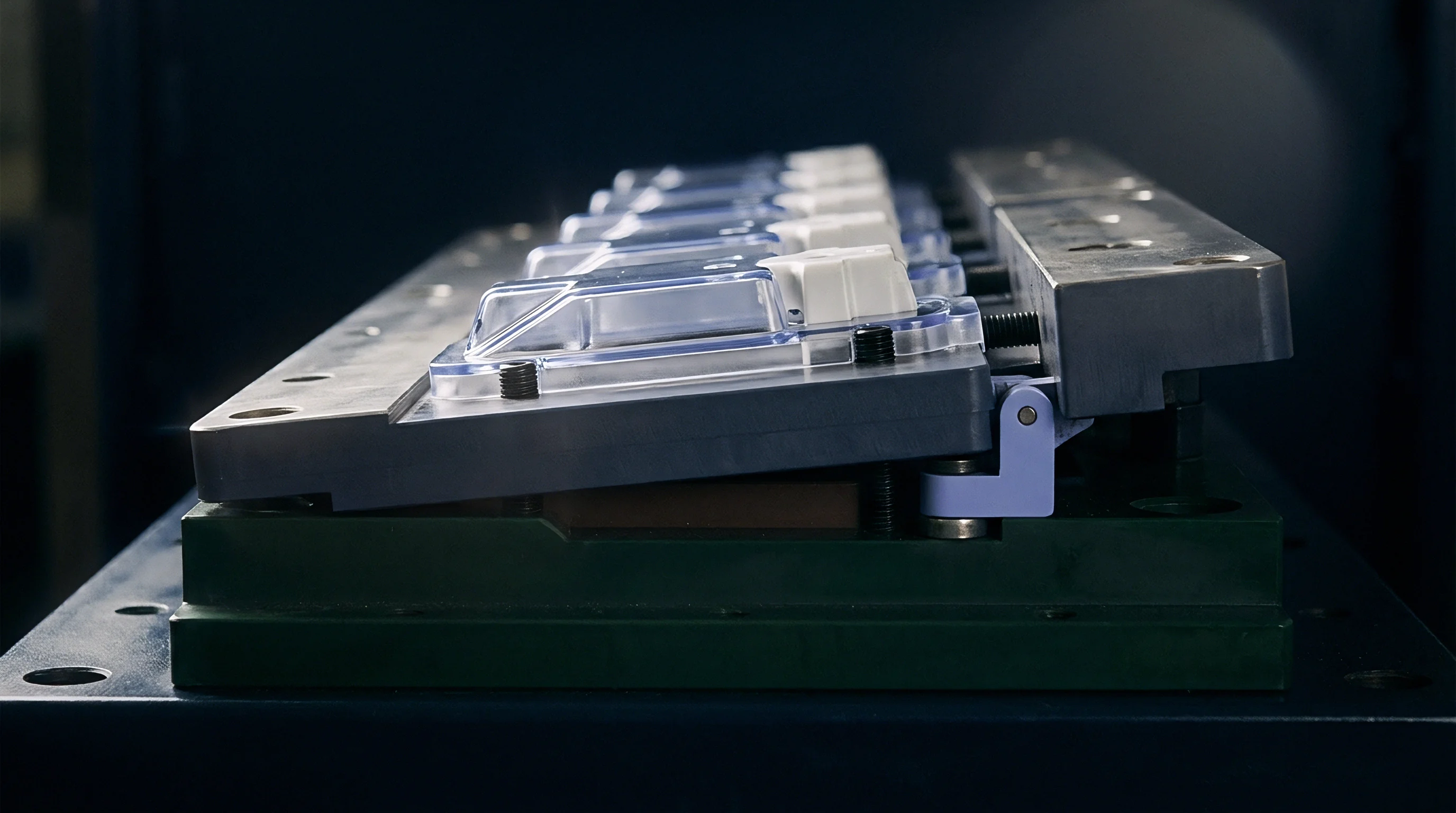
Thermal Gradient Pockets across Multi-Pipe Discharge Geometry
Multi-pipe discharge geometry aims to extract equal mass fractions from distinct horizontal cross-sections. Thermal pockets disrupt balanced flow by altering local polymer density and pellet surface friction. Warmer pellets flow faster through internal conduits, pulling excess volume from mid-silo thermal cores while peripheral material remains stationary.
Recirculation loops mix hot core resin with cool top surface material. Thermal shocks induce micro-crystallinity shifts inside solid pellets. Solid-state annealing changes room-temperature pellet hardness, altering feed behavior in downstream single-screw extruders.
- Extract representative 500-gram samples from core, mid-wall, and boundary thief ports across four vertical silo tiers simultaneously.
- Seal sample containers immediately inside nitrogen-purged foil bags to prevent ambient moisture absorption and ongoing oxidative reaction.
- Condition test specimens at 23 degrees Celsius and 50 percent relative humidity for 24 hours per ISO 291 standards.
- Perform differential scanning calorimetry sweeps from 30 to 200 degrees Celsius at 10 Kelvin per minute to determine oxidation onset temperature and enthalpy of fusion variations.
- Map zero-shear viscosity values against vertical silo coordinates using Carreau-Yasuda model fits derived from oscillatory shear data.
- Calculate vertical viscoelastic drift indices by dividing discharge cone zero-shear viscosity by top-tier zero-shear viscosity.
Silo design specifications must incorporate ISO 11357 thermal characterization requirements alongside ISO 1133 flow metrics to ensure delivered resin meets structural standards.
ISO 1043 polymer designation agreements mandate that post-consumer polyolefin blends exceeding a 15 percent viscoelastic drift index across silo strata trigger formal lot requalification before shipment clearance.


Probe
Quality verification depends on representative sampling across all functional silo tiers. Standard single-point sampling at discharge gates yields misleading quality metrics. The initial material leaving a silo represents only the central core flow channel, concealing off-spec material residing along upper walls or stagnant lower zones.
Effective evaluation requires multi-point extraction using dedicated cross-sectional thief probes capable of penetrating five meters into dense pellet beds.
Capillary rheometry complements dynamic mechanical analysis by testing material under shear rates matching actual processing conditions. Processing methods like extrusion and injection molding subject resin to shear rates between 100 and 10,000 inverse seconds. Melt flow rate tests operate at shear rates below 10 inverse seconds, completely missing non-Newtonian shear-thinning behavior and melt fracture boundaries.
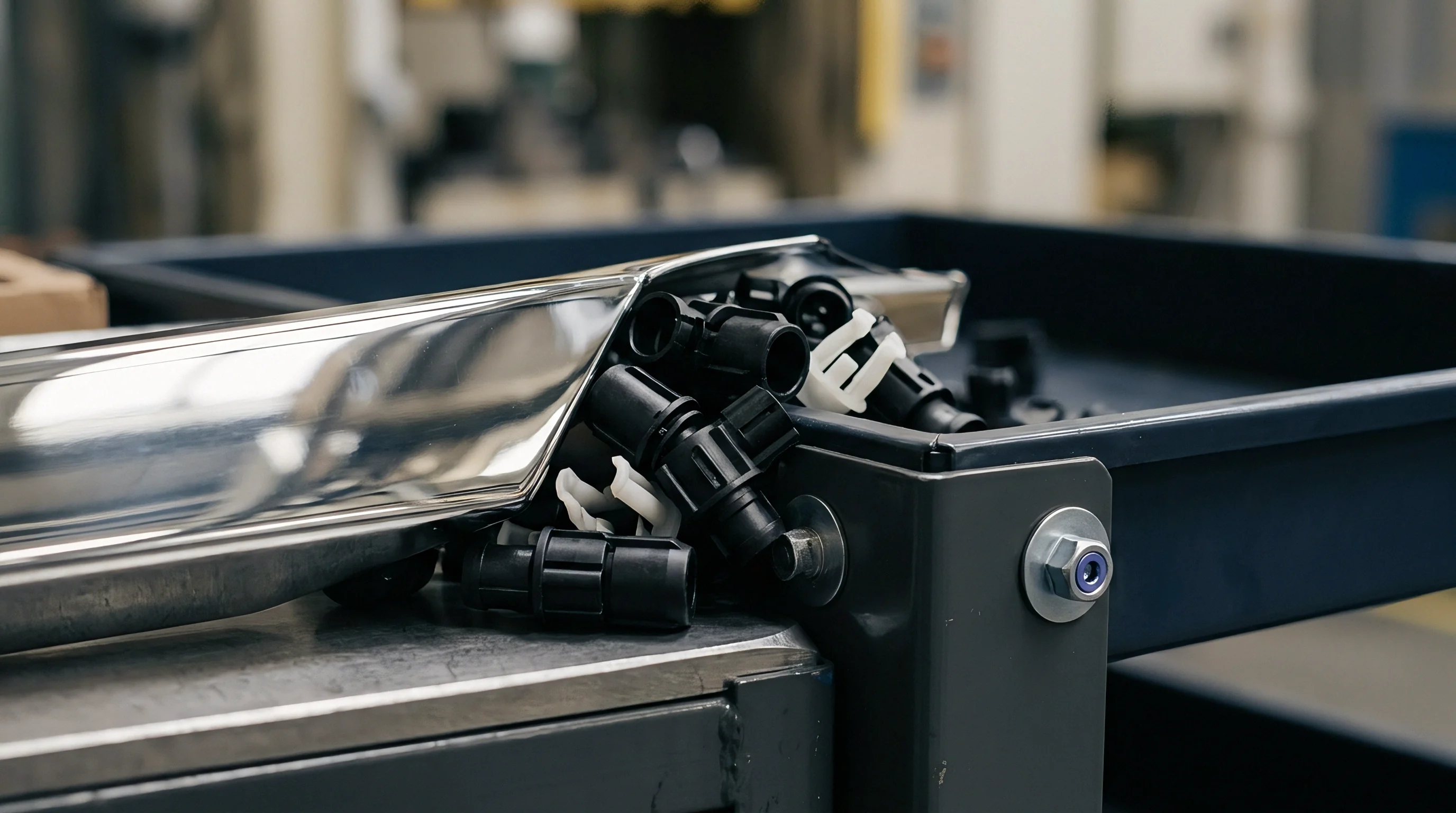
Multi-Tier Thief Probe Extraction Techniques
Pneumatic thief probes utilize concentric tubes with dual opening ports. Probes penetrate the silo shell horizontally at specified vertical intervals. Vacuum extraction pulls 250-gram samples from core, mid-radius, and wall positions without disrupting surrounding bed geometry.
Samples undergo immediate visual and rheological screening.
Sampling precision depends on maintaining bed integrity during probe insertion. High inter-particle friction in compressed lower tiers resists insertion, requiring pneumatic drive assist systems. Improper sampling technique draws resin preferentially from fluid peripheral zones, biasing bulk density and melt flow data.
Sampling only the discharge stream during silo draw-down obscures vertical elasticity gradients that manifest late in the molding cycle.

Capillary Shear Rate Sweeps versus Single-Point Melt Indices
Single-point melt flow rate measurements per ISO 1133-1 using 2.16 kilograms load fail to predict high-shear processing stability. Dual-load testing using 2.16 kilograms and 21.6 kilograms yields the Melt Flow Ratio, providing a rough estimate of molecular weight distribution width. Capillary rheometry per ISO 11443 provides direct measurement of apparent shear viscosity, wall slip, and extrudate swell across processing shear rates.
Viscoelastic drift shifts the shear-thinning transition to lower shear rates. Homogenized recyclate exhibiting significant chain scission shows steep viscosity drops at high shear rates, causing flash during injection molding. Material suffering from crosslinking exhibits premature melt fracture, limiting extrusion line speeds.
| Sampling Location | MFR 190°C/2.16kg (g/10 min) | MFR 190°C/21.6kg (g/10 min) | Melt Flow Ratio (21.6/2.16) | Capillary Viscosity at 1000 s⁻¹ (Pa s) | Extrudate Swell Ratio |
|---|---|---|---|---|---|
| Tier 1 (Top) | 0.82 | 58.2 | 70.9 | 185 | 1.42 |
| Tier 2 (Mid-Upper) | 0.88 | 64.1 | 72.8 | 172 | 1.38 |
| Tier 3 (Mid-Lower) | 0.96 | 73.5 | 76.5 | 158 | 1.31 |
| Tier 4 (Discharge) | 1.12 | 91.8 | 81.9 | 139 | 1.22 |
- Cross-sectional thief sampling pulls material from core and perimeter positions simultaneously to verify horizontal blend uniformity.
- Dual-load melt flow index verification provides fast screening of molecular weight distribution shifts before committing material to production.
- Capillary wall-slip correction separates true shear viscosity from interface sliding in contaminated post-consumer compounds.
- High-strain amplitude sweeps define structural breakdown limits under intensive mechanical mixing conditions.
Does multi-tier capillary screening justify the additional laboratory expenditure when balancing scrap reduction against incoming resin cost?


Disruption
Downstream manufacturing process control degrades when processing resin with unquantified viscoelastic drift. Extrusion blow molding of large industrial containers demands high melt strength to prevent parison sag. When long-chain branching degrades during silo recirculation, the extruding parison stretches under its own weight.
Wall thickness at upper container sections thins beyond structural design tolerances, causing catastrophic failure during drop weight testing per ISO 16104 standards.
Injection molding operations suffer from cavity filling fluctuations. Heterogeneous post-consumer lots cause gate pressure spikes and variable mold shrinkage rates. Molds dialed in for higher molecular weight fractions fill incompletely when processing low-viscosity tail fractions from lower silo tiers.
Dimensional variance across production shifts forces operators to continually adjust packing pressure profiles, increasing cycle times and scrap rates.

Parison Sag in Extrusion Blow Molding
Parison sag accelerates when loss factor tan delta values exceed 2.2 at low angular frequencies. Polymer melt exiting the die head elongates under gravity forces during the suspended extrusion phase. Reduced zero-shear viscosity speeds up elongation, resulting in thin container necks and excessive pinch-off scrap at the bottom die boundary.
Extrudate swell variations worsen wall distribution problems. Viscoelastic drift reduces elastic memory, lowering swell ratios by up to 15 percent. Lower swell narrows parison diameter, missing pinch-off mold boundaries and generating structural seam defects along container sidewalls.
Melt strength decay across homogenizer batches manifests primary failure as localized wall thinning before gross dimensional distortion occurs.

Cavity Pressure Fluctuations during Injection Filling
Viscoelastic drift disrupts injection molding process stability by shifting the viscosity curve dynamically across a single shipment. Automated cushion control systems struggle to adapt when material viscosity varies by more than 10 percent between successive gaylord boxes fed from different silo levels.
Polymer crystallization kinetics change alongside molecular weight scission. Shorter polymer chains crystallize rapidly, raising peak crystallization temperatures and inducing localized sink marks. Differential shrinkage across semi-crystalline phases leads to part warpage that compromises final assembly dimensions.
| Processing Method | Primary Rheological Root Cause | Observed Defect Mode | Standard Test Method | Commercial Rejection Threshold |
|---|---|---|---|---|
| Extrusion Blow Molding | Zero-shear viscosity drop > 20% | Parison sag / Wall thinning | ISO 11443 Capillary Rheometry | Wall thickness < 1.8 mm |
| Injection Molding | Shift in shear-thinning index > 0.15 | Flash / Short shots | ISO 1133-1 MFR 2.16kg | MFR drift > ± 20% from CoA |
| Pipe Extrusion | Loss of high molecular weight tail | ESCR stress cracking failure | ISO 16770 Full Notch Creep Test | Failure time < 300 hours |
| Film Blowing | Elastic modulus G’ decay at low frequency | Bubble instability / Width drift | SAOS Oscillatory Frequency Sweep | G’ shift > 25% at 0.1 rad/s |
- Back-pressure compensation rules require continuous melt temperature monitoring to adjust screw recovery speed as feed viscosity fluctuates.
- Extruder temperature profile shifts lower front barrel temperatures to maintain melt strength when processing degraded low-viscosity strata.
- Melt wall-shear monitoring identifies wall-slip transitions before surface haze and micro-voids mar finished part aesthetics.
- Cycle time adjustment triggers extend cooling phases automatically when processing high-crystallinity, low-molecular-weight lot fractions.
Maintaining tight process windows on post-consumer polyolefin lines requires adjusting mold holding pressures in direct response to verified melt elasticity trends.

Clearing
Commercial contracts for post-consumer polyolefin compounds rely heavily on Certificate of Analysis parameters that fail to capture spatial viscoelastic drift. Standard purchase agreements specify melt flow rate ranges, bulk density limits, and ash content maximums. Polymer buyers accepting shipments based on single-point MFR values absorb technical risks associated with internal silo segregation and thermo-mechanical degradation.
Landed cost calculations must account for scrap generation rates, process downtime, and potential warranty claims stemming from premature structural part failures.
Redrafting resin procurement specifications protects processing operations against unquantified material drift. Smart buyers mandate multi-point COA testing, requiring compounders to report melt flow rate and dynamic viscosity values from top, middle, and bottom silo discharge points. Price adjustment clauses tie final invoice settlements directly to rheological uniformity metrics across delivered lots.

Certificate of Analysis Validation against Multi-Point Sampling
Validating incoming resin shipments involves comparing supplier COA metrics against incoming laboratory verification data. Discrepancies between supplier single-point values and incoming multi-tier samples frequently exceed 25 percent in post-consumer streams. Incorporating capillary shear sweeps into standard raw material receiving protocols isolates variable lots before silo transfer.
Statistical process control limits set hard boundaries for lot acceptance. A batch exhibiting an MFR drift greater than 15 percent across horizontal or vertical sampling points triggers immediate quarantine. Automated receiving systems stop pneumatic unloading lines, forcing suppliers to defend blend consistency before financial settlement.

Commercial Rebate Structures for Rheological Variance
Contractual penalty structures assign clear monetary values to material drift. Tiered pricing models adjust the landed price per metric tonne based on verified shear viscosity variance. Batches meeting basic density targets but exhibiting broad viscoelastic drift command discounted rates to offset higher processing scrap costs.
Supplier quality agreements establish concrete rejection limits linked to downstream performance standards. When rheological drift forces processing plants to run reduced cycle speeds or accept higher part reject rates, formal rebate claims recover lost operating margin.
Integrating dynamic rheological specifications into resin purchase orders shifts quality risk back to compounders, enforcing strict blending discipline across multi-tier silo homogenization operations.