Virgin Resin Specification Gaps and Undeclared Regrind Content
Undeclared regrind in virgin polymer collapses oxidation stability and broadens viscosity bands, increasing landed cost per good part despite initial pellet discounts.

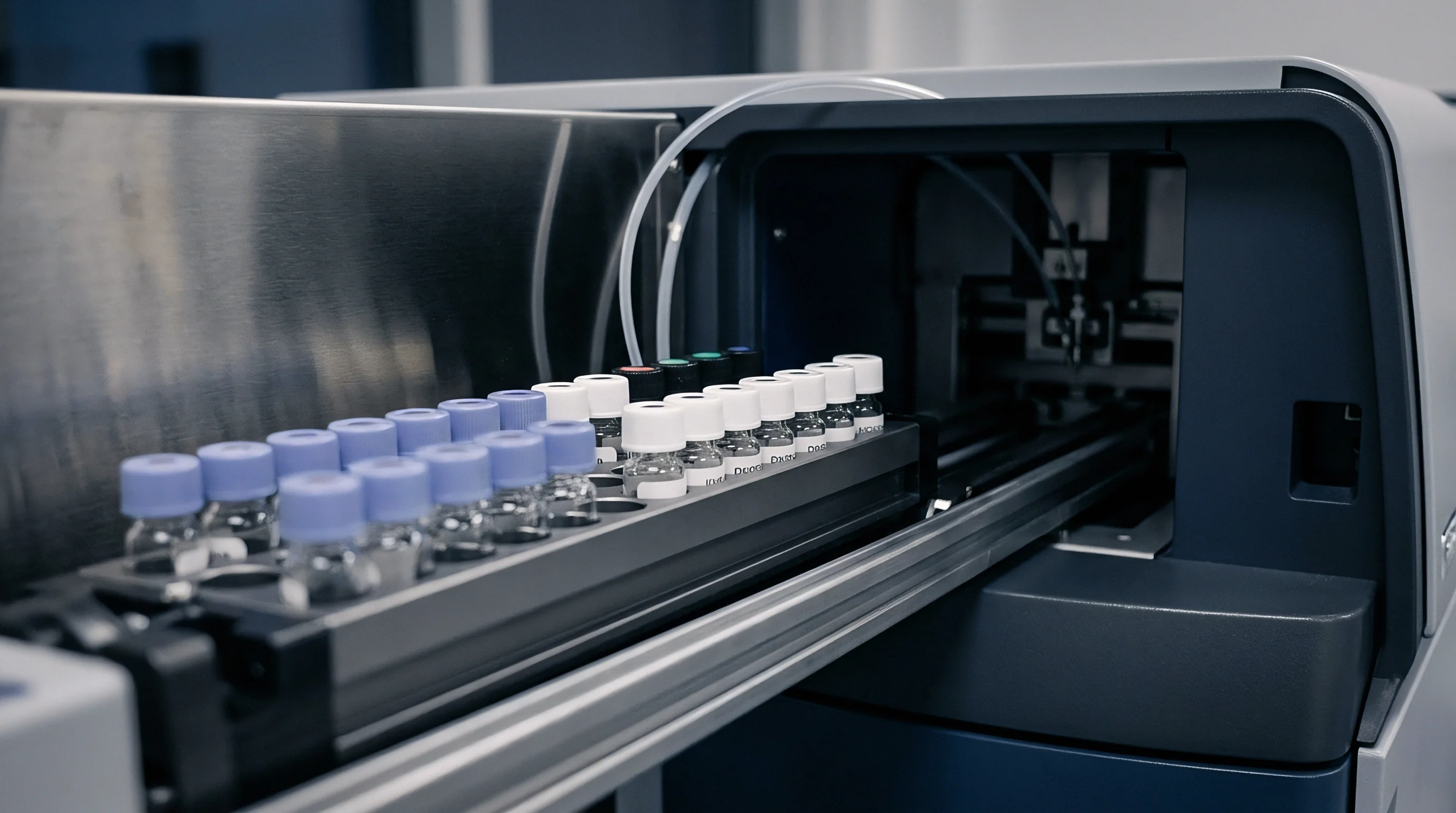
Disparity
Polymer technical datasheets serve as commercial marketing documents instead of binding material guarantees. They report nominal mechanical and thermal figures measured from pristine test specimens molded under ideal parameters per ISO 294-1. Delivered resin shipments often deviate from these figures because of reactor lot blending, broad compounding windows, and undeclared in-house regrind added during pelletization.
These laboratory metrics conceal batch-to-batch variations in molecular structure, additive loading, and melt flow.
Extruders and resin producers routinely blend internal sprues, edge trim, off-spec startup purge, and floor scrap back into virgin pellet runs. So long as that reprocessed scrap stays within the same plant, standard commercial definitions allow suppliers to classify the resulting batch as virgin polymer. This practice introduces thermal history, chain degradation, and additive depletion into material sold as first-generation resin, leaving receiving lines with processing instability despite clean documentation.
Nominal datasheet values reflect ideal molding parameters in a laboratory rather than the statistical distribution of commercial resin lots.
Undeclared regrind creates operational variance during conversion. Inconsistent melt viscosity causes gate pressure fluctuations, erratic part shrinkage, and intermittent mechanical failures during downstream assembly. These gaps between datasheet values and actual polymer behavior show up in specific ways across conversion processes.
- Oxidative degradation kinetics accelerate in reprocessed resin as primary antioxidants deplete early, causing premature embrittlement over the product’s service life.
- Broadened polydispersity index alters melt elasticity, leading to erratic mold filling, melt fracture, and unexpected sink marks in thick wall sections.
- Non-melting crosslinked gels formed by localized overheating clog runner nozzles and create high-stress nucleation sites inside molded container walls.
- Color shifting toward yellow or brown forces higher colorant let-down ratios to meet nominal cosmetic specifications.
- Additive package dilution drops ultraviolet stabilization and slip performance below design thresholds, accelerating weathering outdoors.
The gap between specified virgin properties and delivered polymer quality persists because standard resin purchase orders reference broad industry grades instead of tight analytical property windows. Buyers who rely solely on single-point melt flow rate values from datasheets remain blind to internal scrap inclusions. Internal wide-spec recycling streams are frequently classified as prime virgin polymer on the premise that in-house process scrap remains chemically identical to the parent resin prior to extrusion.

Rheology
Repeated thermal cycles during re-extrusion induce mechanical shear and thermo-oxidative reactions that alter polymer chain architecture. In polyolefins like polypropylene and high-density polyethylene, thermal exposure drives chain scission, breaking high molecular weight chains into shorter fragments. In polymers such as polyamide or polyethylene terephthalate, unmanaged moisture during melt processing triggers hydrolytic degradation, dropping intrinsic viscosity within seconds.
These molecular modifications alter melt flow behavior across processing shear rates.
Chain scission reduces the weight-average molecular weight (Mw) while broadening the polydispersity index (PDI = Mw/Mn). Shorter polymer chains slide past one another with less entanglement resistance, driving up the Melt Flow Rate (MFR). A virgin polypropylene homopolymer with a nominal MFR of 3.0 g/10 min at 230 °C under a 2.16 kg load can show an MFR of 8.5 g/10 min after three thermal passes.
This drop in viscosity reduces melt strength, making it difficult to maintain a stable parison during blow molding or sheet extrusion.
| Polymer Grade | Thermal Pass Count | MFR (g/10 min) | Tensile Modulus (MPa) | Charpy Impact (kJ/m²) |
|---|---|---|---|---|
| PP Homopolymer (ISO 1133, 230 °C / 2.16 kg) | Virgin (0 Pass) | 3.1 | 1550 | 4.2 |
| PP Homopolymer (ISO 1133, 230 °C / 2.16 kg) | 10% Regrind (1 Pass) | 3.8 | 1520 | 3.8 |
| PP Homopolymer (ISO 1133, 230 °C / 2.16 kg) | 25% Regrind (2 Pass) | 5.4 | 1460 | 3.1 |
| PP Homopolymer (ISO 1133, 230 °C / 2.16 kg) | 50% Regrind (3 Pass) | 8.9 | 1380 | 2.2 |
| HDPE Injection Grade (ISO 1133, 190 °C / 2.16 kg) | Virgin (0 Pass) | 7.0 | 1050 | 8.5 |
| HDPE Injection Grade (ISO 1133, 190 °C / 2.16 kg) | 25% Regrind (2 Pass) | 11.2 | 980 | 5.6 |
| Test methods: Tensile Modulus per ISO 527-2 at 50 mm/min; Charpy Notched Impact per ISO 179-1eA at 23 °C. | ||||
Shear sensitivity varies by polymer family. While many polyolefins undergo chain scission, certain polyethylene grades experience thermo-oxidative crosslinking under low-oxygen, high-shear conditions inside the extruder barrel. Viscosity drops in degraded fractions, while long-chain branching or crosslinking forms high-viscosity gels that clog melt filters.
Primary phenolic antioxidants and secondary phosphite stabilizers are consumed during each heat cycle, leaving the polymer vulnerable during subsequent molding steps.
A polypropylene homopolymer subjected to three extrusion passes displays an increase in Melt Flow Rate from 3.0 g/10 min to 8.5 g/10 min under ISO 1133 test conditions at 230 °C and 2.16 kg load.
A broad molecular weight distribution lowers the critical shear rate where melt fracture begins. During high-speed injection molding, degraded melt streams exhibit erratic shear-thinning, which causes parting-line flash alongside short shots in thin sections. Tensile strength and notched impact resistance decline together as chain scission weakens tie molecules in the crystalline matrix.
Ignoring these rheological shifts leads to premature environmental stress cracking and brittle failures in load-bearing molded parts.


Sack
Incoming inspection of bulk resin requires systematic physical sampling before unloading railcars, octabins, or bags into storage silos. Physical testing on arrival catches visual anomalies, bulk density shifts, and thermal history before contamination spreads through plant distribution systems. Sampling should follow ISO 582 or ASTM D1898 guidelines, using double-tube lances to pull core samples from multiple container depths.
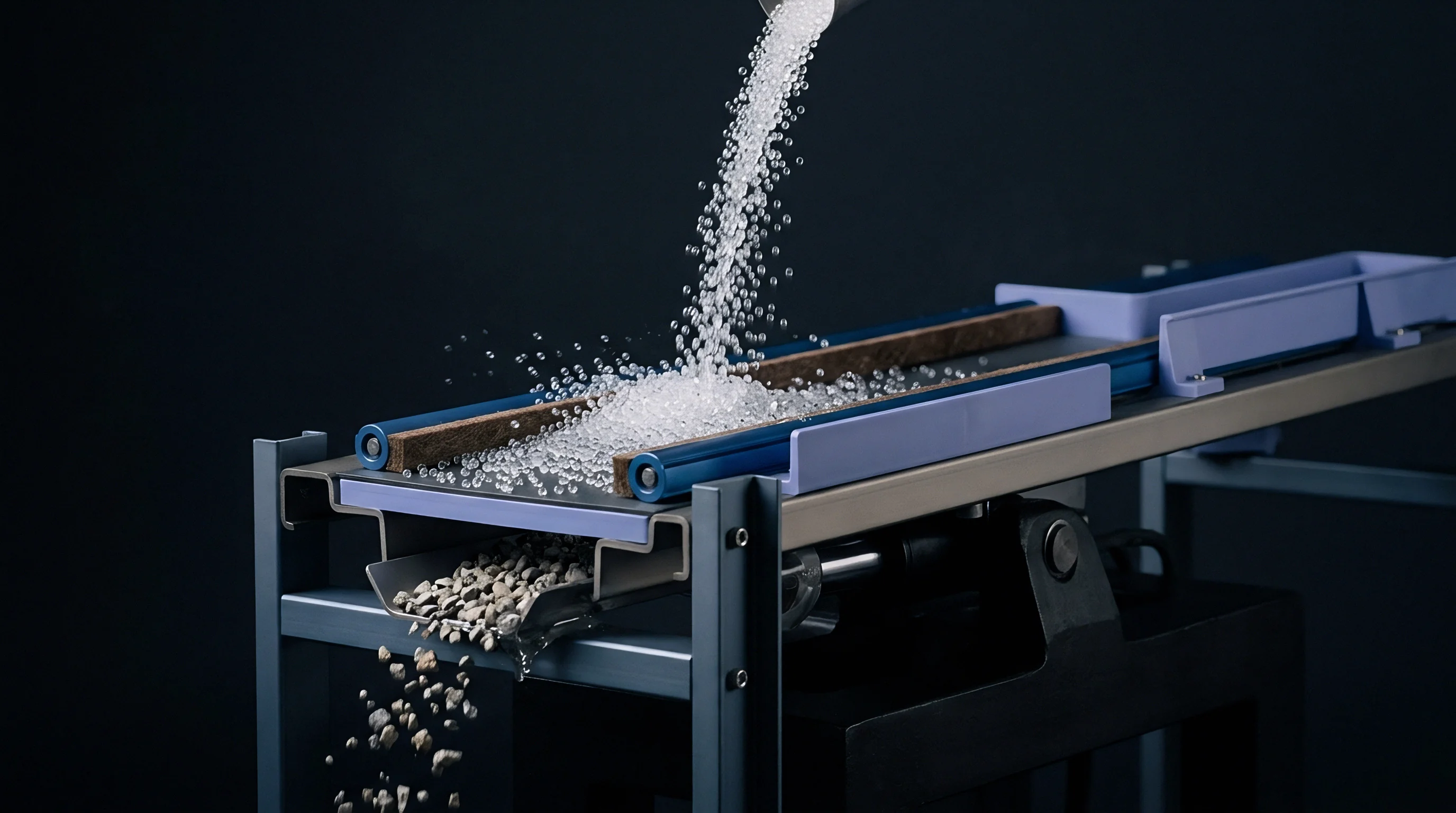
Which Analytical Bench Test Exposes Undeclared Regrind First?
Differential Scanning Calorimetry (DSC) per ISO 11357 offers the fastest definitive check for mixed thermal history and regrind inclusions. While Melt Flow Rate testing indicates average viscosity shifts, DSC thermal scans reveal structural details like secondary melting peaks, altered crystallization kinetics, and reduced Oxidation Induction Time (OIT).
| Test Method | Standard Reference | Measured Parameter | Detection Threshold |
|---|---|---|---|
| Differential Scanning Calorimetry (DSC) | ISO 11357-3 / ASTM D3418 | Enthalpy, double peaks, crystallization temp | 5% regrind content |
| Oxidation Induction Time (OIT) | ISO 11357-6 / ASTM D3895 | Antioxidant depletion time at 200 °C | 3% regrind content |
| Gel Permeation Chromatography (GPC) | ISO 16014 / ASTM D6474 | Mw, Mn, and PDI broadness shift | 8% regrind content |
| Melt Flow Rate (MFR) Variance | ISO 1133 / ASTM D1238 | Melt mass-flow displacement rate | 12% regrind content |
| Spectrophotometry (CIELAB) | ISO 11664-4 / ASTM E313 | Yellowing Index (YI), b coordinate drift | 10% regrind content |
Oxidation Induction Time measurements taken under isothermal conditions at 200 °C in pure oxygen expose prior heat history immediately. Virgin polyolefin resins with intact antioxidant packages resist thermo-oxidative breakdown for over 30 minutes. Resins contaminated with regrind, having depleted their primary phenolic antioxidants during earlier passes, show OIT values under 10 minutes.
Spectrophotometers measuring b yellowing coordinates detect thermal oxidation long before it becomes visible to the naked eye under warehouse lighting.
Incorporating mandatory Oxidation Induction Time thresholds per ASTM D3895 into raw material receiving protocols prevents premature field failure from antioxidant depletion.
Verification protocols on incoming dock shipments must follow a strict sequential path to isolate non-conforming polymer lots prior to silo loading.
- Collect multi-point core samples across ten percent of delivered containers using a double-tube sampling lance per ISO 582 parameters.
- Measure bulk density using an ISO 60 pourability funnel to identify variance in pellet geometry or fine dust content.
- Conduct melt flow rate testing on blended samples under ISO 1133 conditions to establish baseline flow consistency against lot documentation.
- Perform differential scanning calorimetry thermal scans to detect secondary oxidation peaks or unexpected thermal transition temperatures.
- Quantify antioxidant retention by measuring Oxidation Induction Time at 200 °C per ASTM D3895 standards.
- Isolate non-conforming lots in quarantine bays until laboratory results confirm chemical purity and additive stabilization levels.
Pellet lots displaying clear color variation or surface haze under optical inspection reliably signal mixed thermal history before formal laboratory testing begins.
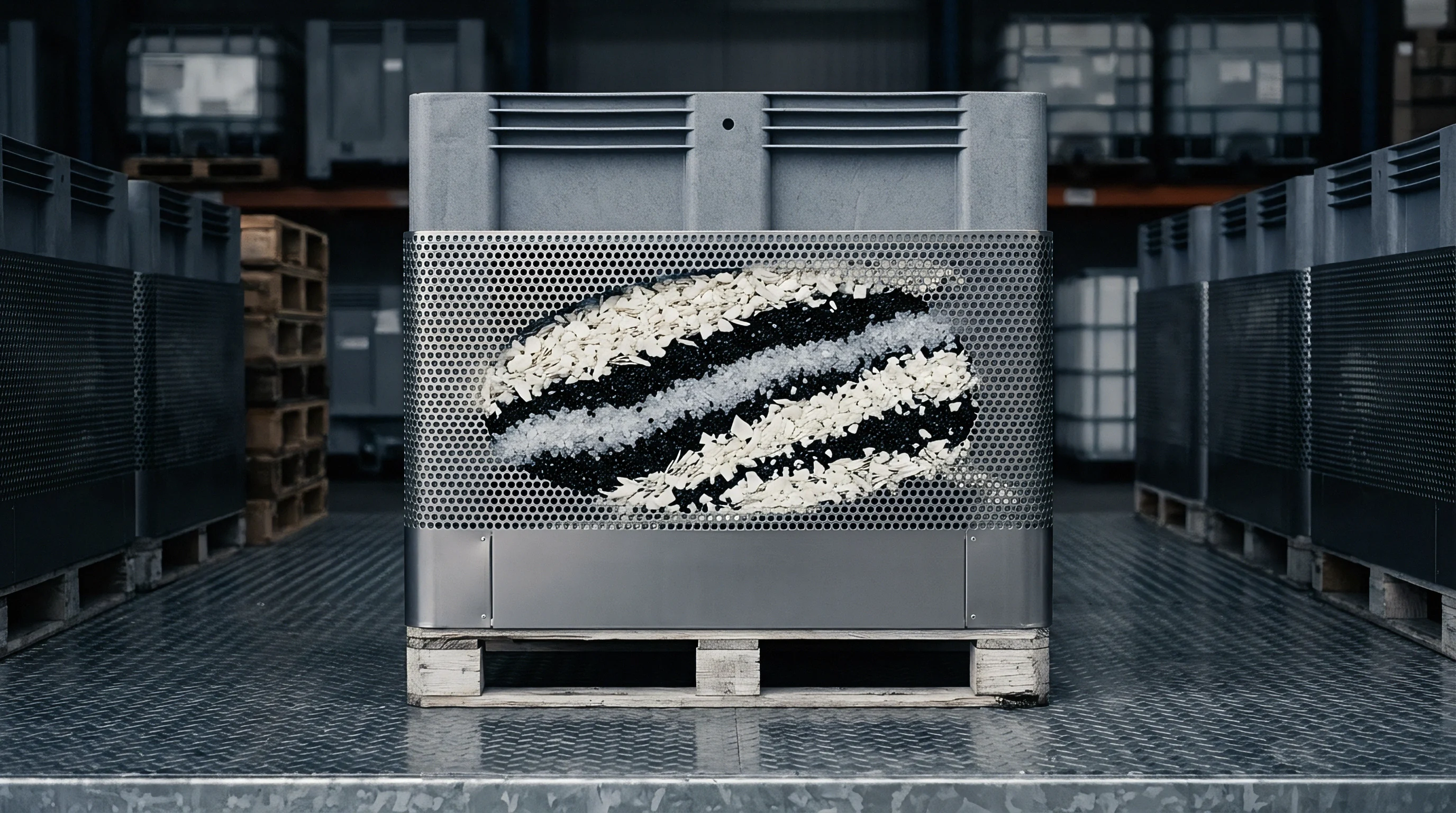

Dossier
Procurement documents need to turn broad commercial datasheets into legally binding material specifications. A thorough specification sets strict control windows for melt flow index, density, polydispersity, color variance, and explicitly forbids undeclared recyclate streams. Relying on standard mill certificates leaves room for suppliers to hide behind broad manufacturing tolerances.

Contractual Control Limits and Certificate of Analysis Verification
Certificates of Analysis (COA) supplied with resin shipments often report lot averages based on reactor samples taken hours before final packaging. A buyer-defined purchasing agreement should instead require batch-specific testing from the actual gaylords or railcars being shipped. Specific property thresholds must serve as firm rejection limits rather than target averages.
- Narrow Melt Flow Rate bands keep batch-to-batch flow variations within plus or minus eight percent of nominal targets.
- Zero undeclared regrind clauses prohibit post-industrial scrap, edge trim, or third-party reprocessed streams in virgin-grade orders.
- Differential Scanning Calorimetry baseline scans establish thermal history signatures and confirm antioxidant stabilization before accepting delivery.
- Gel count ceilings cap optical gel impurities at maximum allowable area density counts per square meter of extruded film.
- Bulk density tolerances keep pellet geometric variation within plus or minus three percent of reference virgin density.

Defining Allowed In-House Recyclate Caps in Procurement Documents
Where an application allows internal regrind, purchasing documents should clearly separate virgin resin delivery specifications from plant-level regrind let-down rules. The virgin resin specification must mandate pristine, first-generation polymer made directly from reactor feed. When compounders deliver pre-blended recycled materials, the supply contract needs to state the maximum allowed recycling passes, feed origin, and required analytical testing.
Contractual terms should define clear audit rights, sampling frequencies, and financial liabilities for out-of-spec shipments. The agreement should require suppliers to absorb freight, testing, machine downtime, and tool cleaning costs whenever non-conforming material is delivered. Incorporating ISO 11403 single-point and multi-point data requirements into the supply contract forces suppliers to certify that every batch consists entirely of first-generation polymer from polymerization reactors.


Margin
Purchasing raw polymer based strictly on initial price per metric tonne exposes molders and extruders to significant financial risk downstream. Undeclared regrind undermines process stability, extends cycle times, raises scrap rates, and accelerates tool wear through abrasive contamination. An upfront discount on resin pellets quickly turns into a net loss when plant output falls.

Scrap Rate Escalation and Injection Cycle Time Penalties
Thermal degradation alters polymer crystallization kinetics. Reprocessed chains with shorter molecular lengths crystallize at higher temperatures, leading to uneven shrinkage, warpage, and internal stress in molded components. Operators often respond to dimensional instability by lengthening cooling times, which slows overall plant output and increases scrap when parts fail dimensional inspection.
A small reduction in raw resin purchase price disappears when cycle times extend to accommodate inconsistent melt behavior during mold packing.

Worked Economic Exposure on Contaminated Virgin Polymer Lots
Evaluating the true cost of undeclared regrind requires looking at landed costs across the entire production run. Consider an industrial molding run converting 50,000 kg of polyolefin resin into structural housings. Prime virgin resin costs 1.60 USD per kg, while an off-spec lot containing undeclared regrind is bought at a discount of 1.48 USD per kg.
| Cost Parameter | Prime Virgin Resin Lot | Off-Spec Contaminated Lot |
|---|---|---|
| Raw Polymer Delivered Cost (USD/kg) | 1.60 | 1.48 |
| Total Resin Consumed (kg) | 50,000 | 50,000 |
| Base Material Outlay (USD) | 80,000 | 74,000 |
| Molding Cycle Time (seconds) | 42.0 | 46.5 |
| Total Production Press Hours Required | 583.3 | 645.8 |
| Machine Operating Rate (USD/hour) | 85.00 | 85.00 |
| Total Machine Press Operating Cost (USD) | 49,580 | 54,893 |
| Part Quality Yield / Scrap Rate (%) | 1.5% | 6.8% |
| Good Parts Delivered (Units) | 49,250 | 46,600 |
| Total Effective Landed Cost (USD) | 129,580 | 128,893 |
| Final Landed Cost Per Good Part (USD) | 2.63 | 2.77 |
The upfront raw material discount of 6,000 USD on the 50,000 kg shipment creates an immediate nominal saving. However, longer cooling cycles add 62.5 press hours to the run, adding 5,313 USD in direct press operating costs. Higher defect rates from gel inclusions and warpage push scrap from 1.5% to 6.8%, wasting 3,400 kg of processed material.
As a result, the landed cost per acceptable part rises from 2.63 USD with prime virgin resin to 2.77 USD with the contaminated lot. The initial discount becomes a net operating loss of 0.14 USD per good part delivered. The industry continues to weigh whether low-cost spectral imaging tools at the moulding machine hopper can reliably isolate sub-five-percent reprocessed resin contamination before processing begins.