Bio Based Resin Sourcing and Industrial Composting Compliance
Industrial composting compliance requires verifying bio-carbon via ASTM D6866, disintegration via EN 13432, and total fluorine screening below 100 ppm.

Origin
Bio-based feedstock identity relies on radiocarbon isotope analysis rather than chemical structure alone. A polymer synthesized from plant sugars displays identical mechanical properties to its petrochemical analogue, yet carries a distinct carbon-14 signature. Sourcing practices evaluate biological origin by measuring the ratio of carbon-14 to carbon-12 within the polymer matrix.
Fossil feedstocks contain zero carbon-14 due to radioactive decay over millions of years, whereas modern biological feedstocks match atmospheric radiocarbon activity levels. Specifying renewable resins demands precise laboratory verification of this isotopic ratio to support commercial bio-based claims.
Radiocarbon Isotope Testing for Bio Carbon Fraction
Mass fraction determination follows ASTM D6866 Method B liquid scintillation or accelerator mass spectrometry, with laboratory results reporting bio-based carbon content as a percentage of total organic carbon. A high bio-based fraction does not imply rapid environmental degradation. Polyethylene produced from sugarcane ethanol yields a bio-based carbon fraction above ninety-nine percent, yet remains non-biodegradable in natural environments.
Conversely, polybutyrate adipate terephthalate originates predominantly from fossil petrochemicals, yet degrades completely under thermophilic composting conditions. Sourcing engineers define procurement specifications by separating the carbon origin test from the end-of-life disposal path.
| Polymer Family | Bio-Based Carbon (%) | Melt Flow Rate (g/10 min) | Test Condition | Primary Degradation Pathway |
|---|---|---|---|---|
| Polylactic Acid (PLA 4032D) | 98.5 – 100.0 | 6.0 – 8.0 | 210 °C / 2.16 kg | Industrial Composting (Thermophilic) |
| Polyhydroxyalkanoate (PHBV) | 99.0 – 100.0 | 15.0 – 20.0 | 190 °C / 2.16 kg | Soil, Marine, Industrial Composting |
| Polybutyrate Adipate Terephthalate (PBAT) | 0.0 – 15.0 | 3.0 – 5.0 | 190 °C / 2.16 kg | Industrial Composting |
| Polybutylene Succinate (PBS) | 20.0 – 50.0 | 4.0 – 7.0 | 190 °C / 2.16 kg | Industrial Composting, Soil |
| Bio-Polyethylene (Bio-HDPE) | 95.0 – 99.0 | 0.3 – 0.55 | 190 °C / 2.16 kg | Recyclable non-biodegradable stream |
| Melt flow values determined via ISO 1133 or ASTM D1238; bio-based carbon fraction verified by ASTM D6866 Method B. | ||||
Distinguishing Compostability from Biological Sourcing
Polymer chemistry separates carbon source from end-of-life degradation behavior. Polylactic acid represents a bio-based polyester capable of industrial disintegration, but it remains recalcitrant in ambient soil or home composting systems. Polyhydroxyalkanoates undergo microbial digestion across marine, soil, and industrial environments due to enzymatic cleaving of aliphatic ester linkages.
Mixing bio-based non-degradable polymers like Bio-PE into compostable streams contaminates organic waste processing facilities. Procurement contracts state both the minimum radiocarbon percentage under ASTM D6866 and the specific disposal standard compliance to prevent material misclassification at the point of entry.
Radiocarbon analysis yields a bio-based carbon fraction of 98.5 percent under ASTM D6866 Method B testing.
Certification bodies require raw material suppliers to submit full chemical characterizations alongside isotopic data. Unverified claims invite regulatory penalties. A supplier certificate stating bio-content must link directly to specific resin lot numbers and manufacturing facility batch records.
When purchasing compounded masterbatches, the bio-carbon fraction drops in direct proportion to inorganic filler loadings such as calcium carbonate or talc. Calculating net biological carbon requires adjusting the total weight by subtracting inert mineral weight prior to isotope ratio calculations.
Resin specified for composting applications needs clear differentiation between biological feedstock origin and post-consumer microbial breakdown pathways.

Foil
Flexible packaging production requires careful balancing of polylactic acid with polybutyrate adipate terephthalate to yield adequate tear resistance. Pure polylactic acid is brittle, with a flexural modulus exceeding three gigapascals and failure elongation below five percent. Blending flexible aliphatic-aromatic co-polyesters restores impact resistance and dart drop strength.
Extrusion compounding of these distinct polymer phases demands close control over melt temperature, shear rate, and residence time to prevent thermal cleavage of functional chains.
Rheological Processing Windows and Chain Extension
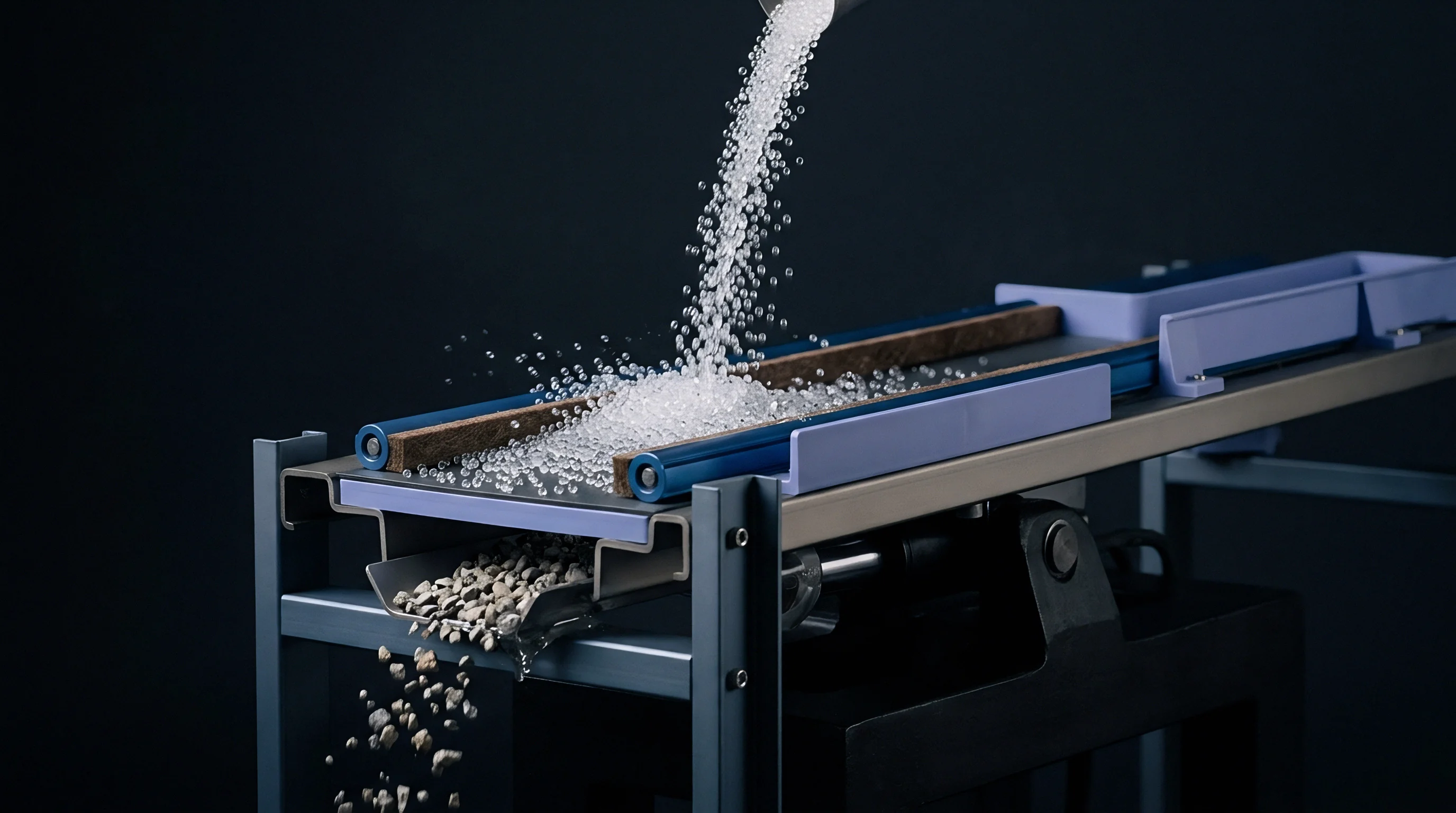
Melt flow rate stability during blown film extrusion depends directly on pre-extrusion moisture levels. Polylactic acid and polybutyrate adipate terephthalate hydrolyze rapidly when processed with moisture contents above two hundred fifty parts per million. Desiccant drying at sixty-five degrees Celsius for four hours lowers moisture content to acceptable limits below one hundred fifty parts per million.
Polymer degradation during compounding causes melt viscosity collapse, bubble instability, and variable film gauge thickness across the die gap.
Drying polyester resin blends below target moisture limits prevents hydrolytic molecular weight loss during extrusion.
Chain extenders counteract molecular weight loss induced by thermal and hydrolytic degradation. Adding epoxy-functional acrylic oligomers at loadings between zero point three and zero point eight percent by weight re-links severed polymer chains during melt processing. The reaction increases zero-shear melt viscosity, expands strain-hardening behavior, and raises bubble strength on blown film lines.
Excessive chain extender addition induces gel formation and localized cross-linking, which creates optical defects and film tearing. Processing engineers adjust feed zone temperatures to ensure full reaction of functional groups without generating unreacted additive residues.
| Blend Ratio (PLA/PBAT/Talc) | Chain Extender (wt%) | MFR 190°C/2.16kg (g/10 min) | Tensile Strength (MPa) | Elongation at Break (%) |
|---|---|---|---|---|
| 100 / 0 / 0 | 0.0 | 8.5 | 62.0 | 4.2 |
| 40 / 50 / 10 | 0.0 | 6.2 | 22.5 | 210.0 |
| 40 / 50 / 10 | 0.4 | 3.1 | 26.8 | 380.0 |
| 40 / 50 / 10 | 0.8 | 1.8 | 28.1 | 410.0 |
| 20 / 70 / 10 | 0.4 | 2.4 | 19.5 | 520.0 |

Additives and Degradation Failure Modes
Uncontrolled thermal history in the extruder hydrolyzes ester bonds along the polymer backbone. Melt temperature limits must stay below two hundred ten degrees Celsius for PLA-PBAT compounds to inhibit thermal scission. Antistat agents, slip additives, and color masterbatches must maintain chemical compatibility with compostable matrices without inhibiting microbial activity during post-consumer disposal.
Erucamide slip agents migrate to film surfaces to lower the coefficient of friction, but excessive concentrations create heat-sealing failures at bag converting stations.
- Hydrolytic Chain Scission occurs when wet pellets enter the extruder barrel, causing immediate molecular weight breakdown, high melt flow rate drift, and severe drop in mechanical tensile strength.
- Phase Separation manifests when polylactic acid and polybutyrate adipate terephthalate lack adequate compatibilization, yielding low tear strength and delamination under tensile load.
- Thermal Transesterification develops under elevated residence times, altering ester sequence distribution and shifting crystallization temperatures away from target processing windows.
- Additive Migration Blocking appears when low-molecular-weight plasticizers bloom excessively to the surface, causing film layers to fuse together on stored master rolls.
Compounding operations quantify degradation through solution viscosity or gel permeation chromatography. A shift in polydispersity index signals uneven chain scission or erratic branching. Quality control labs test melt flow rate on every incoming pellet container to establish processing consistency before releasing material to extrusion lines.
Deviations greater than fifteen percent from nominal MFR targets indicate moisture contamination or improper heat history during upstream compounding.
Inadequate moisture control during compounding degrades the resin backbone, leading to brittle film formation, high scrap rates at the converter, and immediate rejection of finished goods.


Chamber
Controlled thermophilic conditions inside industrial composting facilities drive the biochemical degradation of aliphatic-aromatic co-polyesters. Operating near fifty-eight degrees Celsius, these facilities combine managed moisture, forced aeration, and sustained heat to encourage microbial colonization. Bacteria and fungi secrete extracellular enzymes that cleave polymer chains into lower molecular weight oligomers, which microbes then assimilate as carbon and energy sources, converting the resin matrix into carbon dioxide, water, and biological humus.

How Does Thermophilic Disintegration Differ from Biodegradation?
Physical breakdown into fragments smaller than two millimeters defines the mechanical criteria of ISO 16929, measuring film disintegration inside a managed compost medium over a twelve-week cycle. Complete biodegradation requires converting polymer organic carbon into carbon dioxide via microbial respiration under ISO 14855-1 or ASTM D5338 conditions. A material disintegrates completely when film fragments disappear visually, yet full chemical biodegradation demands complete conversion of the underlying polymer chains into inorganic metabolic end products.
Failure to pass the ninety percent carbon conversion threshold within one hundred eighty days under ISO 14855-1 invalidates industrial compostability certification.
Laboratory testing strictly separates physical disintegration from carbon conversion efficiency. A polymer formulation passing physical breakdown within twelve weeks can fail ultimate biodegradation if the chemical backbone resists enzymatic cleavage. Test standards enforce a minimum carbon conversion threshold of ninety percent relative to a natural cellulose control material within one hundred eighty days.
Polymer chemistry, thickness, and crystallinity dictate conversion kinetics, requiring thin-wall packaging designs to optimize surface area exposure within the compost pile matrix.

Four-Step Qualification Sequence for Compostable Polymers
Laboratory verification proceeds through distinct testing phases to guarantee environmental safety.
- Chemical characterization establishes total organic carbon, heavy metal concentrations, and fluorine content using inductively coupled plasma optical emission spectroscopy and ion chromatography.
- Ultimate aerobic biodegradation testing measures carbon dioxide evolution over one hundred eighty days at fifty-eight degrees Celsius in synthetic municipal solid waste compost per ISO 14855-1.
- Physical disintegration evaluation passes test material through a two-millimeter sieve after twelve weeks of pilot-scale composting exposure according to ISO 16929 standards.
- Ecotoxicity screening assesses plant growth response and seedling emergence using OECD 208 guidelines on compost enriched with tested polymer residues at concentrations up to ten percent.
Plant growth trials evaluate phytotoxicity by comparing plant biomass and germination rates between control compost and test-enriched compost. Monocotyledon and dicotyledon plant species grow in compost matrices subjected to polymer degradation. Heavy metals such as copper, zinc, nickel, and lead must remain below strict threshold values defined by EN 13432 Annex A. Test reports expire after twelve months.
Exceeding heavy metal concentration ceilings invalidates compostability claims regardless of physical breakdown rates.
Incorporating ISO 17088 section 6.2 into purchase agreements legally obligates suppliers to furnish raw disintegration data alongside toxicity reports prior to invoice payment.

Paperwork
Commercial compliance dossiers bundle laboratory analytical certificates with third-party certification logos to satisfy regulatory scrutiny. Procurement teams cross-check supplier claims against public databases maintained by independent certification institutes. An authentic certificate covers specific material formulations, maximum allowed wall thicknesses, and approved colorant loadings.
Utilizing a certified base resin does not grant automatic certification to a converted finished article if added masterbatches or processing aids exceed approved limits.

Fluorine Content Limits and Ecotoxicity Audits
Perfluoroalkyl substances face zero-tolerance mandates across major European and North American certification schemes. Total fluorine content testing via combustion ion chromatography enforces strict caps below one hundred parts per million to exclude intentionally added fluorinated polymer processing aids. Fluorinated additives used to eliminate melt fracture in polyethylene extrusion cause immediate failure during compostability audits when added to bio-polyester compounding lines.
Fluorine screening eliminates perfluoroalkyl processing aids from compostable packaging supply chains.
Laboratory documentation verifies that pigments and printing inks applied to compostable substrate films contain no restricted heavy metals or aromatic amines. Third-party certifiers validate that total added ink load stays below one percent by dry weight of the finished product. Exceeding this threshold forces independent disintegration and ecotoxicity testing on the printed packaging article.
Regulatory authorities issue stop-sale orders when uncertified colorants leach into organic recycling streams.

Traceability and Batch Certificate Audits
Incoming lot inspection matches shipment bag markings against supplier certificates of analysis. Procurement specifications detail required documentation prior to material clearance at receiving docks.
- Certificate of Analysis Validation verifies melt flow rate, density, and moisture content for every unique resin lot against signed technical specifications.
- Standard Compliance Statement confirms resin adherence to EN 13432, ASTM D6400, or ISO 17088 with clear reference to test report numbers.
- Maximum Thickness Threshold Clearance ensures the finished part wall thickness remains below the absolute limit validated in the base resin disintegration certificate.
- Fluorine Total Content Report confirms total fluorine content remains under one hundred parts per million via combustion ion chromatography testing.
Auditors inspect supply chain records to prevent material substitution. Blending recycled compostable regrind back into primary production streams demands clear accounting of thermal cycles. Excess regrind incorporation alters crystallization kinetics, leading to processing instability and altered disintegration performance in municipal facilities.
Maintenance of full batch genealogy guarantees material integrity from monomer feedstock production through finished container shipment.
Minor additive substitutions compromise compostability compliance even when the underlying resin matrix remains unaltered.

Tariff
Customs classification of bio-based resins shifts landed costs through varied import duty schedules across international borders. Harmonized System tariff codes depend on chemical structure rather than end-of-life compostability attributes. Customs authorities classify polylactic acid under heading 3907, whereas polyhydroxyalkanoates enter under natural polymer heading 3913.
Importers must evaluate specific tariff headings to forecast landed material costs accurately before finalizing overseas procurement orders.

Customs Nomenclature and Harmonized System Codes
Importing polyhydroxyalkanoates under tariff line 3913.90 incurs distinct duty rates compared to polylactic acid entries under 3907.70. Polybutyrate adipate terephthalate enters under 3907.99 as a synthetic polyester co-polymer. Incorrect tariff classification exposes importers to back-duty assessments, seizure of goods, and civil administrative fines.
Sourcing teams demand formal customs advance rulings when importing novel bio-polyester house blends to establish legally binding duty rates prior to shipment departure.
| Polymer Matrix | HS Code Classification | US Most Favored Nation Duty (%) | EU Common Customs Tariff (%) | Primary Classification Basis |
|---|---|---|---|---|
| Polylactic Acid (PLA) | 3907.70.00 | 6.5 | 6.5 | Poly(lactic acid) polyesters |
| Polyhydroxyalkanoates (PHA) | 3913.90.20 | 5.8 | 6.5 | Natural polymers and modified natural polymers |
| Polybutyrate Adipate Terephthalate (PBAT) | 3907.99.50 | 6.5 | 6.5 | Other synthetic polyesters in primary forms |
| Polybutylene Succinate (PBS) | 3907.99.50 | 6.5 | 6.5 | Other synthetic polyesters in primary forms |
| Bio-based Polyethylene (Bio-PE) | 3901.10.10 | 6.5 | 6.5 | Ethylene polymers in primary forms (density <0.94) |
Landed Cost Arithmetic and Material Selection
Delivered resin economics incorporate base polymer price, functional modifier loading, transport logistics, and regulatory compliance fees. In a standard model for a twenty-metric-tonne container shipment of film-grade PLA/PBAT blend resin, a base invoice price of three thousand two hundred US dollars per tonne FAS shipping port forms the starting point. International ocean freight and marine insurance add two hundred forty dollars per tonne.
Customs clearance applies a six point five percent duty rate to the CIF vessel value, adding two hundred twenty-three dollars and sixty cents per tonne. Terminal handling, drayage, and inland freight add another one hundred sixty dollars per tonne, raising the landed resin cost to three thousand eight hundred twenty-three dollars and sixty cents per tonne before plant processing.
Converter manufacturing economics require factoring in edge-trim scrap rates on high-speed blown film lines. Assuming a four percent unrecoverable scrap rate during bag converting, the effective material cost per tonne of finished product rises to three thousand nine hundred eighty-two dollars and ninety-two cents. Sourcing high-cost compostable resins mandates tight processing parameters to minimize start-up scrap.
Adding secondary certification maintenance fees and batch-level laboratory testing costs adds approximately forty-five dollars per tonne. Evaluating duty schedules alongside freight logistics allows procurement teams to calculate precise landed costs per thousand finished units before signing multi-container supply contracts.