Correlating Dryer Air Dew Point with Karl Fischer Titration Values
Resin moisture correlates to air dew point only at thermodynamic equilibrium; diffusion kinetics and hopper dwell dynamics govern actual Karl Fischer values.

Vapor
Drying hygroscopic resins relies on managing the equilibrium between water bound in the polymer matrix and moisture present in the surrounding process air. Processing polymers like polyethylene terephthalate, polyamide 66, and polybutylene terephthalate without adequate drying triggers hydrolytic chain scission in the melt. Molecular weight drops rapidly during extrusion or injection molding once water concentrations cross critical thresholds.
Processors often track dryer air dew point as a continuous proxy for resin dryness, assuming dry air automatically yields low internal moisture.
This thermodynamic balance depends directly on the partial pressure of water vapor in the air stream. Desiccant air dryers pass process air through molecular sieves to suppress the dew point, frequently targeting minus 40 degrees Celsius or lower. At any given temperature, that partial pressure sets the theoretical lower limit for moisture in the resin after prolonged dwell time.
Polyethylene terephthalate dried at 160 degrees Celsius under an air dew point of minus 40 degrees reaches a thermodynamic equilibrium water content of 18 parts per million.

Thermodynamic Equilibrium Isotherms
Equilibrium water absorption in polymers follows sorption isotherms that relate internal concentration to external vapor pressure. At low relative humidity, Henry’s Law applies, with internal moisture scaling linearly with external partial pressure. At higher humidities, polar polymers transition toward dual-mode sorption or Flory-Huggins interaction behavior as water molecules cluster inside the matrix.
High-performance engineering polymers exposed to hot, dry air operate almost entirely within the Henry’s Law regime.
The Henry’s Law constant shifts exponentially with drying temperature along an Arrhenius relationship. Raising process air temperature elevates the internal vapor pressure of absorbed water within the pellet, driving moisture outward, while lowering supply dew point depresses ambient water partial pressure. Together, these two variables set the minimum moisture equilibrium reachable by the material.
Partial Pressure Relations in Hygroscopic Polymers
Calculating water vapor partial pressure from process air dew point provides the actual thermodynamic driving force behind drying. Dew point represents the temperature at which air reaches saturation at constant pressure; sub-zero dew points correspond to exceptionally low vapor partial pressures, expressed in pascals or millibars.
The Clausius-Clapeyron equation or the Buck equation provides exact conversions between dew point temperature and vapor pressure over ice. At an atmospheric dew point of minus 20 degrees Celsius, water vapor partial pressure equals approximately 103 pascals. Lowering the dew point to minus 40 degrees Celsius drops that pressure to approximately 12.8 pascals, while pushing down to minus 50 degrees Celsius yields roughly 3.9 pascals.
Lower partial pressure steepens the concentration gradient between the pellet core and surrounding air, accelerating desorption.
| Polymer Family | Drying Temperature (°C) | Air Dew Point (°C) | Vapor Partial Pressure (Pa) | Equilibrium Water Content (ppm) |
|---|---|---|---|---|
| Polyethylene Terephthalate (PET) | 160 | -20 | 103.0 | 125 |
| Polyethylene Terephthalate (PET) | 160 | -40 | 12.8 | 18 |
| Polyethylene Terephthalate (PET) | 160 | -50 | 3.9 | 6 |
| Polyamide 66 (PA66) | 80 | -20 | 103.0 | 450 |
| Polyamide 66 (PA66) | 80 | -40 | 12.8 | 65 |
| Polyamide 66 (PA66) | 80 | -50 | 3.9 | 22 |
| Polycarbonate (PC) | 120 | -30 | 38.0 | 40 |
| Polycarbonate (PC) | 120 | -40 | 12.8 | 15 |
Higher processing temperatures shift equilibrium limits upward, requiring drier process air to attain equivalent residual water levels.

Hygrometry
Monitoring process air drying capacity depends on inline dew point sensors installed in the dry air supply line near the drying hopper inlet. Industrial hygrometers use various physical sensing mechanisms to estimate air stream moisture, with metal oxide ceramic impedance sensors, chilled mirror instruments, and polymer capacitive sensors representing the primary options deployed on commercial compounding and molding lines. Sensor drift or contamination leads to inaccurate readings, masking air moisture increases that degrade sensitive polymer grades.
Chilled mirror hygrometers serve as primary reference standards through direct optical detection of dew or frost formation on a thermoelectrically cooled mirror surface. These instruments achieve high precision, reaching accuracy levels within plus or minus 0.1 degree Celsius dew point. High costs and sensitivity to particulate contamination restrict chilled mirror units primarily to calibration benches and critical high-value compounding operations.
ISO 15512 Method C requires carrier gas moisture levels under five parts per million to prevent drift during baseline coulometric titration.
Sensor Calibration and Probe Positioning
Industrial desiccant dryers depend heavily on aluminum oxide or silicon oxide ceramic impedance sensors mounted in the air piping. The dielectric constant of the oxide layer shifts predictably as water molecules adsorb into its porous matrix. Over time, volatile organic compounds, plasticizer fumes, and low-molecular-weight oligomers carried from hot drying hoppers coat the sensor element.
This fouling creates artificially low moisture readings, causing panel displays to report a minus 40 degree Celsius dew point when actual supply air sits at minus 15 degrees Celsius.
Probe location determines measurement validity. Placing the sensor directly at the outlet of the desiccant bed measures bed performance rather than air entering the resin hopper. While temperature drops along uninsulated transport lines alter relative humidity, absolute dew point stays constant unless condensation occurs.
Mounting the probe in the entry manifold immediately upstream of the resin hopper isolates dry air quality right at the point of application.

Desiccant Wheel Saturation Mechanics
Rotary desiccant wheel dryers continuously cycle synthetic zeolite beds through drying, regeneration, and cooling zones. Physical breakdown of molecular sieve beads generates fine dust that clogs downstream filters and coats sensor elements. As desiccant media age or suffer thermal degradation from faulty regeneration heaters, moisture adsorption capacity drops, broadening the achievable dew point baseline.
- Polymer volatilization coating forms an impermeable barrier over ceramic sensor pores, freezing capacitance output at an artificially low dew point value.
- Desiccant dust contamination disrupts local airflow across the sensing element, introducing hysteresis and erratic signal spikes.
- Sample line thermal gradients cause localized condensation inside unheated sampling tubes whenever plant ambient temperatures drop below the local dew point.
- Ambient air ingress through cracked fittings or loose quick-disconnect couplings elevates the air dew point reading downstream of a functional desiccant wheel.
A minus 40 degree Celsius dew point at the hopper inlet does not guarantee dry resin at the discharge throat if material dwell time is insufficient.
Coulometry
Direct verification of internal resin water content requires chemical analytical methods rather than ambient air space measurements. Karl Fischer titration provides the standard reference for residual water determination in thermoplastics, as specified in ISO 15512 and ASTM D6869. Coulometric Karl Fischer titration paired with a high-temperature solids evaporator oven extracts water from the polymer matrix without dissolving the sample in hazardous solvent mixtures.
The sample sits in a sealed glass vial heated inside an oven manifold. A dry carrier gas, typically high-purity nitrogen or zero air, sweeps evaporated moisture out of the vial and bubbles it into a closed titration cell containing an anode reagent solution rich in iodide ions, sulfur dioxide, and an organic base. Electric current generated at the electrode oxidizes iodide to iodine, which reacts with water in a strict one-to-one stoichiometric ratio.

Water Extraction via Anode Titration Mechanics
Measuring current consumed during iodine generation provides an absolute determination of extracted moisture mass via Faraday’s Law, where 10.71 coulombs of electricity correspond to exactly one milligram of reacted water. Because coulometric titration measures absolute moisture down to single micrograms with high accuracy, it avoids the precision limitations of loss-on-drying thermal balances when testing engineering resins requiring moisture targets under 0.05 percent by weight.
Incorrect thermal parameters introduce side reactions that interfere with titration chemistry. Overheating polyketones, polyamides, or polymers containing specific additive packages releases organic volatiles, aldehydes, or amine compounds. These species react directly with iodine in the Karl Fischer reagent, artificially inflating calculated water figures or causing end-point drift failure where the titrator never reaches a stable baseline current.
Oven Temperature Optimization for ISO Standard Specifications
Selecting the correct oven temperature balances complete moisture extraction against thermal decomposition of the polymer matrix. ISO 15512 Method C specifies heating the sample below its melting or decomposition onset while ensuring rapid diffusion of water out of the pellet structure. For polyamide 66, an oven temperature of 170 degrees Celsius extracts bound water within eight to twelve minutes without generating degradation products.
| Resin Type | Target Moisture Limit (ppm) | Oven Temperature (°C) | Carrier Gas Flow (mL/min) | Extraction Dwell Time (min) |
|---|---|---|---|---|
| PET (Apt for Bottle Grade) | 50 | 170 – 180 | 100 – 150 | 10 – 12 |
| Polyamide 66 (Unfilled) | 200 | 170 | 100 | 10 |
| Polybutylene Terephthalate | 100 | 160 | 100 | 8 – 10 |
| Polycarbonate (Optical) | 20 | 200 | 120 | 8 |
| Polyetheretherketone (PEEK) | 300 | 250 | 150 | 12 – 15 |
- Sample mass selection aligns with expected moisture levels to ensure total consumed water sits between 100 and 2000 micrograms per test run.
- Carrier gas dryness demands nitrogen passing through molecular sieve drying columns to maintain baseline background drift under 5 micrograms per minute.
- Vial crimp integrity uses PTFE-faced silicone septa to prevent ambient moisture ingress during thermal equalization on the autosampler tray.
- Drift subtraction protocol calculates real-time background moisture contribution immediately before executing sample extraction.
ASTM D6869 section 8.2 mandates sample vial purge times of at least two minutes with ultra-high purity nitrogen before heating, which eliminates atmospheric air contamination from the titrator drift calculation.


Kinetics
Assuming a direct linear equivalence between air dew point and resin dryness ignores solid-state transport physics. Solid-state diffusion governs the rate at which water molecules migrate from the center of a polymer pellet to its outer surface, an unsteady-state process modeled by Fick’s Second Law as a function of temperature, spatial dimensions, and diffusion coefficients.
The diffusion coefficient increases exponentially with temperature according to Arrhenius kinetics. Lowering drying air dew point depresses boundary concentration at the pellet surface, but cannot accelerate internal molecular movement. If drying temperature sits too low or hopper residence time falls short of kinetic requirements, resin exits the dryer with high core moisture despite continuous supply air dew points of minus 50 degrees Celsius.
Reductions in air dew point below desiccant regeneration limits produce diminishing moisture removal rates when internal solid-state diffusion controls the drying process.

Does Air Dew Point Guarantee Final Moisture Levels?
Processes relying solely on air dew point displays risk significant quality failures because dew point reflects air condition, not polymer state. Material dwell time depends on hopper geometry and solid mass flow dynamics. Funnel flow or channeling inside a drying hopper causes freshly loaded wet pellets to stream directly down the central core to the discharge throat in a fraction of nominal residence time, while pellets along the walls remain stagnant.
Halving the radius of a spherical pellet reduces required drying time by a factor of four due to the quadratic relationship in Fickian diffusion equations. Mathematical modeling for fractional moisture loss demonstrates that diffusion time scales directly with the square of characteristic pellet thickness.

Mass Transfer Rate Limitations and Hopper Dwell Dynamics
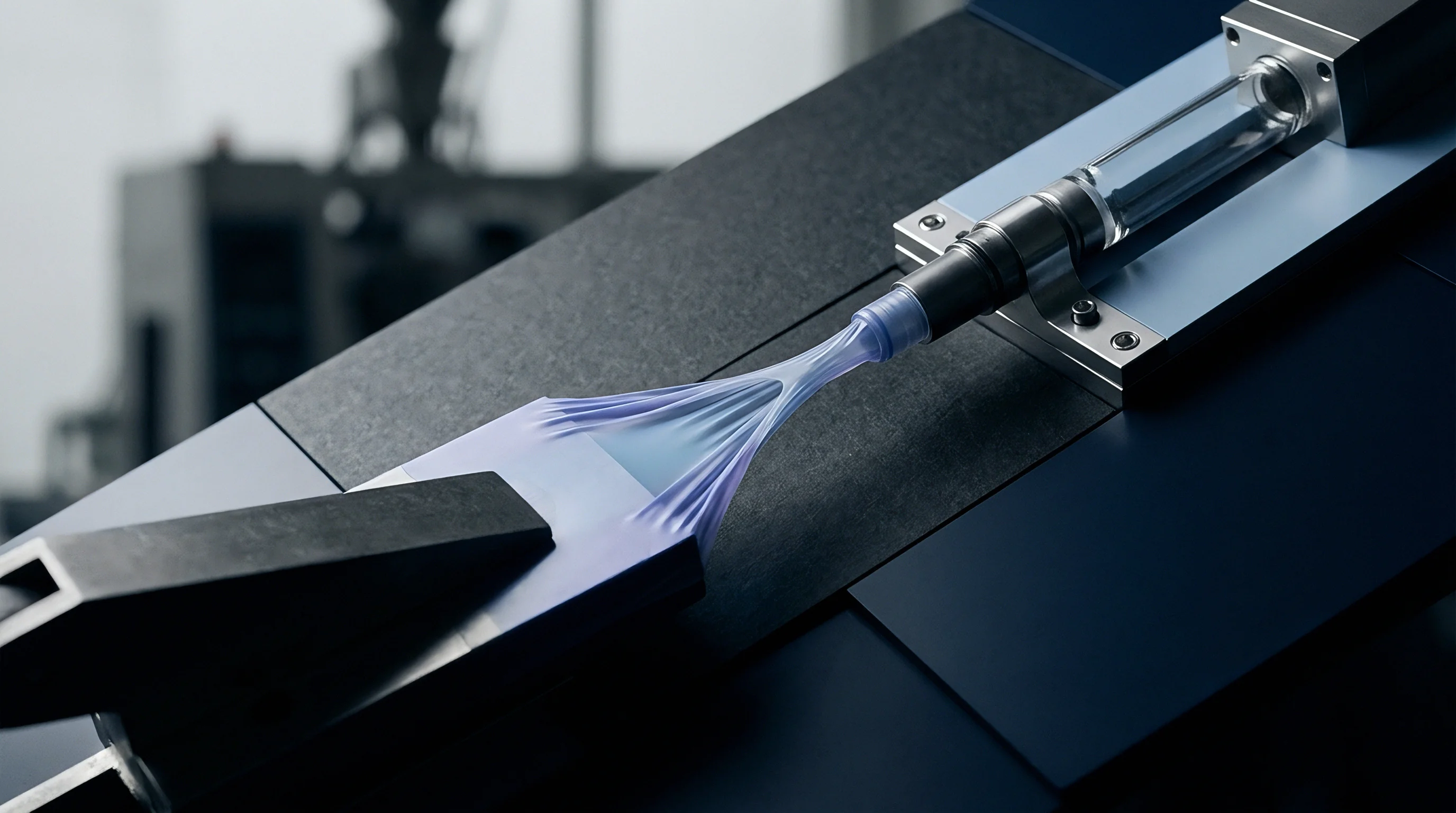
Mathematical modeling demonstrates the divergence between dew point capabilities and kinetic outcomes. Consider a 3.0 millimeter diameter spherical polyamide 66 pellet drying at 80 degrees Celsius under supply air with a minus 40 degree Celsius dew point. The diffusion coefficient of water in polyamide 66 at 80 degrees Celsius equals approximately 2.5 times 10 to the minus 11 square meters per second.
Reaching a final moisture concentration of 200 parts per million from an initial water content of 2000 parts per million demands at least 4.5 hours of true plug-flow residence time.
If the same polyamide 66 resin processes through a hopper experiencing severe funnel flow, average core dwell time drops to 1.5 hours. Off-line Karl Fischer titration of resin sampled from the extruder feed throat reveals a residual water content of 750 parts per million, despite inline sensors confirming a supply air dew point of minus 42 degrees Celsius at the hopper inlet. The dry air stream achieved its thermodynamic task at the pellet surface, but internal kinetic mass transfer limits prevented moisture extraction from the interior.
- Extract three representative resin pellet samples directly from the lower hopper isolation valve using a moisture-free sealed sampling thief.
- Transfer pellets into dry, pre-purged glass titration vials within eight seconds of collection to prevent ambient humidity absorption.
- Measure process air dew point at the exact inlet port of the drying hopper using a recently calibrated chilled mirror reference instrument.
- Execute coulometric Karl Fischer titration according to ISO 15512 Method C at the standardized extraction temperature for the target resin grade.
- Plot measured Karl Fischer moisture values against theoretical equilibrium predictions calculated from the air vapor partial pressure.
- Adjust hopper throughput or air distribution diffuser cone configurations if measured moisture exceeds predicted equilibrium values by more than twenty percent.
Assuming dry air guarantees dry resin risks processing hydrolytically degraded polymer, leading to melt strength collapse, part brittleness, and costly field failures.

Frost
Operating desiccant drying systems at extreme dew points incurs significant operational expense. Pushing desiccant beds from minus 40 degrees Celsius to minus 60 degrees Celsius dew point requires doubling regeneration heater power consumption and shortening bed cycle times. Excessive drying temperatures combined with ultra-low moisture environments can trigger secondary degradation pathways in specific polymer chemistries, including premature thermal oxidation or discoloration caused by antioxidant depletion.
Specifying air dew point targets without setting bound Karl Fischer acceptance limits creates commercial vulnerability in resin procurement contracts. Sourcing specifications must define acceptable moisture ranges in actual resin pellets upon arrival or immediately prior to processing, placing the correlation burden on process validation protocols.
| Target Air Dew Point (°C) | Specific Energy Demand (kWh/kg) | Achievable PET Moisture (ppm) | PET Intrinsic Viscosity Retained (%) | Operational Risk Mode |
|---|---|---|---|---|
| -15 | 0.045 | 180 – 250 | 81.2 | Hydrolytic scission, melt drop |
| -30 | 0.062 | 60 – 90 | 93.5 | Acceptable standard molding limit |
| -40 | 0.088 | 20 – 35 | 98.1 | Optimal performance-to-cost ratio |
| -55 | 0.142 | 8 – 12 | 98.4 | Desiccant degradation, high cost |
A divergence between dry air supply readings and titration results points to airflow channeling inside the drying hopper.

Over Drying Expenses and Thermal Chain Scission
Over-drying certain polymers leads to severe operational difficulties during melt processing. Polyamide grades dried below 0.02 percent moisture exhibit sharp increases in melt viscosity due to solid-state post-condensation reactions during extrusion, increasing motor torque limits and driving up melt temperatures. If un-dried regrind blends enter the stream later, higher processing temperatures accelerate hydrolytic scission and collapse melt strength.
Balancing air dew point settings against actual measured moisture content optimizes both energy consumption and final product quality. Coulometric Karl Fischer titration serves as the authoritative arbiter when qualifying new resin grades or validating dryer performance specifications.
Commercial Acceptance Criteria for Moisture Dossiers
Formulating resin procurement agreements requires rigorous analytical validation protocols. A standard certificate of analysis displaying hopper air dew point telemetry holds no standing in commercial quality disputes involving hydrolytic degradation. Material receiving dossiers demand lot-specific coulometric Karl Fischer test certificates measured under recognized standard test methods.
Whether automated feedback loops linking inline Karl Fischer measurements with desiccant regeneration cycles will replace static dew point monitoring remains an open question for high-throughput compounding plants.