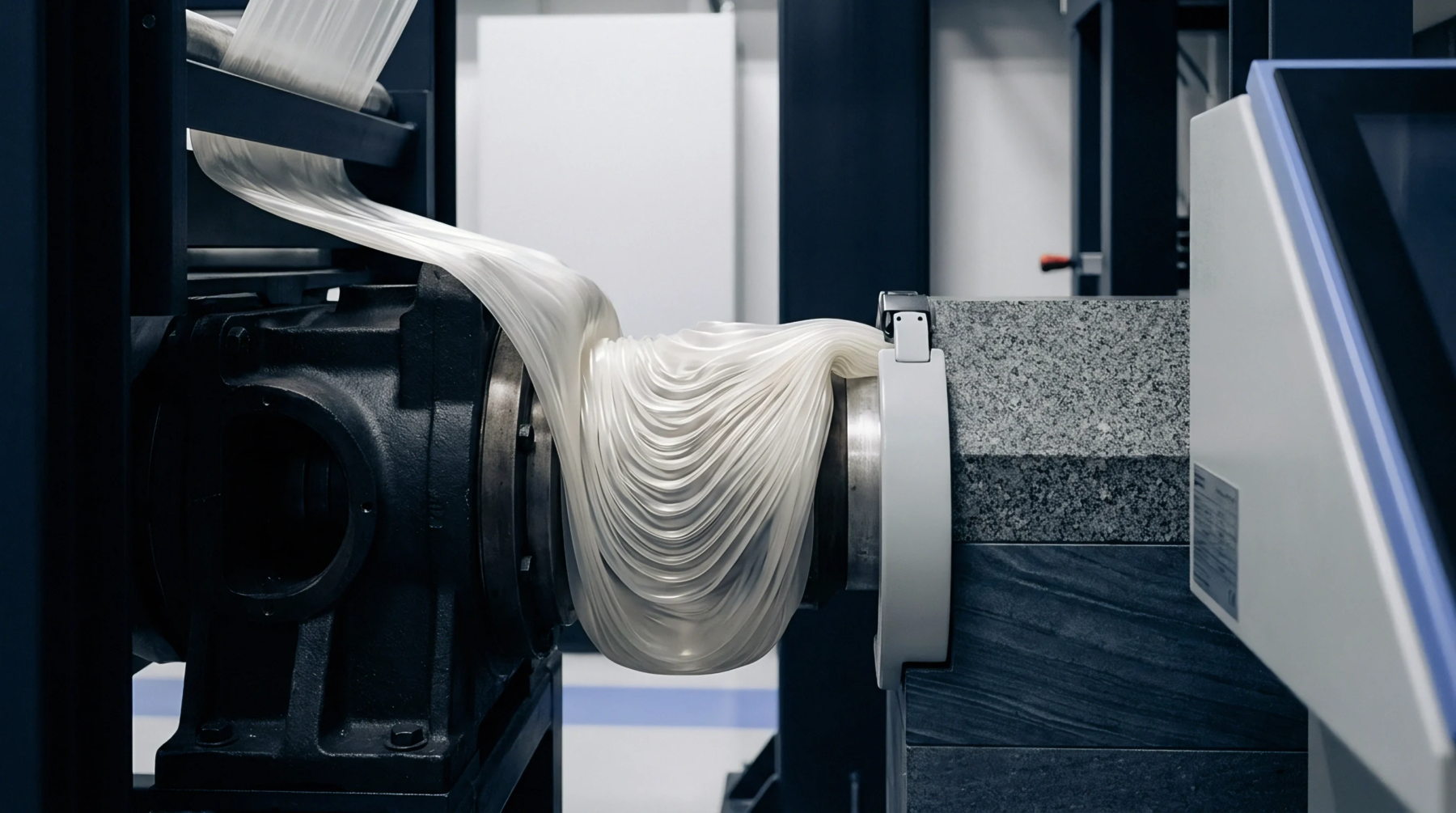
Evaluating Melt Flow Rate Limitations in Recycled Polypropylene Testing
Single point melt flow index testing fails to predict recycled polypropylene processing behavior due to shear thinning and contaminant induced melt instability.
Single point melt flow index testing fails to predict recycled polypropylene processing behavior due to shear thinning and contaminant induced melt instability.

Thermal and oxidative degradation alters polyolefin flake viscosity and residual stability, demanding MFR, OIT, and Carbonyl Index verification before processing.

Intrinsic viscosity loss in reprocessed PET flake is quantified by dilute solution viscometry using ASTM D4603 to prevent structural failure in preforms.

High shear molding relies on pseudoplastic shear thinning, requiring capillary rheometry over melt flow index to control viscous heating and pressure losses.

High shear compounding degrades ultra-high molecular weight tails through mechanochemical scission, best quantified by zero-shear viscosity and Mz tracking.

Low frequency storage modulus G prime below 0.1 rad/s isolates high molecular weight elastic recovery to predict bimodal pipe swell and prevent over-extrusion.

Dynamic rheology quantifies bimodal polyethylene high mass tail content by tracking zero shear viscosity and low frequency storage modulus at 190 C.

Interfacial viscous fingering during melt fractionation is controlled by tuning temperature gradients and limiting viscosity ratios across polymer phase boundaries.
Expertise is a utility, not a secret. sentiention™ publishes its working knowledge as open reference: intelligence layer covering the materials it sources, the markets it enters, and the reference that serves both.