Standard Melt Flow Index Testing Deficiencies in Recovered Polyolefin Processing
Standard melt flow index testing fails recycled polyolefins due to low-shear limits, thermal breakdown, and unmeasured pseudoplastic behavior.

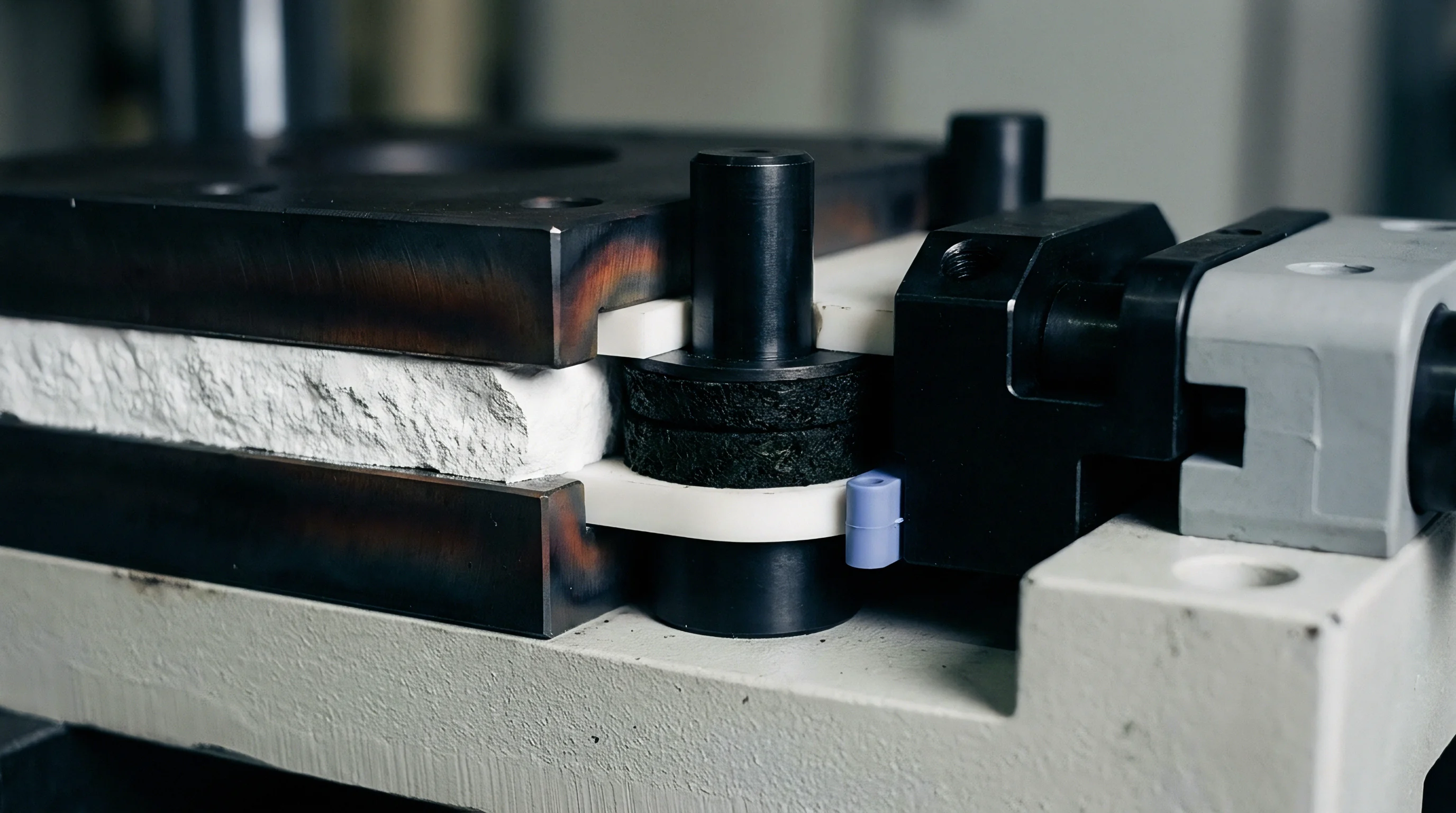
Bore

Standard Capillary Geometry Constraints
Standard capillary melt indexers conforming to ISO 1133 or ASTM D1238 operate with a standard barrel interior diameter measuring 9.550 mm and an extrusion die measuring 2.095 mm in diameter by 8.000 mm in length. Piston loads of 2.16 kg or 5.00 kg drive the polymer melt through the orifice at modest displacement speeds. These dimensions produce shear rates hovering between 0.1 reciprocal seconds and 50 reciprocal seconds.
Shear rates differ. Melt index lies.
High-speed conversion processes operate at completely different velocity regimes. Injection molding nozzle tips, cold runners, and thin-wall mold cavities subject polyolefin melts to shear rates between 1,000 reciprocal seconds and 50,000 reciprocal seconds. Sheet extrusion and blow molding dies operate between 100 reciprocal seconds and 1,500 reciprocal seconds.
Measuring flow rates exclusively at gravimetric low-shear conditions fails to predict physical performance inside production tooling.
| Process or Standard | Test Condition or Equipment | Effective Shear Rate Range | Deformation Mode |
|---|---|---|---|
| ASTM D1238 Condition 190/2.16 | Bench indexer, 2.095 mm die | 0.1 to 5.0 s⁻¹ | Uniaxial shear flow |
| ISO 1133 Condition M (230/2.16) | Bench indexer, 2.095 mm die | 1.0 to 10.0 s⁻¹ | Uniaxial shear flow |
| Profile Extrusion | Calibration sizing die | 50 to 500 s⁻¹ | Combined shear and planar extension |
| Blow Molding | Accumulator head annular die | 300 to 2,500 s⁻¹ | Extensional draw and wall shear |
| Injection Molding | Submarine gate, thin cavity | 1,000 to 35,000 s⁻¹ | High shear thin-film filling |

Thermal Exposure inside Test Cylinders
Standard melt flow rate testing mandates a preheat soak time inside the heated barrel lasting between five and seven minutes before measurement begins. Virgin polyolefins containing intact primary phenolic antioxidants withstand this thermal exposure without shifting molecular architecture. Reprocessed polyolefins lack consistent antioxidant protection due to multiple heat histories suffered during post-consumer collection, washing, and re-pelletization.
An extrusion grade post-consumer polypropylene showing a melt flow rate of 2.1 grams per ten minutes under ISO 1133 Condition M generates apparent shear rates below four reciprocal seconds inside the standard barrel.
Extended thermal dwelling at elevated temperatures induces chemical changes inside reprocessed polyolefin charges during the test itself. Unstabilized post-consumer polypropylene undergoes thermal-oxidative chain scission, artificially lowering melt viscosity and raising the recorded mass flow rate. Conversely, post-consumer polyethylene containing residual cross-linking agents or unsaturated contaminants undergoes gelation, increasing molecular weight and artificially lowering recorded flow numbers.
The index recorded at the end of a seven-minute preheat reflects degradation inside the barrel rather than the flow properties of the delivered shipment.
Suppliers frequently explain away processing variations by claiming that any pellet batch meeting the single-point melt index tolerance on the certificate of analysis satisfies the structural requirements of the purchase order.


Viscosity

Why Do Identical Melt Index Values Produce Inconsistent Mold Filling?
Non-Newtonian fluid behavior causes pseudoplastic polyolefins to exhibit non-linear rheological profiles across different flow velocity regimes. Recycled high-density polyethylene and polypropylene lots contain post-consumer scrap batches with broad molecular weight distributions. Uncontrolled mechanical recycling steps introduce short-chain scission products alongside partially cross-linked gel networks.
Viscosity curves diverge. Melt elasticity dominates.
Two post-consumer polypropylene lots can register an identical melt mass-flow rate of 12.0 grams per ten minutes at 230 °C under a 2.16 kg load. When accelerated to 5,000 reciprocal seconds inside an injection mold cavity, their flow behavior diverges. The lot possessing a broad molecular weight distribution undergoes aggressive shear thinning, flowing rapidly into thin cavity walls.
The lot possessing a narrow distribution retains high viscosity under shear, causing early gate freeze-off and incomplete filling.
- Mould Flash occurs when low molecular weight tail fractions thin excessively under high injection pressures.
- Short Shots develop when long-chain entanglements maintain structural resistance inside narrow tool gates.
- Differential Shrinkage originates from asymmetric molecular orientation down the flow channel during cooling.
- Warpage Defects emerge as localized viscoelastic recovery alters part dimensions post-ejection.

Elasticity and Extrudate Swell Anomalies
Extrudate swell occurs when polymer chains exiting a constrained die relax and recover their coiled molecular equilibrium. High molecular weight fractions dominant in post-consumer blow molding grades store strain energy during capillary transit. Standard gravimetric melt flow measurements weigh the mass of extrudate cut over fixed time intervals, ignoring the physical diameter expansion of the exiting strand.
Pellet lots exhibiting identical single-point mass flow rates display variable swell ratios ranging from 1.2 to 2.2 times the orifice diameter. In extrusion blow molding operations, excessive swell alters parison wall thickness distribution, causing weight spikes and cooling delays. In profile extrusion, unpredictable swell distorts outer product dimensions beyond drawing calibration limits.
Standard melt mass-flow values register mass output while remaining completely blind to die swell relaxation dynamics.
Designing high-speed tooling around low-shear melt flow figures causes severe part distortion, unexpected tool wear, and scrap rates exceeding fifteen percent during initial production runs.


Contamination

Particulate Blockage and Phase Inclusions
Foreign particulate matter, cross-stream polymeric entrainments, and residual mineral fillers alter the physical behavior of reprocessed polyolefins inside the test cylinder. Post-consumer polyolefins frequently carry sub-micron to hundred-micron inclusions including cross-linked gel particles, aluminium foil fragments, sand, and high-melting contaminants like polyethylene terephthalate or polyamide. The capillary die plugs.
Fillers settle fast. Talc settles quickly.
A standard 2.095 mm extrusion die acts as a crude physical filter during testing. Particulate inclusions larger than thirty microns collect near the conical die entry region, restricting effective orifice diameter and elevating backpressure. This artificial restriction slows extrudate output, yielding an artificially low melt flow number that misrepresents the base resin matrix.
Conversely, phase-separated rubber modifiers or low-melting wax impurities bleed through the orifice under load, creating localized lubrication layers that skew optical displacement calculations.
- Load twenty grams of virgin or recycled pellet sample directly into the heated barrel pre-calibrated to ISO 1133 test temperature.
- Apply the standard preheat dwelling duration of seven minutes to allow complete thermal equilibration across the charge.
- Monitor piston travel velocity through optical encoders to record instantaneous flow rate changes across successive volumetric cuts.
- Inspect extruded strands under ten-times magnification for surface roughness, structural melt fracture, and particulate clustering.
| Contaminant Class | Origin in Scrap Stream | Bench Testing Artifact | High-Shear Plant Impact |
|---|---|---|---|
| Cross-linked Gels | Over-stabilized film scrap | Orifice necking, lower MFR | Extrudate tear, surface fish-eyes |
| Calcium Carbonate | Rigid packaging fillers | Filler settling, piston drag | Increased melt density, tool erosion |
| Un-melted PET/PA | Multi-layer barrier film | Intermittent die plugging | Screen pack blinding, melt fracture |
| Polyethylene in PP | Caps and closures scrap | Phase separation in barrel | Impact drop, internal delamination |

Density and Inhomogeneous Phase Migration
Recycled compounds filled with calcium carbonate or talc display gravimetric density shifts reaching 0.95 g/cm³ to 1.25 g/cm³, compared to 0.90 g/cm³ for unfilled polypropylene. Standard Melt Flow Rate measurements express output in grams per ten minutes, confounding physical polymer volume displacement with mineral mass weight. A heavily filled post-consumer resin yields higher mass displacement figures purely due to filler weight, masking a highly viscous polymer matrix.
Recycled polyolefins contaminated with un-melted phase inclusions plug standard test orifices long before reaching processing equilibrium.
Inside static barrel cylinders, dense mineral fillers settle toward the bottom die during the seven-minute preheat period. Initial volumetric cuts register elevated filler concentrations, while final cuts reflect depleted polymer fractions. This phase separation corrupts volumetric flow rate calculations conducted under ISO 1133 Procedure B optical piston sensing.
The industry continues to deliberate whether rapid spectroscopic inline detection can replace traditional capillary filtration tests without increasing capital expenditure for small-scale compounders.


Screening

Multi-Load Melt Flow Rate Characterization
Evaluating complex recycled compounds requires diagnostic testing methodologies capable of capturing rheological behavior across wide shear spectrums and thermal cycles. Multi-load melt mass-flow rate testing introduces a secondary measurement step using elevated weight loads, such as comparing 2.16 kg to 21.6 kg mass loads under ASTM D1238 Condition 190/21.6. Shear rates match.
Resin viscosity drops. Melt flow shifts.
Dividing the high-load melt flow index by the low-load melt flow index yields the Flow Rate Ratio. This dimensionless number provides direct structural insight into molecular weight distribution breadth without requiring high-temperature size exclusion chromatography. A low Flow Rate Ratio between 10 and 15 indicates a narrow distribution typical of virgin injection molding grades.
A high Flow Rate Ratio exceeding 30 flags broad distributions or recycled blends prone to severe shear thinning.
- High Load Flow Ratio provides an immediate indication of molecular weight distribution breadth without complex analytical solvent separation.
- Capillary Pressure Transducers capture real-time melt fracture thresholds and wall slip phenomena across commercial extrusion shear rates.
- Dynamic Frequency Sweeps expose cross-linking networks and rubber phase elasticity through storage modulus cross-over measurements.
- Thermogravimetric Analysis Integration isolates inorganic filler loadings from volatile organic degradation products prior to physical compounding.
| Characterization Technique | Tested Shear Range | Information Captured | Equipment Capital Cost |
|---|---|---|---|
| Single-Point MFR (ISO 1133) | 0.1 to 10 s⁻¹ | Low-shear mass displacement | Low |
| Multi-Load MFR (ASTM D1238) | 1.0 to 100 s⁻¹ | Flow Rate Ratio, shear sensitivity | Low to Moderate |
| High-Pressure Capillary Rheometry | 10 to 50,000 s⁻¹ | Apparent viscosity curve, wall slip | High |
| Parallel-Plate Oscillatory DMA | 0.01 to 500 rad/s | Storage modulus, loss tangent, gels | High |

High-Pressure Capillary and Oscillatory Rheometry
High-pressure capillary rheometers replace dead-weight loads with servomotor-driven pistons capable of forcing polymer melt through precision tungsten carbide dies at controlled speeds. Equipping the barrel with pressure transducers mounted directly upstream of the die entrance eliminates piston friction error. Capillary rheometry measures true shear stress, apparent shear rate, and entry pressure losses across four orders of magnitude of flow velocity.
Incorporating dual-load melt flow index ratios into incoming quality agreements eliminates resin lots that exhibit severe high-shear non-linearity.
Dynamic mechanical analysis using rotational parallel-plate rheometers applies small-amplitude oscillatory shear to polyolefin samples. Measuring the storage modulus and loss modulus across frequency sweeps reveals subtle molecular degradation long before physical processing failures occur. The frequency where storage modulus crosses loss modulus directly correlates with molecular weight distribution width, identifying degraded post-consumer lots prior to siloing.
Relying on multi-load flow ratios rather than single-point indices provides compounders with reliable boundaries for processing stability across variable scrap streams.


Contract

Redrafting Resin Procurement Specifications
Procurement specifications for recycled resins achieve protection by replacing single-point flow metrics with multi-tier rheological criteria. Relying on single-point melt index targets allows off-spec compound lots to pass incoming inspection while failing on conversion lines. Procurement contracts specifying high-density polyethylene or polypropylene recyclate must bind suppliers to dual-load flow ratio limits, thermal stability indices, and particulate filtration thresholds.
The test fails. Thermal degradation accelerates. Melt pressure surges.
Flow resistance grows.
Consider a commercial scenario involving a 22-tonne shipment of recycled polypropylene destined for automotive housing injection molding, priced at 1,350 Euros per tonne. Graded strictly under a standard single-point melt index specification of 12.0 grams per ten minutes at 230 °C under 2.16 kg, the lot passes incoming inspection. On the production line, broad molecular weight distribution anomalies induce severe shear thinning, causing mold flash that rejects 6.5 percent of finished parts.
Across an 180,000-part production run, scrap costs, tool cleaning downtime, and wasted energy total 14,200 Euros.
Modifying the purchase agreement to mandate a dual-load Flow Rate Ratio limit between 28 and 34 under ASTM D1238 Condition 230/21.6 versus 230/2.16 adds a testing premium of 40 Euros per tonne from the compounder. The lot price increases to 1,390 Euros per tonne, adding 880 Euros to raw material expenditure. Enforcing this rheological gate eliminates unstable shear-thinning lots, reducing line scrap from 6.5 percent to 0.8 percent.
Net operational savings across the production run exceed 11,500 Euros, proving that strict incoming rheological parameters lower true cost per good part.
Inserting ASTM D1238 Procedure D multi-load testing requirements into purchase order addendums shifts the legal burden of rheological compliance back to the compounder prior to railcar dispatch.