Meaning
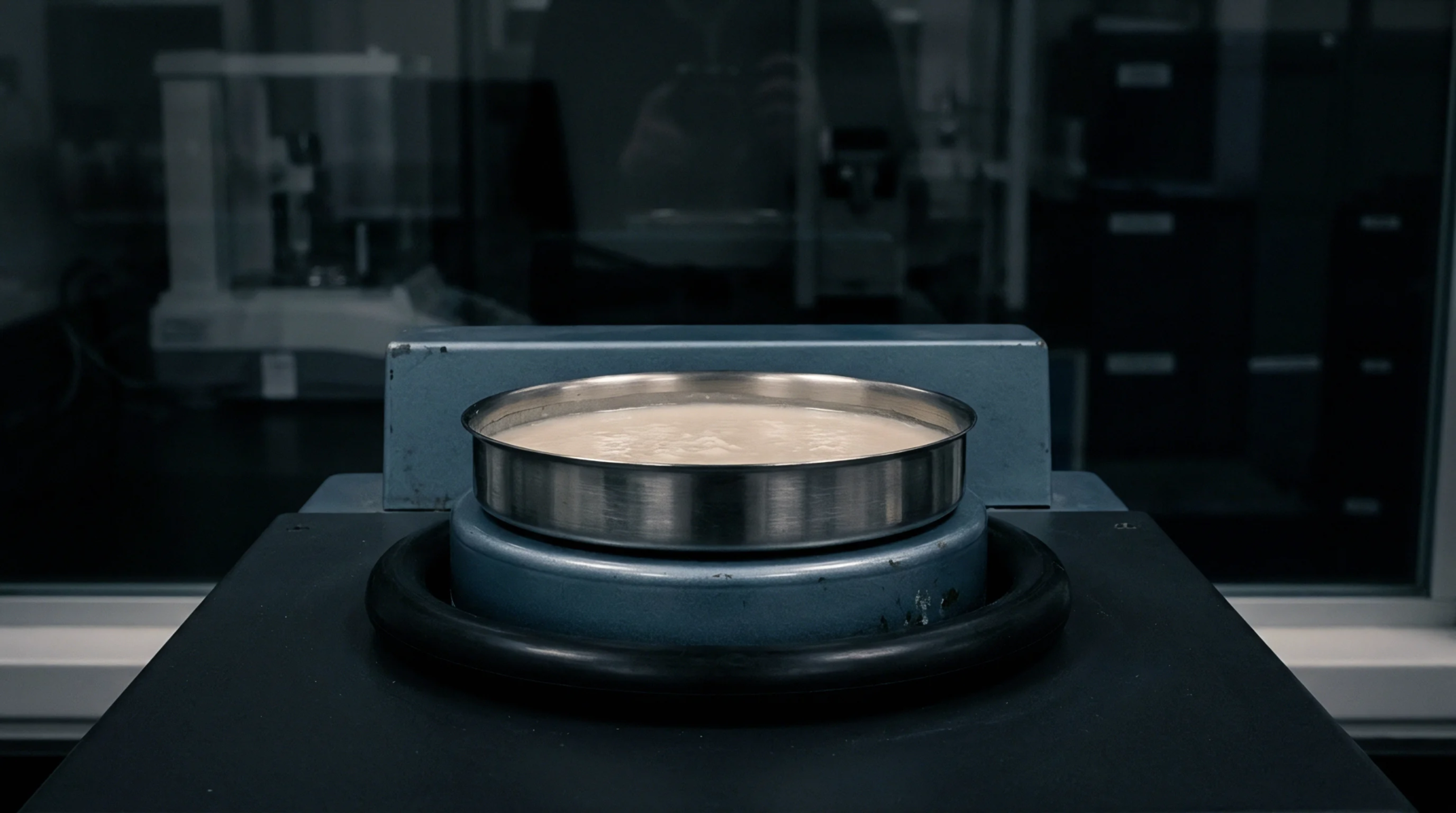
Rotational rheometry measures shear stress under controlled angular velocity to map the flow behaviour of polymer melts and solutions. Melt viscosity determines how resin fills tool cavities during injection and dictates the processing window for extrusion lines. Shear rates must match actual production conditions because pseudoplastic materials drop in viscosity under high deformation.
The method stops applying once crosslinking solidifies thermosets beyond the gel point or when fillers exceed particle sizes that bridge the measuring gap.
Melt Behaviour
Dynamic oscillation tests apply sinusoidal strain to separate storage modulus from loss modulus. Molecular weight distribution governs elasticity while average chain length sets zero shear viscosity. Virgin HDPE maintains predictable profiles but regrind batches shift curves downward through chain scission.
Processing lines run stable extrudates only when melt elasticity stays inside tight limits.
Shear Sensitivity
Viscosity drops across rising shear rates because entangled polymer coils stretch and align parallel to flow vectors. Plunges in viscosity during high speed injection cause flash if clamp tonnage fails to hold the parting line. Datasheet melt flow indices test single points whereas full curves expose non Newtonian thinning across the entire shear range.
Moulders adjust barrel temperatures to shift the curve when feedstock batches vary from nominal specifications.
Flow Defects
Surface sharkskin appears when melt fracture initiates at die lips due to excessive wall shear stress. Wall slip occurs if lubricants segregate prematurely from the bulk resin matrix during extrusion. Correct die geometry and matched melt temperatures eliminate melt instabilities without sacrificing cycle times.
Part specifications demand uniform molecular orientation to prevent warpage after ejection from the tool.