
Gas Chromatography Screening of Post Consumer Polyolefin Food Packaging Resins
Gas chromatography screening verifies that post-consumer polyolefin resins meet strict food-contact migration limits before packaging enters commercial markets.
Gas chromatography screening verifies that post-consumer polyolefin resins meet strict food-contact migration limits before packaging enters commercial markets.
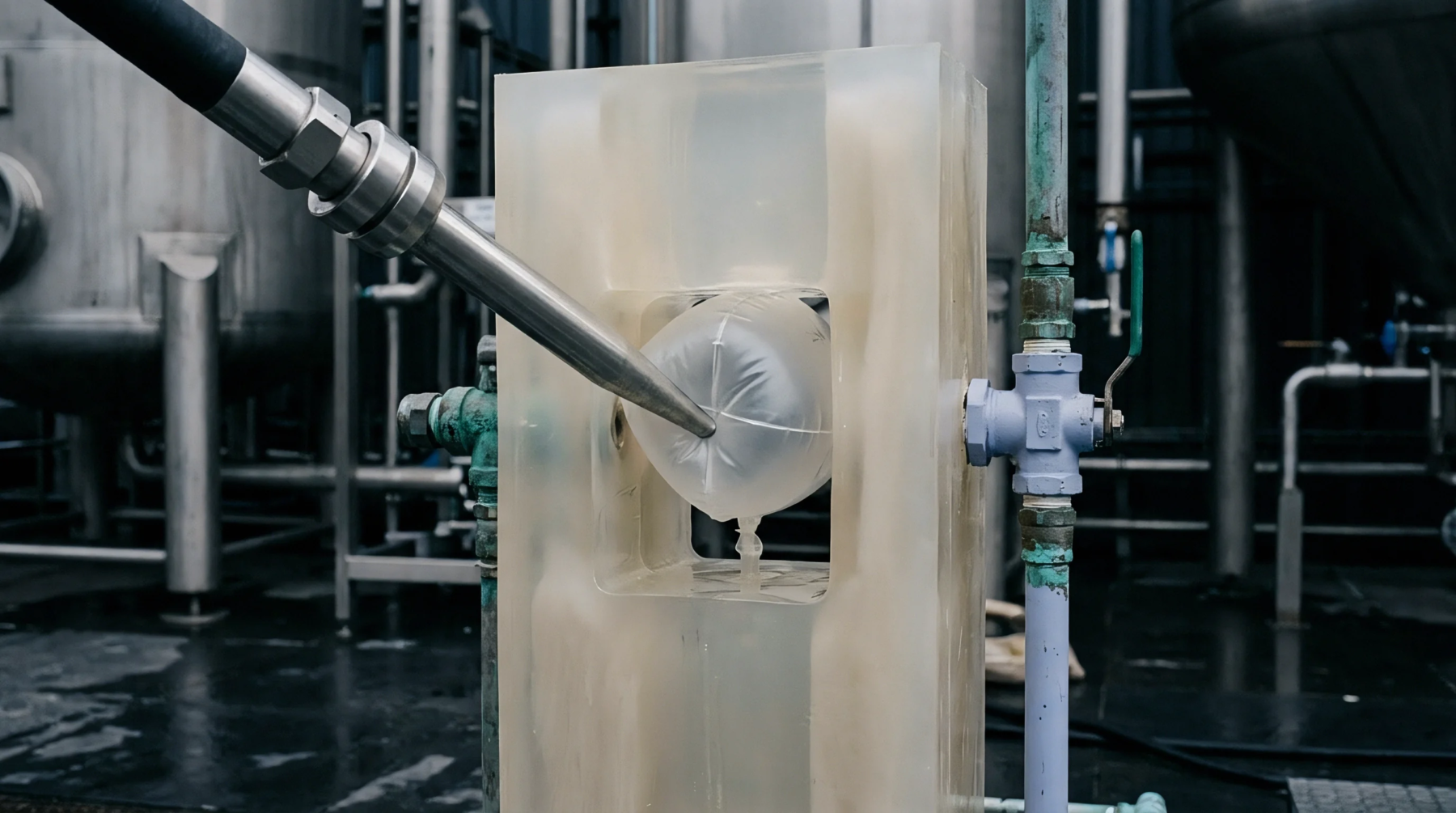
High-resolution mass spectrometry elucidates migrating cyclic adhesive oligomers in recycled laminates to verify structural safety against toxicological limits.

Deriving an analytical evaluation threshold converts toxicological intake limits into chromatographic screening baselines using actual container contact ratios.

Resolving chemical recycling customs disputes requires single-site mass balance records that deduct fuel gas and process tars from declared credits.

Third-party regulatory escrow audits unredacted polymer formulations to verify migration compliance while shielding proprietary masterbatch recipes.

Converters must secure precise masterbatch additive identities, specific limits, and dual-use statuses to verify food contact migration compliance legally.

Uncharacterized degradation products in recycled food-contact polyolefins require non-target GC/LC-MS screening evaluated against TTC exposure thresholds.

Relative response factor calibration requires surrogate class matching and safety buffers to prevent tenfold underestimation of food contact migrants.

Non-linear simulant swelling invalidates standard Fickian migration models at elevated temperatures, requiring direct vegetable oil testing over solvent screening.

Thermodynamic diffusion modeling provides valid polyolefin food contact screening only when verified initial concentrations and worst-case Ap parameters align.

Hot runner temperature differentials across mold cavities cause localized additive degradation and uneven migration rates that compromise food contact release.

Decontamination efficiency validation and non-target mass spectrometry quantify NIAS limits to secure food-contact declarations for recycled PET.

Verifying virgin polyolefin certificates demands matching melt index, density, and additive spectra to batch physical lots before regulatory release.

Unidentified migrants in food contact plastics require Cramer Class III or genotoxic threshold default evaluations under Threshold of Toxicological Concern principles.

Accurate HRMS oligomer quantification in recycled polyolefins requires class-matched surrogate calibrants to achieve the 10 ppb food contact threshold.

Calibrating analytical evaluation thresholds for genotoxic benzophenone photolysis in recycled polyethylene requires setting LC-HRMS screening limits to 0.05 ppb.

Unidentified migrants in post-consumer resins require derivation against Cramer Class III (90 µg/day) or genotoxic thresholds (0.15 µg/day) for compliance.

Chromatographic screening couples cryogenic extraction, orthogonal GC and LC separation, and high-resolution MS to quantify NIAS against toxicological limits.

Non-target mass spectrometry screening with ten-ppb threshold evaluation prevents non-compliant recycled polyolefin food packaging entering supply chains.

Mass spectrometry screening quantifies non-intentionally added polyolefin migrants, converting raw chemical spectra into defensible food contact compliance dossiers.

Equilibrating recycled polyolefin pellets at 120 C for 45 minutes isolates volatile organic compounds while avoiding polymer matrix thermal degradation.

Harmonized HRMS quantification in recycled plastics requires matrix-matched standard addition and conservative response factor bands to bound screening uncertainty.

Non-target screening limits derive from toxicological exposure caps adjusted for packaging contact geometry, simulant transfer, and detector response factor variance.

Trace post-consumer recycled fractions in multi-layer packaging require physical layer microtomy before pyrolysis GC-MS to verify claims below five percent.

Certified mass balance allocation requires site-specific physical yield reconciliation, strict energy-stream deductions, and twelve-month credit expiry enforcement.

High-tension roll winding generates multi-megapascal radial stress that accelerates solid-state NIAS diffusion across polymer contacts, peaking near the core.

Tightly wound printed polymer rolls transfer photoinitiators through physical set-off, requiring pressure-aware diffusion modeling and batch-specific testing to verify compliance.

Prevent mechanical ink set-off in flexible web stock by matching tension taper curves to core pressure limits and verifying cure thresholds.

Dynamic temperature spikes during thermoforming and hot-fill accelerate NIAS diffusion by thinning functional barriers and increasing polymer chain mobility.

Verifying functional barrier integrity in recycled polymers requires surrogate challenge testing, Fickian transport modeling, and precise lag time calculation.
Expertise is a utility, not a secret. sentiention™ publishes its working knowledge as open reference: intelligence layer covering the materials it sources, the markets it enters, and the reference that serves both.