Toxicological Evaluation Thresholds for Uncharacterized Degradation Products in Recycled Polyolefin Food Contact Articles
Uncharacterized degradation products in recycled food-contact polyolefins require non-target GC/LC-MS screening evaluated against TTC exposure thresholds.


Flake

Thermal Oxidation Pathways in Recycled Polyolefins
Post-consumer polyethylene and polypropylene experience repetitive thermal and mechanical stress during extrusion, pelletizing, and final article converting. Processing temperatures between 190 degrees Celsius and 280 degrees Celsius trigger alkyl radical formation via homolytic carbon-carbon backbone scission. Heat shears polymer chains.
In the presence of residual oxygen trapped within post-consumer flake, these free radicals form peroxy species that propagate chain oxidation. The resulting hydroperoxides decompose into carbonyl compounds, alcohol derivatives, branched aliphatic ketones, and cyclic oligomers. Secondary thermal reactions generate uncharacterized low-molecular-weight degradation products that remain suspended inside the polyolefin matrix.
Sterically hindered phenolic antioxidants and phosphite processing stabilizers present in virgin resins degrade into complex transformation products during melt processing. Irganox 1010 and Irgafos 168 break down into 2,4-di-tert-butylphenol, oxidized phosphite esters, and quinone methides. Radicals initiate chain oxidation.
When post-consumer polyolefins contain blended unknown additives from non-food packaging streams, high-temperature recycling loops produce tertiary oxidation products whose exact chemical structures cannot be indexed against commercial spectral libraries.
Recycled high-density polyethylene extruded at 230 degrees Celsius generates over two hundred distinct volatile and semi-volatile degradation peaks during ten-day migration into ten percent ethanol at forty degrees Celsius.
Low-molecular-weight polyolefin oligomers spanning C12 to C35 represent a significant fraction of uncharacterized migrants. Oligomers migrate into food. Unsaturated cyclic oligomers containing double bonds present elevated chemical reactivity relative to linear saturated paraffin chains.
Standard wash processes remove surface contamiants from shredded flake. Chemical oxidation products generated inside the bulk polymer during melt extrusion remain permanently integrated until migration into contact food simulants takes place. Inadequate thermal stabilization during reprocessing increases the density of uncharacterized electrophilic species capable of interacting with biological macromolecules.


Scan
Analytical Non-Target Screening Protocols
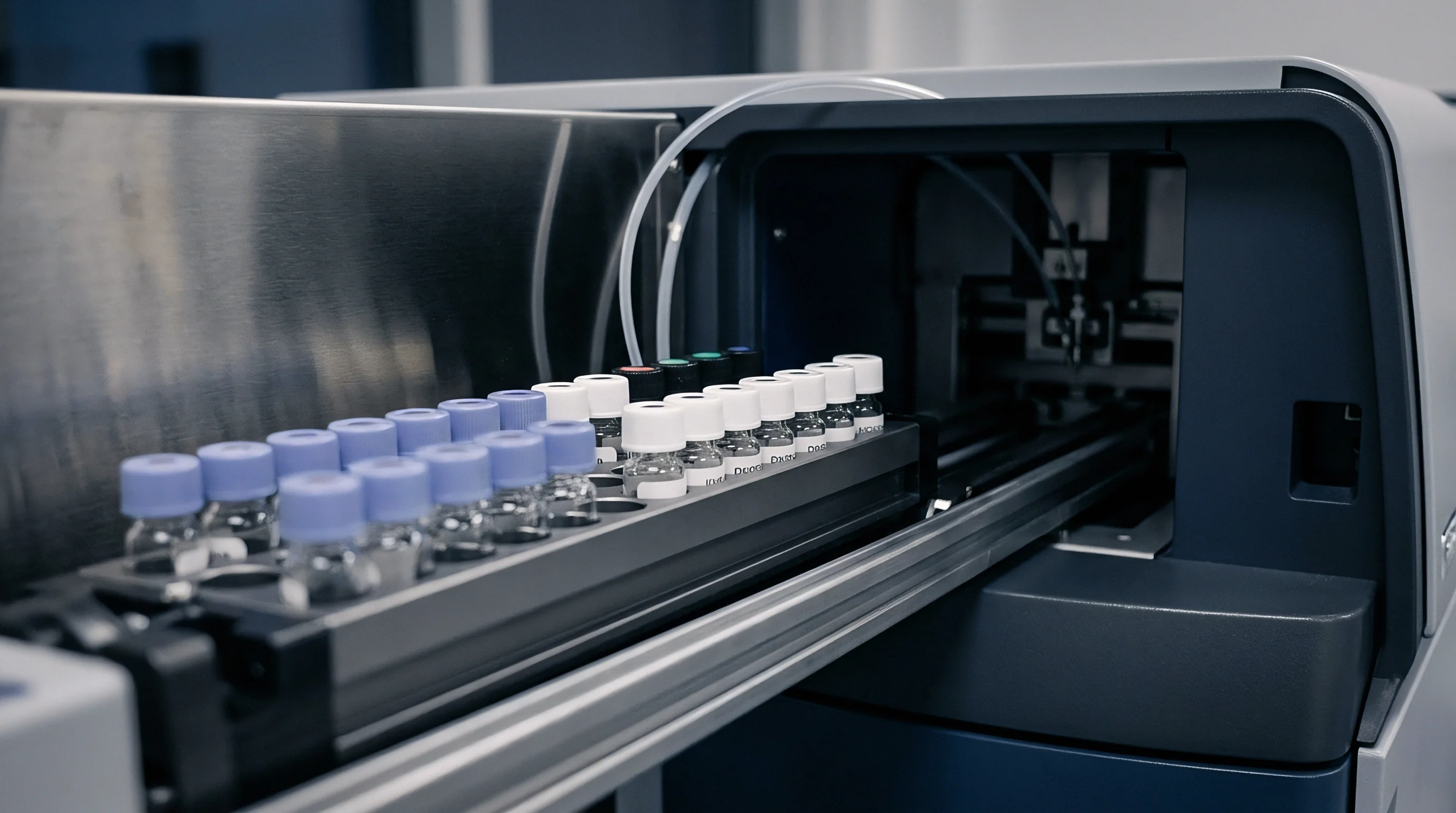
Identification of unknown chemical species migrating from post-consumer polyolefins relies on high-resolution chromatographic techniques paired with mass spectrometry. Gas chromatography coupled to time-of-flight mass spectrometry resolves volatile and semi-volatile migrants. Liquid chromatography matched with quadrupole time-of-flight mass spectrometry isolates polar, non-volatile compounds.
Simulants capture polar compounds.
Quantification of structural unknowns requires surrogate standards due to the absence of authentic reference substances. The choice of internal standard introduces significant quantitation uncertainty into concentration calculations. Chromatograms display unassigned peaks.
Using d5-chlorobenzene or toluene-d8 as a universal reference yields response factors that deviate by up to one order of magnitude from the true substance concentrations, because ionization efficiency varies based on functional group geometry and molecular mass.
| Analytical System | Targeted Compound Class | Limit of Detection (mg/kg food) | Quantification Standard Strategy |
|---|---|---|---|
| GC-EI-MS | Volatile hydrocarbons, low oligomers | 0.002 | Deuterated internal alkanes |
| GC-CI-MS | Semi-volatile polar oxidation products | 0.005 | Substituted aromatic surrogates |
| LC-ESI-QTOF-MS | Non-volatile additives and transformations | 0.001 | Isotopically labeled universal standards |

Deriving Screening Thresholds from Analytical Limits
Chromatographic signal processing relies on baseline integration limits to establish whether an uncharacterized peak triggers toxicological assessment. Analytical laboratories set a concentration cutoff below which structural identification is not attempted. Response factors vary widely.
Setting this analytical threshold too high allows potentially toxic low-dose migrants to pass untracked, while setting it too low creates thousands of unresolvable spectra that stall regulatory filing.
A default analytical screening cutoff of 0.01 milligrams per kilogram of food contact simulant matches the structural identification threshold recommended for unknown migrants in food packaging.
Laboratories frequently report uncharacterized peaks as equivalents of an arbitrarily selected internal standard. When an unknown compound possesses a low ionization efficiency relative to the chosen standard, the reported concentration underestimates the actual physical mass present in the simulant. Re-evaluating the chromatogram under positive and negative ionization modes reduces the probability of missing electron-deficient toxic compounds.
Reprocessed polyolefin suppliers occasionally assert that unassigned chromatogram peaks originate entirely from benign food-grade fatty acid esters, despite lacking mass spectral match scores above eighty percent.

Tier

Applying Threshold of Toxicological Concern Architecture
Evaluating uncharacterized chemical structures requires a systematic probabilistic hazard classification. The Threshold of Toxicological Concern framework categorizes substances without specific toxicity data into defined exposure bands based on molecular structural features and chemical reactivity. Cramer decision tree logic divides non-genotoxic chemicals into Class I, Class II, and Class III categories.
Class I covers simple structures with low toxicity, establishing an human exposure limit of 1800 micrograms per person per day. Class III encompasses complex structures suggestive of significant toxicity, restricting exposure to 90 micrograms per person per day.
Substances containing structural alerts for DNA reactivity bypass standard Cramer classification. Genotoxicity demands low limits. Uncharacterized degradation products containing alkylating moieties, aromatic amines, or unhindered epoxides fall under the genotoxic threshold of 0.15 micrograms per person per day, equivalent to a concentration limit of 0.00025 milligrams per kilogram of food for a sixty-kilogram adult consuming one kilogram of food daily.

Which Toxicological Thresholds Apply to Unidentified Polyolefin Recyclate Migrants?
Determining the permissible migration concentration for an uncharacterized peak involves matching the analytical limit of quantification against the genotoxicity threshold. Take a rigid 500-millilitre post-consumer polypropylene container weighing 25 grams, designed to store 500 grams of aqueous food. The surface-to-volume ratio measures 6 square decimetres per kilogram of food under conventional regulatory exposure conventions.
Assume gas chromatography mass spectrometry reveals an uncharacterized peak at a retention time of 14.2 minutes with an estimated concentration of 0.003 milligrams per kilogram of food simulant based on a d10-phenanthrene surrogate standard.
Because the molecular structure of the migrating peak remains completely unassigned, structural alert screening for genotoxicity cannot rule out DNA-binding capacity. The analytical result of 0.003 milligrams per kilogram exceeds the genotoxic threshold of 0.00025 milligrams per kilogram by a factor of twelve. To clear the batch without chemical identification, either functional barrier efficiency must reduce migration below 0.00025 milligrams per kilogram, or structural elucidation must establish the absence of genotoxic structural alerts, allowing reclassification into Cramer Class III at 0.015 milligrams per kilogram of food.
An uncharacterized migrant concentration exceeding 0.00025 milligrams per kilogram of food simulant triggers mandatory structural identification or bioassay screening to exclude DNA reactivity.
Uncertainty surrounding the human dietary intake of specific recycled packaging formats complicates the conversion of daily exposure limits into volumetric migration caps. If real-world consumption patterns for a specific packaging application deviate substantially from the standardized assumption of one kilogram of packaged food consumed daily per individual, does toxicological safety assessment require adjusting the default concentration thresholds applied during batch testing?


Matrix

Bioassay Systems for Integrated Hazard Profiling
Effect-based bioassays complement chromatographic identification by measuring the total biological toxicity exerted by a complex mixture of migrants. In vitro toxicological testing detects hazards arising from synergism between multiple low-level uncharacterized degradation products. Ames bacterial reverse mutation tests performed under OECD Guideline 471 identify DNA-reactive mutagens in polymer extracts.
Reporter gene assays evaluate estrogenic and androgenic endocrine disruption activity without requiring prior identification of individual chemical constituents.

Operational Steps for Bioassay Integration in Recyclate Screening
- Solvent Extraction Concentrating isolates volatile and non-volatile migrants from polyolefin flake or converted articles into ethanol or ethyl acetate using reflux or ultrasonic immersion.
- Evaporative Solvent Exchange transfers extracted residues into dimethyl sulfoxide at concentration factors up to one thousand-fold to accommodate cell culture media limits.
- Bacterial Mutagenicity Testing exposes Salmonella typhimurium strains TA98, TA100, TA1535, and TA1537 to extract concentrates in the presence and absence of metabolic activation systems.
- Cytotoxicity Threshold Determination screens mammalian cell lines using colorimetric metabolic assays to prevent false-negative reporter gene results caused by cell death.
- Nuclear Receptor Activation Profiling quantifies bioluminescent output from engineered cell lines to measure agonistic or antagonistic activity at hormone receptors.
Bioassays signal functional toxicity. Biological screening systems require high extraction yields to deliver meaningful toxicology data. Concentrating polyolefin extractables can precipitate hydrophobic low-molecular-weight oligomers out of solution, removing potential toxic drivers from the liquid test medium and producing false negatives in gene expression assays.
| Biological Endpoint | Test System Standard | Sensitivity Boundary | Interference Factors |
|---|---|---|---|
| Point Mutations | Ames OECD 471 | 0.5 ug mutagenic equiv/L | Bacterial cell toxicity from oligomer oils |
| Estrogenicity | ER-CALUX OECD 455 | 0.1 ng 17b-estradiol equiv/L | Cytotoxic fatty acid residue inhibition |
| Peroxisome Proliferation | PPAR-gamma CALUX | 1.0 ug rosiglitazone equiv/L | Plasticizer additive cross-reactivity |
| DNA Strand Breaks | In Vitro Comet Assay | 0.05 mg extract residue/mL | Solvent residue toxicity in culture medium |
Extracts concentrate trace migrants. Combining non-target chromatographic quantification with bioassay output resolves safety profiles for uncharacterized peak clusters. When non-target chromatography yields unidentified peaks above genotoxicity exposure thresholds, negative results across a battery of Ames and mammalian cell assays validate safety provided structural alerts are absent from all fully identified peak structures.
Biological activity observed in an extract containing no identified toxic chemicals indicates that uncharacterized compounds dominate the toxicity profile of the recycled polymer batch.
Extracted polymer oils must fully dissolve in non-toxic assay solvents prior to dosing biological systems.

Record
EU Recycled Plastics Compliance Dossier Compilation
Commission Regulation (EU) 2022/1616 establishes strict documentation requirements for plastic materials containing post-consumer recyclate intended for food contact. High-density polyethylene and polypropylene recycling processes require decontamination technology qualification or operation under a novel technology evaluation scheme. The compliance dossier must trace non-target compound screening protocols applied to incoming sorted flake and outgoing decontamination output.
Declarations of conformity for recycled polyolefins state the residual concentration of uncharacterized volatile compounds alongside overall migration values. Overall migration testing using simulant A (10% ethanol), simulant B (3% acetic acid), and simulant D2 (vegetable oil) under standardized exposure condition OM2 (10 days at 40 degrees Celsius) confirms matrix stability. Specific migration screening ensures individual uncharacterized migrants remain below calculated toxicological thresholds based on intended food contact duration and thermal limits.
| Regulatory Jurisdiction | Mandatory Chemical Evidence | Toxicological Threshold Standard | Audit Record Retention |
|---|---|---|---|
| European Union (EU 2022/1616) | GC-MS non-target screening report, bioassay profile | TTC 0.15 ug/person/day for unknowns | 10 years post-market placement |
| United States (US FDA TOR) | Extraction testing under 21 CFR 177.1520 | Threshold of Regulation 0.5 ppb in diet | Batch manufacturing lifecycle duration |
| Mercosur (GMC Res 39/19) | Positive list chemical inventory, total migration | Specific migration limit default 0.05 mg/kg | 5 years from invoice date |

US FDA Threshold of Regulation and No Objection Letters
The United States Food and Drug Administration evaluates recycled polyolefin manufacturing via the Threshold of Regulation process or through issuing formal No Objection Letters. Submissions present challenge test data demonstrating that decontamination processes remove surrogate contaminants spiked into post-consumer flake at concentrations up to 1000 milligrams per kilogram. Surrogate compounds span volatile non-polar, volatile polar, non-volatile non-polar, and non-volatile polar chemical classes, including toluene, chlorobenzene, benzophenone, and methyl stearate.
Declarations carry legal weight. Evaluation of uncharacterized degradation products under US FDA provisions relies on estimated daily intake calculations derived from migration testing into 10 percent ethanol, 50 percent ethanol, or food-simulating solvent mixtures. When dietary concentration resulting from migration stays below 0.5 parts per billion, equivalent to an exposure level of 1.5 micrograms per person per day, toxicological testing requirements drop unless structural alerts for direct-acting carcinogens exist.
Supply agreements specify that converted polyolefin articles derived from post-consumer recyclate shall contain no uncharacterized migrating substance presenting a concentration higher than 0.00025 milligrams per kilogram of food simulant unless accompanied by a negative bacterial reverse mutation test report conducted directly on the final article extract.

Duty

Financial Risk Exposure in Recycled Resin Sourcing
Purchasing recycled high-density polyethylene or polypropylene resins without non-target toxicological verification creates major commercial liability across supply chains. Converting uncharacterized recycled polyolefin resin into food contact articles without validating migration profiles leaves brand owners open to product recalls, inventory seizures, and customs enforcement actions. Unchecked lots risk rejection.
Border controls and national enforcement authorities execute random sampling of food contact articles imported from third countries. Analysis revealing uncharacterized mutagenic compounds or total specific migration exceeding statutory limits results in rapid alert notifications and immediate market withdrawal orders. Customs holds halt shipments.
The financial burden of inventory destruction, product replacement, legal defence, and administrative fines lands on the entity designated as the legal importer into the destination jurisdiction.

Structuring Supply Contracts for Compliance Indemnity
Managing toxicological exposure requires embedding precise analytical criteria into commercial purchasing specifications. Procurement contracts must define non-target screening obligations, specifying maximum allowable concentration limits for uncharacterized chromatographic peaks found in standard food simulants. Relying on basic polymer property datasheets covering melt flow index, density, and tensile strength fails to protect buyers from toxicological non-compliance.
- Batch Non-Target Testing Requirements state that every production lot of recycled polyolefin resin must undergo high-resolution mass spectrometry screening against agreed analytical LOQ thresholds.
- Decontamination Challenge Audit Access grants buyers the right to inspect third-party validation reports for the supplier’s thermal vacuum stripping or extrusion decontamination technology.
- Recourse for Non-Compliant Migration assigns financial responsibility for testing costs, logistics, and resin replacement to the recycler if uncharacterized peak migration exceeds TTC thresholds.
- Traceability Stream Verification mandates clear documentation isolating post-consumer food contact source streams from non-food packaging waste collected through municipal recovery networks.
Resin pricing formulas reflect the cost of analytical verification and toxicological qualification. Recycled polyolefin pellets sold without comprehensive non-target screening data trade at a discount compared to certified food-grade recyclate. That price gap reflects the deferred cost of toxicological testing, bioassay verification, and legal risk management transferred onto the converting operation.
When an uncharacterized degradation compound triggers regulatory action post-distribution, the total landed cost of unverified cheap recyclate escalates beyond the cost of virgin polymer resins.