Gas Chromatography Screening of Post Consumer Polyolefin Food Packaging Resins
Gas chromatography screening verifies that post-consumer polyolefin resins meet strict food-contact migration limits before packaging enters commercial markets.


Pellet
Incoming recycled high-density polyethylene and polypropylene lots arrive at compounding docks with technical data sheets that report melt flow index, density, and tensile modulus while remaining completely silent on chemical purity. Post-consumer feedstock carries a complex payload of volatile and semi-volatile chemical residues from previous consumer usage, ambient storage, sorbed detergents, printing inks, and thermal degradation sustained during wash-plant re-extrusion. Food-contact conversion cannot proceed on mechanical resin specifications alone.
The converter inherits full civil and regulatory accountability for every substance migrating from the final container into food above 0.01 milligrams per kilogram.
Static headspace sampling offers the initial analytical gate for sorting clean post-consumer polyolefin lots from contaminated batches before railcars or bulk bags enter plant silos. Granulated resin heated inside a sealed twenty-milliliter vial at one hundred degrees Celsius for sixty minutes releases volatile organic compounds directly into the gas phase. The gas chromatograph receives an aliquot of this gas phase through a heated transfer line maintained at one hundred and twenty degrees Celsius to avoid condensation losses.
A sealed vial heated at one hundred degrees Celsius for sixty minutes delivers volatile head-space fractions into the carrier stream without thermal degradation of the polymer backbone.
Mass spectrometers running in full-scan electron ionization mode from mass-to-charge ratio thirty-five to five hundred detect post-consumer fragrance markers, cleaning solvents, and low-boiling thermal breakdown products. Limonene, alpha-pinene, and ethyl butyrate serve as diagnostic indicators of prior contact with scented household products or post-consumer food waste. When total volatile organic compound area counts against an external toluene standard exceed fifty milligrams per kilogram of polymer, the lot carries an odor profile and a volatile burden that high-temperature vacuum degassing extruders rarely strip down to acceptable migration baselines.

Automated Thermal Desorption Mechanics
Direct thermal desorption tubes packed with polymer granules bypass manual solvent extraction and extend the analytical window to semi-volatile migrants. Glass desorption tubes packed with fifty milligrams of cryo-milled polymer receive an inert helium flush at two hundred and sixty degrees Celsius inside a two-stage thermal desorber. The primary desorption sweeps volatile and semi-volatile compounds onto an electronically cooled Tenax TA trap held at minus ten degrees Celsius.
Rapid ballistic heating of the cold trap at forty degrees per second injects the focused organic parcel onto a non-polar capillary column with split ratios tuned between ten to one and fifty to one.
Thermal desorption captures chemical species boiling between sixty and three hundred and eighty degrees Celsius. This range encompasses monomer cleavage fragments, additive degradation species, synthetic fragrances, and industrial solvents. Polypropylene lots subject to multiple extrusion cycles exhibit distinctive homologous series of branched alkanes and alkenes resulting from tertiary carbon radical beta-scission.
High-density polyethylene exhibits linear alpha, omega-alkadienes, and straight-chain alkanes. Chromatographic profiles of virgin polyolefins display clean baselines punctuated only by known primary antioxidant packages such as pentaerythritol tetrakis(3-(3,5-di-tert-butyl-4-hydroxyphenyl)propionate) and tris(2,4-di-tert-butylphenyl)phosphite. Recycled resin chromatograms present a continuous hump of unresolved complex mixtures beneath specific contaminant peaks.
Cryogenic milling prepares the resin for reproducible desorption kinetics. Unmilled commercial pellets possess a low surface-area-to-volume ratio that restricts analyte diffusion during brief analytical heating windows. Milling under liquid nitrogen reduces pellet diameter below five hundred micrometers.
Smaller particle dimensions shorten diffusion paths and prevent skewed quantitative returns that lead quality managers to underreport batch contamination levels.
The cleanest smelling lot on the loading dock often contains the highest semi-volatile chemical burden.
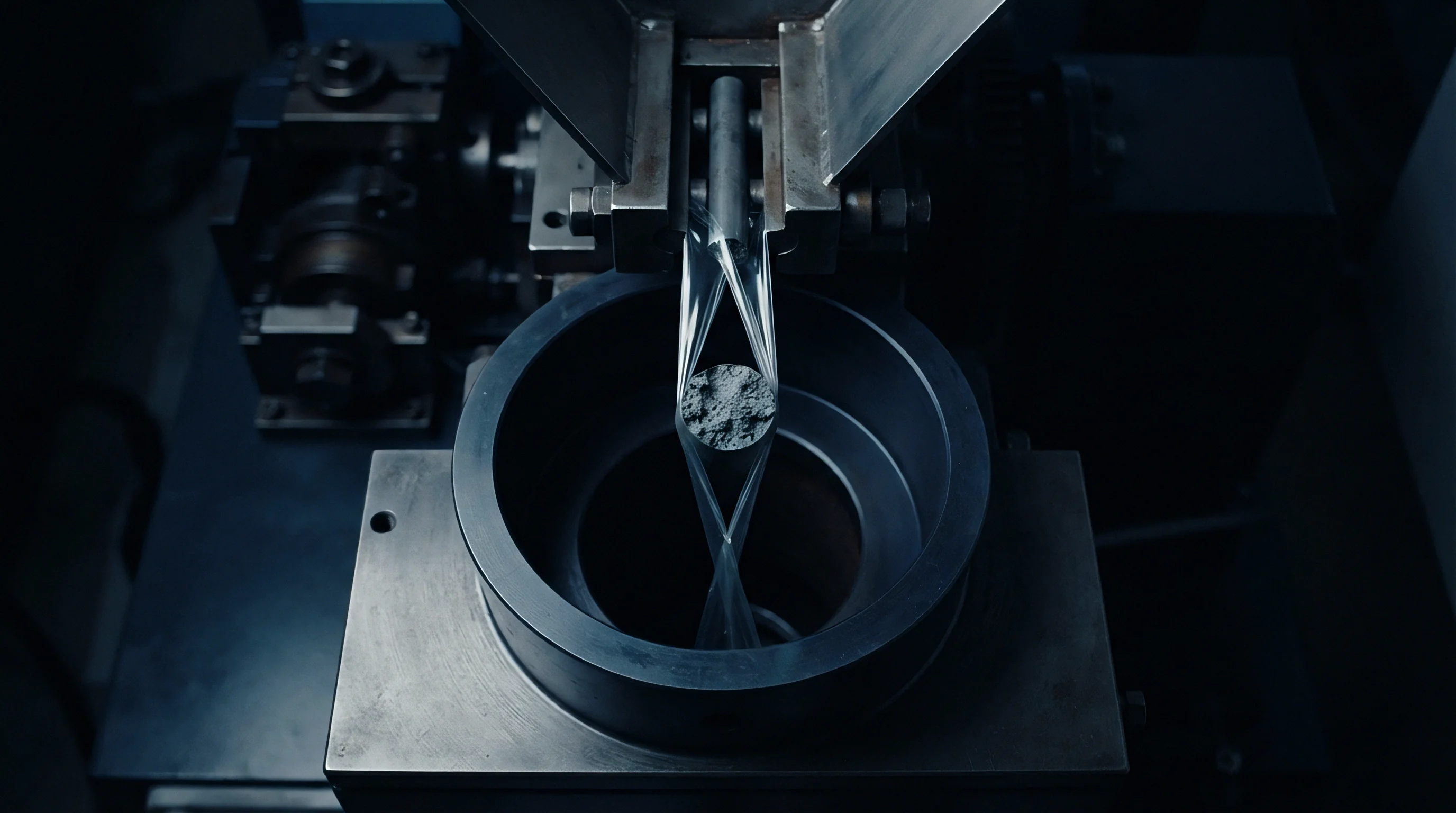

Chromatogram
Deconvolution of raw gas chromatography profiles requires tandem separation tools and spectral library matching backed by retention index verification. A single one-dimensional gas chromatography run on a standard non-polar fifty-percent phenyl methylpolysiloxane column fails to resolve hundreds of co-eluting isomeric hydrocarbons found in post-consumer polyolefin matrices. Polyolefin oligomeric saturated hydrocarbons generate a dense baseline envelope stretching from retention index one thousand to three thousand.
Within this envelope lie both authorized food additives and non-intentionally added substances that require toxicological assessment under European Union Regulation 10/2011.
Comprehensive two-dimensional gas chromatography splits co-eluting peaks by coupling two distinct stationary phases through a cryogenic or thermal modulator. The primary column, typically thirty meters of non-polar dimethylpolysiloxane, separates compounds by boiling point. The secondary column, usually one to two meters of mid-polar fifty-percent diphenyl dimethylpolysiloxane or polyethylene glycol, separates eluting peaks according to polarity within a modulation period of four to six seconds.
Modulated effluent focused onto a time-of-flight mass spectrometer operating at acquisition rates of one hundred to two hundred spectra per second converts co-eluting humps into ordered two-dimensional retention planes.

Non-Intentionally Added Substances Identification Protocols
Identification of unexpected migrants follows an analytical workflow designed to screen across diverse chemical classes. Alkane homologue retention indices calculated against a continuous C8 to C40 reference standard normalize retention behaviors across column batches. Spectral matching against the National Institute of Standards and Technology mass spectral library provides candidate structures, but library search algorithms generate false positive assignments when evaluating polyolefin degradation isomers.
Positive confirmation demands matching retention index values within twenty index units on non-polar phases alongside authentic reference standard retention times.
- Solvent micro-extraction isolates the soluble fraction using dichloromethane or cyclopentane at forty degrees Celsius for twenty-four hours to swell the polymer matrix without dissolving bulk polyethylene or polypropylene chains.
- High-resolution filtration removes insoluble particulate through 0.22-micrometer polytetrafluoroethylene filters to protect the analytical injector and capillary column from particulate clogging.
- Internal standard addition introduces deuterated naphthalene, deuterated phenanthrene, and deuterated chrysene at known concentrations of one milligram per kilogram to correct for evaporation losses during concentration steps.
- Splitless injection delivers one microliter of concentrated extract into a baffled inlet held at two hundred and eighty degrees Celsius with an inlet liner designed to minimize analyte discrimination.
- Deconvolution processing extracts pure mass spectra from overlapping chromatogram peaks using automated peak detection algorithms tuned against signal-to-noise ratios greater than three.
Antioxidant transformation products represent a critical class of non-intentionally added substances detected in post-consumer resins. Tris(2,4-di-tert-butylphenyl)phosphite decomposes during recycling into its corresponding phosphate, followed by subsequent hydrolysis into 2,4-di-tert-butylphenol. Further oxidation produces 3,5-di-tert-butyl-4-hydroxybenzaldehyde and isomeric quinoid structures.
These phenolic breakdown products elute within the semi-volatile retention region. Their quantitative presence signals heavy thermal stress during prior service life or post-consumer pelletizing stages.
Printing ink photoinitiators and plasticizers migrate into polyolefin container walls during initial consumer packaging lifecycles. Wash plants remove surface labels but leave sorbed ink carriers within the bulk resin. Gas chromatography screening regularly uncovers benzophenone, 4-methylbenzophenone, 1-hydroxycyclohexyl phenyl ketone, and 2-ethylhexyl 4-(dimethylamino)benzoate.
These compounds exhibit high mass spectrometry response factors under electron ionization. Their presence in resins intended for fresh produce or dairy packaging creates direct compliance failures under food-contact safety frameworks.
| Chemical Substance | CAS Registry | Kovats Index | Quantification Ion | TTC Cramer Class | Screening Limit |
|---|---|---|---|---|---|
| Limonene | 138-86-3 | 1032 | 68, 93 | Class I | 1.0 mg/kg |
| 2,4-Di-tert-butylphenol | 96-76-1 | 1514 | 191, 206 | Class II | 0.5 mg/kg |
| Benzophenone | 119-61-9 | 1628 | 105, 182 | Class III | 0.05 mg/kg |
| Triethyl citrate | 77-93-0 | 1674 | 157, 215 | Class I | 1.8 mg/kg |
| oxidized Irgafos 168 | 31570-04-4 | 2612 | 647, 662 | Class II | 0.3 mg/kg |
| Bis(2-ethylhexyl) phthalate | 117-81-7 | 2502 | 149, 167 | Class III | 0.01 mg/kg |
Polyolefin oligomers present an ongoing analytical screening challenge. Polyolefin oligomeric saturated hydrocarbons consist of linear and branched saturated hydrocarbons originating from polymerization side reactions and mechanical polymer degradation. Toxicological thresholds classify saturated hydrocarbon fractions up to carbon number thirty-five under structural groups requiring strict exposure caps.
Gas chromatography coupled with flame ionization detection quantifies total oligomeric content across boiling ranges because flame ionization yields uniform mass response factors per unit carbon weight. Flame ionization detectors lack identification capability. Coupling flame ionization detection in parallel with mass spectrometry through an effluent splitter resolves both total hydrocarbon mass and specific structural identities.
Screening post-consumer resin without quantifying non-intentionally added substances below ten micrograms per kilogram leaves converters open to regulatory sanctions. The Threshold of Toxicological Concern concept categorizes unknown uncharacterized substances lacking mutagenicity alerts into Cramer Class III, which imposes a dietary intake limit of ninety micrograms per person per day. Translated to a standard packaging migration assumption of one kilogram of food contacting six square decimeters of surface, any uncharacterized non-intentionally added substance migrating above ten micrograms per kilogram of food represents an unvetted safety risk.
Can analytical deconvolution software ever definitively prove the complete absence of genotoxic structural alerts within an unresolved oligomeric baseline?

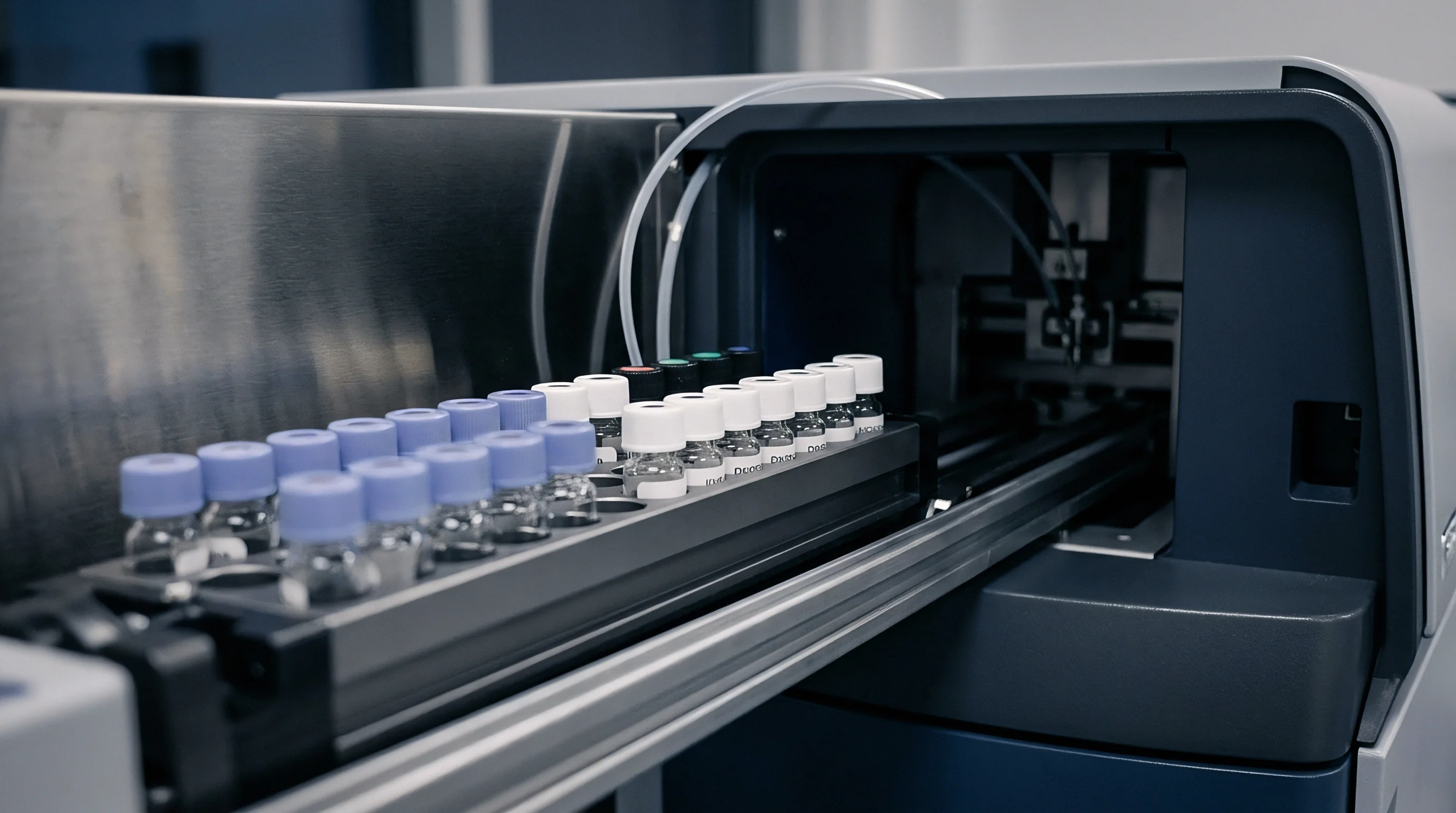
Vapor
Partition coefficients dictate how volatile contaminants transfer from solid polyolefin walls into the headspace vapor phase and subsequently into food contact media. A resin containing five milligrams per kilogram of toluene does not necessarily transfer five milligrams per kilogram of toluene into the packaged contents. Migration depends on the diffusion coefficient of the migrant through the semi-crystalline polymer, the partitioning coefficient between the polymer and the contact phase, contact duration, and temperature.
Solid-phase microextraction captures volatile organic vapors directly from equilibrium chambers without requiring organic solvents. A fused silica fiber coated with a fifty-micrometer layer of divinylbenzene, carboxen, and polydimethylsiloxane exposes its sorptive phase to the vapor above heated polymer flakes. Volatiles adsorb onto the fiber until thermodynamic equilibrium establishes between the resin, the headspace gas, and the fiber coating.
Retracting the fiber into its protective needle allows manual or robotic insertion into a gas chromatograph inlet held at two hundred and fifty degrees Celsius, where rapid thermal desorption transfers the analytes directly onto the analytical column.
Solid-phase microextraction fibers coated with divinylbenzene and carboxen extract trace volatile fractions from headspace phases without generating hazardous solvent waste streams.

Diffusional Modeling against Migration Simulants
Mathematical migration modeling based on Piringer diffusion equations provides conservative estimates of contaminant transfer into food simulants. Converting measured gas chromatography concentrations into migration predictions requires precise measurement of the initial concentration within the virgin or recycled container wall. European food contact safety testing designates four primary food simulants: ten percent ethanol for aqueous foods, three percent acetic acid for acidic foods, twenty percent ethanol for alcoholic foods and oil-in-water emulsions, and poly(2,6-diphenyl-p-phenylene oxide), known commercially as Tenax, for dry foodstuffs.
Simulated contact tests for polyolefins often deploy Tenax at forty degrees Celsius for ten days to represent ambient long-term storage, or sixty degrees Celsius for ten days to simulate extended shelf life above six months. Tenax acts as a perfect adsorbent sink for volatile and semi-volatile migrants evaporating from the polymer surface. Following the exposure window, analytical chemists extract the Tenax bed with diethyl ether or acetone and analyze the concentrated solvent extract via gas chromatography-mass spectrometry to measure real transferred mass per square decimeter of packaging.
Discrepancies arise between liquid simulant extractions and dry simulant sorption. Polyolefins swell when placed in contact with non-polar or semi-polar liquid media like pure vegetable oil or ninety-five percent ethanol. This swelling accelerates polymer chain mobility, increases diffusion rates, and artificially inflates measured migration rates relative to actual food contact scenarios.
Headspace solid-phase microextraction bypasses liquid-induced swelling by measuring clean vapor partition coefficients from pristine, unswollen polymer samples.
Supply agreements governing food packaging grade recycled resin specify that raw material screening values must demonstrate compliance with Annex II of Regulation (EU) 10/2011, restricting unlisted migrants to a limit of 0.01 milligrams per kilogram in food simulant after exposure at forty degrees Celsius for ten days.


Liability
Converters and brand owners carry non-transferable statutory responsibility for the safety of finished packaging articles placed on commercial shelves. Sourcing post-consumer polyolefin resin accompanied by generic supplier warranties does not protect packaging manufacturers against enforcement actions, product recalls, or administrative seizures. Declarations of compliance frequently cover only the virgin carrier resin or base masterbatch formulations, omitting specific statements regarding post-consumer non-intentionally added substances present in the recycled fraction.
European Union Regulation 2022/1616 establishes strict legal boundaries for recycled plastics intended for food contact. The regulation requires that recycling technologies undergo rigorous risk evaluation through European Food Safety Authority dossiers or operate under certified recycling schemes. Converters cannot hide behind input materials.
The legal entity that converts the polymer and seals the article signs the Declaration of Compliance covering the finished article, assuming direct liability for every chemical peak visible on a screening chromatogram.

Decontamination Challenge Verification
Evaluating decontamination efficiency requires challenge tests where recycling plants spike intentional chemical surrogates into contaminated flake batches before extrusion and solid-state de-volatilization. Testing agencies select surrogate contaminants representing distinct volatile, polar, and non-polar properties. Gas chromatography screens verify that recycling equipment strips spiked surrogate loads down to residual levels that guarantee migration below safe dietary limits.
- Toluene acts as a low-molecular-weight volatile non-polar marker with high vapor pressure, verifying the efficiency of primary vacuum degassing ports on twin-screw extruders.
- Chlorobenzene serves as a volatile halogenated surrogate to test stripping rates of polar industrial solvent residues.
- Phenylcyclohexane represents high-boiling semi-volatile non-polar hydrocarbons typically found in industrial oils, motor greases, and consumer automotive products.
- Benzophenone tests the removal efficiency of polar semi-volatile contaminants including printing ink components and packaging varnishes.
- Methyl stearate acts as a high-molecular-weight fatty ester surrogate, evaluating the plant’s capacity to remove heavy lipid residues and cosmetic carriers.
Challenge test criteria require the recycling process to demonstrate a reduction factor typically between one thousand and ten thousand for each surrogate substance. Gas chromatography screening establishes the residual baseline concentration in the output pellets. Multiplying the residual concentration by worst-case diffusion equations calculates the maximum potential human dietary exposure.
| Surrogate Marker | Spiked Level | Post-Devolatilization Target | Log10 Reduction Factor | GC Detection Method |
|---|---|---|---|---|
| Toluene | 500 mg/kg | 0.05 mg/kg | 4.0 | Static Headspace GC-MS |
| Chlorobenzene | 500 mg/kg | 0.05 mg/kg | 4.0 | Static Headspace GC-MS |
| Phenylcyclohexane | 1000 mg/kg | 0.10 mg/kg | 4.0 | Thermal Desorption GC-MS |
| Benzophenone | 1000 mg/kg | 0.20 mg/kg | 3.7 | Solvent Extraction GC-MS |
| Methyl stearate | 1000 mg/kg | 0.50 mg/kg | 3.3 | Solvent Extraction GC-FID |
Analytical reports issued by feedstock suppliers frequently mask testing realities. Laboratories often run screening tests on five-gram grab samples collected from the surface of one storage silo, leaving three hundred metric tons of bulk material uncharacterized. Bulk lots contain variable contamination pockets created by intermittent batch sorting failures at material recovery facilities.
A single bale of post-consumer detergent containers mixed into a dairy recycling stream contaminates an entire extrusion run with synthetic fragrance fixatives and tertiary amine antioxidants.
Auditors inspecting supplier declarations must check the boundary limits of provided test reports. A laboratory certificate asserting that no substances exceeded detection limits remains meaningless unless the certificate specifies the limit of detection, the specific extraction solvent, the simulant conditions, and the exact chromatographic equipment utilized. Certificates that state non-detectable results at a method detection limit of one milligram per kilogram fail to prove compliance with toxicological thresholds set at ten micrograms per kilogram.
Vendors often assert that vacuum degassing extruder systems completely remove all volatile compounds during pelletization without presenting quantitative gas chromatography traces to substantiate the claim.

Tariff
Global legislative frameworks drive demand for post-consumer polyolefins by penalizing virgin packaging through targeted plastics taxes and mandatory recycled content quotas. In the United Kingdom, the Plastic Packaging Tax imposes a levy of two hundred and seventeen pounds and eighty-five pence per metric ton on finished packaging containing less than thirty percent chemically certified post-consumer recycled plastic. Across the European Union, member states fund the plastics levy through national budgets calculating eighty euro cents per kilogram of non-recycled plastic packaging waste.
Converters that integrate post-consumer resin to escape taxation must prove the material is safe for food contact.
Commercial exposure escalates rapidly when customs authorities or trading standards agencies pull packaging samples from retail shelves or import docks for verification testing. Regulatory bodies maintain analytical facilities that deploy automated headspace gas chromatography-mass spectrometry screening to detect fraudulent compliance filings and unvetted chemical contamination. If regulatory screening uncovers unauthorized contaminants migrating into food above legal thresholds, customs officers impound shipments, revoke declarations of conformity, and initiate product recall proceedings.
A container holding twenty metric tons of contaminated packaging resin faces immediate impoundment when border laboratory screening detects unvetted migrants above statutory thresholds.

Landed Cost Calculations and Risk Allocation
Financial calculations demonstrate the balance between tax savings and contamination testing liabilities. Consider a food converter manufacturing rigid polyethylene containers for chilled dairy distribution. The facility processes four thousand metric tons of resin annually.
Assume virgin food-contact grade high-density polyethylene trades at one thousand three hundred and fifty euros per metric ton. Food-grade certified post-consumer recycled high-density polyethylene trades at a premium of one thousand eight hundred and fifty euros per metric ton due to intensive sorting, decontamination, and analytical certification costs. Non-certified recycled polyethylene containing minimal traceability documentation sells at one thousand one hundred euros per metric ton.
Procuring certified material containing thirty percent recycled resin increases raw material expenditure by one hundred and fifty euros per ton across the polymer blend. Over four thousand tons, this decision adds six hundred thousand euros in direct material procurement costs. This investment exempts the converter from three hundred and twenty thousand euros in packaging tax penalties while maintaining food contact safety baselines.
Opting for cheaper non-certified post-consumer resin appears to save one million euros on raw materials. This decision introduces critical financial and legal liabilities. Quality control testing protocols require full gas chromatography screening on every forty-ton lot.
Comprehensive screening costs two thousand five hundred euros per lot for combined headspace, thermal desorption, and migration simulant testing. Across one hundred lots per year, analytical testing consumes two hundred and fifty thousand euros.
If analytical screening discovers that four lots contain cyclic siloxanes, limonene, and printing ink photoinitiators exceeding migration thresholds, those one hundred and sixty metric tons of resin are rejected. Rejection costs include scrap disposal at three hundred euros per ton, lost machine scheduling valued at twelve thousand euros per downtime shift, and urgent procurement of replacement virgin polymer at spot market rates. The raw material savings vanish.
Discoveries of chemical migration failures after packaging has reached commercial supermarket shelves produce catastrophic financial losses. A single product recall involving packaged food goods costs an enterprise between eight hundred thousand and three million euros in logistics, inventory write-offs, retailer penalties, and emergency communications. Commercial packaging supply contracts must allocate this financial risk to resin vendors through binding technical indemnity clauses.
Procurement contracts that omit batch-specific chromatographic screening criteria shift all financial liability for non-intentionally added substance failures directly onto the converter, resulting in uninsured balance sheet losses and immediate market exclusion when enforcement authorities intercept non-compliant containers.