Non Equilibrium Mass Transfer Limits of Heavy Organic Surrogates in Ultra High Vacuum Polyester Recycling Lines
Ultra high vacuum decontamination of heavy organic surrogates from PET melts is governed by molecular diffusion within viscous films rather than equilibrium pressure.
Vapor

Phase Separation Mechanics at Ultra Low Pressures
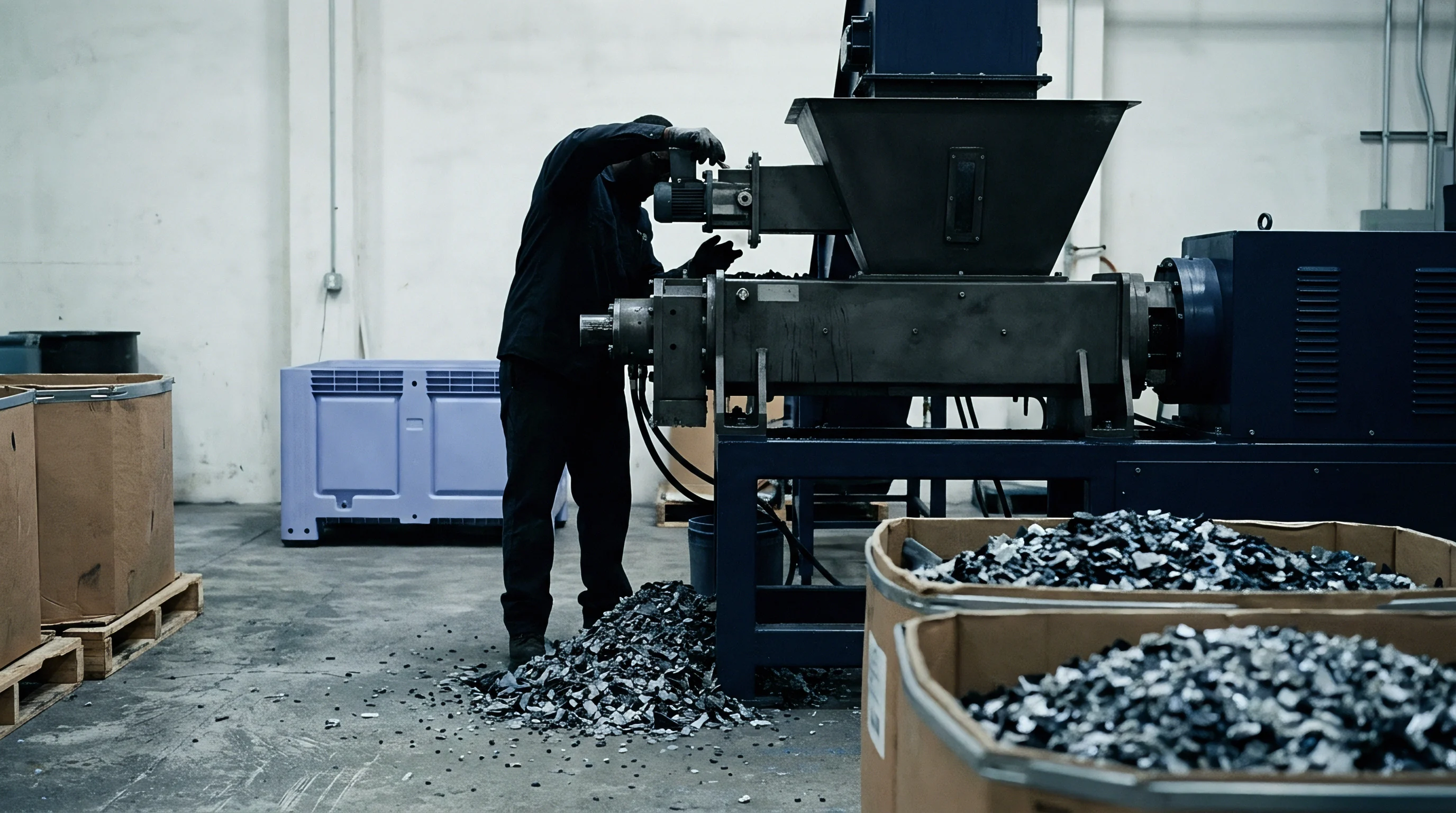
Decontamination of post-consumer polyethylene terephthalate under deep vacuum conditions operates outside classical equilibrium thermodynamics. In continuous processing equipment operating below 0.1 mbar, volatile organic compounds with molecular weights above 180 grams per mole do not obey Henry’s law calculations derived at atmospheric or mild vacuum levels. Heavy surrogates used in food-contact validation trials, such as benzophenone, methyl stearate, and phenylcyclohexane, exhibit extremely low vapor pressures in the molten polymer phase at typical processing temperatures between 260°C and 290°C. Mass transport across the molten polymer interface becomes entirely governed by rate-limiting transient diffusion through viscous liquid boundary layers rather than thermodynamic gas-phase saturation limits.
At operating pressures under 10 Pa, the thermodynamic driving force for phase change relies on the chemical potential gradient between the bulk polymer matrix and the continuous vapor phase. The activity coefficient of heavy organic contaminants dissolved in PET melts increases significantly at low concentrations, typically below 500 milligram per kilogram. This non-ideal behavior means the effective volatile partial pressure drops far slower than total system pressure, requiring mechanical action to expose fresh polymer interfaces continuously.
Benzophenone retention in molten polyester at 280°C drops below 10 milligram per kilogram only when absolute pressure remains below 0.05 mbar across the entire liquid film surface.
Gas phase transport within the devolatilization vessel transitions from viscous continuum flow to Knudsen molecular flow as system pressure falls. Diffusion sets the limit. When the mean free path of evaporated surrogate molecules exceeds the mechanical clearances of the vent ports and vacuum piping, inter-molecular collisions in the vapor space cease to govern total mass transport.
Surrogates collide primarily with equipment walls, creating local back-scattering phenomena that re-contaminate the exposed melt surface if the vacuum manifold fails to maintain line-of-sight molecular extraction.
Interfacial Depletion Dynamics
Boundary layer starvation develops within milliseconds of exposing a stagnant polymer melt film to ultra-high vacuum. High molecular weight surrogates possess low diffusion coefficients within molten polyester, ranging between 10 to the minus 10 and 10 to the minus 11 square meters per second at 285°C. Rapid evaporation at the immediate gas-liquid boundary exhausts local contaminant concentration instantly, forming an depleted skin layer. Transport across this stagnant surface skin drops to near zero unless mechanical stress re-mixes the bulk melt into the surface boundary.
Thermodynamic equilibrium calculations assuming a well-mixed liquid bulk consistently underestimate required residence times by factors between four and nine. Process engineers relying on equilibrium partition coefficients fail to predict the residual contaminant levels measured in food-contact challenge tests. Real mass flux per unit area requires dynamic integration of surface age distribution functions across the entire devolatilization section.
Unresolved structural questions persist regarding whether local surface tension gradients induced by localized surrogate evaporation generate Marangoni convection cells inside ultra-thin polyester films under deep vacuum.

Kinetics
Diffusion Coefficients and Activation Energies
Transport rates of heavy organic molecules through molten polyethylene terephthalate depend heavily on temperature, matrix viscosity, and surrogate molecular volume. Below the melting temperature of 250°C, solid-state diffusion of heavy contaminants through semi-crystalline PET domains is hindered by high activation energy barriers. Above the melting point, polymer chain mobility expands free volume, accelerating diffusional transport significantly.
High melt temperatures simultaneously accelerate thermal degradation pathways, limiting the thermal processing window.
Determining reliable transport parameters requires non-isothermal sorption-desorption testing under calibrated molecular vacuum conditions. Activation energy for methyl stearate transport in molten PET reaches 85 kilojoules per mole, whereas smaller volatile species like toluene exhibit activation energies near 42 kilojoules per mole. Consequently, elevated melt temperatures selectively improve the extraction efficiency of heavy, high-boiling contaminants compared to light volatiles.
| Surrogate Species | Molecular Weight (g/mol) | Melt Temp (°C) | Diffusion Coeff (m²/s) | Activation Energy (kJ/mol) |
|---|---|---|---|---|
| Toluene | 92.14 | 270 | 4.2 × 10⁻⁹ | 41.8 |
| Chlorobenzene | 112.56 | 270 | 2.8 × 10⁻⁹ | 46.2 |
| Phenylcyclohexane | 160.26 | 280 | 8.5 × 10⁻¹⁰ | 68.4 |
| Benzophenone | 182.22 | 280 | 3.1 × 10⁻¹⁰ | 74.1 |
| Methyl Stearate | 298.50 | 290 | 9.2 × 10⁻¹¹ | 85.6 |
| Data determined under 0.02 mbar absolute pressure using dynamic thermogravimetric sorption coupled with mass spectrometry. | ||||

Boundary Layer Penetration Mechanics
Penetration theory models mass transfer across short-lived liquid elements exposed to vacuum. The mass transfer coefficient scales directly with the square root of the surrogate diffusion coefficient divided by exposure time. Shortening surface residence time through rapid mechanical wiping increases local mass flux substantially.
Liquid boundary layer renewal dominates total process performance when working with high molecular weight organic species.
ISO 17881 validation protocols mandate surrogate extraction efficiencies exceeding 99.9 percent for post-consumer recycled PET intended for direct food contact applications.
Thick melt layers generate severe internal mass transfer resistance. Direct experimental observations reveal that molten PET films exceeding 0.5 millimeter in thickness retain over 80 percent of initial benzophenone concentration after 60 seconds under 0.01 mbar vacuum, while films under 0.1 millimeter thickness reach target purity within 3 seconds under identical temperature and pressure settings. Film thinness controls extraction.
Mechanical renewal rates must exceed chemical reaction kinetics associated with polymer degradation. As a practical rule, reducing melt film thickness by half improves heavy surrogate removal efficiency twice as effectively as increasing processing temperature by twenty degrees Celsius.

Conductance
Gas Dynamics in Ultra High Vacuum Pipelines
Extraction of heavy organic vapors from vacuum manifolds presents severe fluid mechanical challenges. When absolute system pressure falls below 0.1 Pa, the Knudsen number, defined as the ratio of molecular mean free path to pipe inner diameter, exceeds unity. Under these condition, molecular flow conditions dictate manifold behavior.
Pressure drops inside extraction piping cannot be calculated using classical Navier-Stokes or Darcy-Weisbach formulations.
Conductance in molecular flow regimes depends entirely on geometric parameters and gas molecular mass, remaining independent of absolute pressure. Vacuum lines with small diameters or sharp right-angle elbows introduce extreme flow resistance, causing catastrophic back-pressure buildup directly above the polymer melt surface. Local pressure spikes at the vent port suppress volatile flash evaporation instantly.
Gas phase impedance dominates. Condensation of extracted heavy surrogates on cold internal walls of vacuum ductwork narrows effective cross-sectional diameters rapidly during continuous operation. A solid deposit layer of methyl stearate measuring only 2 millimeters in thickness along a 100 millimeter vacuum manifold reduces molecular conductance by over 35 percent, throttling extraction rates across the entire recycling line.
- Verify vacuum sensor calibration using absolute capacitive manometer gauges rated for ranges between 0.001 mbar and 1.0 mbar before initiating melt processing.
- Inspect internal surfaces of the main vent stack and primary vapor cold trap for organic residue buildup, executing hot-solvent flush cycles if wall accumulation exceeds 0.5 millimeter depth.
- Confirm seal gas purge rates on main bearing assemblies do not exceed 0.05 standard cubic centimeters per minute to avoid throttling molecular flow channels.
- Measure vacuum pipeline manifold pressure drop across the isolation gate valve to ensure total system pressure drop stays below 0.02 mbar during full load operation.
- Drain fluid accumulation from the continuous condensation traps prior to high-vacuum sequence startup to maintain optimum low-pressure conductance paths.
Cold Trap Drag and Orifice Impedance
Sizing extraction ports on twin-screw and multi-ring devolatilization reactors requires rigorous Knudsen flow balance calculations. Narrow barrel vent openings generate extreme flow restrictions under deep vacuum conditions. Molecular velocity profiles reveal that heavy organic species with high molecular weights move significantly slower through orifice bottlenecks than water vapor or residual solvents, accumulating at the vent interface.
Pumping speed at the vacuum inlet drops inversely with the square root of volatile molecular weight during molecular flow processing.
Undersized vacuum manifold geometry forces local operating pressures to rise into the transitional flow regime, decreasing surrogate volatilization rates and causing thermal breakdown of trapped organic compounds. Equipment specifications ignoring pipe conductance penalties result in field failures where target food-contact decontamination levels cannot be reached without sacrificing throughput capacity by up to 60 percent.

Scission
Melt Viscosity Degradation and Chain Cleavage
Extended residence times at high melt temperatures under deep vacuum trigger severe hydrolytic and thermal degradation of the polyester backbone. Polyethylene terephthalate suffers chain scission through thermal cleavage of ester bonds, generating carboxyl end groups and vinyl ester end groups. Simultaneously, residual moisture present in inadequately dried incoming flakes reacts instantly at high temperatures, reducing intrinsic viscosity and destroying mechanical properties needed for bottle-grade resin applications.
Thermal exposure carries risk. Every chain scission event increases the total carboxyl end group content, accelerating subsequent thermo-oxidative degradation during final conversion steps. High carboxyl end group concentrations above 35 milliequivalents per kilogram render the recycled polymer highly susceptible to rapid hydrolytic breakdown during container shelf life.
| Residence Time (s) | Vacuum Level (mbar) | Intrinsic Viscosity (dL/g) | Carboxyl End Groups (meq/kg) | Benzophenone Removal (%) |
|---|---|---|---|---|
| 15 | 0.05 | 0.81 | 18.2 | 88.4 |
| 30 | 0.05 | 0.78 | 22.5 | 96.1 |
| 60 | 0.05 | 0.73 | 29.8 | 99.3 |
| 120 | 0.05 | 0.64 | 41.2 | 99.8 |
| 240 | 0.05 | 0.52 | 63.7 | 99.9 |

Processing Optimization Boundaries
Equilibrium solid-state polymerization equipment operates below polymer melting points to preserve molecular weight while extracting volatiles, but requires multi-hour retention times. Liquid-phase devolatilization reactors achieve surrogate extraction within seconds or minutes, but risk severe intrinsic viscosity loss if temperature and shear profiles are managed incorrectly. Balancing mass transfer against polymer thermal stability dictates the true operating window of ultra-high vacuum recycling systems.
Melt drag increases. Compounding equipment operators often attempt to compensate for intrinsic viscosity drops by raising vacuum level further or boosting processing temperatures. Machine operators frequently complain that maintaining high intrinsic viscosity while achieving required surrogate decontamination rates remains impossible without adding costly chain extenders or liquid-state polycondensation boosters to the raw melt feed.
Renewal
Surface Area Generation and Thin Film Mechanics
Overcoming internal diffusion resistance within viscous polyester melts requires mechanical designs that generate thin liquid films continuously while renewing exposed gas-liquid interfaces. Specialized multi-screw extruders, ring extruders, and wiped-film disc reactors maximize the specific surface area generation rate, expressed in square meters of fresh polymer surface per kilogram of melt per second. High surface creation rates strip dissolved volatiles rapidly before boundary layer depletion halts transport.
Thick stagnant melt pools inside conventional single-screw devolatilization sections fail to extract heavy organic surrogates despite application of extreme vacuum levels below 0.01 mbar. Film thickness governs volatile release speed. Mechanical wiping blades operating at tight clearances against temperature-controlled reactor walls produce polymer films thinner than 0.2 millimeter, reducing diffusion distance and shortening required decontamination times by orders of magnitude.
- Excessive Melt Pool Depth suppresses volatile extraction by allowing heavy surrogates to remain trapped within unmixed bulk core layers during vacuum flight phases.
- Inadequate Screw Flank Clearance permits thermal local hot-spots that accelerate polymer degradation while failing to distribute melt across available barrel surfaces.
- Vent Port Flooding occurs when viscous melt expands into vacuum extraction domes, blocking gas flow channels and corrupting process vacuum stability.
- Low Specific Surface Renewal Frequency permits stationary boundary layer formation, causing sudden drops in surrogate removal efficiency during continuous processing.
How Does Surface Area Generation Rate Overcome Diffusion Limits?
Increasing mechanical surface renewal frequency shifts the rate-limiting step of decontamination from bulk diffusion to interfacial evaporation. Consider a worked processing scenario comparing two liquid-state devolatilization units operating at 280°C and 0.05 mbar absolute vacuum, processing 1,500 kilograms per hour of recycled PET flake contaminated with 100 milligram per kilogram of methyl stearate. Reactor A relies on a conventional twin-screw architecture generating a specific surface area of 12 square meters per kilogram per minute.
Reactor B utilizes a multi-shaft ring-extruder producing 85 square meters per kilogram per minute through high-speed film splitting and thin-layer redistribution.
Under Reactor A conditions, heavy surrogate diffusion through the 1.2 millimeter thick melt flight pool limits overall mass transfer, yielding a residual methyl stearate concentration of 14.2 milligram per kilogram after a 45-second residence time. Intrinsic viscosity drops from 0.80 to 0.72 dL/g due to prolonged thermal exposure. In Reactor B, high-frequency film stretching maintains an average film thickness below 0.08 millimeter, increasing effective surrogate transport rates sixfold.
Residual methyl stearate falls to 0.4 milligram per kilogram within 12 seconds of melt exposure, while intrinsic viscosity stays preserved at 0.78 dL/g. High surface generation rates eliminate the need for thermal overload.
Material supply contracts for food-grade recycled polyester resins strictly regulate permissible heavy surrogate limits, requiring complete documentation of melt temperature, absolute vacuum pressure, and mechanical power consumption parameters across every production lot.

Compliance
Regulatory Thresholds and Challenge Testing Frameworks
Demonstrating suitability of recycled polyethylene terephthalate for direct food contact applications requires strict adherence to international regulatory validation standardizations. Both the United States Food and Drug Administration and the European Food Safety Authority mandate rigorous challenge tests using specific chemical surrogates designed to model worst-case post-consumer contamination levels. Chemical surrogates represent distinct volatility and polarity spectrums, ranging from volatile solvents like toluene to non-volatile heavy organic compounds like benzophenone and fatty acid esters.
| Chemical Surrogate | Contaminant Class | Challenge Level (mg/kg) | US FDA Limit (mg/kg) | EFSA Migration Limit (µg/kg) |
|---|---|---|---|---|
| Toluene | Volatile Non-Polar | 1000 | ||
| Chlorobenzene | Volatile Polar | 1000 | ||
| Phenylcyclohexane | Semi-Volatile Non-Polar | 1000 | ||
| Benzophenone | Non-Volatile Polar | 1000 | ||
| Methyl Stearate | Heavy Non-Polar Fatty Acid | 500 |
Achieving compliance under these rigid safety frameworks requires verification that recycled resin produces food migration levels below 0.5 parts per billion for non-carcinogenic substances, translating to residual concentration limits in bottle wall materials typically below 0.21 milligram per kilogram. Non-equilibrium mass transfer optimization within ultra-high vacuum processing lines remains the primary engineering mechanism that allows recycling plants to consistently satisfy these stringent health standards without requiring costly chemical depolymerization.
- Feedstock Quality Verification establishes maximum permissible incoming contaminant limits through automated flake sorting and chemical screening before processing.
- Vacuum Line Sensor Redundancy guarantees continuous measurement of system pressure levels across all devolatilization ports throughout continuous production runs.
- Melt Temperature Profiling prevents localized thermal breakdown while maintaining kinetic conditions needed for high molecular weight surrogate extraction.
- In-Line Viscometry Monitoring tracks intrinsic viscosity changes in real time, triggering automatic discharge divert valves if structural degradation occurs.
- Finished Pellet Analytical Assay confirms compliance with food contact challenge requirements through gas chromatography coupled with mass spectrometry testing on every shipping batch.

Landed Cost Economics and Decontamination Logistics
Capital expenditures for ultra-high vacuum recycling equipment scale rapidly as target vacuum levels drop below 0.1 mbar. Installing high-capacity roots pumps, multi-stage dry vacuum systems, and customized molecular condensation cold traps adds substantial fixed cost to a recycling facility. Electrical power demands required to maintain liquid boundary layer shearing under continuous UHV conditions increase unit operating expense per metric tonne of finished food-grade resin pellet produced.
Operating costs for UHV devolatilization systems increase by approximately 28 percent when working operating pressures drop from 0.5 mbar down to 0.02 mbar.
Process selection hinges on evaluating total landed cost per prime quality pellet against competitive secondary virgin resin settlements. Operating an ultra-high vacuum devolatilization system at 0.03 mbar requires additional electrical power input reaching 0.18 kilowatt-hours per kilogram of processed PET melt, compared to 0.09 kilowatt-hours per kilogram for conventional vacuum degasification setups operating near 2.0 mbar.
High energy inputs and capital amortization costs are offset by eliminating downstream solid-state polymerization steps when producing direct food-grade melt stream products. Solid-state polymerization reactors demand residence times between 8 and 20 hours at temperatures near 210°C, incurring heavy nitrogen gas consumption and major thermal energy footprints. Liquid-state devolatilization lines using high-shear thin-film UHV technology complete surrogate decontamination within 30 to 90 seconds, cutting overall plant footprint requirements by up to 70 percent while eliminating nitrogen loop operating expenses entirely.
Economic viability of the process relies on maintaining absolute vacuum integrity across all manifold connections continuously, avoiding unscheduled downtime and expensive mechanical seal rebuilds.