
Extrusion Shear Induced Degradation Ratios in Recycled Polyethylene Manifold Systems
Maintain manifold shear rates below 300 s⁻¹ and specify 25-minute minimum OIT to prevent catastrophic molecular weight loss in recycled polyethylene extrusion.
Maintain manifold shear rates below 300 s⁻¹ and specify 25-minute minimum OIT to prevent catastrophic molecular weight loss in recycled polyethylene extrusion.

Validating post-consumer polyolefin decontamination requires LC-HRMS screening of non-volatile oligomers paired with high-molecular-weight surrogate challenge testing.

Thermal conditioning and standard thermal history resets eliminate density drift errors, securing accurate mold shrinkage during polyethylene resin converting.

Polyethylene hydrostatic testing requires degassed, temperature-corrected fluid baths and void-free plaques to prevent false 0.002 g/cm³ receiving rejections.

Analytical identification thresholds for polyolefin NIAS must be set to 10 ppb in simulants to prevent uncharacterized genotoxins from voiding food contact dossiers.

Polyolefin migration compliance requires selecting food simulants based on polarity and fat content while accounting for matrix swelling and thermal limits.

Polyolefin oligomer humps in HDPE mimic mineral oil on LC-GC-FID; compliance requires GCxGC-TOFMS spectral deconvolution and specific migration on Tenax.
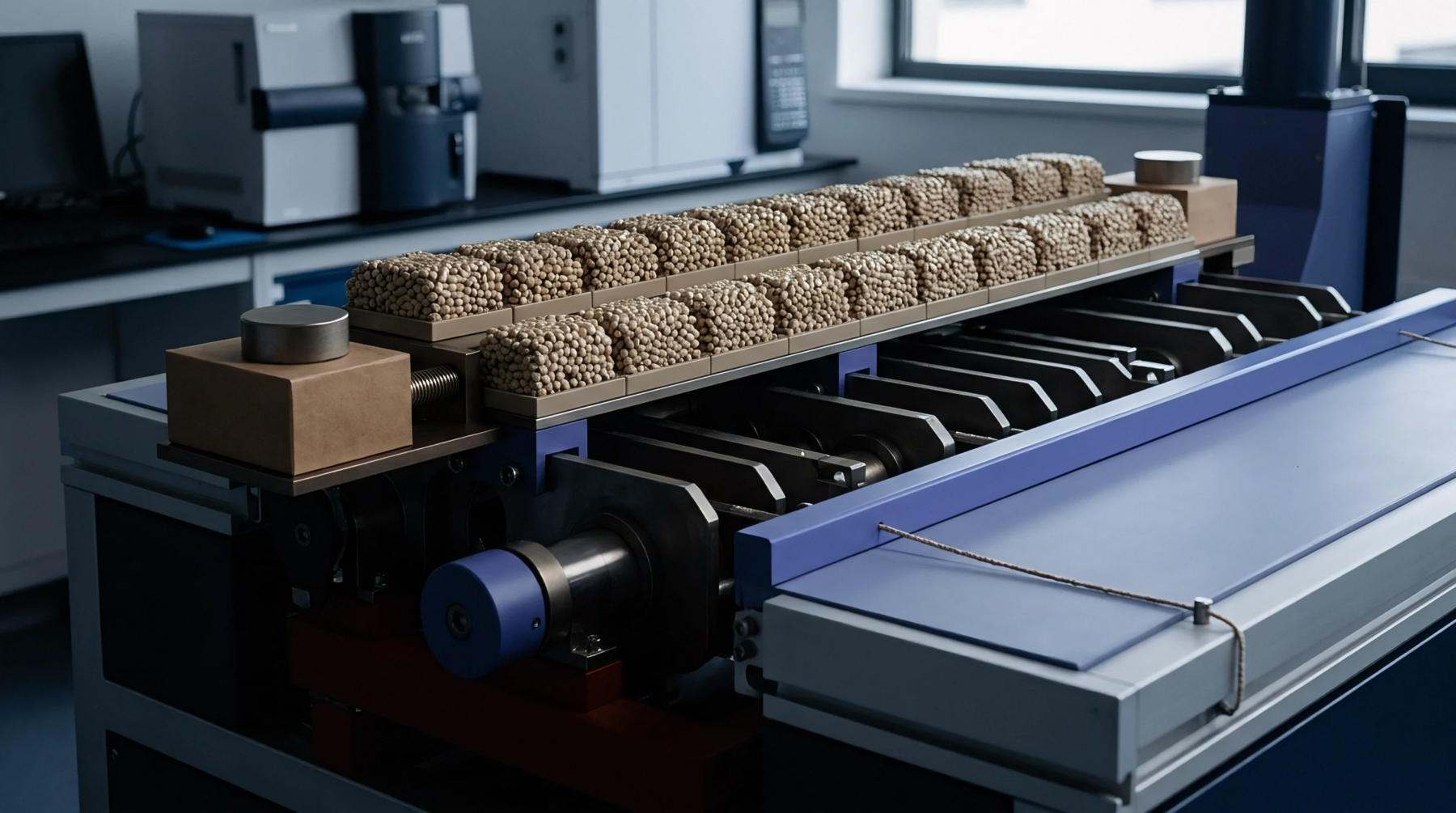
Infrared spectroscopy identifies contaminant chemistries while differential scanning calorimetry quantifies polymer blend fractions and thermal degradation state.

Coupling thermal desorption solvent extraction with non aqueous potentiometric titration quantifies volatile contaminants and acid values in recycled polyolefins.

Chromatographic mass transfer characterization couples LC-GC-FID extraction with Fickian diffusion modeling to verify sub-1000 Dalton oligomers stay below 0.5 mg/kg.

Determining masterbatch letdown ratios for recycled polyethylene requires MFR matching, antioxidant depletion testing, and gravimetric dosing adjustments.

Polyolefin recyclate quality verification relies on multi-temperature melt flow testing, oxidation induction time, and continuous screen filtration tracking.

Dock acceptance of production packaging lots relies on non-target analytical screening and strict lot-specific verification behind declarations.

Contractual risk allocation for reprocessed resin requires rigid specification bounds, quarantine controls, and clear price deduction mechanics.

Correcting capillary rheometry data via Bagley and Rabinowitsch protocols is mandatory to prevent up to 50 percent viscosity errors in bimodal HDPE die design.

Imported polyolefin virgin resin declarations require batch-matched GC-MS monomer analysis and complete Annex I chemical chain documentation prior to entry.

Dynamic low-frequency rheometry identifies thermal degradation in recycled polyolefins that single-point melt flow tests miss entirely.

Recycled plastic food contact compliance requires rigorous surrogate challenge testing, non-target NIAS screening, and lot-traced migration verification.

Undeclared regrind in virgin polymer collapses oxidation stability and broadens viscosity bands, increasing landed cost per good part despite initial pellet discounts.

Undisclosed recycled content invalidates virgin resin warranties when analytical testing proves melt flow or thermal deviation beyond contractual tolerance.

Standardized food simulant selection for polyolefins depends on food solubility, polymer swelling factors, and mandatory thermal contact windows.

House blending recycled resins causes melt viscosity drift and crosslinked gel contamination that disrupts mold filling and degrades part mechanical strength.

Incoming resin qualification mandates physical sampling, melt rheology auditing, and CoA validation to prevent off-spec polymer from entering production.

Untargeted screening by GC-MS and LC-HRMS combined with Threshold of Toxicological Concern metrics establishes legal food-contact safety for recycled polyolefins.

Quantifying interfacial adhesion in recycled polyolefins requires measuring essential work of fracture and domain size to set compatibilizer dosage.

Relative response factor adjustments eliminate false-pass compliance screening for non-intentionally added substances in polyolefin recyclate packaging dossiers.

Post-consumer HDPE sourcing relies on batch melt testing, DSC thermal screening, and mass balance audits to prevent factory scrap and field failure.

Verify migration compliance using finished container single-sided cell tests, worst-case simulant conditions, and batch-matched documentation.

Trimming blow moulded bottle weight reduces unit resin costs but narrows drop test safety margins along bottom pinch seams and heel radii.

EU food simulant and condition selection requires matching food chemistry and thermal exposure to Regulation 10/2011 matrices to secure legal market access.
Expertise is a utility, not a secret. sentiention™ publishes its working knowledge as open reference: intelligence layer covering the materials it sources, the markets it enters, and the reference that serves both.