Harmonized System Subheading Verification Using Immersion Density Protocols
Immersion density testing verifies polymer tariff subheadings by resolving specific gravity at 23 °C on void-free annealed plaques.
Boundaries
Customs authorities classify primary raw polymers under Chapter 39 of the Harmonized System using precise physical parameters. Specific gravity serves as the primary legal criterion separating low-density polyethylene from high-density grades, determining the applicable import tariff rate, antidumping exposure, and trade preference eligibility. Importers declaring resin shipments rely on nominal datasheet figures provided by compounders.
Tariff auditors perform independent laboratory verification tests on arriving container shipments. Discrepancies between declared specific gravity and laboratory measurements trigger administrative reclassification, retroactive duty assessments, and potential customs penalties.
Customs labs test density at 23 °C. Under Harmonized System Chapter 39 Note 6, primary forms include granules, pellets, powder, and flakes. Specific gravity boundaries dictate statutory classification across major polyolefin subheadings. The boundary line separating low-density polyethylene from high-density polyolefins sits at exactly 0.940 g/cm³.
Polyethylene Classification Thresholds
Subheading 3901.10 governs ethylene polymers possessing a specific gravity under 0.940 measured on additive-free resin at 23 °C. This classification encompasses low-density polyethylene produced via high-pressure autoclave processes, linear low-density polyethylene, and metallocene plastomers. Subheading 3901.20 applies to polyethylene exhibiting a specific gravity of 0.940 or greater. This higher density bracket covers medium-density and high-density resins manufactured through low-pressure gas-phase or slurry loop polymerizations.
Antidumping tariffs apply at boundary limits. A resin lot with a true base density of 0.938 g/cm³ falls under subheading 3901.10. Adding two percent carbon black masterbatch by weight elevates the apparent density of the compound to 0.942 g/cm³.
Tariff enforcement officers test the finished compound rather than the neat polymer matrix. The physical addition of mineral colorants or carbon black forces a reclassification into subheading 3901.20 unless the importer proves base resin composition through verified chemical extraction testing.
Copolymer and Additive Level Shifts
Incorporating comonomers or inorganic pigments modifies bulk density beyond pure homopolymer baseline figures. Ethylene-vinyl acetate copolymers containing less than 95 percent ethylene by weight exit heading 3901 entirely, moving into subheading 3901.30 or 3901.90 depending on specific vinyl acetate mass fractions. Polypropylene homopolymers fall under subheading 3902.10 with typical densities ranging between 0.895 g/cm³ and 0.915 g/cm³.
Propylene copolymers fall under subheading 3902.30, requiring monomer composition verification alongside density profiling.
Titanium dioxide raises compound mass, while calcium carbonate additions increase density at a rate of approximately 0.008 g/cm³ per one percent filler loading by weight. High-density fillers alter the hydro-balance calculation, obscuring the identity of the underlying base polymer during routine customs screening.
| HS Subheading | Polymer Family | Specific Gravity Limit | Primary Tariff Variance Risk |
|---|---|---|---|
| 3901.10 | Low Density Polyethylene (LDPE/LLDPE) | Less than 0.940 g/cm³ | Reclassification to 3901.20 adds duty and antidumping penalties |
| 3901.20 | High Density Polyethylene (HDPE) | 0.940 g/cm³ or greater | Reclassification to 3901.10 triggers origin rule disputes |
| 3902.10 | Polypropylene Homopolymer | Density 0.895 to 0.915 g/cm³ | Misclassification as copolymer under subheading 3902.30 |
| 3904.10 | Polyvinyl Chloride Unplasticized | Density 1.380 to 1.450 g/cm³ | Reclassification as plasticized PVC under subheading 3904.22 |
Misdeclaring specific gravity at international borders results in retro-active duty assessments, structural freight delays, and severe monetary penalties imposed by customs enforcement agencies.
Bath
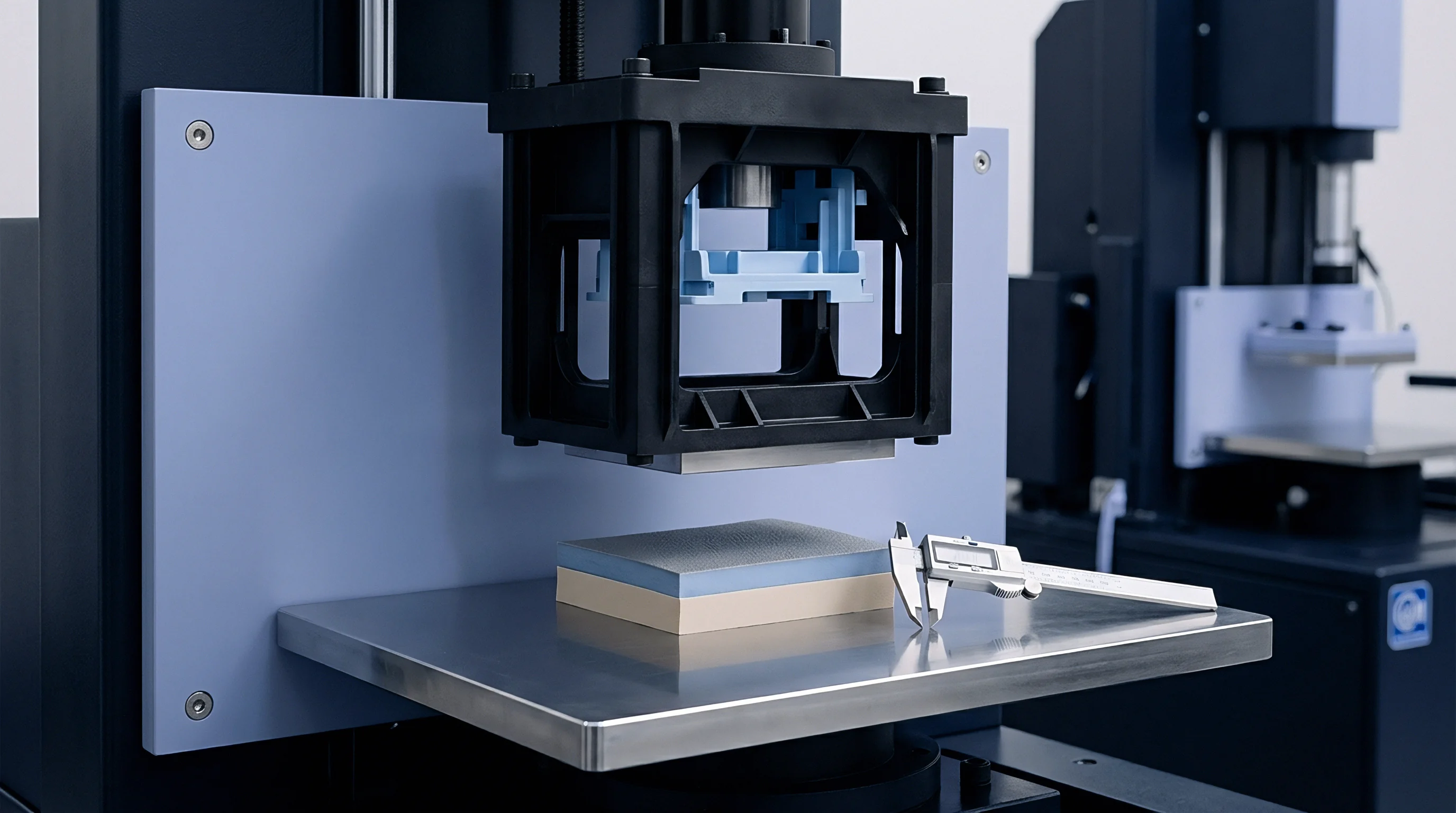
Liquid displacement testing per ISO 1183-1 Method A relies on measuring the buoyant force exerted on a submerged polymer sample. Analytical hydro-balances calculate density by weighing the specimen in air and subsequently weighing it while suspended in a liquid of known density. Deionized water serves as the primary immersion fluid for polymers denser than 1.000 g/cm³, while lower density polyolefins require alcohol mixtures or controlled organic fluids to achieve complete immersion without flotation.
Hydro-balance testing demands thermal equilibrium. Fluid density varies directly with bath temperature changes. Water density decreases by approximately 0.0002 g/cm³ for every 1.0 °C increase in liquid temperature near the standard reference point of 23.0 °C. Uncalibrated immersion media generate systematic errors that alter specific gravity calculations at sensitive tariff boundaries.
Fluid Selection and Temperature Sensitivity
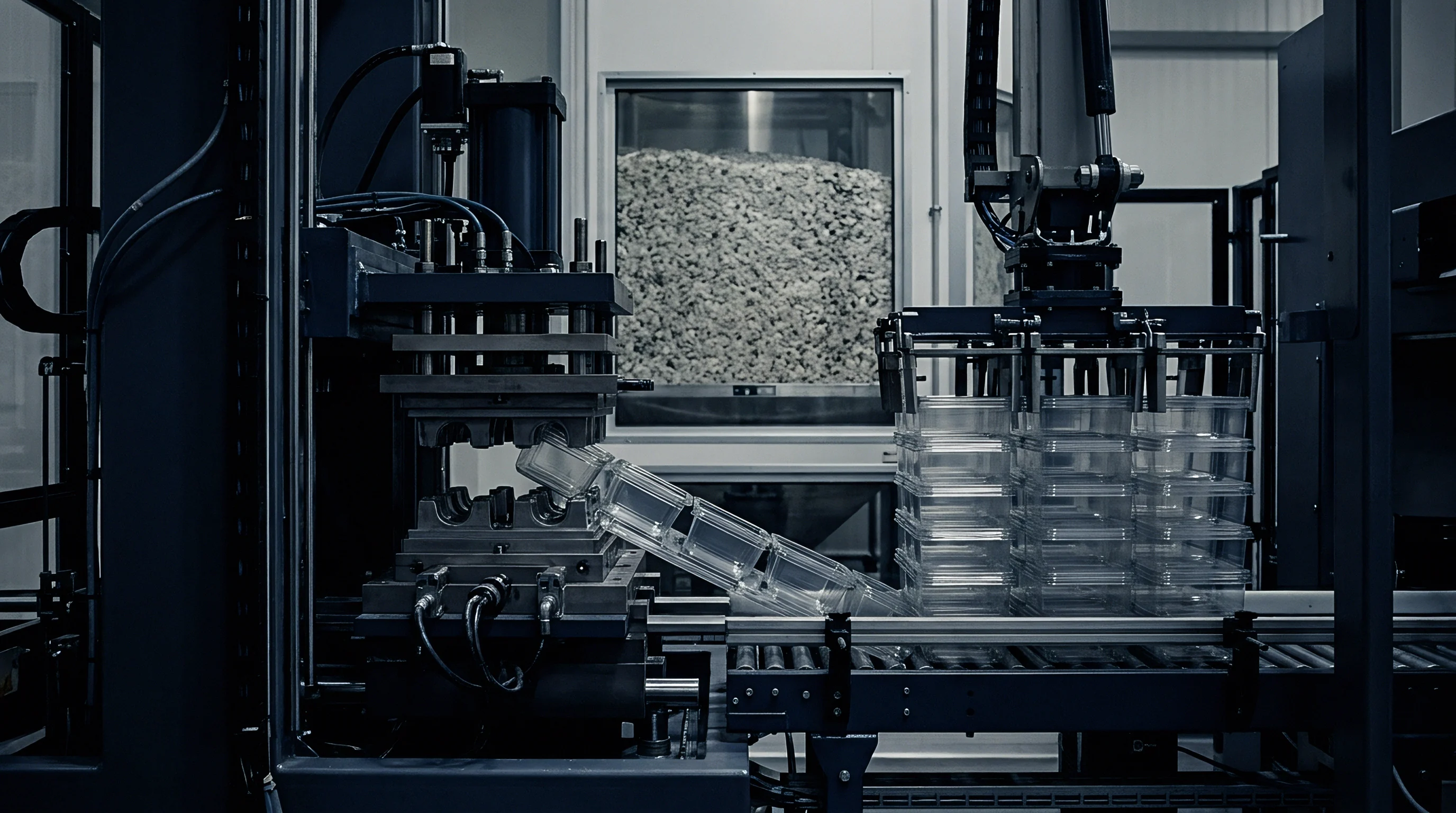
Deionized water functions as the standard immersion medium for materials denser than 1.000 g/cm³. For polyolefins with densities below 1.000 g/cm³, pure isopropyl alcohol or ethanol-water blends supply the required lower liquid density. Standard test procedures set water density at 0.9975 g/cm³ at 23.0 °C. Distilled water must undergo degassing under vacuum prior to testing to remove dissolved air that forms micro-bubbles during sample immersion.
Thermal control systems maintain liquid bath temperature within a strict tolerance of ±0.1 °C. A temperature drift of 0.5 °C shifts the calculated density of a polyethylene specimen by 0.0001 g/cm³, sufficient to misrepresent a resin sitting at 0.9399 g/cm³ as crossing the 0.9400 g/cm³ customs threshold.
A thermal gradient inside the immersion fluid destroys the accuracy of hydro-balance readings before the balance register settles.

Surfactant Dosage and Wetting Control
Surface tension between the fluid and the polymer pellet attracts airborne gas micro-bubbles. Hydrophobic polymers like polypropylene and polyethylene repel aqueous solutions, encouraging micro-bubbles to adhere to sample edges. Attached bubbles increase perceived displacement volume, causing the balance to register an artificially low sample weight in liquid.
Adding less than 0.1 percent non-ionic surfactant by weight lowers fluid surface tension below 30 mN/m without measurably altering bulk fluid density. Ethanol reduces liquid surface tension, while isopropanol conditioning baths strip surface grease and air layers from molded specimens prior to physical immersion.
Minor density discrepancies are frequently attributed to normal laboratory humidity variations rather than unannounced resin formula alterations.
Specimen
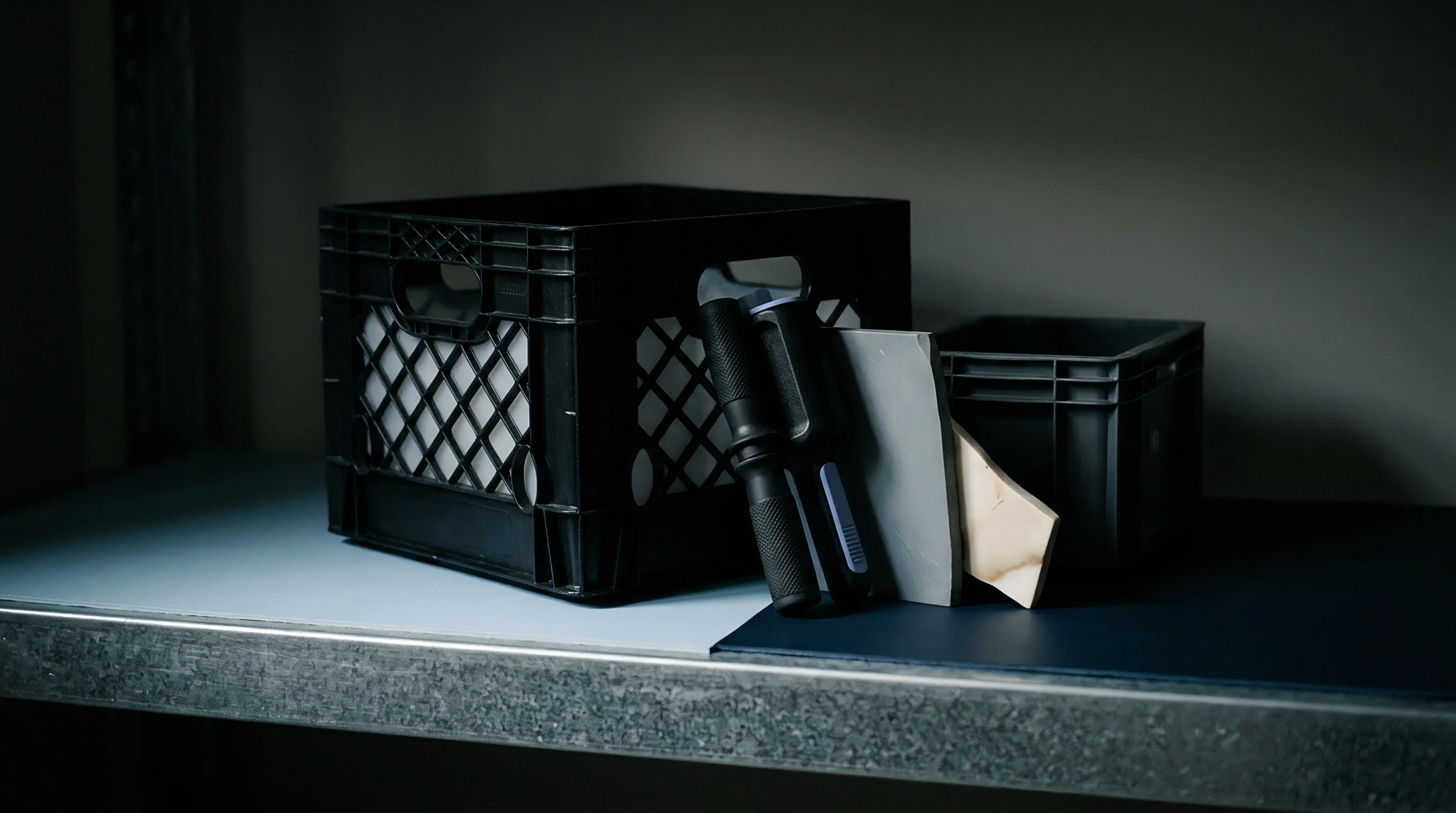
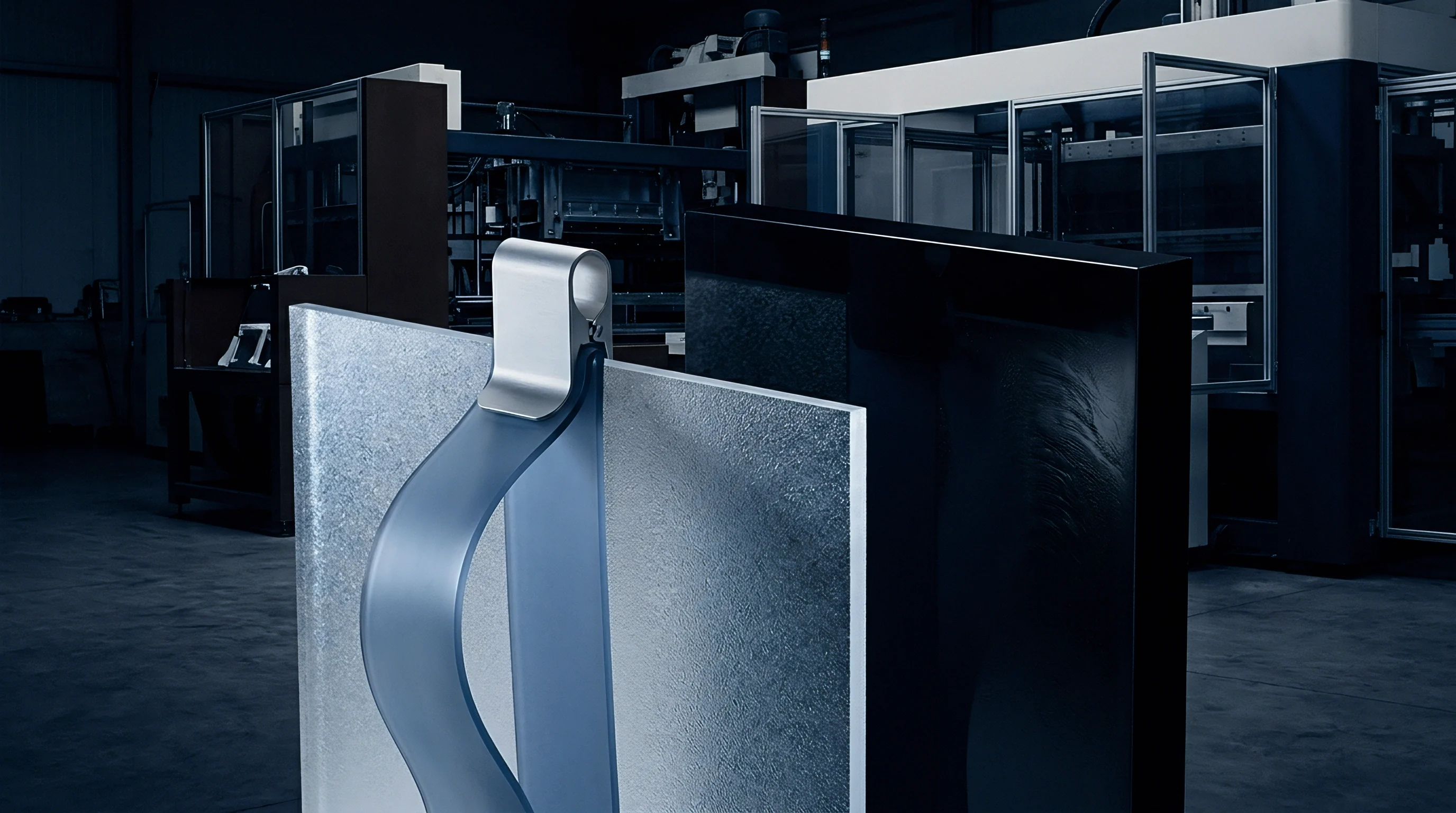
Compression molding plaque preparation determines the final crystalline morphology and apparent volume of a test sample. Testing raw extruded pellets directly in an immersion balance introduces significant measurement variation. Pellets contain micro-voids, internal shrinkage cavities, and irregular surface contours that trap air pockets during liquid submersion.
Accurately determining material density requires compression molding test plaques under standardized thermal and pressure conditions defined by ISO 293 or ASTM D4703.
Thermal history alters unit volume. Semi-crystalline polymers like polyethylene and polypropylene alter their molecular packing density based on the cooling rate applied during plaque crystallization. Quench cooling suppresses crystal formation, producing an amorphous structure with lower mass density.
Slow cooling permits maximum lamellar crystallization, increasing mass density.
Thermal History and Crystallinity Development
Quenching molten polyolefins in cold water freezes amorphous polymer chains before folded lamellae fully align. Fast cooling depresses high-density polyethylene density by up to 0.006 g/cm³ compared to annealed samples. ISO 293 Annex C prescribes controlled cooling rate Schedule C at 15.0 °C per minute to ensure consistent lamellar crystallization across comparative evaluation runs.
Quench cooling high-density polyethylene plaques drops measured density by 0.004 g/cm³ compared to slow thermal annealing under ISO 293 Annex C.
Polymer molecules require thermal mobility to organize into dense crystalline domains. Rapid thermal drops lock the polymer chains into lower-density amorphous configurations, producing laboratory test results that understate true material density.
Void Minimization during Compression Molding
Internal micro-cavities trapped inside molded plaques drop measured mass per unit volume below true material density. Mold degassing sequences vent entrapped air during initial melt compression. Hydraulic pressing schedules maintain sustained clamping force during cooling to accommodate volumetric thermal contraction.
Ultrasonic inspection or optical microscopy verifies plaque solid structural integrity before punching test specimens for immersion balance testing. Discarding plaques containing internal voids prevents low-density test artifacts from corrupting tariff compliance determinations.
- Void Inclusion Trapped air bubbles inside compression-molded plaques reduce apparent weight, causing high-density resins to test artificially below tariff boundaries.
- Rapid Cooling Shock Quenching hot plaques in ambient water prevents complete polymer chain crystallization, depressing measured specific gravity figures during liquid immersion.
- Surface Degassing Failure Microscopic air pockets adhering to pellet surfaces create artificial buoyancy forces that systematically lower calculated specific gravity values.
- Pigment Dispersion Clumping Uneven distribution of heavy mineral additives creates localized density spikes that yield inconsistent hydro-balance numbers across a single lot.
Slow cooling inside the mold always yields higher density readings than rapid water quench techniques.
Dispute
Customs verification audits challenge resin import classifications when laboratory re-testing reveals specific gravity values crossing legal tariff boundaries. Reclassification actions impose retroactive duty rate differentials, interest charges, and administrative fines on the importer of record. Resolving valuation and tariff disputes demands understanding both physical measurement error margins and customs assessment formulas.
Does Carbon Black Loading Force Tariff Reclassification?
Adding two percent carbon black by weight to linear low-density polyethylene elevates resin density from 0.920 g/cm³ to 0.941 g/cm³. The base ethylene-hexene copolymer possesses a physical density well below the 0.940 g/cm³ statutory border. The added masterbatch carbon black particles possess an intrinsic density of 1.800 g/cm³, raising total compound mass per unit volume.
Border authorities test arriving masterbatch or black compound pellets in the state as imported. If the liquid immersion test yields 0.941 g/cm³, customs reclassifies the lot under subheading 3901.20, assessing higher tariff rates despite the base polymer being linear low-density resin. Importers must supply verified extraction analytical records proving base resin density prior to pigment compounding to defend the original classification.
Financial Reclassification Assessment Mechanics
Tariff adjustments alter total landed costs when customs agencies reassign imported polymer lots to higher duty categories. Consider a commercial shipment of 100 metric tonnes of linear low-density polyethylene declared under subheading 3901.10 at a declared value of $1,200 per metric tonne, totaling $120,000. Subheading 3901.10 carries a base duty rate of 0 percent under trade agreement concessions.
Customs border testing records a specimen density of 0.9412 g/cm³ due to fast plaque cooling errors and 2 percent masterbatch loading, reclassifying the shipment under subheading 3901.20.
| Error Source | Mechanism of Action | Density Delta Range | HS Boundary Impact |
|---|---|---|---|
| Quench Cooling | Depressed lamellar crystallization | -0.003 to -0.006 g/cm³ | False classification of 3901.20 as 3901.10 |
| Surfactant Absence | Surface air bubble attachment | -0.002 to -0.005 g/cm³ | False pass below 0.940 specific gravity limit |
| Thermal Drift (2 °C) | Expansion of fluid medium | +0.0006 g/cm³ per °C drop | False elevation across 0.940 tariff line |
| Carbon Black (2%) | High-density filler mass addition | +0.012 to +0.018 g/cm³ | Shifts 3901.10 base polymer into 3901.20 |
Subheading 3901.20 incurs a 6.5 percent standard customs duty plus a 25 percent trade defense penalty tariff. The reassessed duty rate equals 31.5 percent of shipment value, generating a direct tariff liability of $37,800. Customs enforcement assesses an additional statutory penalty fee equal to 20 percent of the unpaid duty shortfall, adding $7,560.
Total cash outlays increase by $45,360, elevating delivered resin cost from $1.20 per kilogram to $1.65 per kilogram.
Incorporating ISO 1183-1 Method A testing requirements directly into sales contracts prevents buyers from absorbing customs duties caused by improper supplier laboratory protocols.
Inserting an explicit laboratory arbitration clause specifying ISO 1183-1 Method A testing on unpigmented base resin shifts reclassification liability back to the compounder.

Audit
Verification workflows structure incoming inspection procedures to confirm polymer classification before shipments reach border customs control. Importers establish quality assurance verification steps to validate certificates of analysis accompanying incoming container lots. Re-testing specific gravity prior to customs lodgment mitigates compliance exposure and prevents unexpected tariff reclassifications.

Incoming Hydro-Balance Verification Workflow
Receiving raw resin lots demands physical testing before accepting customs documentation from international suppliers. Incoming quality control protocols extract representative pellet samples across multiple bulk container locations following ISO 582 rules. The internal testing laboratory molds void-free test plaques, subjects samples to standardized slow cooling schedules, and performs liquid immersion density testing under tightly controlled bath temperatures.
- Extract ten random pellet samples across three container locations following ISO 582 sampling rules.
- Degas the test liquid inside a vacuum chamber for twenty minutes to clear micro-bubbles.
- Submerge molded test plaques into ethanol or deionized water maintained at precisely 23.0 °C.
- Record sample weight in air and submerged weight on an analytical balance reading to 0.0001 grams.
- Calculate specific gravity using fluid density tables corrected for actual bath temperature.
Customs officers reclassify polymer shipments based on physical density measurements taken from arriving pellets regardless of declared paper specifications.
Contractual Quality Clauses and Specification Controls
Sales agreements protect resin buyers when chemical and physical parameters carry clear test method definitions. Procurement specifications incorporate explicit testing protocols, cooling standards, and density thresholds to bind compounders to verified quality targets. Contractual clauses define specific arbitration mechanisms for resolving specific gravity variances discovered during incoming verification.
- Base Polymer Specification Purchase orders state density limits measured on neat base resin prior to compounding additives or pigments.
- Test Method Designation Contracts reference ISO 1183-1 Method A explicitly rather than generic density terminology.
- Annealing Protocol Standard Agreements require sample plaque preparation under ISO 293 Annex C to eliminate thermal history discrepancies.
- Dual Testing Arbitration Clauses specify a third-party accredited laboratory to resolve specific gravity disputes between buyer and seller.
Whether international customs authorities will accept chemical extraction data to isolate base polymer density from filled compounds remains a contested point in trade law.