Verifying Virgin Resin Monomer Declarations for Polyolefin Import
Imported polyolefin virgin resin declarations require batch-matched GC-MS monomer analysis and complete Annex I chemical chain documentation prior to entry.

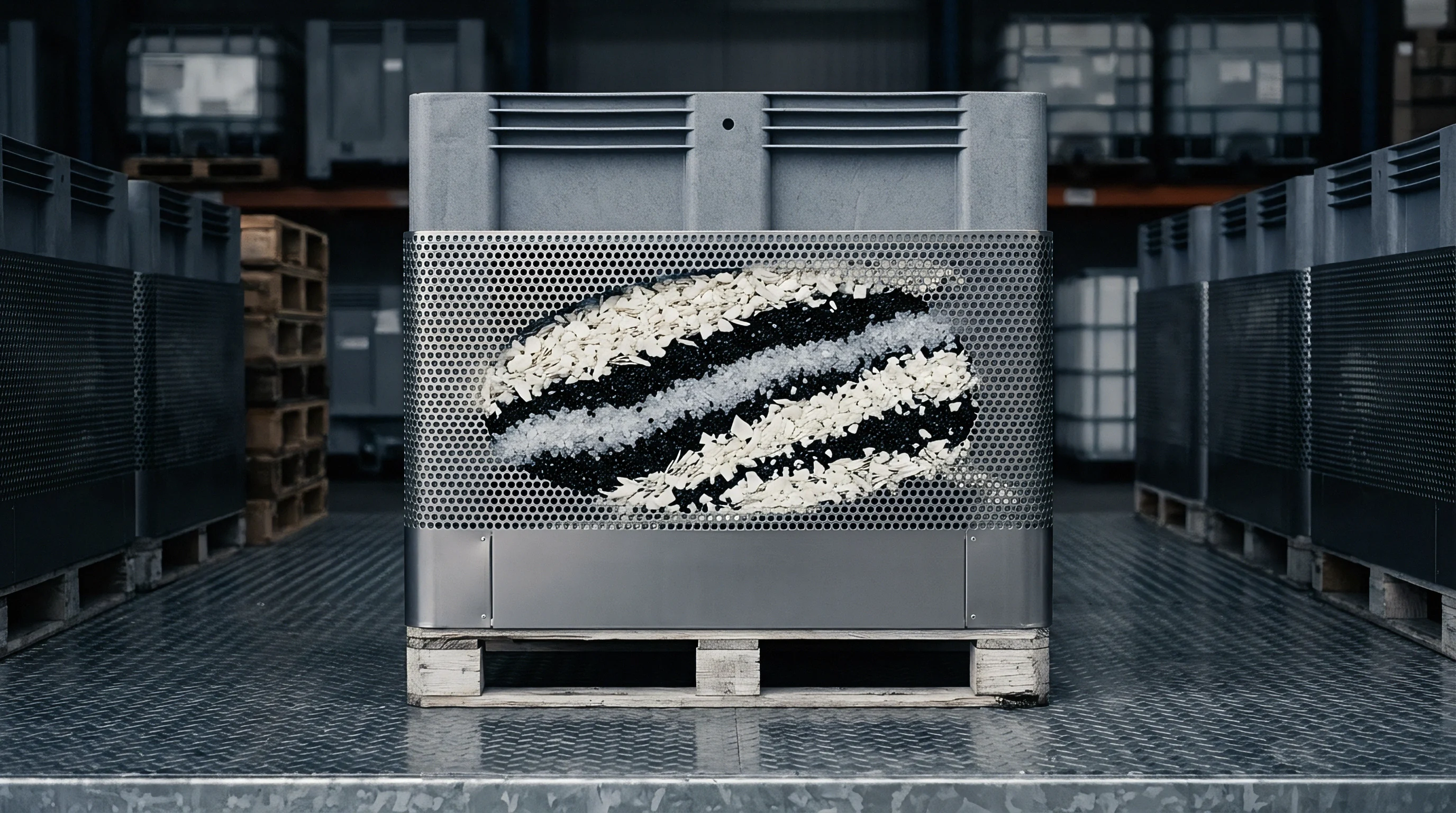
Pellet
Granular polyolefin feedstocks entering international customs territories carry documented claims regarding monomer purity, polymerisation history, and additive composition. High-density polyethylene, linear low-density polyethylene, and polypropylene resins synthesised in overseas petrochemical facilities undergo melt degassing and purge silo conditioning to strip unreacted gaseous monomers before packaging. Ethylene, propylene, and alpha-olefin comonomers including 1-butene, 1-hexene, and 1-octene remain trapped within the amorphous domains of the solid polymer matrix at varying concentration levels.
Residual monomer concentrations reflect reactor residence times, catalyst activity parameters, and post-reactor stripping efficiency. Volatile monomer residues off-gas during storage.
Polymerisation routes dictate the specific chemical fingerprint of unreacted residuals within imported resin lots. Ziegler-Natta catalytic systems leave trace organometallic remnants alongside residual comonomer fractions, while metallocene catalyst systems yield narrower molecular weight distribution profiles with distinct low-molecular-weight oligomeric fractions. Gas phase fluidised bed reactors and slurry loop reactors demonstrate differing stripping dynamics for C6 and C8 alpha-olefins.
Higher comonomers exhibit lower vapor pressures and higher solubility in polyolefin melts, increasing the analytical challenge of thorough thermal degassing. Unpurged silos retain hydrocarbon vapors.

Polyolefin Synthesis Routes and Unreacted Residuals
Chemical verification begins by quantifying residual free comonomers alongside volatile organic degradation products generated during pelletization. Thermal degradation during pellet extrusion creates branched alkanes, alkenes, and oxidized species that interfere with standard monomer detection protocols. Catalyst residues drive secondary degradation.
| Polymer Family | Catalyst System | Primary Comonomer | Typical Residual Monomer Range | Dominant Volatile Byproduct |
|---|---|---|---|---|
| LLDPE Slurry Loop | Ziegler-Natta | 1-Hexene | 15 to 85 mg/kg | C12-C18 branched oligomers |
| LLDPE Gas Phase | Metallocene | 1-Octene | 25 to 140 mg/kg | C16-C24 saturated hydrocarbons |
| HDPE Multistage Slurry | Ziegler-Natta | 1-Butene | 5 to 30 mg/kg | Residual hexane solvent traces |
| PP Homopolymer Loop | Ziegler-Natta IV Gen | None (Propylene) | 10 to 50 mg/kg | Atactic polypropylene oligomers |
| PP Random Copolymer | Metallocene | Ethylene | 20 to 90 mg/kg | 2,4-Dimethyl-1-heptene |
Verification practices demand distinguishing prime virgin reactor output from post-industrial scrap or blended reprocessings that suppliers mix into bulk container shipments. Recyclate contamination introduces oxidized species, ester fragments, fragrance chemicals, and halogenated flame retardant traces absent in virgin polyolefins. Sourcing practices encounter resin suppliers claiming that post-reactor purging equipment reduced residual 1-hexene concentrations below detection thresholds without providing batch-specific gas chromatography testing data.

Dossier
Documentary chains accompanying imported resin shipments must substantiate compliance across every chemical entity present in the matrix. Compliance files under European Union Regulation (EC) 1935/2004 and Regulation (EU) 10/2011 require explicit identification of all starting substances listed in Annex I. Synthetic identity, Chemical Abstracts Service (CAS) registration numbers, and European Commission chemical numbers define the legal scope of the declaration. Paperwork scope determines legal buyer exposure.
Traceability gaps open when resin brokers provide general generic product datasheets in lieu of batch-matched Statements of Compliance. A valid declaration names the exact commercial grade, manufacturing site, and lot identification codes covered by the chemical evaluation. Missing CAS numbers invalidate the declaration.

Structural Integrity of Compliance Declarations
Upstream chemical identification links resin synthesis parameters to downstream food contact authorization thresholds. Dual-use additives, including glycerol monostearate or calcium stearate, require explicit disclosure to enable downstream converters to calculate combined migration exposure against direct food additive regulations. Non-intentionally added substances, including catalyst breakdown products, side-reaction oligomers, and additive impurities, must undergo risk assessments in accordance with internationally accepted toxicological evaluation principles.
Statements of Compliance issued without batch lot numbers and explicit Annex I substance CAS registration lists fail to satisfy customs audit requirements under Regulation (EU) 10/2011.
Verification protocols mandate systematic auditing of every section within the supplier compliance package. Upstream supplier signatures establish chemical liability.
- Grade Specific Authorization Scope confirms that the declaration explicitly names the imported resin lot rather than an overarching resin product family.
- Monomer Inclusion Statements verifies that all starting monomers and comonomers appear on the relevant positive list with their respective Specific Migration Limits.
- Restriction and SML Detail lists every restricted additive alongside quantitative migration limits, expressed in milligrams per kilogram of food simulant.
- Dual Use Additive Disclosures identifies substances regulated simultaneously as plastic additives and direct food ingredients.
- Functional Barrier Declarations defines whether the polymer resin layer relies on an internal or external structural layer to prevent chemical migration into food.
Supply contracts incorporate the requirement that every resin batch shipped across a border carries a statement affirming that no unlisted monomers or restricted additives were introduced during synthesis, compounding, or pelletization.


Spectrometry
Analytical laboratory validation of monomer content in solid polyolefins requires solvent extraction or gas-phase extraction combined with chromatographic separation. Static headspace gas chromatography coupled with flame ionisation detection provides precise quantitative determination of volatile monomers like ethylene and propylene. Static headspace gas chromatography with mass spectrometry identifies higher comonomers, including 1-hexene, 1-octene, and 4-methyl-1-pentene.
Gas chromatography isolates volatile organic fractions.
Quantification of residual monomers relies on complete dissolution of the polyolefin matrix in hot orthodichlorobenzene or xylene, followed by controlled precipitation or direct headspace sampling. Standards such as EN 13130 specify method execution parameters for residual comonomer analysis. Mass spectrometry confirms molecular fragment identity.

Are Laboratory Test Reports Valid across Multiple Resin Shipments?
Laboratory test reports validate chemical composition only for the specific production lot subjected to testing. Process variations, catalyst batch alterations, and purge silo operational shifts alter residual comonomer and oligomer profiles between consecutive production runs. Detection limits define zero residual claims.
Headspace gas chromatography testing of LLDPE resin lots using orthodichlorobenzene matrix dissolution at 140°C achieves a limit of quantification of 0.05 milligrams per kilogram for residual 1-hexene monomer.
| Target Monomer | Analytical Method | Matrix Preparation | Limit of Detection (LOD) | Limit of Quantification (LOQ) |
|---|---|---|---|---|
| Ethylene | HS-GC-FID | Sealed vial thermal equilibrium at 120°C | 0.01 mg/kg | 0.05 mg/kg |
| Propylene | HS-GC-FID | Sealed vial thermal equilibrium at 120°C | 0.01 mg/kg | 0.05 mg/kg |
| 1-Butene | HS-GC-MS | Dissolution in o-dichlorobenzene at 130°C | 0.02 mg/kg | 0.08 mg/kg |
| 1-Hexene | HS-GC-MS | Dissolution in o-dichlorobenzene at 140°C | 0.01 mg/kg | 0.05 mg/kg |
| 1-Octene | Thermal Desorption GC-MS | Direct thermal extraction at 180°C | 0.05 mg/kg | 0.15 mg/kg |
| Vinyl Acetate | HS-GC-MS | Dissolution in dimethylformamide at 110°C | 0.05 mg/kg | 0.20 mg/kg |
- Sample collection selects five independent bags or octabins per 20-tonne container lot.
- Cryogenic grinding reduces resin pellets to sub-500-micrometer powder under liquid nitrogen.
- Analytical weighing places 1.00 gram of powdered sample into a 20-milliliter headspace vial.
- Internal standard addition injects deuterated hydrocarbon tracers into the sealed vial.
- Thermal equilibration heats the sample at 130°C for 45 minutes inside the automated autosampler.
- Gas chromatographic separation isolates residual volatile species on a capillary column.
- Mass spectrometry detection quantifies target monomer peaks against matrix-matched calibration curves.
Laboratory verification leaves open the technical question of whether low levels of thermal oxidation products formed during high-temperature analytical dissolution alter the integrated signal of comonomers possessing similar retention times on non-polar capillary columns.

Migration
Mass transfer of residual monomers and low-molecular-weight polyolefin species into contacting media follows Fickian diffusion mechanisms. Specific migration limits govern allowable chemical transfer from packaging structures into food products or representative food simulants. Overall migration limits set a maximum permissible threshold of 10 milligrams per square decimeter of food contact surface area, or 60 milligrams per kilogram of food simulant.
Simulant choice alters polymer swelling rates.
Testing regimes select standardized liquid food simulants based on target food contact applications. Simulant A represents aqueous foods, Simulant B evaluates acidic environments, Simulant C handles alcoholic media up to 20 percent concentration, and Simulant D2 utilizes fatty food simulants such as vegetable oil, isooctane, or 95 percent ethanol. Polyolefin exposure to fatty food simulants causes polymer matrix swelling, accelerating mass transfer rates of residual monomers and cyclic oligomers.
Calculated diffusion models overestimate actual transport.

Simulant Selection and Thermal Exposure Profiles
Test duration and temperature choices replicate worst-case realistic contact conditions. Standard testing conditions of 10 days at 40°C simulate long-term storage at ambient temperatures, whereas exposure at 70°C for 2 hours reflects short-term elevated temperature processing. Accelerated testing using solvent screening media requires adjusting migration calculations to correct for non-linear swelling phenomena.
Polyolefin contact testing using Simulant D2 at 40°C for 10 days yields an accelerated migration factor up to four times higher than real food contact due to solvent-induced polymer matrix swelling.
Diffusion modeling algorithms, including the Piringer model, estimate monomer mass transfer based on polymer density, molecular weight, and temperature parameters. Mathematical modeling overestimates actual migration rates, providing a conservative compliance assessment when physical testing data is unavailable. Importers face product recall liabilities when actual analytical migration values exceed calculated model predictions due to unexpected resin oligomer fractions.


Tariff
Customs authorities classify imported polyolefin resins under Chapter 39 of the Harmonized Commodity Description and Coding System. Tariff subheadings distinguish polymers based on the mass fraction of constituent monomer units. Heading 3901 covers polymers of ethylene, requiring a minimum 95 percent weight fraction of ethylene monomer units for primary classification under 3901.10 for polyethylene with a specific gravity under 0.94, or 3901.20 for polyethylene with a specific gravity of 0.94 or higher.
Monomer weight percentages dictate tariff lines.
Ethylene-alpha-olefin copolymers, including LLDPE containing 1-hexene or 1-octene, fall under subheading 3901.90 when the monomer unit content of the comonomer exceeds 5 percent by weight of the total polymer composition. Incorrect comonomer ratio declarations lead to misclassification, triggering duty adjustments and anti-dumping penalty assessments. Incorrect tariff codes attract backdated duties.
Customs Classification and Monomer Purity Rules
Verification of virgin status requires establishing that imported material contains no post-consumer or post-industrial recycled content. Reclaimed resin lots misdeclared as virgin polyolefin feedstocks violate customs entry laws, exposing importers to administrative fines and cargo seizure. Customs laboratories employ differential scanning calorimetry and gel permeation chromatography to identify bimodal molecular weight distributions and thermal transition anomalies indicative of recycled polymer blends.
| Polymer Type | HS Code | Primary Monomer Limit | Comonomer Weight Threshold | Audit Verification Document |
|---|---|---|---|---|
| LDPE Virgin Resin | 3901.10.50 | Ethylene equal to or above 95% | Below 5% total comonomers | NMR Monomer Ratio Certificate |
| LLDPE (Ethylene-Hexene) | 3901.90.90 | Ethylene below 95% | 1-Hexene equal to or above 5% | Melt Index and NMR Spectroscopy |
| HDPE Virgin Resin | 3901.20.20 | Ethylene equal to or above 95% | Below 5% 1-Butene comonomer | Density Pycnometry per ISO 1183 |
| PP Homopolymer | 3902.10.00 | Propylene equal to or above 99% | Below 1% total comonomers | FTIR Spectroscopy per ASTM D5576 |
| PP Random Copolymer | 3902.30.00 | Propylene below 99% | Ethylene between 1% and 6% | Carbon-13 NMR Spectroscopy |
Discrepancies between declared HS codes and physical resin composition surface during post-clearance customs audits. Importers retain responsibility for verifying chemical compositional declarations prior to customs entry submission.
Resin shipments misclassified by comonomer weight ratio face backdated tariff reclassifications and customs penalty assessments exceeding thirty percent of landed cargo value.
- Monomer Weight Fraction Divergence occurs when nuclear magnetic resonance spectroscopy demonstrates comonomer levels exceeding declared tariff thresholds.
- Recycled Content Misdeclaration appears when thermal analysis detects multiple melting points or contaminant additives inconsistent with virgin resin datasheets.
- Density Standard Non-Compliance arises when laboratory pycnometry yields specific gravity values outside the range specified by the declared HS code line item.
- Origin Certificate Mismatch occurs when chemical element impurity profiles contradict regional petro-refinery feedstock source declarations.
Customs compliance documentation matches physical chemical data to tariff schedules without relying on broker interpretations.


Remedy
Commercial contracts governing international resin supply must contain explicit quality acceptance protocols and risk assignment provisions. Sourcing contracts define rejection thresholds based on residual monomer analytical findings, comonomer ratio drift, and missing food contact compliance documentation. Commercial contracts fix testing fee burden.
Quarantine mechanisms prevent suspect material from entering conversion processing lines prior to laboratory analytical verification. Landed cost calculations incorporate sampling costs, third-party laboratory verification fees, demurrage charges at port terminals, and potential re-export freight expenditures. Rejection notices require immediate cargo quarantine.

Contractual Risk Allocation and Discrepancy Protocols
Supply agreements establish clear timelines for lot sampling, testing execution, and notification of non-conformity. Purchase orders incorporate standard compliance clauses that bind the supplier to indemnify the buyer against downstream recall costs, regulatory fines, and customs penalties resulting from misdeclared chemical composition or unlisted monomer inclusions. Legal recourse depends on clear analytical proof gathered before title transfer occurs.
Contractual terms specify that third-party laboratory testing performed by an accredited ISO 17025 facility serves as the binding arbiter for analytical discrepancies between supplier and buyer test results. Sourcing practice experience proves that establishing pre-shipment lot sampling protocols at origin port warehouses eliminates cargo border holds and protects landed margin calculations.