
Relative Response Factor Calibration for Non Target Mass Spectrometry Screening
Relative response factor calibration requires surrogate class matching and safety buffers to prevent tenfold underestimation of food contact migrants.

Relative response factor calibration requires surrogate class matching and safety buffers to prevent tenfold underestimation of food contact migrants.

Correlate MFR with high-shear capillary curves using dual-load Flow Rate Ratios and constitutive models to qualify variable resin feeds accurately.

Non-linear simulant swelling invalidates standard Fickian migration models at elevated temperatures, requiring direct vegetable oil testing over solvent screening.

Emulsion structure suppresses fat-contact migration, rendering neat oil simulants excessively aggressive and alcoholic simulants unreliably unconservative.

Single-point melt index testing misses high-shear flow variance; enforce multi-point ISO 11443 capillary viscosity limits at 5,000 s⁻¹ in resin contracts.

Thermodynamic diffusion modeling provides valid polyolefin food contact screening only when verified initial concentrations and worst-case Ap parameters align.

Polypropylene above 3% embrittles post-consumer polyethylene, requiring olefin block copolymers to reduce domain sizes below 1 micron and recover impact strength.

Analytical rheology characterizes high density polyethylene recyclate degradation via flow rate ratios, zero-shear viscosity, and strain hardening bounds.

Extracting lipophilic simulants requires size-exclusion cleanup to prevent mass spectrometry matrix suppression during dual-use additive migration quantification.

Hot runner temperature differentials across mold cavities cause localized additive degradation and uneven migration rates that compromise food contact release.

Coupled mechanical shear and thermal autoxidation accelerate polyolefin radical generation across reprocessing, demanding multi-point rheology and restabilization.

Multicavity tooling induces thermal and shear gradients that skew dual-use additive blooming, demanding cavity-discrete migration testing for compliance.

Coupling real-time core preform infrared profiling with non-isothermal simulation maps true through-thickness temperatures to eliminate blow moulding wall defects.

Dynamic shear viscosity thresholds across operational shear rates prevent extruder surging and wall fracture where single melt flow figures fail.

Decontamination efficiency validation and non-target mass spectrometry quantify NIAS limits to secure food-contact declarations for recycled PET.
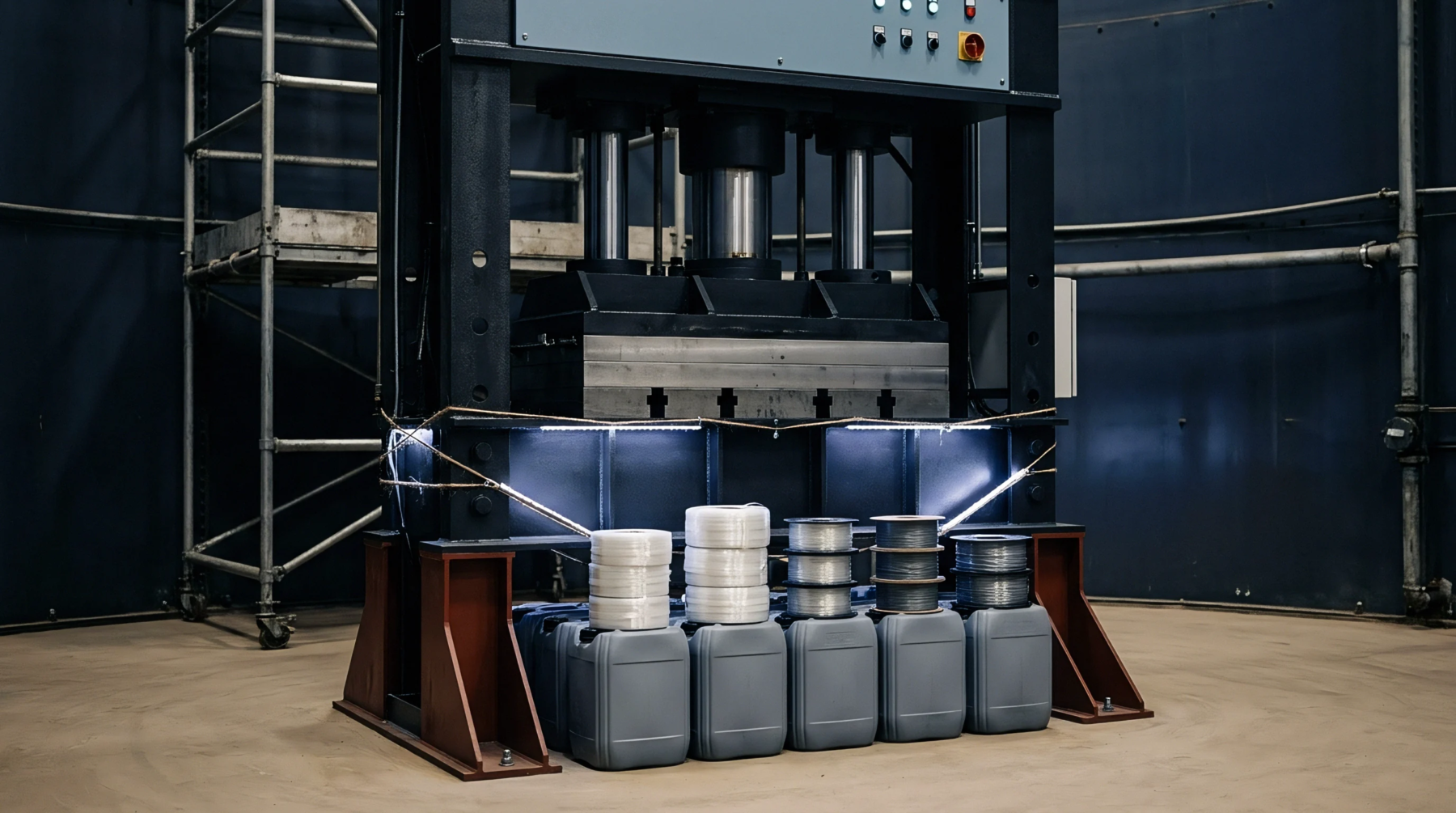
Optimal stretch blow moulding demands exact pre-blow timing synchronization to control strain hardening and achieve uniform container wall thickness.

Coupled viscoplastic modeling of back-stress hardening and adiabatic softening allows thin-wall tooling optimization that cuts cycle times and capital spend.

Residual oxidative induction time limits define processing stability by measuring consumed antioxidant additives in recycled polyolefin pellets under isothermal oxygen flow.

Standard melt indexers measure low shear viscosity, while capillary viscometers capture processable shear rates, requiring multi-weight or high-shear testing.

Converting melt volume rates across load and temperature requires applying polymer melt density and activation energy exponential corrections.

Deterministic FPGA processing of piezoelectric cavity telemetry converts micro-moulding melt front arrivals into sub-millisecond switchover execution.

Predictive state observers compensate fieldbus latency in thin-wall tooling, shifting pressure switchover before delayed packets cause cavity flash.

Verifying virgin polyolefin certificates demands matching melt index, density, and additive spectra to batch physical lots before regulatory release.

Unidentified migrants in food contact plastics require Cramer Class III or genotoxic threshold default evaluations under Threshold of Toxicological Concern principles.

Accurate HRMS oligomer quantification in recycled polyolefins requires class-matched surrogate calibrants to achieve the 10 ppb food contact threshold.

Polyolefin melt flow testing requires strict ISO and ASTM temperature-load pairings to prevent molecular weight drift from inflating scrap rates.

Closed-loop cavity pressure control stabilizes micro-injection molding by compensating for viscosity shifts and holding part dimensions within micron tolerances.

Testing secondary polyolefin packaging requires screening gas-phase volatiles and set-off degradation products migrating across primary barriers into food.

Secondary polyolefin waste cessation requires verified feedstock sorting limits, vacuum devolatilization, REACH threshold compliance, and audited FPC dossiers.

Retrospective interest on toll-compounded polyolefins accrues daily on unpaid duties from customs entry dates whenever mass-balance origin tracing fails an audit.
Expertise is a utility, not a secret. sentiention™ publishes its working knowledge as open reference: intelligence layer covering the materials it sources, the markets it enters, and the reference that serves both.