Meaning
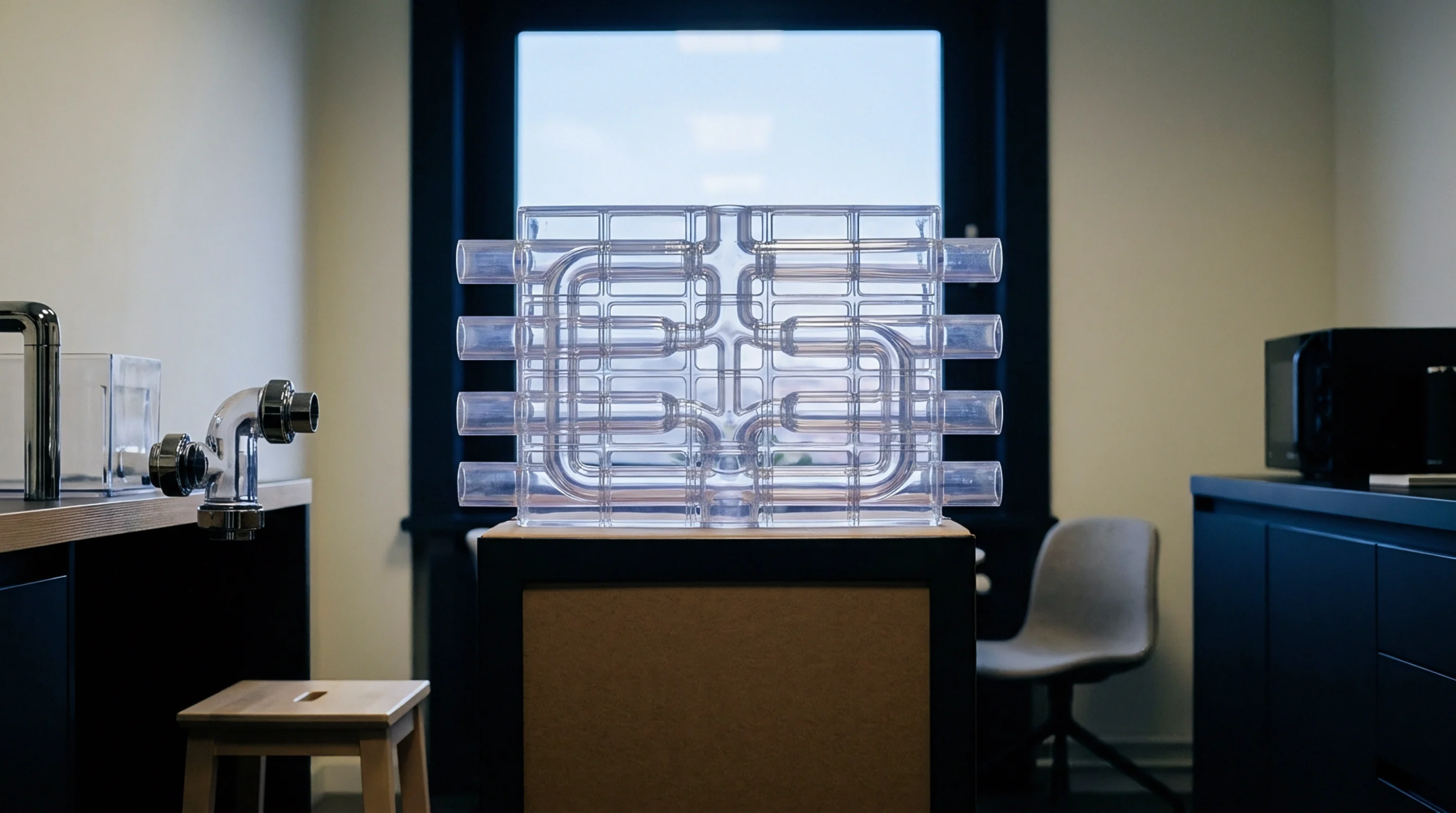
Equilibrium in the distribution of heat among the various flow channels of an injection manifold ensures that every part in a multi-cavity tool is produced under identical conditions. Achieving hot runner thermal balance prevents viscosity variations that cause some cavities to fill more slowly than others. If the temperature is uneven, the resulting parts will exhibit different shrinkage rates and dimensional tolerances.
Thermal Gradient
Differences in the proximity of heater bands to the melt channels create localized hot or cold spots within the steel. Maintaining hot runner thermal balance requires precise control over each individual heating zone to counteract heat loss at the manifold supports. Variations in the thermal profile lead to inconsistent gate freeze times across the tool.
Cavity Uniformity
Consistent melt properties at each nozzle tip are required to produce high-quality parts in high-cavitation moulds. When hot runner thermal balance is absent, the cavities furthest from the main sprue often experience lower temperatures and higher pressures. This imbalance results in a wider distribution of part weights and increases the frequency of short shots in the outer cavities.
Manifold Balance
Engineering the layout of the heaters and the flow paths ensures that the material residence time is the same for every nozzle. Sophisticated manifold designs use thermocouple feedback to adjust the power output for each zone in real time. Proper thermal management across the manifold allows for the production of high-precision components with minimal deviation in physical properties.