Viscoplastic Constitutive Modeling of Strain Hardening and Thermal Softening Interplay
Coupled viscoplastic modeling of back-stress hardening and adiabatic softening allows thin-wall tooling optimization that cuts cycle times and capital spend.


Flaw
Finite element simulations of high-speed polymer forming or crashworthiness frequently predict premature necking or catastrophic rupture where physical components exhibit stable drawing. The primary driver of this discrepancy is the decoupled treatment of viscoplastic flow, adiabatic shear heating, and orientational hardening. Thermoplastic polyolefins, semi-crystalline polyamides, and engineering polycarbonates undergo substantial plastic deformation under strain rates spanning 0.01 per second to 5000 per second.
At low deformation speeds, isothermal conduction dissipates deformation energy into surrounding tool steel. At elevated industrial rates, 85 to 95 percent of plastic work converts directly into internal thermal energy, driving localized thermal softening. When constitutive models neglect the continuous mechanical resistance from macromolecular network alignment, simulated components neck uncontrollably under plastic strain values below 0.35.
Tooling engineers facing progressive cavity filling, high-speed thermoforming, or blow-moulding wall thinning observe this failure directly in mismatched part mass and localized web thinning. Standard finite element codes typically implement the classic Johnson-Cook model, which treats strain hardening and thermal softening as uncoupled, multiplicative scalar functions. In polymers, orientation hardening stems from entropic back-stresses that intensify precisely as polymer chains stretch toward their limit extensibility, an effect rooted in molecular chain kinematics rather than dislocation pinning.
Treating these competing rate-dependent mechanisms as simple isotropic factors causes molders to add excessive wall thickness, unnecessarily increasing part weight and lengthening cooling cycles.
A four-millimeter unfilled polyamide 6 plaque running at an injection velocity of 180 millimeters per second converts 90 percent of shear work into localized melt heating, shifting the shear zone temperature upward by 18 Kelvin before tool wall contact occurs.
Procuring production tooling based on naive isotropic plastic approximations commits capital to unviable cavitation layouts. When a runner system or stretch-blow profile is sized against a simulation that under-predicts strain-hardening resistance at high elongation, the physical tool delivers parts with thick gate pads, localized wall washouts, and severe variations in crystalline density across deep-draw pockets. Mold designers compensate by modifying gate geometries and adding water circuits, incurring substantial toolroom revision expenses.
Accurately formulating the constitutive boundary between hardening and softening determines whether a 32-cavity cold-runner tool runs stably within its target 14-second cycle or generates excessive reject rates across operational shifts.
A supplier will often attribute early production thinning to batch-to-batch polymer variability rather than acknowledge an uncalibrated constitutive model during the initial mold flow validation.

Kinematics
Deformation kinematics for finite-strain viscoplasticity require a multiplicative decomposition of the total deformation gradient, denoted as F, into elastic and plastic components. Elastic response encompasses reversible intermolecular bond stretching and instantaneous lattice distortion, whereas intermediate plastic configurations govern irreversible macromolecular slip, segmental rotation, and entropic back-stress generation.
The total deformation gradient separates into an elastic tensor and an inelastic tensor, written as F equals Fe multiplied by Fp. The plastic velocity gradient, Lp, operates within the intermediate stress-free configuration, linking rate-dependent plastic flow directly to the driving deviatoric stress tensor. Unlike metallic crystals where slip occurs along fixed crystallographic planes, amorphous and semi-crystalline polymers deform via collective shear transformations. Segmental chain mobility is mediated by free volume distribution and thermal activation.
The effective plastic shear rate follows non-Newtonian, thermally activated Eyring formulations or cooperative Argon mechanisms, modulated directly by current temperature and hydrostatic pressure.

Decomposition and Internal Stress Frameworks
To accurately capture mechanical response across variable operational rates, the Cauchy stress tensor must separate into two distinct components: an intermolecular resistance tensor and an entropic orientational back-stress tensor. The intermolecular stress accounts for local barrier hopping, which yields yield peaks followed by intrinsic strain softening. The orientational network back-stress originates from entropy loss as coiled macromolecular chains stretch between chemical crosslinks or physical entanglements.
| Kinematic Variable | Mathematical Representation | Physical Domain | Primary Operational Effect |
|---|---|---|---|
| Elastic Deformation | Fe | Intermediate to current | Lattice compliance, volumetric bulk response |
| Plastic Flow Gradient | Fp | Reference to intermediate | Irreversible chain slip, permanent dimensional drift |
| Back-Stress Tensor | Hb | Intermediate network space | Nonlinear orientational hardening, post-yield stiffening |
| Inelastic Dissipation | Dint | Local continuum point | Adiabatic temperature rise, core thermal softening |
| Left Cauchy-Green Elastic | Be = Fe Fe^T | Current spatial domain | Intermolecular driving stress, local shear yielding |
The network stress formulation relies on non-Gaussian statistical mechanics, typically implemented via eight-chain representations or full-network sphere integrations. As equivalent plastic stretch approaches the limiting network stretch parameter, chain tension rises nonlinearly, expressed mathematically through inverse Langevin functions. This dramatic hardening counters the destabilizing influence of thermal softening at elevated strains, stabilizing neck growth during deep drawing and blow-molding operations.

Conversion of Mechanical Work to Internal Heat
The energy balance equation dictates local temperature evolution throughout rapid forming cycles. The thermodynamic dissipation inequality requires the generation of entropy via non-conservative plastic work. The rate of internal heat generation per unit current volume equates to the Taylor-Quinney coefficient multiplied by the inner product of the deviatoric plastic driving stress and the plastic velocity gradient.
In classical metal plasticity, the Taylor-Quinney coefficient is treated as a constant scalar, conventionally assumed at 0.90. In solid polymers undergoing finite deformation, this conversion parameter exhibits strong dependence on plastic strain and current temperature. During initial yield and post-yield softening, substantial mechanical energy is stored elastically as internal conformational defects and distorted entanglements, depressing the instantaneous Taylor-Quinney coefficient to values between 0.40 and 0.60.
Once plastic strain exceeds 0.50, conformational chain locking forces virtually all subsequent plastic work into vibrational heat dissipation, driving the coefficient toward 0.95.
Thermal conduction through thin molded walls depends on thermal diffusivity, cycle contact times, and transient interface heat transfer coefficients. When localized plastic deformation rates outpace thermal conduction across characteristic component thicknesses, conditions turn adiabatic, triggering concentrated shear band heating.
A standard procurement agreement incorporating DIN 16742 Series A tolerance limits will nullify supplier variance claims when tool-steel temperatures correlate directly to simulation-predicted adiabatic shear bands.


Dissipation
The mathematical coupling of temperature evolution to plastic flow rate forms the core of non-isothermal viscoplastic constitutive equations. Yield stress is modeled via thermal activation theory, where shear yielding reflects molecular segment jumps across energy barriers under applied shear stress. As deformation rate escalates, mechanical relaxation times compress, resulting in elevated initial yield stress.
The Eyring formulation states that the plastic shear strain rate is proportional to the product of absolute temperature, a reference jump frequency, and the hyperbolic sine of the activation volume multiplied by effective shear stress, divided by Boltzmann thermal energy. Below the glass transition temperature, high-speed strain hardening exhibits substantial sensitivity to hydrostatic pressure. Incorporating a pressure-dependent Drucker-Prager or Coulomb-Mohr yield surface modification accounts for this asymmetry between tensile yield, compressive loading, and simple shear.
Coupled Constitutive Formulations
To capture the dual influences of strain hardening and thermal softening, constitutive formulations must incorporate state variables tracking equivalent plastic strain, stretch invariants, and current absolute temperature. Consider a representative unified viscoplastic framework. The total deviatoric Cauchy stress, s, balances the intermolecular driving stress, s_inter, and the macromolecular back-stress, s_back:
s = s_inter + s_back
The magnitude of s_inter is governed by the equivalent plastic shear strain rate, gamma_dot_p, expressed in terms of an effective shear stress, tau, an athermal resistance, s_0, a pressure sensitivity coefficient, mu_p, and a thermal activation parameter, beta_T:
gamma_dot_p = gamma_dot_0 sinh( (tau + mu_p p) / (s_0 (1 – beta_T (T – T_0))) )^m
Macromolecular back-stress operates in parallel, tracking network stretch via the eight-chain model, where mu_R defines network shear modulus and lambda_L represents limiting chain extensibility:
s_back = (mu_R / 3) (lambda_L / lambda_chain) L_inv(lambda_chain / lambda_L) dev(B_p)
Here, B_p represents the isochoric plastic left Cauchy-Green tensor, lambda_chain equals the square root of one-third the first invariant of B_p, and L_inv denotes the inverse Langevin function. When local temperature elevates due to plastic work, the thermal softening term within s_inter reduces flow resistance. Conversely, as lambda_chain approaches lambda_L, the inverse Langevin function accelerates, driving s_back toward infinity and preventing runaway plastic localization.
Dynamic mechanical analysis conducted under ISO 6721 reveals that orientational network moduli drop by less than 12 percent across the rubbery plateau, whereas intermolecular yield resistance plummets by more than 60 percent across identical thermal transitions.
The localized temperature rate, T_dot, balances mechanical generation against spatial Fourier heat conduction:
rho C_p T_dot = eta_TQ (s_inter : D_p) + k_th div(grad(T))
In this governing equation, rho defines mass density, C_p defines specific isobaric heat capacity, eta_TQ represents the variable Taylor-Quinney factor, D_p denotes the symmetric plastic rate-of-deformation tensor, and k_th defines isotropic thermal conductivity. Adiabatic conditions dominate when the local deformation time scale remains substantially shorter than the characteristic thermal diffusion time across the shear layer.
The characteristic thermal diffusion time scales with the square of the half-wall thickness divided by thermal diffusivity. For high-density polyethylene with a diffusivity of 0.14 square millimeters per second, a 2.0-millimeter wall section carries a characteristic diffusion time of roughly 7.1 seconds. High-rate stamping, rapid blow molding, or core pin filling happening under 0.5 seconds forces the material to behave adiabatically, concentrating thermal softening inside central shear zones.
Whether strain hardening can arrest localized necking under intense thermal softening conditions remains dependent on the ratio of activation energy to the limiting network stretch parameter.

Bench
Calibrating coupled viscoplastic constitutive models requires targeted mechanical characterization across multiple decades of strain rate and controlled temperature intervals. Relying solely on low-speed standard tensile tests guarantees divergence when predicting high-rate manufacturing processes or dynamic impacts.
Testing begins with isothermal uniaxial tension and compression tests executed across strain rates from 0.0001 per second to 1.0 per second on standard electromechanical frames. Standard ISO 527 tensile bars exhibit necking instabilities that introduce non-uniform triaxial stress states, skewing true stress calculations beyond uniform elongation limits. To isolate true post-yield hardening, testing protocols rely on cylindrical uniaxial compression specimens following ISO 604, alongside flat shear testing via digital image correlation.
Compression testing eliminates premature necking, isolating macromolecular network back-stresses up to equivalent true plastic strains above 1.2.

Dynamic Strain Rate and Adiabatic Heating Capture
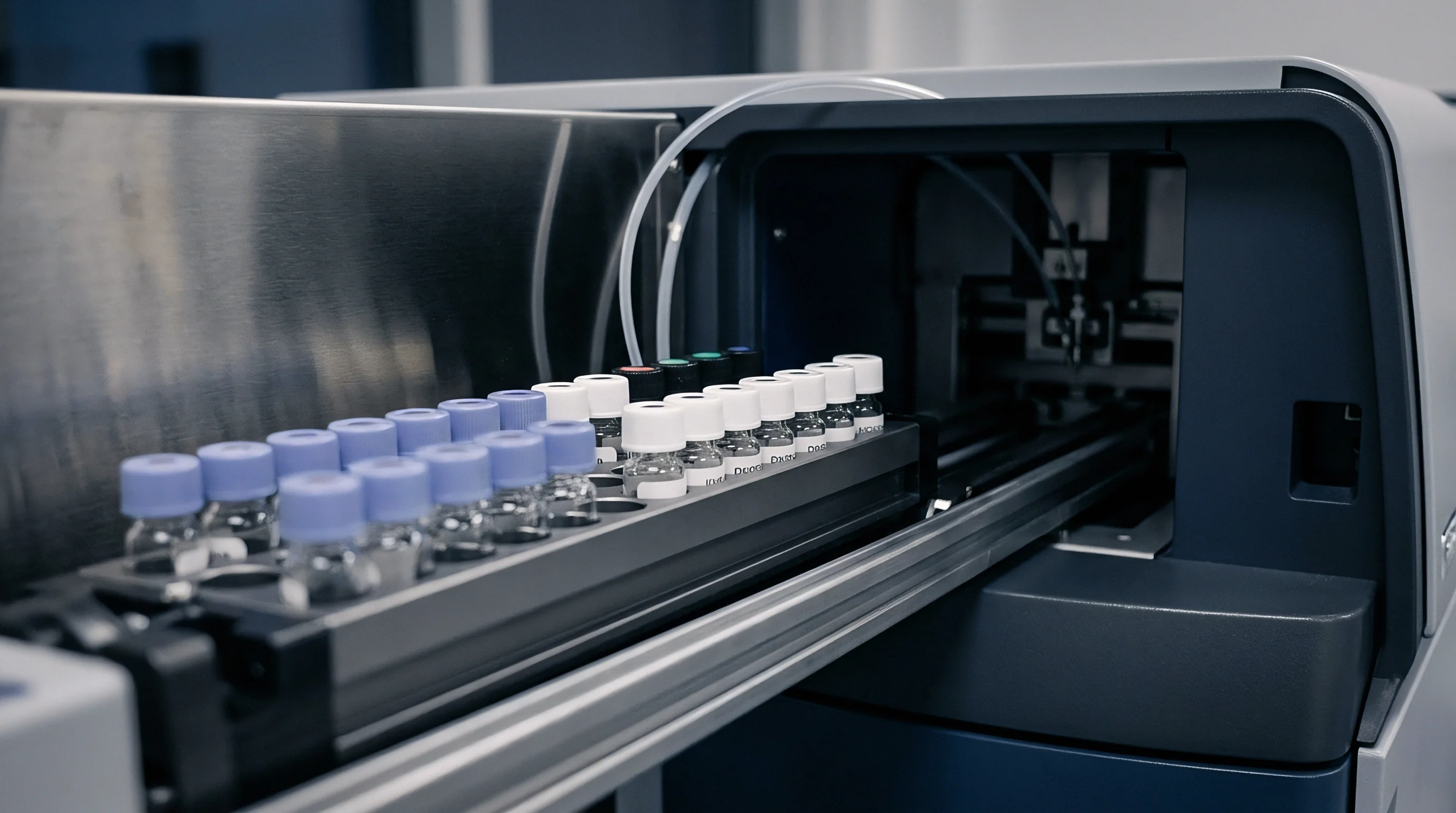
Characterizing high-rate behavior from 10 per second to 3000 per second requires servo-hydraulic high-rate testing equipment and split-Hopkinson pressure bar apparatus. Measuring the coupled drop in flow stress from adiabatic shear heating demands high-speed infrared thermography synchronized with full-field digital image correlation.
- Specimen Geometry Qualification verifies that miniature compression cylinders achieve uniform uniaxial stress without barreling, limiting frictional end-effects by using PTFE lubrication films beneath 0.05-millimeter initial thicknesses.
- High-Speed Optical Tracking captures stereo digital image correlation fields at framing frequencies above 100,000 frames per second, resolving localized necking initiation, true axial elongation, and Poisson ratio transitions.
- Infrared Radiometric Calibration maps surface temperature fields using thermal imaging cameras calibrated against polymer-specific emissivity values across the 293 Kelvin to 473 Kelvin operational envelope.
- True Stress Re-Scaling corrects raw force-displacement data by accounting for instantaneous cross-sectional contraction, isolating structural geometric softening from real constitutive softening.
- State Variable Decoupling separates isothermal rate-sensitivity parameters from thermal softening coefficients by comparing low-speed heated data against high-speed adiabatic stress drops.
The fundamental challenge in dynamic parameter extraction centers on the Taylor-Quinney coefficient. While literature frequently assumes a static 0.90 value, dynamic testing of polypropylene shows that eta_TQ starts below 0.35 during initial yield, rising to 0.88 once true strain passes 0.65. Assuming a constant 0.90 across all strain regimes overestimates thermal generation during early deformation, artificially inducing premature yielding in structural evaluations.
Material testing dossiers lacking high-rate isothermal-to-adiabatic transition curves cannot be used to certify tool drawings for deep-draw parts.


Qualification
Translating calibrated constitutive models into commercial finite element environments demands rigorous numerical integration routines. Standard explicit codes update internal state variables using radial return mapping or forward Euler integration. Explicit algorithms require stable time increments governed by the dilatational wave speed through the smallest mesh element.
Because coupled viscoplastic formulations introduce strong thermal and mechanical feedback, standard integration schemes frequently suffer from severe numerical drift or mesh dependency. When strain localization initiates, element sizing dictates the width of the localized shear band. As mesh refinement decreases element dimensions, localized plastic dissipation concentrates into narrower volumes.
Without numerical regularization, the calculated temperature rises artificially high, triggering unphysical thermal softening that leads to catastrophic, mesh-dependent premature failure.

Integration Schemes and Spatial Regularization
Overcoming localized mesh sensitivity requires incorporating non-local continuum mechanics or viscoplastic regularization techniques. Incorporating a rate-dependent overstress term, as seen in Duvaut-Lions or Perzyna formulations, introduces an intrinsic internal length scale. This mathematical regularization keeps the governing dynamic partial differential equations hyperbolic, ensuring finite, mesh-independent shear band widths.
| Integration Scheme | Algorithm Formulation | Time Step Dependency | Shear Band Robustness |
|---|---|---|---|
| Forward Euler Explicit | Explicit, uncoupled thermal-mechanical | Bounded by Courant criterion, dt < 0.2 microseconds | Poor, severe mesh sensitivity without regularization |
| Backward Euler Implicit | Fully implicit, simultaneous Newton-Raphson | Unconditionally stable, limited by residual convergence | Acceptable, exhibits convergence issues near limit stretch |
| Adiabatic Split Operator | Isothermal mechanical step with staggered thermal update | Semi-implicit, conditional on thermal diffusion rate | Moderate, computationally economical for transient cycles |
| Non-Local Viscoplastic | Gradient-enhanced implicit integral update | Implicit, governed by spatial gradient convergence | Superior, mesh-independent localization dimensions |
When selecting numerical algorithms for rapid forming simulations, engineers must balance computational cost against localization stability. Explicit schemes with staggered adiabatic thermal updates prove effective for high-velocity stamping and fast filling cycles. In contrast, steady-state blow molding or thermoforming stretching runs benefit from fully coupled implicit solvers that maintain stability despite stiff entropic back-stress spikes.
Implementing non-local viscoplastic algorithms increases simulation computational overhead by 30 to 50 percent per run. However, eliminating unphysical localized necking avoids costly, unnecessary redesigns of complex tooling geometries. A mold designer who misinterprets an unregularized mesh-dependent shear band as genuine mechanical failure risks over-thickening local part sections, adding useless mass to every production part.
Failing to verify that an external CAE contractor applied non-local viscoplastic regularization leaves the mold buyer holding all tool rework costs when physical parts draw without the localized necking predicted by simulation.
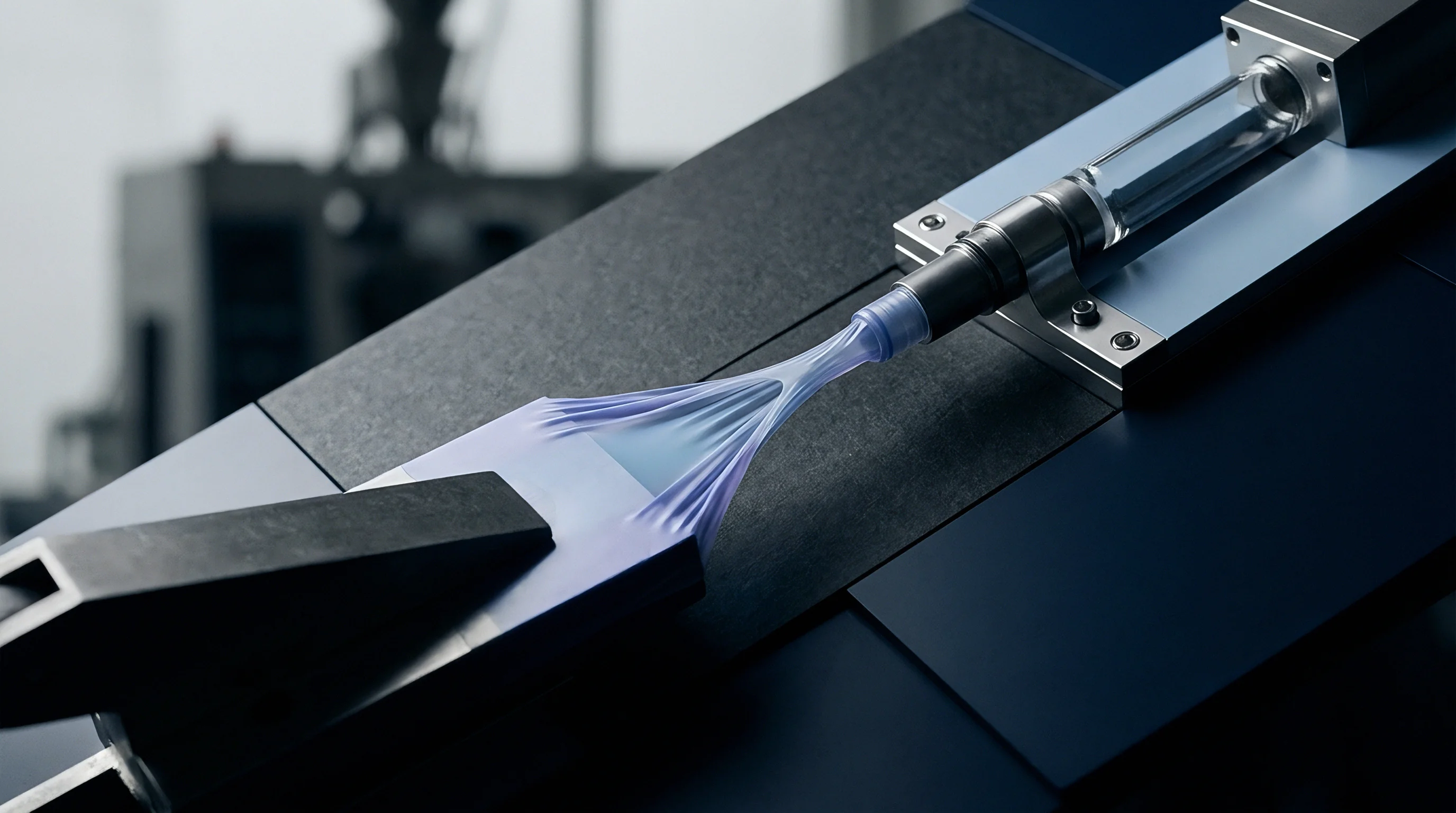
Tooling
Validating coupled viscoplastic models directly impacts tooling architecture, mold manufacturing choices, and production piece prices. When constitutive simulations accurately capture the balance between strain-hardening stabilization and thermal softening dissipation, tooling teams can safely engineer thinner, structurally robust nominal walls across complex geometries.
Consider an automotive battery module enclosure originally designed with a 3.5-millimeter nominal wall in a 30 percent glass-coupled polypropylene copolymer. Initial uncoupled Johnson-Cook structural simulations indicated deep corner necking during rapid injection-compression, leading the project team to consider increasing the wall to 4.2 millimeters. By recalibrating using a fully coupled viscoplastic model with eight-chain network hardening and dynamic adiabatic dissipation, the simulation proved that orientation hardening stably counters thermal shear softening, maintaining robust wall integrity at 3.2 millimeters.

Wall Thickness Optimization and Cavity Economics
Reducing nominal wall thickness from 4.2 millimeters down to 3.2 millimeters across a substantial housing changes manufacturing thermodynamics, operating cycle times, and the total tooling investment required to support annual vehicle build targets.
- Cooling Time Reduction accelerates cycle speeds, dropping cooling time quadratically based on the ratio of wall thicknesses, which cuts holding and cooling intervals by roughly 42 percent.
- Tool Steel Sizing reduces total mold volume, allowing the use of an 800-tonne press instead of a 1300-tonne machine, directly trimming hourly machine operating rates.
- Cavitation Density permits expanding from a 2-cavity mold to a 4-cavity configuration on equivalent press footprints, amortizing tool construction capital over double the production yield.
- Resin Mass Savings removes 240 grams of polymer per shot, directly reducing raw material procurement expenses over multi-year production volumes.
Reviewing tooling economics shows that the original 4.2-millimeter design demanded three 2-cavity molds costing 165,000 USD each, operating on 1100-tonne presses with a cycle time of 38 seconds. Under the optimized 3.2-millimeter nominal wall, validated through advanced viscoplastic analysis, total volume is handled by just two 4-cavity molds costing 245,000 USD each, operating on 800-tonne presses with a 22-second cycle time.
For an annual production volume of 1,200,000 units, moving to the thinner, viscoplastic-optimized profile delivers major economic gains. The combined capital expenditure for tooling shifts from 495,000 USD down to 490,000 USD, while machine-hour processing charges drop by nearly 40 percent. Over a five-year lifecycle, saving 240 grams of resin per part at 1.85 USD per kilogram yields over 2,660,000 USD in raw material savings alone.
Keep the cooling circuit within two channel diameters of the mold face to prevent localized tool steel heat soak from erasing the strain-hardening stability achieved in thin-wall sections.

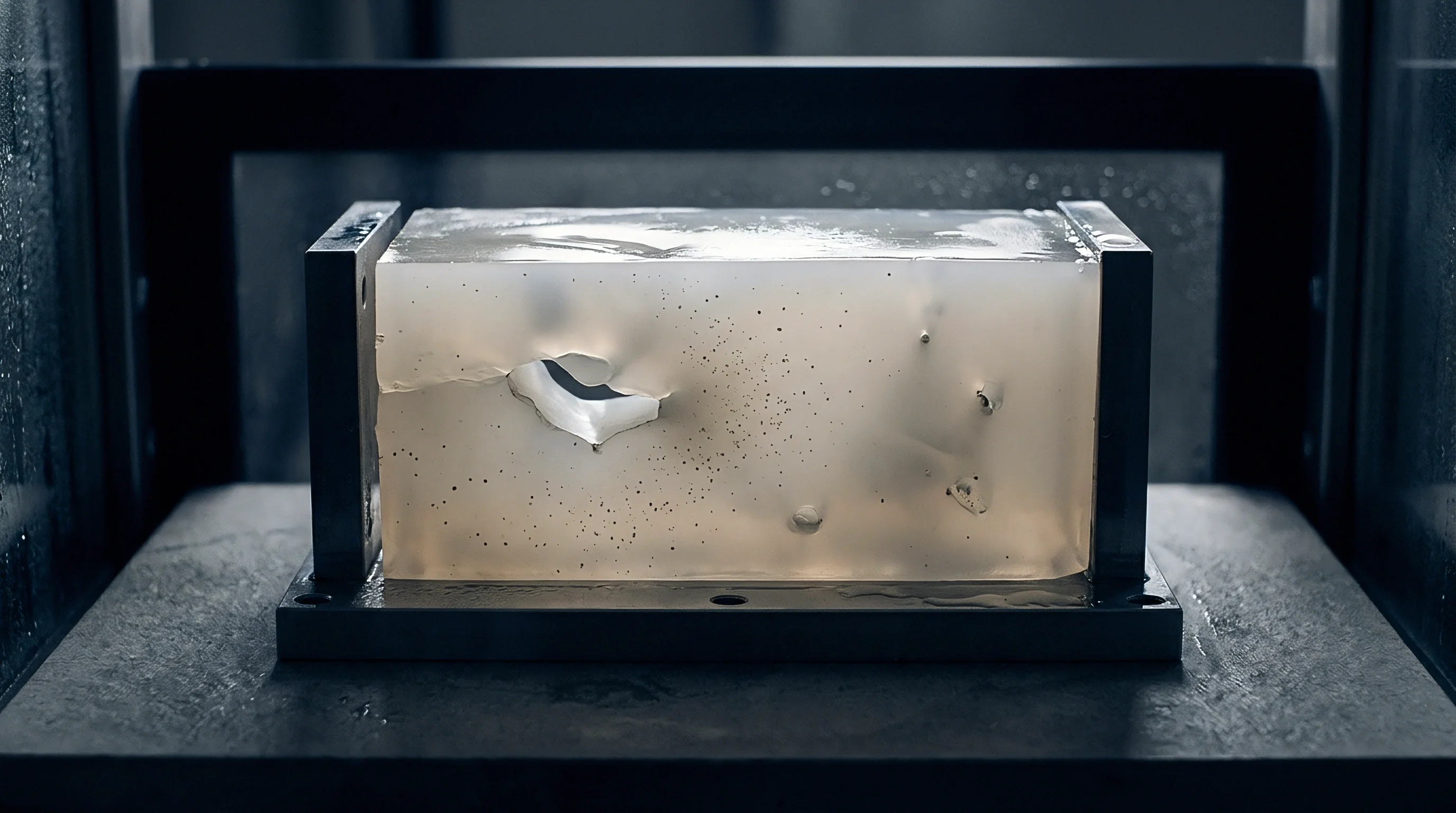
Verification
Transforming viscoplastic constitutive equations into validated physical tooling requires systematic shop-floor verification. The mold qualification procedure verifies that numerical model parameters match physical part dimensions, crystalline phase distributions, and localized wall thicknesses during initial production sampling.
The shop-floor validation framework operates through three structured phases. First, instrumented tool trials measure real cavity pressure and melt temperature profiles at critical shear zones, comparing internal sensor data against finite element flow predictions. Second, initial off-tool samples undergo high-resolution optical metrology, confirming that real wall thinning across deep draw features remains within DIN 16742 Series A tolerances.
Third, destructive impact testing and optical birefringence confirm that molecular chain alignment matches the predicted back-stress distributions, verifying that orientational hardening stabilized the part as intended.
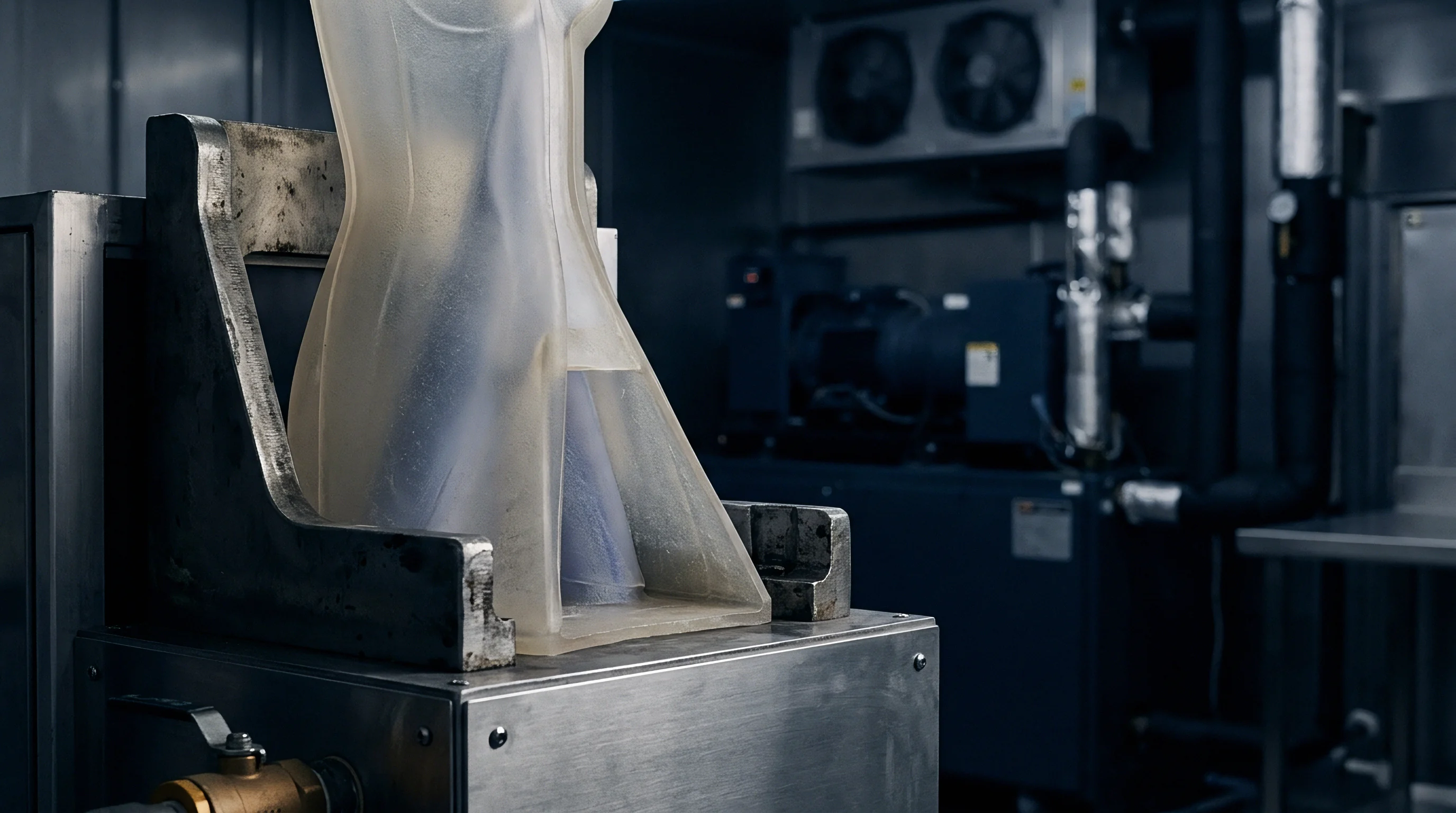
Production Audit and Factory Acceptance
Auditing the production window protects both tooling capital and long-term part quality across high-volume runs. A tool proven on an initial pre-series run can drift out of specification during unattended night shifts if hydraulic stability slips or cooling circuits suffer fouling.
Production shift data verifies that a 1.2-second drift in injection transit time shifts peak core shear heating by 8.4 Kelvin, moving localized wall thickness outside DIN 16742 tolerance boundaries.
Production contracts should define the acceptable process window explicitly. Rather than specifying only hydraulic injection pressure, the technical agreement must define upper and lower thresholds for cavity melt transit times, mold steel thermal equilibrium, and maximum allowable variation in dynamic peak cavity pressure.
When factory acceptance testing confirms that physical part dimensions, flash boundaries, and corner wall profiles track simulation predictions within 0.05 millimeters across a continuous 500-shot run, the tooling package earns final sign-off, clearing the mold for production transfer.
Commercial acceptance protocols require measuring wall-thinning profiles across five parts chosen from the final fifty shots of an unassisted four-hour run before authorizing final tooling release payments.