Meaning
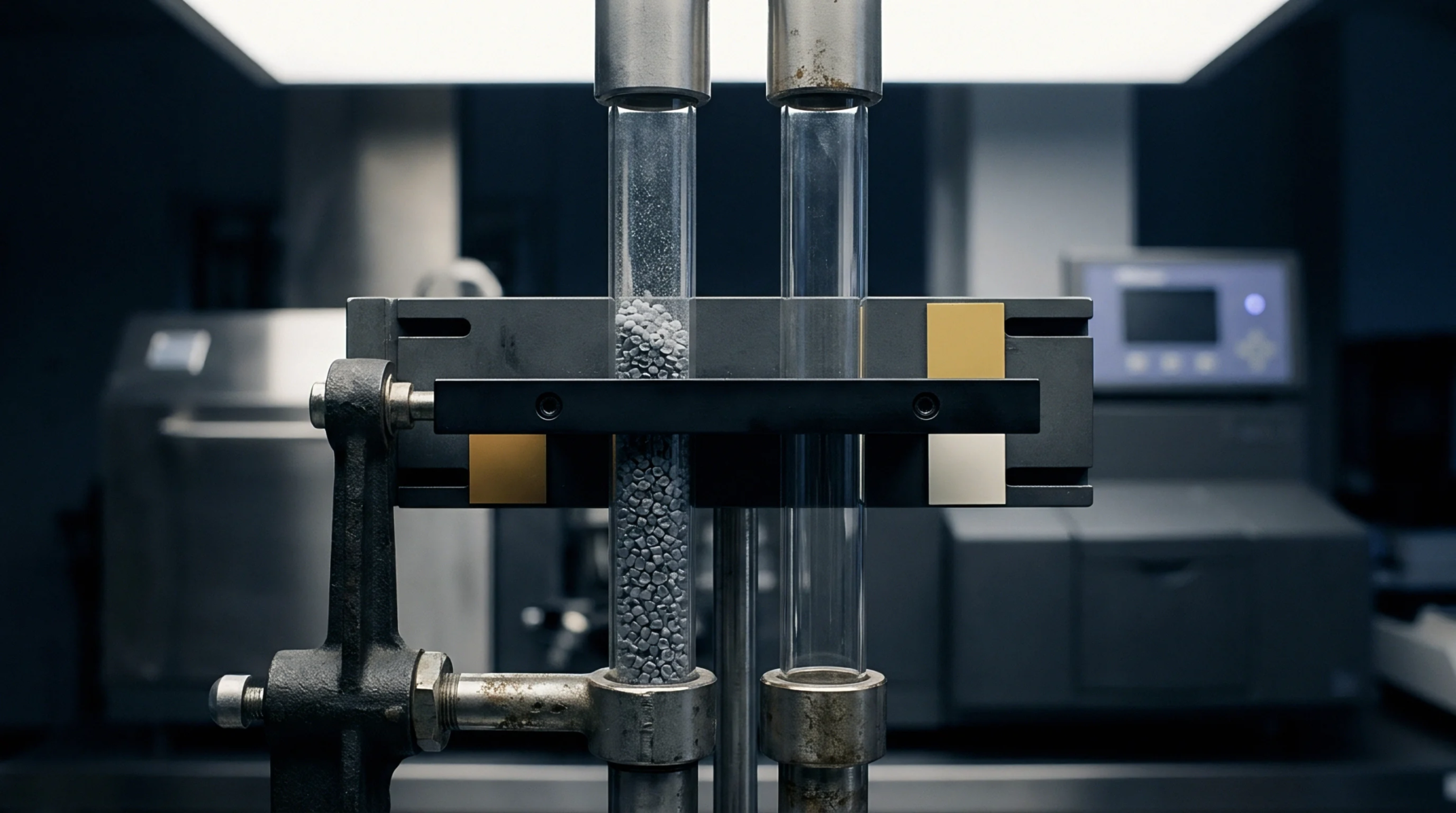
Engineering thermoplastics reinforced with glass fibers provide the high strength and stiffness required for demanding structural applications in the automotive and industrial sectors. This specific material grade, known as pa66-gf30, consists of a polyamide 66 base resin with thirty percent by weight of short glass fiber reinforcement. It is a workhorse of the injection moulding industry because it combines excellent mechanical properties with good heat resistance and chemical stability.
The addition of glass fibers substantially increases the tensile strength and the modulus of the material compared to the unfilled resin. However, the presence of these fibers also changes the processing characteristics and the shrinkage behavior of the polymer. Moulders must carefully manage the orientation of the fibers to ensure the part performs as intended.
Fiber Reinforcement
Structural integrity of the final component is determined by the interaction between the nylon matrix and the embedded glass strands. In a grade like pa66-gf30, the fibers act as a load-bearing element that prevents the polymer chains from moving under stress. This reinforcement makes the material suitable for replacing metal parts in engine covers, manifolds and structural brackets.
During the moulding process, the fibers tend to align with the flow of the melt, which leads to anisotropic properties in the finished part. This means that the strength and the shrinkage are different in the direction of flow compared to the cross-flow direction. Designers use computer simulations to predict this alignment and optimize the gate locations.
Proper fiber management is essential for avoiding warping and achieving the required dimensional stability.
Moulding Parameter
Processing of glass-filled polyamides requires a focus on temperature control and the management of machine wear. For pa66-gf30, the melt temperature must be high enough to ensure good flow but low enough to prevent the degradation of the nylon matrix. The presence of abrasive glass fibers can cause rapid wear on the screw and barrel of the injection moulding machine, which leads to a loss of process control over time.
High injection speeds are often used to prevent the material from freezing too quickly in the tool and to ensure a good surface finish. The mould temperature is also critical because it influences the crystallinity of the resin and the final appearance of the part. Consistent parameters are necessary for maintaining a stable production run with minimal scrap.
Part Performance
Reliability of the moulded component over its service life depends on the quality of the material and the precision of the manufacturing process. The use of pa66-gf30 provides a high level of creep resistance and dimensional stability under load, even at elevated temperatures. However, because nylon is hygroscopic, the material will absorb moisture from the environment, which reduces its stiffness and increases its impact strength.
This change must be accounted for during the design phase to ensure that the part still fits and functions after it has reached equilibrium. Regular testing of the mechanical properties confirms that the fiber content and the resin quality are within the specification. This material remains a top choice for high-stress applications where weight reduction is a priority.
The performance of these parts supports the efficiency of modern vehicle designs.