Meaning
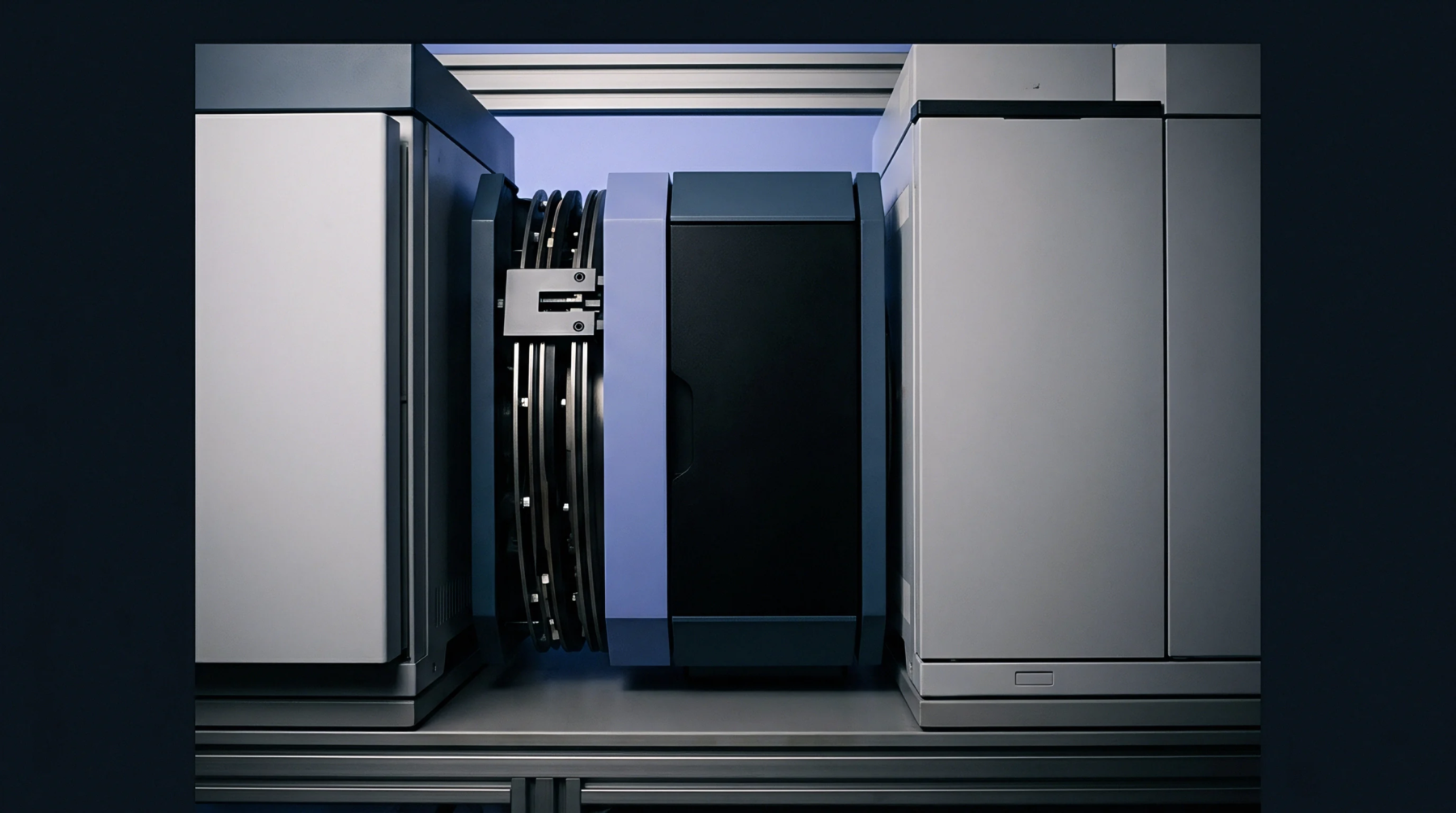
Non-destructive testing techniques measure the reduction in X-ray beam intensity as it passes through a material. In polymer characterization and quality control, x-ray attenuation provides a way to measure density variations and fiber orientation within injection molded parts. This reduction depends on the thickness, density and elemental composition of the polymer sample.
Density Correlation
Highly dense regions or heavy filler materials like glass fibers increase the absorption of x-rays. The rate of x-ray attenuation varies directly with the mass of the material in the beam path. This relationship allows the system to generate a detailed density map of the part, highlighting regions of internal shrinkage or voiding.
This mapping helps engineers identify areas where the packing pressure was insufficient to fill the part completely. In crystalline polymers, this analysis can also locate regions with higher crystalline density, which cool at different rates during the solidification phase.
Fiber Mapping
Alignment of reinforcing fibers alters the absorption profile in different directions. Because glass fibers cause more x-ray attenuation than the polymer matrix, the alignment can be traced through the part thickness. This information is critical for predicting the mechanical strength and warpage of the molded component, as fiber orientation determines the local thermal expansion coefficient.
Material Contrast
Low atomic number elements in polymers yield low contrast, requiring high precision detectors for accurate analysis. If the polymer has no heavy fillers, the difference in attenuation between a dense region and a void is very small. This limitation can be overcome by using high-resolution micro-tomography, which reveals microscopic defects that would escape standard industrial scanning.