
Analytical Evaluation Threshold Derivation in Food Contact Polymers
Deriving the analytical evaluation threshold pairs toxicological limits with contact geometry and detector response factors to quantify unidentified migrants.
Deriving the analytical evaluation threshold pairs toxicological limits with contact geometry and detector response factors to quantify unidentified migrants.
Exemption from European plastic packaging taxes requires third-party accredited EN 15343 chain-of-custody records linking batch resins to post-consumer waste.

Polyethylene slip amides migrate via matrix supersaturation, dropping film kinetic friction below 0.22 through surface crystallization within 72 hours.

Relative response factor multipliers scale semi-quantitative screening peaks upward, preventing false compliance claims on unidentified plastic migrants.

Polyolefin decontamination efficiency requires challenge tests measuring surrogate reduction alongside batch headspace VOC monitoring to satisfy food contact limits.

Polyolefin migration compliance demands simulant-specific exposure verification and mass-spectrometric screening for unlisted oligomeric hydrocarbons.

Semi-quantifying unidentified migrants requires applying empirical detector uncertainty factors to surrogate peak areas to prevent false-negative safety files.

Polyolefin stabilizer thermal degradation kinetics generate volatile non-intentionally added cleavage products that invalidate virgin resin compliance declarations.

Analytical screening thresholds require adjustment for packaging surface-to-volume ratios, extraction concentration, and ionization response variations.

Specific migration limits restrict migrant transfer from plastics into food, verified via standardized simulants, time-temperature windows, and area ratios.

Analytical migration report verification requires aligning production lot numbers, food simulants, exposure regimes, and detection limits with customs entries.

Verify food contact compliance by aligning accredited migration data, batch traceability, and full component declarations before cargo arrival.

Composite compliance testing of post-consumer polyolefins fails without cryogenic milling and Gy sampling models to eliminate massive fundamental error.
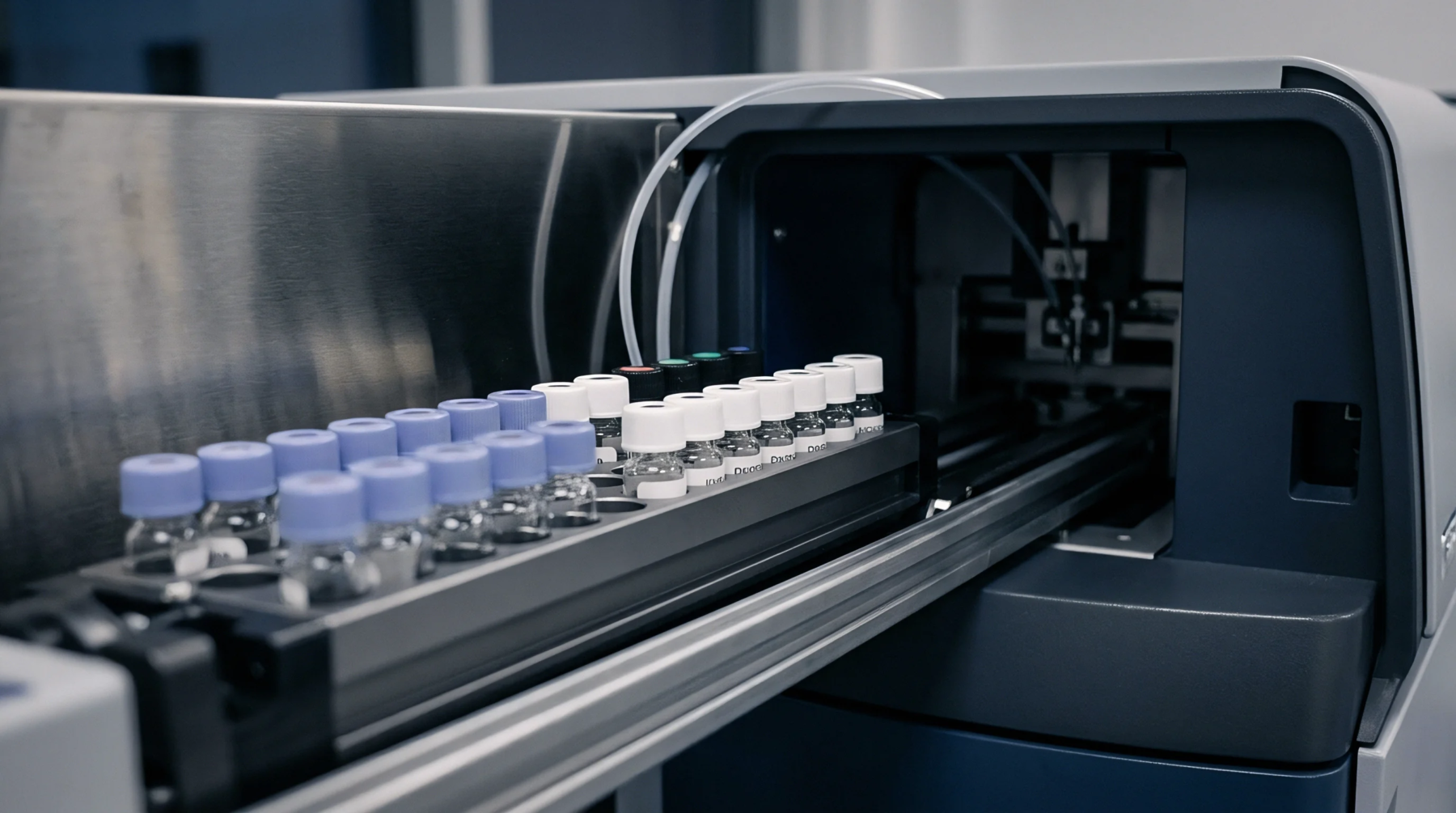
Deriving an analytical evaluation threshold converts toxicological intake limits into chromatographic screening baselines using actual container contact ratios.

Select erucamide for thermal stability and predictable migration, balancing inorganic antiblock surface adsorption to maintain stable film friction below 0.25.

Converters must secure precise masterbatch additive identities, specific limits, and dual-use statuses to verify food contact migration compliance legally.

Thermodynamic diffusion modeling provides valid polyolefin food contact screening only when verified initial concentrations and worst-case Ap parameters align.

Hot runner temperature differentials across mold cavities cause localized additive degradation and uneven migration rates that compromise food contact release.

Decontamination efficiency validation and non-target mass spectrometry quantify NIAS limits to secure food-contact declarations for recycled PET.

Verifying virgin polyolefin certificates demands matching melt index, density, and additive spectra to batch physical lots before regulatory release.

Accurate HRMS oligomer quantification in recycled polyolefins requires class-matched surrogate calibrants to achieve the 10 ppb food contact threshold.

Non-target mass spectrometry screening with ten-ppb threshold evaluation prevents non-compliant recycled polyolefin food packaging entering supply chains.

Mass spectrometry screening quantifies non-intentionally added polyolefin migrants, converting raw chemical spectra into defensible food contact compliance dossiers.

Additive shifts from migration combine polymer diffusion models with food recipe assays to prevent statutory threshold breaches at destination ports.
Non-target screening limits derive from toxicological exposure caps adjusted for packaging contact geometry, simulant transfer, and detector response factor variance.

Prevent mechanical ink set-off in flexible web stock by matching tension taper curves to core pressure limits and verifying cure thresholds.

Verifying functional barrier integrity in recycled polymers requires surrogate challenge testing, Fickian transport modeling, and precise lag time calculation.

Mechanical recycling creates low-molecular-weight degradation products whose migration into food simulants requires batch verification and challenge-tested barriers.

Analytical evaluation thresholds set mathematical peak cutoffs in mass spectrometry screening to trigger toxicity reviews for unknown migrants.

Verify laminate declarations by checking finished layer chemistry, primary aromatic amine cure completion, and simulant test parameters against batch lots.
Expertise is a utility, not a secret. sentiention™ publishes its working knowledge as open reference: intelligence layer covering the materials it sources, the markets it enters, and the reference that serves both.