High Resolution Mass Spectrometry Quantification Workflows for Unknown Polyolefin Oligomers in Food Packaging
High-resolution mass spectrometry screening quantifies unknown polyolefin oligomers using class-matched surrogate standards and conservative response factor multipliers.


Foil
Flexible food packaging that relies on polyolefin sealing layers presents distinct analytical hurdles during food contact compliance testing. Low-density polyethylene, linear low-density polyethylene, and polypropylene routinely retain low molecular weight compounds left over from resin synthesis or later thermal processing. Ranging from 100 Da to 1000 Da, these molecules span saturated aliphatic chains, branched structures, and complex cyclic configurations.
Migration into dry, liquid, or fatty foods occurs continuously throughout shelf life, driven by thermodynamic partition coefficients and diffusion gradients between the plastic substrate and the food matrix.
Quantifying these migrating components poses a technical challenge. Unlike intentional additives such as primary antioxidants or slip agents, unlinked resin fractions lack commercially available reference standards. Characterization relies entirely on high-resolution mass spectrometry screening to detect and evaluate unknown chemical entities.
Lacking specific standard materials for direct chromatographic calibration, analytical laboratories must use surrogate reference molecules to approximate true mass concentrations.

Polyolefin Oligomer Formation in Multi Layer Structures
Base resin polymerization leaves residual short-chain hydrocarbons trapped within the polymer matrix. Extruding resins at high conversion temperatures creates secondary degradation products as free radicals cleave the main polymer backbone. In flexible barrier laminates where polyolefin sealing films bond to aluminum substrates or biaxially oriented polyethylene terephthalate, the thermal stress of solventless polyurethane lamination accelerates this breakdown.
The resulting mixture contains both linear polyolefin oligomeric saturated hydrocarbons and complex polyolefin oligomeric aromatic hydrocarbons originating from catalyst residues or degraded thermal stabilizers.
Solvents readily penetrate deep into the matrix. Extracting these non-target fractions requires careful sample preparation tailored to film thickness and polymer density. Direct extraction with hexane, dichloromethane, or chloroform risks swelling the polymer film, which alters diffusion kinetics and extracts high molecular weight polymer chains that foul mass spectrometry sources.
Controlled migration testing with standardized food simulants evaluates real-world exposure while protecting the source interface from contamination.
Total POSH migration from 50 micron polypropylene film reaches 3.2 mg/kg in vegetable oil simulant D2 after 10 days at 60 degrees Celsius.
Fatty food simulants extract low molecular weight fractions with high efficiency. Liquid simulants such as ethanol ten percent, acetic acid three percent, or vegetable oil simulant D2 draw short-chain fractions across the interface based on chemical solubility. Isooctane and ninety-five percent ethanol serve as substitute fatty simulants under European testing framework EN 1186, accelerating migration kinetics while allowing direct chromatographic injection without tedious lipid cleanup.
Solvent selection directly shapes the profile of isolated compounds, since non-polar substitutes extract high molecular weight aliphatic chains far more readily than polar aqueous simulants.

Migration Physics across Laminated Barrier Films
Fickian diffusion modeling describes how low molecular weight compounds move through flexible polyolefin layers. Diffusion coefficients depend heavily on temperature, polymer crystallinity, and the hydrodynamic radius of the migrating species. Cyclic molecules migrate at distinctly different rates than linear structural isomers of identical molecular mass due to differences in cross-sectional area and polymer matrix interaction energy.
Evaluating finished multi-layer packaging requires distinguishing inner sealant layer migration from set-off migration occurring on outer printed surfaces during roll storage. The analytical methodology must trace structural origins to flag non-compliant resin batches before high-speed filling operations begin. The non-target extraction limits and structural characteristics governing multi-layer packaging assessments include:
- Linear Aliphatic Fractions consist of straight-chain alkane oligomers ranging from carbon chain lengths C10 to C45, exhibiting uniform gas chromatographic spacing and predictable fragmentation patterns under electron ionization.
- Branched Isomeric Mixtures display unresolved complex mixtures in liquid chromatography, producing broad chromatographic humps that obscure discrete individual peak identification and signal integration.
- Saturated Cyclic Species form single or multi-ring structures during polyolefin synthesis, demonstrating higher density and altered diffusion coefficients compared to open-chain analogues of equivalent mass.
- Aromatic Residues originate from trace catalyst residues, degradation of alkylbenzene additives, or secondary reactions during high-temperature resin compounding, posing elevated toxicological concern.
- Polyurethane Intermediates migrate from lamination adhesive systems through polyolefin sealants, co-eluting with aliphatic polyolefin components and confounding total mass spectrum deconvolutions.
When multi-layer structures incorporate recycled polyolefin resins, the profile of migrating short-chain species expands significantly. Recycled feedstocks introduce post-consumer contaminants, degraded polymer fragments, and unexpected cross-linked species that complicate non-target screening workflows. The analytical process must systematically isolate these unknown fractions while maintaining mass accuracy sufficient to assign confident elemental compositions to every detected signal.
Distinguishing whether a detected signal stems from resin synthesis or post-consumer contamination remains an ongoing challenge for regulatory analytical chemists.


Ionization
Mass spectrometry detection of non-polar polyolefin fractions requires ionizing compounds that lack naturally protonated or electroactive functional groups. Aliphatic hydrocarbons possess low proton affinity and lack polar heteroatoms, making traditional electrospray ionization inefficient and highly variable across structural classes. High-resolution mass spectrometers operating with Orbitrap or Time-of-Flight mass analyzers must use specialized atmospheric pressure ionization techniques to achieve low detection limits without causing severe sample fragmentation.
Electrospray Ionization relies on adduct formation to ionize saturated hydrocarbons. Adding ammonium acetate, silver nitrate, or sodium formate to liquid chromatography mobile phases encourages adduct creation, forming ammonium or silver ion complexes with aliphatic chains. Atmospheric Pressure Chemical Ionization and Atmospheric Pressure Photoionization offer superior ionization efficiency for non-polar species by generating gas-phase radical cations or protonated molecules via dopant-assisted photoionization using toluene or chlorobenzene.
Gas chromatography coupled to high-resolution mass spectrometry using electron ionization or low-energy chemical ionization provides alternative separation pathways for volatile and semi-volatile oligomeric fractions.

Atmospheric Pressure Ionization Physics for Saturated Hydrocarbons
In atmospheric pressure chemical ionization, primary corona discharge ionizes reagent gas molecules, transferring charge to solvent molecules that subsequently ionize target analytes through proton transfer or charge exchange. Saturated alkane molecules lack basic sites, forcing ionization to proceed through hydride abstraction and producing pseudo-molecular ions of the form +. This mechanism generates fragment ions that mimic true molecular ion species, complicating high-resolution spectral identification.
Dopant-assisted photoionization overcomes ionization suppression by employing krypton discharge lamps emitting 10.0 eV and 10.6 eV photons. Toluene dopant molecules undergo direct photoionization to form toluene radical cations, which subsequently engage in charge exchange with polyolefin oligomer molecules having ionization energies below 10 eV. This soft ionization mechanism preserves molecular ion integrity, enabling precise elemental formula assignment based on exact mass measurements.
Under EN 13130-1 testing protocols, an uncalibrated peak exceeding 10 micrograms per kilogram automatically triggers a toxicological evaluation requirement.
Low-energy electron ionization at 12 eV to 15 eV presents another powerful pathway for gas chromatography HRMS workflows. Standard 70 eV electron ionization causes extensive fragmentation of aliphatic hydrocarbons, reducing molecular ion abundance to undetectable levels and leaving only non-specific fragment ions at m/z 43, 57, 71, and 85. Lowering electron energy preserves molecular ion visibility while retaining sufficient fragmentation to confirm structural identity.
Isotope patterns confirm carbon numbers.

Mass Resolution Requirements for Structural Deconvolution
Accurate elemental composition assignment requires high-resolution mass analyzers capable of resolving isobaric mass overlaps. Orbitrap instruments operating at resolving powers exceeding 120,000 FWHM at m/z 200, or QTOF instruments operating above 40,000 FWHM, separate nominal mass overlaps between aliphatic hydrocarbon oligomers and heteroatom-containing oxygenated additives or degradation products. Mass accuracy must remain below 2 ppm across the full acquisition mass range to eliminate false positive formula assignments.
Kendrick Mass Defect analysis simplifies complex high-resolution mass spectra by converting IUPAC exact masses to the Kendrick mass scale based on a specific repeat unit, such as CH2 for polyolefin series. Oligomeric homologues possessing identical degrees of unsaturation and ring counts share identical Kendrick Mass Defects, aligning into horizontal series when plotted against nominal Kendrick mass. This mathematical transformation permits rapid separation of polyolefin series from background matrix interferences and solvent impurities.
To establish a reproducible non-target screening acquisition sequence for high-resolution mass spectrometry platforms, analytical laboratories execute a mandatory sequence of instrument setup and acquisition steps:
- Inject mass calibration standards to verify analyzer mass accuracy remains within 1.0 ppm across the 50 to 1200 m/z range.
- Acquire solvent blank spectra using the identical liquid chromatography gradient to construct an active peak subtraction library.
- Execute full scan HRMS data collection at maximum mass resolution to capture accurate molecular ion profiles and isotopic patterns.
- Trigger data-dependent tandem mass spectrometry fragmentation on precursor ions exceeding a pre-set intensity threshold of 100,000 counts.
- Apply low-energy collision-induced dissociation across stepped collision energies from 15 eV to 45 eV to generate structural fragment libraries.
- Export raw centroided spectral files into non-target processing software for automated baseline correction, peak picking, and alignment.
- Filter peak tables through Kendrick Mass Defect modules calibrated to CH2 mass units of 14.01565 Da.
- Cross-examine candidates against reference spectral databases and toxicological threshold databases to assign chemical structure priorities.
Ionization efficiency varies dramatically depending on chemical structure, mass range, and chosen ion source configuration. The operational characteristics of different high-resolution ionization interfaces are outlined in Table 1.
| Ionization Mode | Target Oligomer Family | Dominant Ion Species | Mass Range (Da) | Relative Response Variability |
|---|---|---|---|---|
| ESI with Ammonium Additive | Linear Aliphatics (POSH) | + | 200 to 1000 | High (Factor of 10x to 50x) |
| APCI (Positive Mode) | Branched Aliphatics / Cyclics | + | 150 to 800 | Moderate (Factor of 3x to 8x) |
| Dopant APPI (Toluene) | Aromatic Oligomers (POAH) | M+ radical cation | 100 to 900 | Low (Factor of 1.5x to 3x) |
| GC-Soft EI (15 eV) | Volatile Aliphatics (C10-C30) | M+ radical cation | 100 to 450 | Low (Factor of 1.2x to 2x) |
Response factor variation across structural classes represents the single greatest barrier to accurate non-target quantification. A non-polar saturated cyclic oligomer ionized via atmospheric pressure chemical ionization can yield an ion signal an order of magnitude lower than an aromatic oligomer of equivalent mass ionized via photoionization. Selecting an inappropriate surrogate standard introduces massive quantification errors into regulatory compliance reports.
Analytical chemists must rely on broad response factor ranges or computational response modeling to establish conservative concentration estimates when authentic reference compounds are absent.


Calibration
Quantifying unknown polyolefin oligomers without authentic reference standards requires surrogate calibration strategies that account for wide variations in ionization yield. Standard analytical procedures rely on selecting structurally related internal standards or surrogate compounds added to the extract at known concentrations. The measured area ratio between the unknown analyte peak and the surrogate peak forms the basis for semi-quantitative calculation.
If the response factor of the surrogate compound deviates significantly from that of the target unknown, the calculated mass concentration will severely overestimate or underestimate actual migration levels.
Quantifying relative response variations across three surrogate series establishes empirical safety factors for regulatory submissions. Testing with polydimethylsiloxane, linear alkanes, and alkylbenzene surrogates shows that relative response factors for saturated cyclic polyolefin fractions vary by up to a factor of fifteen across conventional atmospheric pressure ionization sources. Uncalibrated peaks demand conservative estimates.

Surrogate Standard Selection for Unknown Species
Surrogate standards must match the chemical class, molecular mass, and ionization characteristics of the unknown target fractions as closely as possible. For polyolefin saturated hydrocarbons, linear alkanes such as tetracontane, squalane, or deuterated alkane analogues serve as common surrogate calibration standards. For polyolefin aromatic hydrocarbons, deuterated alkylbenzenes or polycyclic aromatic compounds provide closer ionization response matching.
Quantum chemical calculations and machine-learning models now allow chemists to predict gas-phase ionization efficiencies based on molecular descriptors. By calculating liquid-phase basicities, proton affinities, and dipole moments for predicted oligomer structures, software algorithms compute relative response factors relative to a standard reference compound. This computational approach narrows semi-quantification uncertainty from an order of magnitude down to a factor of two, providing much greater confidence when assessing compliance against specific migration limits.
Saturated cyclic oligomers ionize poorly under electrospray conditions, leading analytical chemists to underestimate migration toxicity.
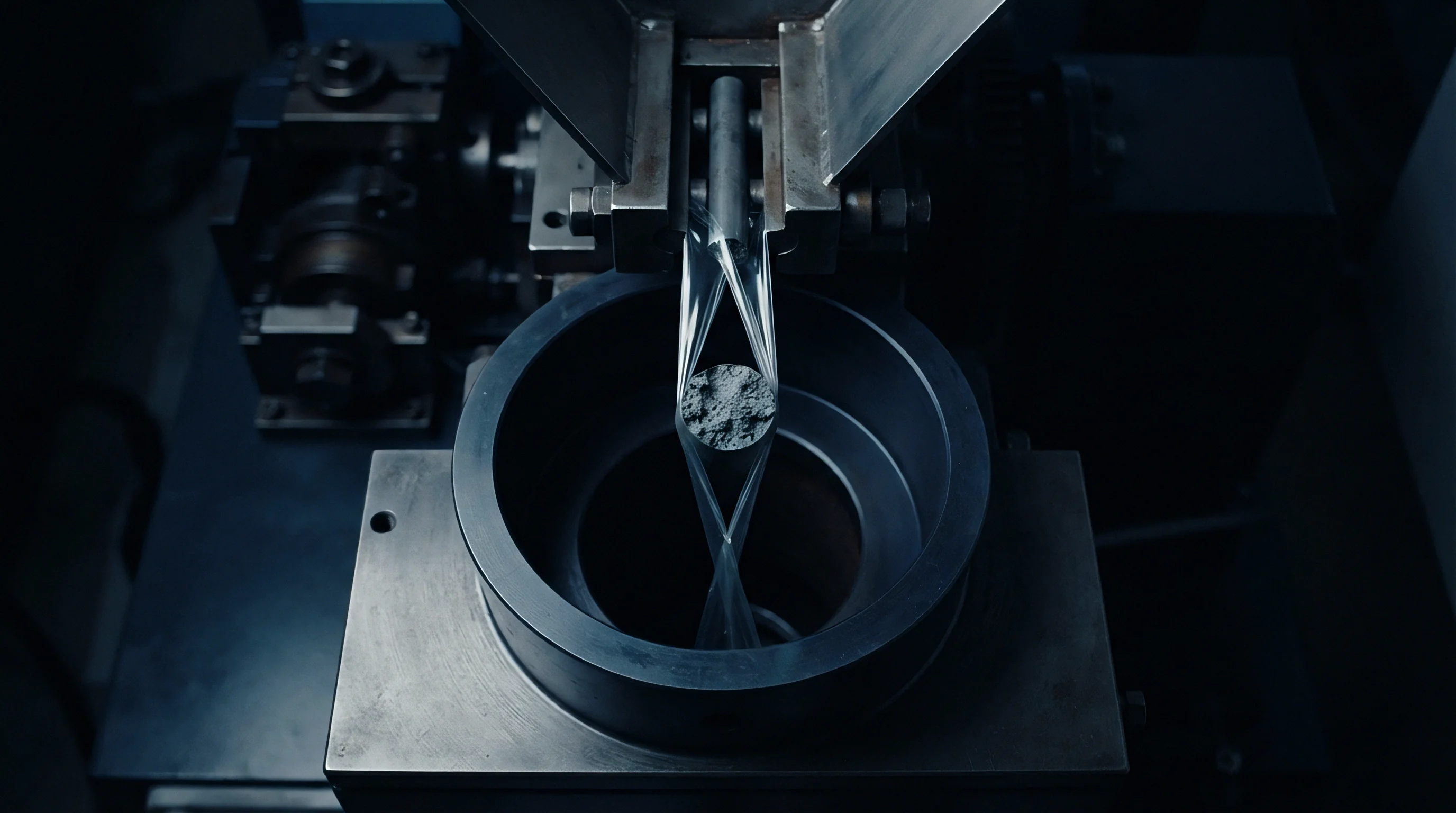
Matrix suppression skews concentration calculations. Co-eluting matrix components, including residual slip agents, antioxidant degradation products, and plasticizer residues, compete for available charge during atmospheric pressure ionization. Ion suppression dampens unknown oligomer signals, leading analytical systems to report falsely low migration values unless matrix-matched calibration standards or isotope-labeled internal standards are incorporated into the workflow.
How Does Matrix Suppression Distort Response Factors?
Co-eluting chemical species alter spray droplet evaporation rates and charge transfer kinetics inside the mass spectrometer source interface. When high concentrations of polar additives co-elute with non-polar polyolefin oligomers, the polar species preferentially occupy the droplet surface, suppressing the ionization of the non-polar oligomers. This suppression effect reduces peak areas by twenty to eighty percent compared to clean solvent standards.
Evaluating semi-quantification uncertainty demands systematic selection of surrogate standards. Laboratories implement structured decision frameworks to select surrogates, manage ionization bias, and bound potential error rates during regulatory screening campaigns:
- Structural Class Matching dictates that aliphatic unknowns must be quantified against aliphatic surrogates, while aromatic unknowns require aromatic surrogate standards to prevent fundamental ionization yield errors.
- Molecular Mass Alignment mandates selecting surrogate standards within 100 Da of the target unknown mass range to minimize mass-dependent analyzer transmission bias.
- Retention Time Proximity requires surrogate standards to co-elute in the same chromatographic window as unknown peaks to control for local mobile phase composition changes.
- Isotopic Labeling utilizes deuterated or carbon-13 labeled analogues where available, ensuring identical matrix suppression and extraction recovery characteristics.
- Uncertainty Budgeting applies a mandatory safety multiplicative factor to calculated semi-quantitative concentrations to compensate for uncalibrated response factor variance.
To illustrate the mathematical impact of surrogate selection on regulatory compliance outcomes, consider a worked analytical example. A non-target high-resolution screening run detects an unknown cyclic polyolefin oligomer peak with an integrated mass spectral area of 1,500,000 counts in a fatty food simulant extract. The laboratory evaluates this unknown peak using three different surrogate standard models to establish its semi-quantitative concentration and assess compliance against a 50 µg/kg toxicological threshold.
The arithmetic calculations proceed under defined analytical assumptions:
Assumption 1: Squalane surrogate (linear saturated alkane) at 100 µg/kg yields 3,000,000 counts, establishing a Squalane Response Factor (RF_sq) of 30,000 counts per µg/kg.
Assumption 2: 1,3,5-Tri-tert-butylbenzene surrogate (aromatic) at 100 µg/kg yields 15,000,000 counts, establishing an Aromatic Response Factor (RF_ar) of 150,000 counts per µg/kg.
Assumption 3: Quantum chemical response modeling predicts the true Response Factor for this cyclic saturated structure (RF_pred) is 12,000 counts per µg/kg due to low ionization efficiency.
Calculation Path A (Squalane Surrogate):
Concentration = Integrated Peak Area / RF_sq
Concentration = 1,500,000 counts / (30,000 counts / µg/kg) = 50.0 µg/kg
Calculation Path B (Aromatic Surrogate):
Concentration = Integrated Peak Area / RF_ar
Concentration = 1,500,000 counts / (150,000 counts / µg/kg) = 10.0 µg/kg
Calculation Path C (Predicted Response Factor Model):
Concentration = Integrated Peak Area / RF_pred
Concentration = 1,500,000 counts / (12,000 counts / µg/kg) = 125.0 µg/kg
The resulting semi-quantitative values span from 10.0 µg/kg to 125.0 µg/kg for the identical chemical signal. Path B produces a false pass result by underestimating concentration by a factor of 12.5 relative to the computationally predicted true response. Path A lands right on the 50 µg/kg threshold, creating compliance ambiguity.
Path C correctly identifies a toxicological breach requiring further refinement or isolation. This variance underscores why quantitative uncertainty ranges are necessary in compliance dossiers.
Table 2 provides the empirical uncertainty multipliers associated with different surrogate standard pairings across common polyolefin oligomer classes.
| Unknown Oligomer Class | Surrogate Standard Class | Average Response Factor Ratio | Quantification Error Factor | Recommended Compliance Safety Multiplier |
|---|---|---|---|---|
| Linear Aliphatic (POSH) | Linear Alkane (e.g. Squalane) | 1.2 | 1.2x to 1.5x | 1.5x |
| Branched Aliphatic (POSH) | Linear Alkane (e.g. Squalane) | 2.5 | 2.0x to 3.5x | 3.5x |
| Saturated Cyclic (POSH) | Linear Alkane (e.g. Squalane) | 0.3 | 3.0x to 5.0x | 5.0x |
| Alkyl-Aromatic (POAH) | Linear Alkane (e.g. Squalane) | 5.0 | 4.0x to 8.0x | 8.0x |
| Alkyl-Aromatic (POAH) | Polycyclic Aromatic (e.g. Phenanthrene-d10) | 1.1 | 1.1x to 1.4x | 1.5x |
| Data determined via atmospheric pressure chemical ionization HRMS cross-calibration using certified reference materials and synthetic oligomeric fractions. Safety multipliers represent upper bound 95% confidence intervals for compliance reporting. | ||||
A commercial dispute arose when an explicit standard operational calibration model was absent from a supply contract. The buyer rejected a forty-metric-ton resin shipment based on an outside laboratory report that used an aromatic surrogate standard to quantify saturated cyclic oligomers, underreporting total migration by a factor of four. Settling the dispute required re-testing the entire batch at an accredited independent facility using verified matrix-matched linear surrogates, absorbing sixty-five thousand euros in analytical fees, demurrage charges, and administrative expenses.


Threshold
Evaluating the toxicological relevance of non-target polyolefin oligomers requires establishing clear migration concentration thresholds linked to hazard profiles. Under European Commission Regulation EU 10/2011, Article 19 mandates that non-intentionally added substances, including polyolefin oligomers, undergo formal toxicological risk assessment by the packaging converter or resin manufacturer. The European Food Safety Authority provides framework criteria for evaluating unknown migration fractions based on molecular structure, exposure estimates, and structural alerts for toxicity.
The Threshold of Toxicological Concern concept establishes safe exposure boundaries for non-target screening hits where full toxicological data is absent. Under the Cramer classification system, chemical structures are grouped into three classes based on chemical reactivity, metabolic fate, and systemic toxicity data. Cramer Class I covers simple structures with predictable metabolic pathways, setting an exposure threshold of 1800 µg/person/day.
Cramer Class III encompasses structures that suggest significant toxicity or lack initial data on metabolic breakdown, restricting exposure to 90 µg/person/day, corresponding to a food concentration boundary of 15 µg/kg under standard consumer intake assumptions.

Toxicological Concern Boundaries in Non Target Screening
Polyolefin oligomers lacking heteroatoms or reactive functional groups fall primarily into Cramer Class I or Class III depending on cyclic saturation and aromaticity. Saturated polyolefin oligomeric hydrocarbons (POSH) are generally assigned to Cramer Class I or Class III based on molecular mass distribution, with fractions between 1000 Da and 5000 Da exhibiting negligible bioaccumulation potential due to intestinal absorption limits. Polyolefin aromatic hydrocarbons (POAH) containing three or more fused aromatic rings carry structural alerts for genotoxicity, enforcing a strict default concentration threshold of 0.15 µg/kg food, equivalent to 10 ng/person/day exposure.
Screening analytical methods must achieve limits of detection low enough to verify compliance against these toxicological boundaries. A high-resolution screening workflow unable to detect unknown substances at 10 µg/kg cannot confirm compliance for Cramer Class III species or potential genotoxic aromatic contaminants. The relationship between analytical capability, toxicological thresholds, and regulatory evaluation requirements is detailed in Table 3.
| Chemical Hazard Class | Cramer Classification | Daily Human Intake Limit (µg/day) | Equivalent Food Concentration (µg/kg) | Required HRMS Screening Limit (µg/kg) |
|---|---|---|---|---|
| Genotoxic Compounds / POAH (>3 Rings) | Structural Alert for Mutagenicity | 0.015 | 0.0025 | 0.010 |
| Non-Genotoxic Aromatic Oligomers | Cramer Class III | 90 | 15 | 1.0 |
| Saturated Cyclic Oligomers (POSH) | Cramer Class III | 90 | 15 | 1.0 |
| Linear/Branched Aliphatic Oligomers | Cramer Class I | 1800 | 300 | 10.0 |
| High Molecular Weight Fraction (>1000 Da) | Excluded from Absorption | Not Restricted | Not Restricted | 50.0 |
Toxicology sets the screening baseline. Establishing whether a detected unknown oligomer poses unacceptable risk involves calculating exposure using standard surface-to-volume ratio assumptions. Regulatory authorities define a default packaging contact geometry where one kilogram of food contacts six square decimeters of packaging film.
For specialized small-format packaging, real surface-to-volume ratios exceed this default, concentrating migrating oligomers into smaller food volumes and demanding stricter analytical detection limits.

Regulatory Compliance Streams for Packaging Declarations
Demonstrating compliance for non-target oligomers requires compiling a complete technical dossier that links raw chromatographic data to toxicological risk assessments. Declarations of Compliance issued down the supply chain must explicitly state the analytical screening boundaries applied during verification testing. A declaration stating that non-intentionally added substances were evaluated without detailing the analytical detection limits or surrogate calibration methods used is invalid during regulatory audits.
Supply chain transparency depends on precise documentation of analytical testing protocols. The underlying technical dossier supporting a Declaration of Compliance must contain specific evidence verifying that all migrating oligomer fractions remain below established safety limits:
- Sampling Traceability Records documenting resin lot numbers, converting extrusion temperatures, and film converting history to link tested samples directly to commercial production lots.
- Simulant Contact Protocol Specifications detailing exact contact times, temperatures, and simulant volumes used during formal migration testing according to EN 1186 standards.
- High-Resolution Mass Spectral Raw Files preserving full-scan centroided mass spectra, mass calibration logs, and raw instrument acquisition parameters for independent auditor review.
- Surrogate Standard Calibration Curves documenting linear dynamic range, signal-to-noise ratios, and empirical response factors applied to calculate semi-quantitative hit values.
- Toxicological Screening Classifications recording chemical structural assignments, Cramer class evaluations, and Threshold of Toxicological Concern comparison calculations for every detected peak.
- Uncertainty Margin Justifications providing conservative safety multipliers applied to account for potential surrogate response factor mismatches during non-target evaluation.
Customs officials routinely hold packaging shipments when screening reports omit structural identification evidence for non-intentionally added substances. Converter suppliers often explain under-reported oligomer migration by arguing that short-chain polyolefin fractions represent natural resin constituents rather than synthetic additives, claiming exemption from specific migration limits. Regulatory authorities reject this argument, holding that any migrating substance capable of transferring into food falls under general safety requirements regardless of its origin.


Receipt
Commercial contracts for food contact packaging materials increasingly incorporate strict non-target mass spectrometry testing specifications. Buyers, brand owners, and importers can no longer accept generic compliance declarations that rely on resin supplier marketing brochures. The financial exposure associated with product recalls, market withdrawals, and regulatory border rejections forces buyers to demand verified high-resolution mass spectrometry screening reports for every production lot.
Contractual agreements must define exact analytical execution protocols, standard calibration strategies, and reporting limits. Specifying that a packaging film must comply with Regulation EU 10/2011 is insufficient without naming the specific testing standards, simulant contact conditions, and non-target screening sensitivity boundaries required to substantiate compliance claims.
Customs clearance officers routinely hold packaging shipments when screening reports omit structural identification evidence for non-intentionally added substances.

Declaration Scope Boundaries and Testing Evidence
A Declaration of Compliance carries legal liability across international borders. The party placing the finished packaging material on the market assumes primary legal responsibility for toxicological safety. When a border authority screens imported packaging and detects migrating polyolefin aromatic hydrocarbons or high levels of cyclic saturated oligomers exceeding toxicological thresholds, the importer carries the duty of proving compliance through underlying laboratory test reports.
Importers assume ultimate legal liability. Data gaps halt customs release. If the underlying dossier relies on outdated testing, uncalibrated screening methods, or mismatched surrogate standards, the declaration fails under regulatory review.
Re-testing held shipments at port facilities introduces severe financial losses through warehouse demurrage fees, analytical expediting costs, and missed retailer delivery windows.

Batch Verification Mechanics in Commercial Supply Chains
Maintaining batch conformity across continuous resin manufacturing operations requires ongoing verification protocols. Resin manufacturers periodically alter catalyst packages, adjust reactor temperatures, or incorporate recycled feedstocks, altering the profile of migrating oligomeric species. A test report generated on a prototype resin lot six months prior to commercial shipment cannot substantiate the safety of current production lots if processing conditions or feedstocks have shifted.
Establishing strict quality control clauses within resin purchase agreements and packaging converting contracts secures compliance across supply chains. These clauses must define mandatory re-testing frequencies, maximum allowable non-target oligomer peak areas, and standardized high-resolution mass spectrometry screening protocols. Implementing batch-specific testing requirements ensures that every container loaded for export contains materials fully backed by traceable, defensive laboratory documentation.
The standard supply agreement clause governing non-target polyolefin oligomer compliance specifies the exact analytical terms required to clear product lots for commercial distribution:
Clause 14.2: The Supplier warrants that all polyolefin packaging materials supplied under this Agreement undergo non-target screening for polyolefin oligomeric saturated hydrocarbons (POSH) and polyolefin oligomeric aromatic hydrocarbons (POAH) using high-resolution liquid chromatography mass spectrometry (LC-HRMS) operating at a mass resolution not less than 60,000 FWHM. The analytical detection limit for unknown migrating fractions shall not exceed 1.0 microgram per kilogram of food simulant. Quantification of unknown peaks shall be calculated using class-matched surrogate reference standards with an applied conservative response factor safety multiplier of not less than 3.5x.
Every commercial production batch delivered to the Buyer must be accompanied by an accredited test report referencing the specific resin lot numbers and demonstrating that total polyolefin oligomer migration remains below 5.0 milligrams per kilogram of simulant D2 under test condition OM1 (10 days at 40 degrees Celsius). Any shipment lacking underlying raw high-resolution spectral data or failing to meet these analytical criteria shall be rejected at the Supplier expense, including all transport, storage, and testing costs incurred by the Buyer.