
Surrogate Selection Criteria for Decontamination Challenge Testing
Selecting surrogate contaminants for challenge testing demands balancing chemical volatility, polarity, molecular mass, and matrix diffusion characteristics.
Selecting surrogate contaminants for challenge testing demands balancing chemical volatility, polarity, molecular mass, and matrix diffusion characteristics.

Semi-quantitative non-target screening of recyclate requires class-specific relative response factors and conservative safety multipliers to verify food contact safety.

Fickian modeling of recycled polyolefins demands matrix-specific diffusion coefficients and layer kinetics to prevent unlisted contaminant migration over 10 ppb.

Gas chromatography screening identifies volatile odorants, polymer cross-contaminants, and depleted stabilizers to prevent field cracking and scrap losses.

Algorithmic baseline correction in polyethylene NIAS screening requires controlled asymmetric least squares fitting to prevent under-reporting non-target toxicological threshold breaches.
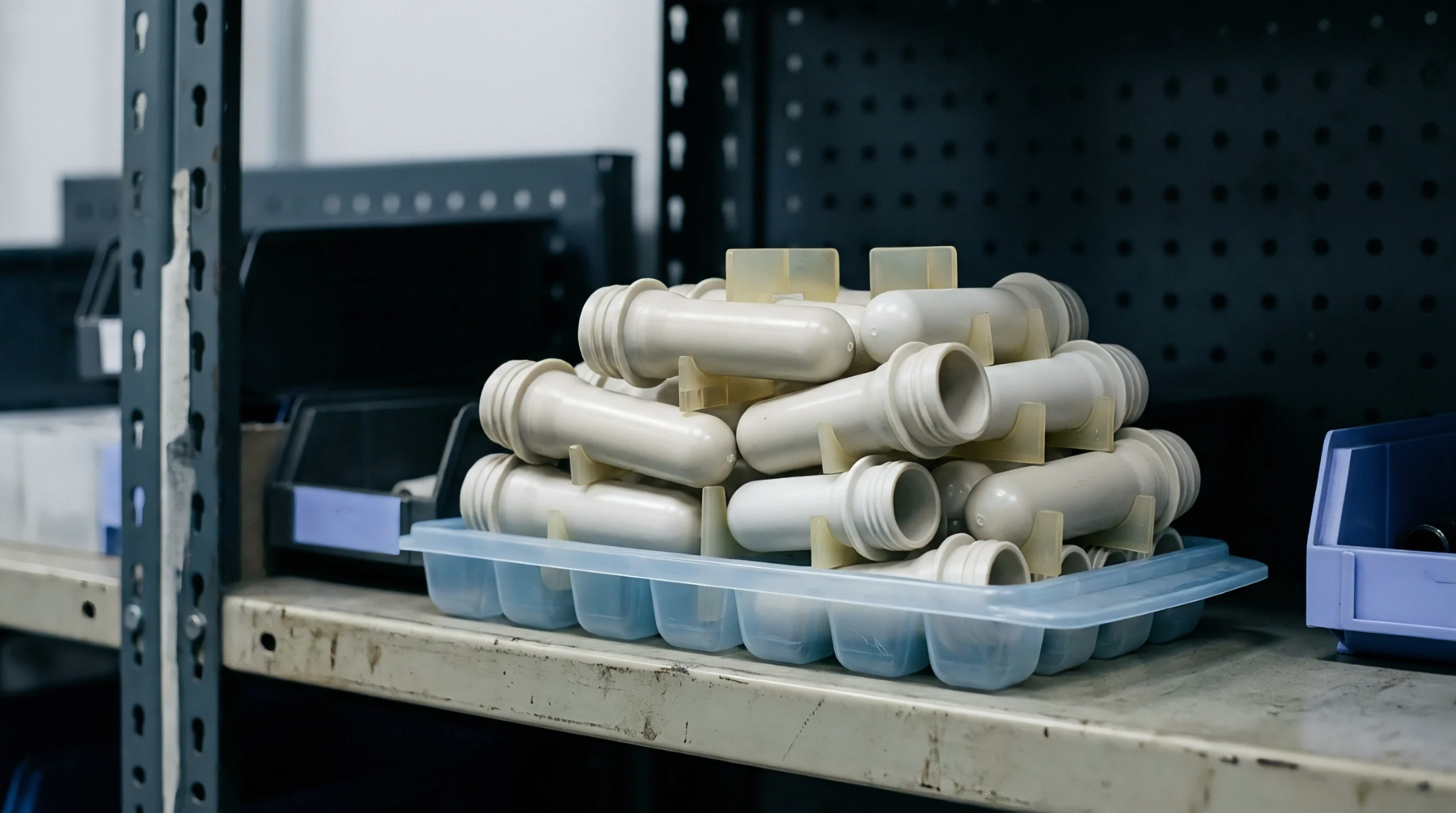
Automated mass spectral deconvolution extracts pure fragmentation patterns from overlapping GC-MS peaks to verify recycled packaging safety and lot acceptance.

Cryogenic precipitation and solid-phase extraction remove low molecular weight polyolefin waxes to eliminate baseline chromatographic noise during additive quantification.

Cramer decision tree classification logic evaluates structural alerts to assign unknown packaging migrants into toxicological classes setting analytical screening thresholds.

Analytical evaluation thresholds for rPE require non-target screening down to 10 ppb using GC-MS and LC-QTOF to guarantee food contact toxicological safety.

Matrix interference corrections in thermal desorption GC-MS isolate native polyamide volatiles from test artifacts, preventing invalid lot rejections.

Polyolefin packaging dock acceptance demands lot-specific sampling, simulant migration verification, and full declaration tracing to prevent food contact exposure failures.

Non-target screening of recycled polyolefin bulk containers demands single-sided cell testing, realistic filling ratios, and strict Cramer class evaluations.

High temperature resin extraction analysis requires dynamic kinetic blank modeling to prevent phantom degradation artifacts from corrupting extractable data.

Modeling non-intentionally added substance diffusion in recycled packaging laminates requires recalibrating standard Piringer parameters with empirical shift factors to prevent false migration passes.

Polyolefin recycling accelerates solvent extraction kinetics by increasing polymer free volume, demanding adjusted diffusion models for food contact compliance.

Auditing resin declarations against package migration test reports requires verifying additive scope, simulant alignment, geometry ratios, and lot traceability.

Verifying monomer compliance and non-intentionally added substances requires batch-level analytical screening paired with complete upstream declarations.

Importers verify food contact declarations by matching resin batch numbers to laboratory migration reports, testing extractables, and auditing additive limits.

Chemical recycling yield calculations require mass balance adjustments for inorganic ash and halogen gas loss to prevent non intentionally added substance compliance failures.

Functional barrier breakthrough modeling verifies recycled polyolefin food contact compliance by calculating contaminant lag time and Fickian mass transport.

Post-consumer resin decontamination requires challenge test validation using surrogate contaminants to ensure specific migration limits stay below toxicological thresholds.

Applying a fourfold uncertainty multiplier to semi-quantitative screening signals guarantees cyclic olefin oligomer compliance under toxicological concern limits.

Quantifying cyclic polyolefin oligomers against linear alkane standards undercounts migration by up to 300%; relative response factor models fix batch release data.

Uncertainty in cyclic olefin oligomer migration testing stems from surrogate response factor bias, requiring calibrated multi-standard correction factors.

Non-target mass spectrometry screening under-quantifies branched polyolefin saturated hydrocarbons by up to eightfold without flame ionization cross-calibration.

Polyethylene NIAS compliance requires high-resolution mass spectrometry screening calibrated for response factor variance against ten parts per billion boundaries.

Polyaryletherketone high-temperature non-intentionally added substances demand chromatographic screening with quantification floors down to 10 ppb for uncharacterized degradants.

High-resolution mass spectrometry matrix correction eliminates oligomer suppression, validating non-intentionally added substance migration in recycled PET.
Surrogate calibration protocols convert chromatogram unknown peak areas into precise mass concentration figures using statistical relative response multipliers.

Polyethylene terephthalate NIAS verification requires multi-platform chromatographic screening down to 0.01 mg/kg backed by toxicological threshold alignment.
Expertise is a utility, not a secret. sentiention™ publishes its working knowledge as open reference: intelligence layer covering the materials it sources, the markets it enters, and the reference that serves both.