Quantification Limits for Polyaryletherketone High Temperature Degradation Non Intentionally Added Substances in Food Contact Applications
Polyaryletherketone high-temperature non-intentionally added substances demand chromatographic screening with quantification floors down to 10 ppb for uncharacterized degradants.


Heat
Polyaryletherketones operate in industrial processing machinery where metal replacement demands continuous thermal stability between 200°C and 300°C. In commercial baking moulds, continuous frying gear, high-pressure steam valves, and dairy extrusion nozzles, polyetheretherketone and polyetherketoneketone maintain structural rigidity under mechanical loads that destroy lower polymers. Extreme thermal environments induce chemical changes within the resin matrix. High kinetic energy disrupts the ether and ketone linkages forming the polymer backbone.
Thermolysis releases low-molecular-weight fragments directly into processing channels. These cleavage products migrate into food contact media during high-temperature cycles.
Polymer chains snap under continuous pressure. Thermal energy drives oxidation and chain scission, producing non-intentionally added substances that exist outside the formulation recipe. Virgin polyaryletherketone resin consists of repeating units of aromatic rings linked by ether and ketone groups, synthesized from 4,4′-difluorobenzophenone and hydroquinone salts.
Unreacted monomers, residual diphenyl sulfone polymerisation solvent, and low-molecular-weight cyclic oligomers reside inside the virgin polymer. High thermal processing temperatures create second-generation degradation compounds. Thermal oxidative scission generates unsubstituted phenol, hydroquinone, 4-phenoxyphenol, 4,4′-difluorobenzophenone, and substituted diaryl ethers.
Mechanical shear during melt processing accelerates these breakdown routes by generating free radicals along the polymer backbone.
Thermal breakdown of ether linkages generates aromatic hydroxyl species that migrate into fatty simulants above two hundred degrees.
Mechanical stress combined with steam or hot oil exposure causes distinct thermal degradation pathways within the polymer matrix.
- Thermal scission occurs when homolytic cleavage breaks weak ether links along the main polymer chain, generating radical fragments that abstract hydrogen to form mono-hydroxy and di-hydroxy aromatic derivatives.
- Thermal oxidation proceeds rapidly in oxygenated processing channels above 220°C, adding hydroxyl groups to aromatic rings and causing ring-opening reactions that yield substituted carboxylic acids.
- Hydrolytic cleavage breaks ether bonds during wet steam sterilization cycles above 130°C, producing lower-molecular-weight phenolic end-group oligomers.
- Solvent leaching releases trapped synthesis residues, including diphenyl sulfone and halogenated aromatic intermediates, when hot fatty foods swell the surface layer of the resin.
Process equipment operating at elevated temperatures generates dynamic NIAS profiles where degradation rates scale with temperature and exposure duration. A conveyor scraper blade manufactured from polyetheretherketone exposed to hot vegetable oil at 230°C releases volatile and semi-volatile fragments into the fat stream. The accumulation rate of scission products depends on surface area contact ratios, oil turnover speed, and local oxygen concentration.
Suppliers often assert that high-temperature thermoplastics remain completely inert under continuous food contact up to three hundred degrees. That assertion ignores the measurable accumulation of low-molecular-weight breakdown products generated during thermal oxidation cycles.

Assay
Analytical quantification of degradation fragments originating from polyaryletherketone requires specialized instruments capable of isolating trace aromatic compounds from complex food matrices. Gas chromatography coupled with high-resolution quad time-of-flight mass spectrometry screens volatile and semi-volatile breakdown products. Liquid chromatography paired with electrospray ionization mass spectrometry detects non-volatile cyclic oligomers up to two thousand Daltons.
Standard targeted screening techniques fail when confronting uncharacterized thermolysis products. Chromatographic peaks frequently emerge without corresponding reference spectra in standard libraries, requiring high-resolution mass accuracy to reconstruct molecular formulas from accurate isotopic patterns.
Blank runs isolate system noise. Establishing precise quantification limits demands strict signal-to-noise thresholds on clean analytical systems. The limit of quantification defines the lowest concentration of a substance that analytical instruments measure with acceptable precision and accuracy.
Under Regulation (EU) 10/2011, uncharacterized non-intentionally added substances migrating from food contact plastics face strict safety thresholds based on toxicological hazard classification. Non-genotoxic substances require confirmation of migration levels below 10 micrograms per kilogram of food simulant, representing the standard 10 parts per billion threshold derived from the Threshold of Toxicological Concern concept. Potential genotoxic degradation products, such as specific halogenated reaction intermediates, demand lower analytical quantification floors set at 0.15 micrograms per kilogram.
Gas chromatography separates light volatiles. Liquid chromatography handles non-volatile fractions. Quantifying unknown peaks without authentic reference standards requires surrogate standards possessing similar ionization efficiencies and structural features.
- Inject a serial dilution of standard aromatic surrogates, including diphenyl ether and 4-phenoxyphenol, to plot five-point linear calibration curves across the range of 1 to 50 parts per billion.
- Extract the food simulant or solvent extract using high-purity dichloromethane or ethyl acetate to concentrate non-polar degradation compounds ten-fold under nitrogen flow.
- Run high-resolution full-scan spectrum acquisition to locate structural fragments based on exact mass defect analysis and isotopic distribution patterns.
- Calculate signal-to-noise ratios for target peaks, setting the limit of detection at three times baseline noise and the limit of quantification at ten times baseline noise.
- Quantify unidentified chromatographic peaks against the nearest structural surrogate calibration slope, reporting values as surrogate equivalents with expanded measurement uncertainty.
| Substance Name | Chemical Structure / CAS | Degradation Mechanism | Target LOQ (µg/kg) | Analytical Method |
|---|---|---|---|---|
| Hydroquinone | C6H6O2 / 123-31-9 | Ether linkage cleavage | 2.0 | LC-MS/MS (ESI-) |
| 4-Phenoxyphenol | C12H10O2 / 831-82-3 | Main chain thermolysis | 5.0 | GC-MS (EI) |
| 4,4′-Difluorobenzophenone | C13H8F2O / 345-92-6 | Residual monomer / breakdown | 1.0 | GC-MS/MS (EI) |
| Diphenyl Sulfone | C12H10O2S / 127-63-9 | Polymerisation solvent release | 5.0 | GC-MS (EI) |
| Cyclic PEEK Trimer | C57H36O9 / Unassigned | Ring oligomer thermal release | 10.0 | LC-HRMS (ESI+) |
Gas chromatography with mass detection achieves a ten microgram per kilogram quantification floor for volatile ether scission products in oil simulants.
Mass spectra confirm molecular weight. Chromatographic noise from fatty food simulants degrades instrument sensitivity, elevating the real-world limit of quantification compared to solvent blank spikes. When vegetable oil matrices enter gas chromatography injection ports, non-volatile triglycerides pyrolyze, generating interfering signals that mask low-level aromatic NIAS peaks.
Instrument calibration drift and matrix suppression force laboratories to widen their expanded uncertainty bounds, raising questions about whether a non-detect result reflects genuine absence or instrumental masking.

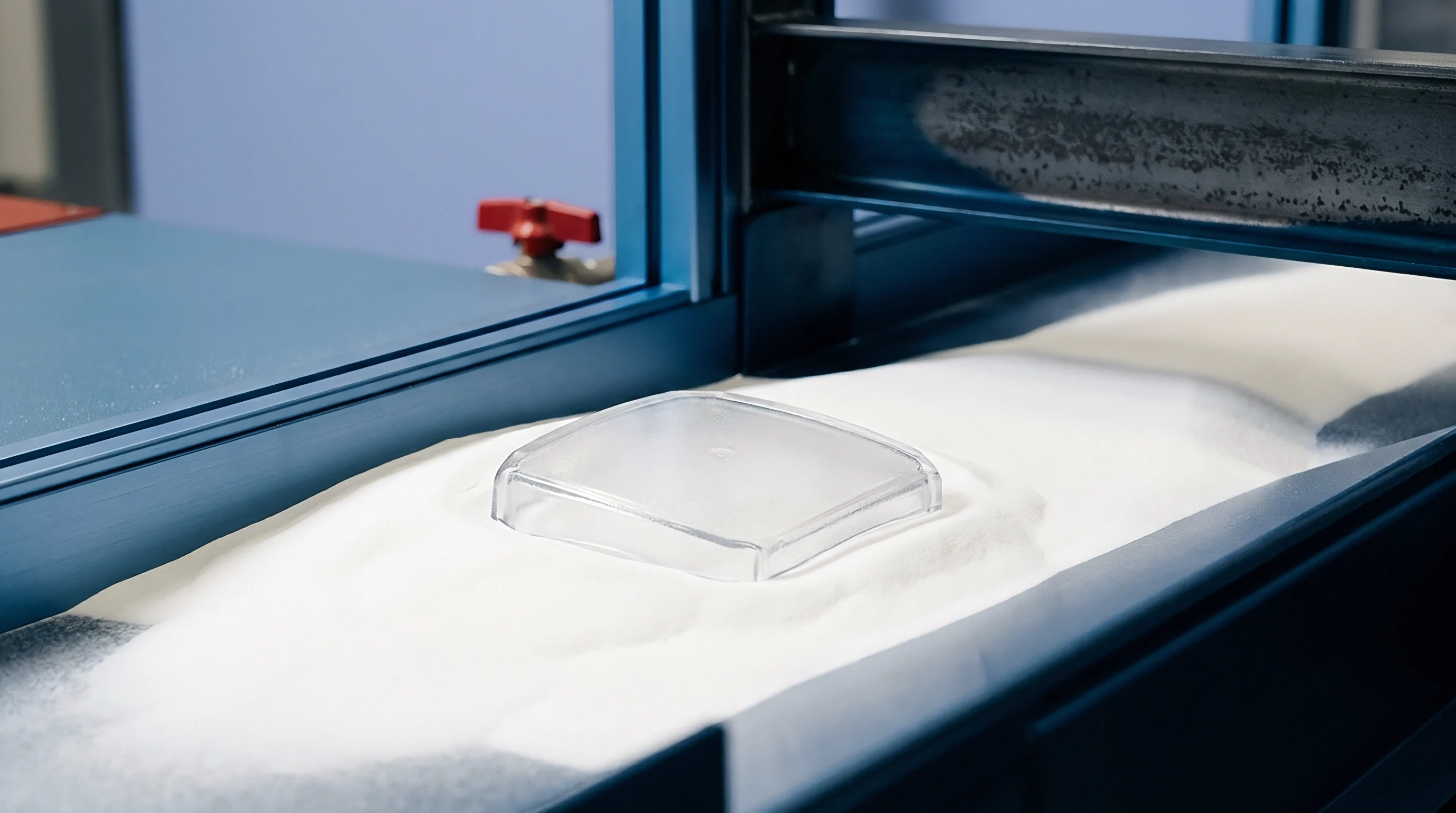
Tenax
Simulated high-temperature food contact testing relies on modified polyphenylene oxide, porous polymer beads known commercially as Tenax, to evaluate dry food applications above 100°C. Standard liquid food simulants fail at high processing temperatures; 10% ethanol, 3% acetic acid, and vegetable oil boil, decompose, or react with test cells at temperatures exceeding 175°C. EN 1186-13 specifies Tenax as Simulant E for testing articles intended for high-temperature service up to 225°C or higher. Polyaryletherketone parts undergo contact testing inside stainless steel pressure cells packed with Tenax powder, held at peak operational temperatures for defined durations.
Mass spectrometry quantifies migrated species extracted from the adsorbent media after exposure. The thermal stability of the adsorbent itself bounds the maximum test temperature. Heating Tenax above 225°C induces thermal decomposition of the polyphenylene oxide matrix, generating monomeric 2,6-diphenylphenol and volatile degradation products that overlap with polyaryletherketone thermolysis peaks on chromatographic traces.
Method verification requires blank adsorbent runs at every temperature step to subtract background noise from the polymer spectrum.
How Do Extreme Migration Conditions Shift Detection Floor?
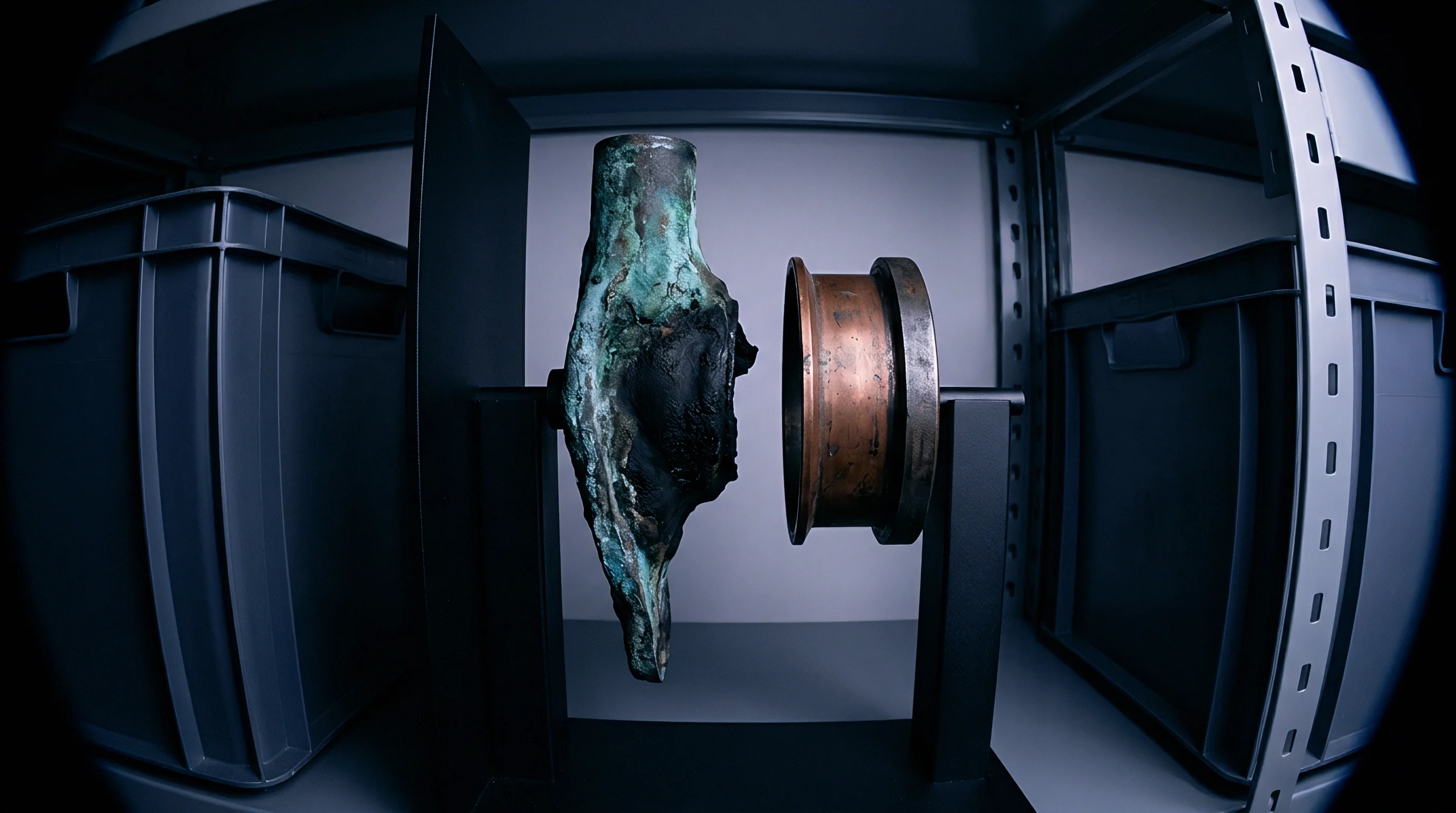
Extended duration at elevated temperature drives degradation reactions inside the test cell that exceed real-world food processing profiles. Testing a polyetheretherketone part at 200°C for two hours inside a sealed migration cell traps volatile fragments that would escape into ambient air in an open baking environment. This artificial trapping increases compound concentration on the adsorbent, effectively lowering the analytical detection threshold required to spot minor scission products.
Repeat-use applications introduce additional testing rules under European packaging regulations.
| Food Type | Simulant Selection | Test Temperature | Test Duration | Primary Standard |
|---|---|---|---|---|
| Dry Bakery Products | Tenax (Simulant E) | 175°C to 225°C | 0.5 to 2.0 hours | EN 1186-13 |
| Fatty Pastry Contact | Vegetable Oil / Tenax | 150°C to 175°C | 1.0 to 4.0 hours | EN 1186-2 / EN 1186-13 |
| Aqueous Steam Processing | Distilled Water / Steam | 121°C to 135°C | 1.0 to 3.0 hours | EN 1186-3 |
| Acidic Food Processing | 3% Acetic Acid (Pressurized) | 100°C to 121°C | 0.5 to 2.0 hours | EN 1186-5 |
Repeat-use migration compliance requires the third exposure extraction to demonstrate lower non-intentionally added substance concentration than the first exposure.
The third migration period determines compliance for repeated-use machinery components. Standard protocols dictate carrying out three consecutive exposure cycles on the same sample using fresh simulant for each cycle. Migration values must drop or remain stable across consecutive cycles.
An increasing concentration curve across exposure steps signals active polymer matrix degradation rather than transient surface leaching, indicating that the resin cannot withstand the operational thermal profile. Supply agreements incorporating Annex V testing specifications under Regulation (EU) 10/2011 bind component suppliers to these specific exposure limits, penalizing materials that demonstrate escalating breakdown products across repeated cycles.

Paperwork
Declarations of conformity for polyaryletherketone components frequently mask technical non-compliance behind generic resin certifications. Raw material manufacturers supply compliance declarations based on tests conducted on clean virgin resin chips extruded at standard melt temperatures under controlled laboratory conditions. Component converters machine, injection-mold, or compression-mold these resins into final parts, introducing significant thermal history, shear stress, and potential regrind material.
A declaration covering base resin pellets does not extend to a finished scraper blade or seal ring subjected to 380°C molding temperatures.
Audit trails demand raw signal files. Technical files must contain supporting data covering the finished article in its final physical form. Article 19 of Regulation (EU) 10/2011 mandates a comprehensive risk assessment for non-intentionally added substances present in finished plastic materials.
Importers and food machinery manufacturers must verify that converter technical files include raw chromatographic screening data, structural identification reports, and toxicological evaluations covering processing-induced degradants.
- Finished part traceability links specific manufacturing lot numbers directly to high-temperature melt processing logs, resin batch certificates, and analytical test reports.
- Screening scope documentation lists all chromatographic methods utilized, target quantification limits achieved, and structural identification procedures executed for unknown peaks.
- Toxicological hazard evaluation details the threshold of toxicological concern classifications, genotoxicity screening data, and safety margins calculated for identified degradation products.
- Exposure profile parameters documents surface-to-volume ratio assumptions, maximum continuous service temperatures, food simulant choices, and contact duration limits.
Calculated exposure sets regulatory risk. Standard declarations stating generic compliance with framework regulations fail during regulatory audits when missing specific NIAS safety assessments for high-temperature breakdown products. Gaps in supporting documentation render the declaration legally invalid, placing full compliance liability onto the entity that imports or markets the finished equipment.
Declarations stating base polymer compliance without finished-part non-intentionally added substance screening fail regulatory technical audits.
Customs officers freeze uncertified cargo. When regulatory authorities challenge a food contact declaration, the importer must produce the complete technical dossier within tight statutory deadlines. Inability to produce verified analytical reports establishing quantification limits for thermal breakdown products results in commercial stop-shipment orders, product recalls, and mandatory market withdrawals across distribution networks.

Ledger
Failure to quantify and control thermal degradation fragments carries quantifiable financial exposure that exceeds the raw cost of initial analytical testing. A single high-resolution screening workflow covering volatile and semi-volatile NIAS via GC-QTOF-MS and LC-QTOF-MS costs between 3,500 and 6,000 Euros per material grade. Omitting this screening leaves equipment manufacturers vulnerable to market enforcement actions, batch rejections, and warranty indemnification claims.
When non-compliant plastic parts contaminate food production lines, liabilities include line teardown costs, food product recall expenses, media destruction costs, and contractual non-performance penalties.
Importers hold the final safety duty. Consider a commercial food processing facility operating ten continuous industrial oven lines equipped with polyetheretherketone conveyor guides. Assume a batch of guide rails suffers severe thermal oxidation due to improper molding thermal profiles, leaking 4-phenoxyphenol into commercial bakery products at 50 parts per billion, five times the non-characterized NIAS threshold.
The bakery’s quality assurance lab identifies the aromatic contaminant during routine quality audits, triggering an immediate shutdown of all ten production lines.
The financial impact accumulates rapidly across direct and indirect cost categories. Line downtime costs average 15,000 Euros per hour per line, totaling 1.8 million Euros over a twelve-hour investigation window. Product quarantine and destruction charges for contaminated baked goods consume 250,000 Euros.
Independent analytical laboratory fees required to isolate the source, quantify the degradants, and re-certify replacement components run 45,000 Euros under emergency expedite schedules. Replacing the defective component lots costs 12,000 Euros in physical parts. The total unrecoverable loss reaches 2.107 million Euros, a exposure dwarfing the initial 5,000 Euro analytical qualification cost.
Commercial contracts allocate this risk through specific liability clauses, testing indemnities, and batch qualification guarantees. Master supply agreements mandate that resin converters execute high-temperature NIAS extraction protocols on every tenth manufacturing lot, attaching certified GC-MS analytical reports to shipping manifests before customs clearance. Procurement teams adjust purchase prices to absorb mandatory testing surcharges, establishing formal chargeback frameworks that automatically invoice component suppliers for recall expenses when field failures trace back to thermal degradation NIAS exceeding statutory limits.