
Recycled Content Claims Priced into a Packaging Tax Line
Recycled content tax claims require lot-specific EN 15343 audit trails and migration reports to withstand customs audits and avoid retroactive landed tax liabilities.
Recycled content tax claims require lot-specific EN 15343 audit trails and migration reports to withstand customs audits and avoid retroactive landed tax liabilities.

Analytical screening for recycled polyolefin food contact articles requires mass spectrometry thresholds below 10 ppb to prove compliance under EU rules.

Uncured printing ink components transfer mechanically onto unprinted food contact surfaces under reel pressure, requiring strict migration testing against specific regulatory limits.

Non-target mass spectrometry combined with toxicological threshold evaluation verifies that recycled plastic packaging meets mandatory food-contact safety limits.

Quantification of non-intentionally added substances in recycled polyolefins requires structural class calibration to overcome mass spectrometry response variances.

Recycled polyolefin NIAS compliance requires high-resolution mass spectrometry screening paired with Cramer structural toxicological limits down to 0.15 ppb.

Dual-use packaging additives demand verification against direct food additive purity and migration limits to prevent compliance failures downstream.

Analytical migration parameters depend on simulant polarity, exposure duration, thermal control, and chromatographic screening against specific migration limits.

Non-target HRMS screening combined with toxicological threshold evaluation provides the empirical basis for verifying recycled plastic safety before market entry.

Base polymer declarations certify monomer purity at the reactor gate but omit all converter additives, breakdown products, and finished article migration limits.

Auditing food contact declarations requires matching batch numbers to accredited migration reports, verifying worst-case simulant choices, and testing NIAS.

Managing recycled plastic compliance under EU waste rules requires challenge-tested decontamination, accredited migration testing, and audited traceability dossiers.

Calculating mass spectrometry relative response factors for uncharacterized cyclic ester oligomers requires ionization efficiency modeling to prevent migration underestimation.

Quantifying semi-volatile photoinitiators in recycled polyolefins requires matrix-matched standard addition to counter 40% measurement uncertainty.

Verifying chemical recycled polymer mass balance ledgers requires physical boundary mass-loss accounting, yield deductions, and batch-level credit transfer documentation.

Structure cross-border packaging contracts with statutory compliance warranties, lot-matched testing dossiers, and letter-of-credit clearance milestones.

Cross-border polymer migration compliance requires testing finished articles under verified worst-case simulants, contact times, and surface-to-volume ratios.

Challenge testing verifies recycled polymer decontamination by measuring surrogate contaminant removal across reactors to prove secondary packaging conformity.

Auditing converter additive disclosures against container migration limits requires screening recipe dosages against diffusion kinetics and analytical test results.

Quantifying photoinitiator residues in recycled polyolefins demands solvent extraction and mass spectrometry to verify migration limits under European food contact rules.

Cramer structural classification sets exposure thresholds for unlisted packaging migrants, turning molecular features into defensible specific migration limits.

Reconciling supplier additive disclosures with NIAS risk assessments requires non-targeted screening, TTC calculations, and confidential third-party audits.

Functional barriers prevent degradation product migration when virgin layer thickness delays chemical breakthrough beyond the container commercial shelf life.

Optimize roll winding tension and UV cure density to eliminate mechanical ink set-off and hold specific photoinitiator migration below legal regulatory limits.

Exemption from plastic packaging taxes requires EN 15343 chain-of-custody dossiers and mass balance ledgers backing physical PCR fractions above statutory thresholds.

Verifying food contact compliance for polymer granulates connects batch migration test data to resin chemistry, valid declarations, and specific end-use limits.
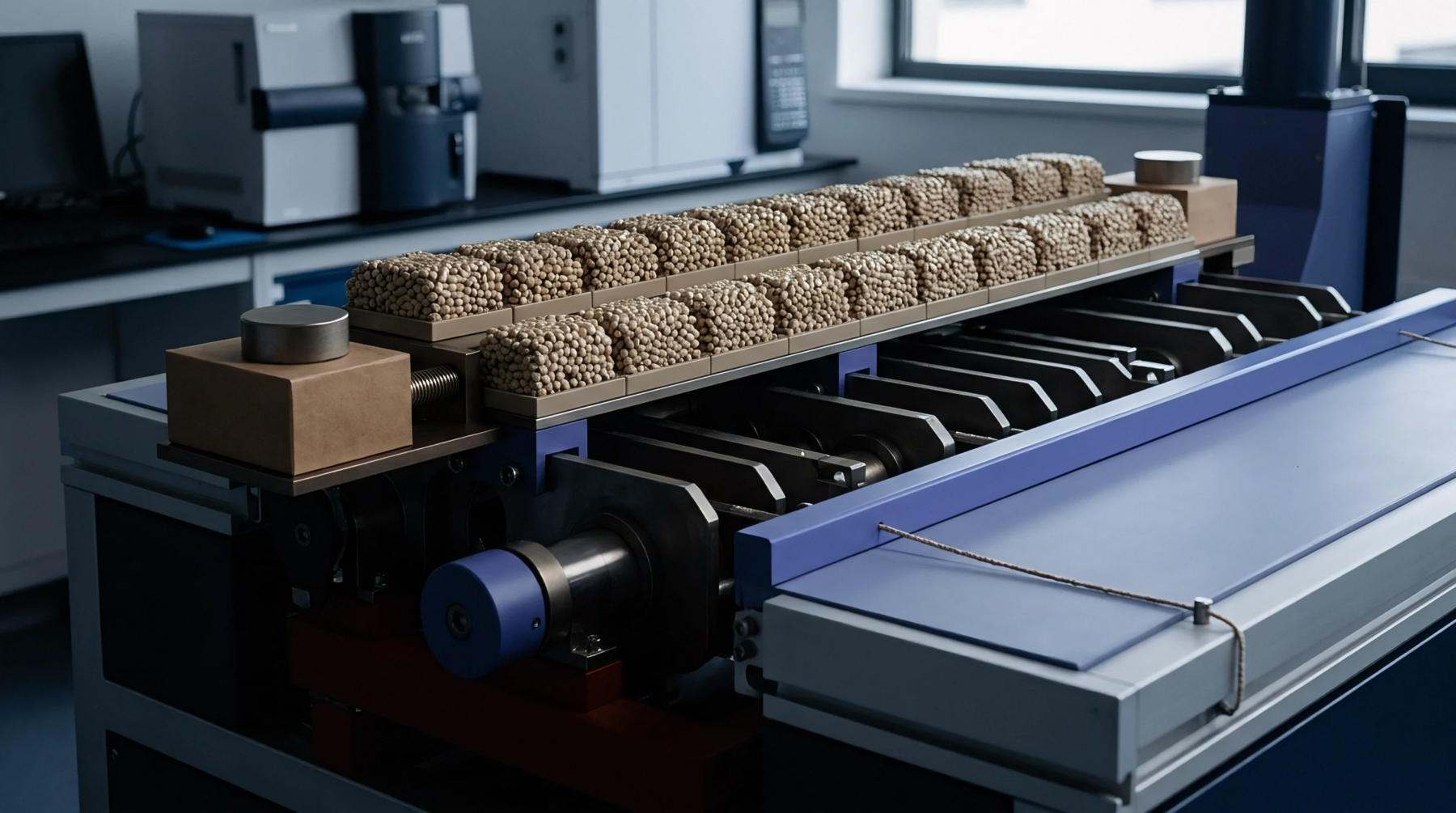
Quantifying dual-use additive migration in multicavity components requires cavity-isolated testing under worst-case shear and thermal conditions.
Converters resolve masterbatch secrecy through third party compliance trusts and standardized specific migration testing protocols.
Non-targeted screening workflows require orthogonal GC-MS and LC-HRMS platforms to detect volatile, non-volatile, and adhesive oligomer migrants down to an analytical evaluation threshold derived from toxicological thresholds of concern.

Recycled polyolefin food contact compliance demands targeted screening for photoinitiators to prevent set-off contaminants from exceeding specific migration limits.
Expertise is a utility, not a secret. sentiention™ publishes its working knowledge as open reference: intelligence layer covering the materials it sources, the markets it enters, and the reference that serves both.