Analytical Migration Testing Parameters across Variable Food Simulant Matrices
Analytical migration parameters depend on simulant polarity, exposure duration, thermal control, and chromatographic screening against specific migration limits.

Matrices
Selecting surrogates for food contact testing requires balancing mass transfer simulation against polymer dissolution. Partitioning between a plastic surface and liquid contents depends on molecular weight, polarity, steric solubility, and temperature. Regulatory protocols specify distinct fluids for aqueous, acidic, alcoholic, fatty, and dry foods; using an incorrect simulant invalidates downstream chromatographic quantification and risks border detentions.
Aqueous matrices use a ten percent ethanol aqueous solution to simulate clear liquids such as fruit juices or pasteurized milk. Acidic foods with a low pH require a three percent acetic acid solution to measure trace element release and heavy metal leaching from polymer backbones, organometallic catalysts, and inorganic pigment stabilizers. High-proof alcoholic products demand ethanol concentrations up to fifty percent by volume to replicate the swelling kinetics seen in spirit containers.
Fatty foods create the most demanding analytical conditions in compliance testing. Triglycerides swell amorphous zones in polyolefins, altering diffusion rates for additives, antioxidants, and low-molecular-weight oligomers. Refined olive oil remains the benchmark simulant under European standards, though its high viscosity and boiling point complicate direct gas chromatography.
For dry or fatty surfaces, laboratories frequently turn to modified polyphenylene oxide, sold commercially as Tenax, to capture volatile and semi-volatile compounds off-gassing at elevated temperatures. Rapid screening protocols often employ substitute solvents like isooctane and ninety-five percent ethanol to accelerate mass transfer while maintaining proportional parity with baseline olive oil extractions.
| Simulant Code | Chemical Composition | Representative Food Category | Primary Extraction Mechanism |
|---|---|---|---|
| Simulant A | 10% Ethanol (v/v) aqueous solution | Clear aqueous beverages, fresh fruits | Hydrophilic leaching of polar additives |
| Simulant B | 3% Acetic acid (w/v) aqueous solution | Pickled vegetables, acidic sauces (pH below 4.5) | Acid hydrolysis and metallic salt extraction |
| Simulant C | 20% Ethanol (v/v) aqueous solution | Low-alcohol beverages, wine derivatives | Moderate organic solvent partitioning |
| Simulant D1 | 50% Ethanol (v/v) aqueous solution | High-alcohol spirits, milk, oil-in-water emulsions | Amorphous phase swelling and lipophilic transport |
| Simulant D2 | Refined vegetable oil or triglycerides | Free fats, butter, vegetable oils, meats | Lipophilic diffusion and plasticizer extraction |
| Simulant E | Poly(2,6-diphenyl-p-phenylene oxide) | Dry grains, bakery products, powdered ingredients | Gas-phase adsorption of volatile compounds |
Solvent polarity dictates how rapidly target molecules cross from the polymer into liquid. Low-polarity species like phthalate plasticizers or hindered amine light stabilizers have minimal affinity for aqueous media and remain locked within the polymer during Simulant A testing. In fatty simulants, however, where thermodynamic activity approaches unity, migration is swift.
Substituting ninety-five percent ethanol for olive oil without applying appropriate reduction factors can over-swell polyolefins, yielding migration values far higher than actual storage would produce. Because heat accelerates mass transfer, checking simulant density against nominal values verifies that evaporation during thermal testing has not artificially concentrated migrants.
Surface morphology also affects mass transfer across the contact interface. Textured films, expanded foams, and co-extruded multilayer sheets exhibit distinct wetting behaviors with liquid simulants. When hydrophobic polyolefin surfaces meet aqueous simulants, surface tension mismatches trap air in microscopic crevices, artificially restricting contact area and leading to underreported migration figures.
Adding trace analytical-grade surfactants resolves these surface tension gaps during liquid cell testing, provided the surfactant does not interfere with downstream mass spectrometry.
Standardized fatty simulants must match the specific lipid partitioning profiles of target food matrices to yield valid specific migration data.
Dry food simulants operate through gas-phase partitioning and surface adsorption rather than liquid extraction. Modified polyphenylene oxide requires verified surface area and uniform pore distribution prior to use. On porous substrates like cardboard or recycled paperboard liners, fine Tenax particles can settle into fiber crevices, creating extraction channels that exaggerate chemical transfer beyond real-world conditions.
Agitating dry simulant particles across film surfaces prevents local saturation from retarding migration kinetics. Simulant stability is equally vital: acetic acid stored in clear glass slowly leaches trace sodium and silica, corrupting heavy metal background measurements during inductively coupled plasma analyses.
Plant qualification efforts often attempt to substitute rapid solvent extractions for standard migration testing. Similarly, raw polymer suppliers sometimes offer total dissolution data in place of ten-day exposure studies. Total extraction in boiling hexane fails to demonstrate compliance across aqueous and fatty categories, as structural dissolution differs fundamentally from equilibrium diffusion.

Bath
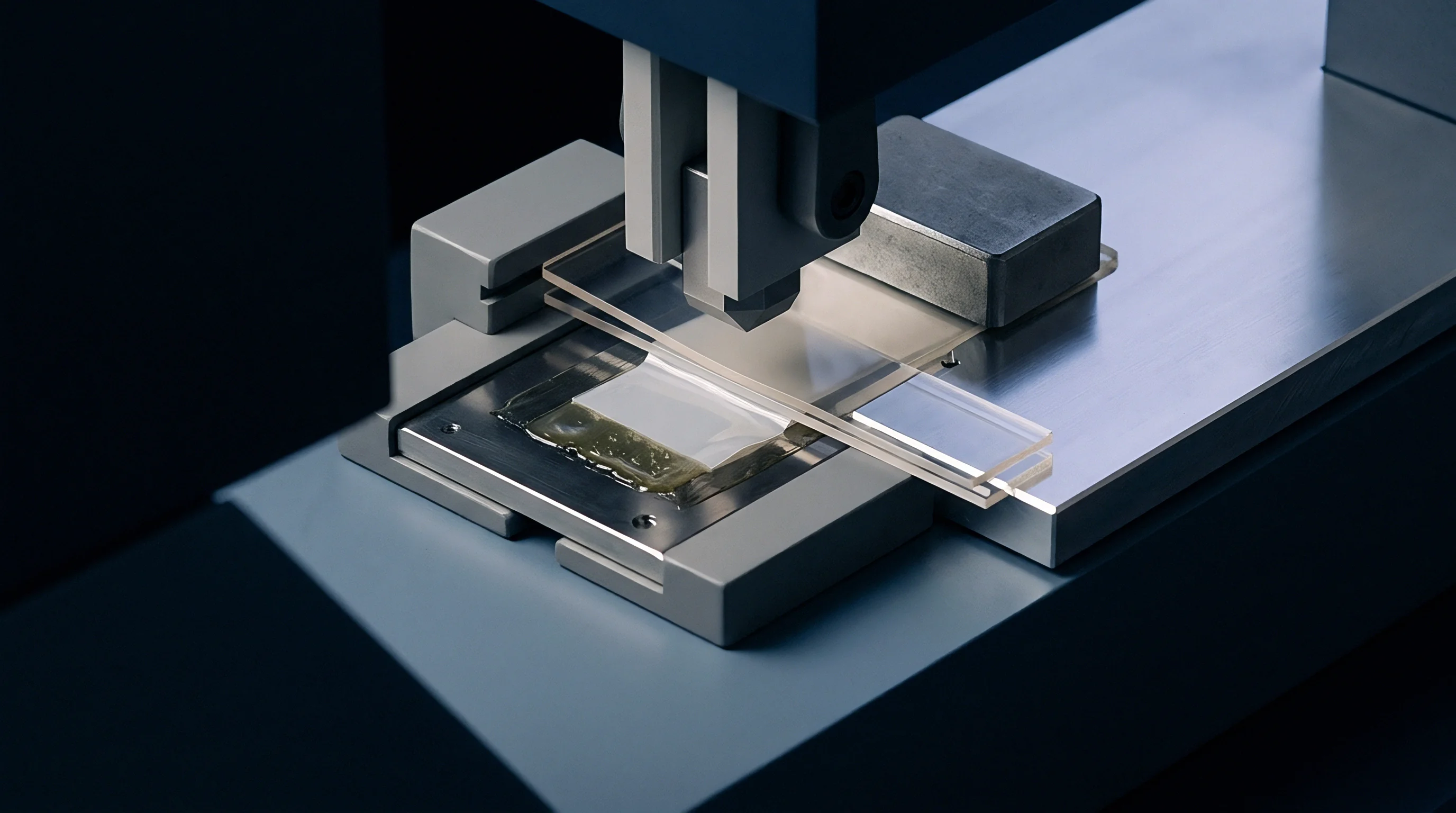
Exposure cells maintain uniform contact between test specimens and simulant fluids over designated time intervals, reproducing worst-case processing and storage conditions expected during commercial service. European Standard EN 1186 outlines vessel configurations ~ single-side cells, total immersion tanks, or pouch filling ~ based on packaging geometry. Single-side stainless steel cells are essential for flexible laminates where only the food-contact layer should be exposed, preventing simulant contact with outer layers containing unverified inks, tie-layer adhesives, or processing aids.
Total immersion submerges the entire sample, exposing cut edges and reverse surfaces. Edges exposed during die-cutting present open cross-sections through which additives diffuse without resistance. For rigid containers, filling the article itself with pre-heated simulant provides the most accurate geometry.
The ratio of simulant volume to surface area must hold strictly to six square decimeters per kilogram or liter of food; altering this ratio skews concentration gradients and distorts the thermodynamic driving forces behind leaching.
Maintaining thermal stability requires calibrated liquid circulating baths or forced-convection ovens. Fluctuations exceeding two degrees Celsius disrupt diffusion kinetics and invalidate repeat-use assessments. Extreme schedules ~ such as two hours at one hundred twenty-one degrees Celsius ~ replicate retort sterilization for retort pouches and wet pet foods.
At these temperatures, aqueous simulants develop substantial vapor pressure, necessitating pressure-rated stainless steel vessels. Any leakage causes preferential loss of water or ethanol, shifting simulant composition and artificially concentrating non-volatile migrants.
Acceleration matrices in regulatory standards establish equivalent time and temperature regimes. Ten days at forty degrees Celsius serves as the baseline for ambient storage exceeding thirty days, whereas two hours at seventy degrees Celsius models hot-fill processing, and exposure at one hundred degrees Celsius replicates boiling water immersion. Polymer chain mobility rises sharply above the glass transition temperature, causing abrupt increases in diffusion rates.
Testing below a material’s glass transition temperature understates migration whenever end-use conditions involve hot filling or microwave reheating.
High-temperature exposure of materials that off-gas volatile organics requires cold-finger condensation mounted above the cell. Open setups let light additives ~ such as residual styrene monomer or butylhydroxytoluene ~ evaporate into laboratory air prior to analysis. Trapping these volatile compounds demands airtight headspace sampling loops or closed-loop solvent traps.
Liquid simulant levels require daily monitoring to account for micro-evaporation across fluoropolymer seals.
Retort sterilization testing requires pressure-rated stainless steel vessels to maintain uniform simulant stoichiometry at elevated temperatures.
Internal supports prevent flat film specimens from adhering to vessel walls or stacking against each other. Stainless steel wire frames maintain separation between coupons, allowing simulant to circulate freely across exposed surfaces. Adhesion during thermal aging reduces effective surface area, producing artificially suppressed migration values.
Monitoring polyolefin dimensional changes during high-temperature tests ensures structural swelling does not block simulant circulation inside the exposure chamber.
Accurate volumetric measurement directly governs specific migration calculations. Thermal contraction during cooling alters solvent volume if measured immediately upon removal from the bath. Vessels must reach equilibrium at twenty-three degrees Celsius and fifty percent relative humidity before final volume verification and sampling.
Post-exposure transfer presents significant risk of evaporative loss, particularly with volatile solvents like isooctane; rapid transfer into minimal-headspace chromatography vials limits analyte loss.
Selecting total immersion over single-side cells for flexible packaging consistently overstates migration by leaching compounds from internal adhesive layers.
Kinetics
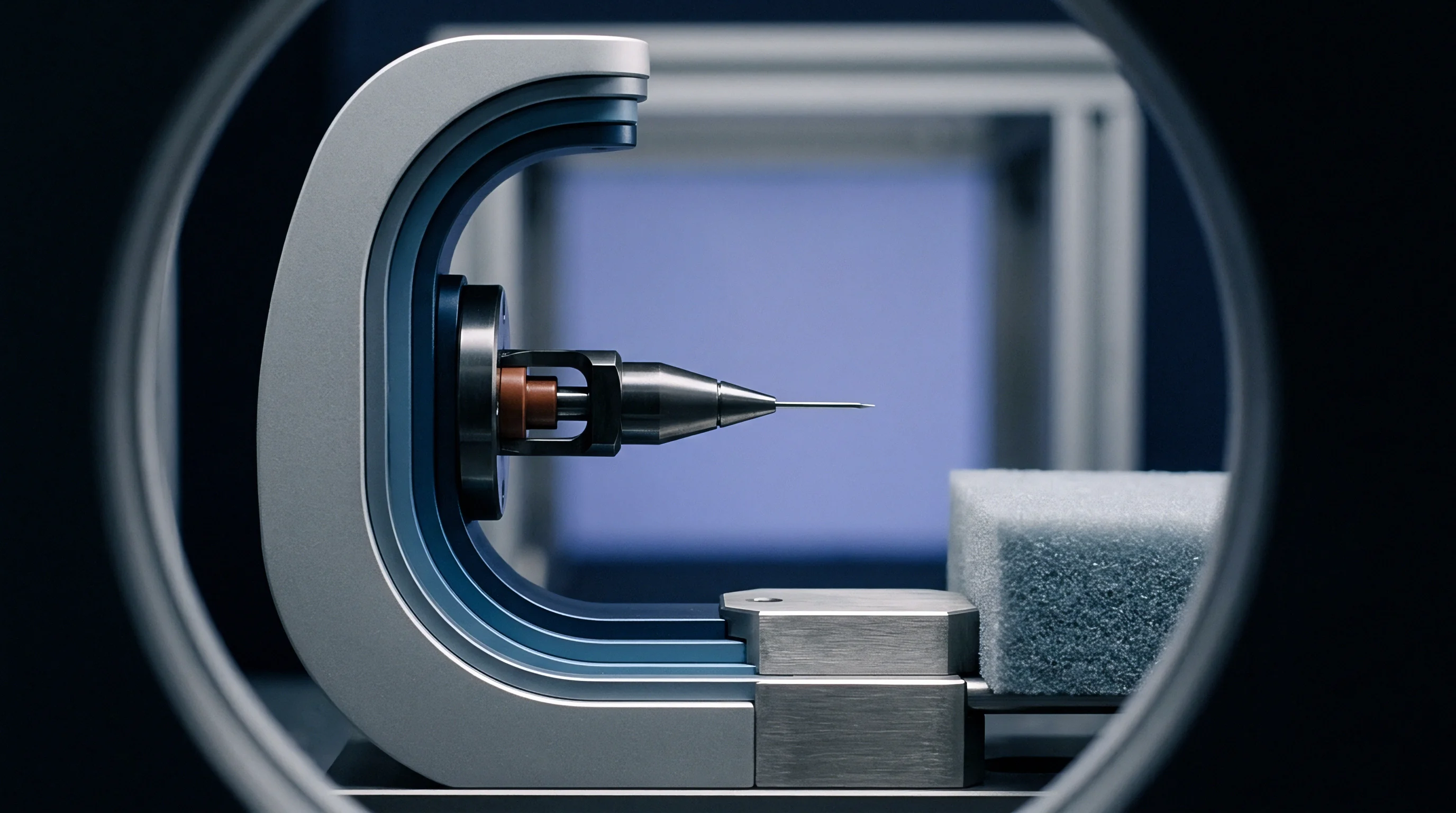
Mass transfer across the polymer-food interface conforms to Fickian diffusion under ambient conditions. The diffusion coefficient describes the rate at which a migrant moves through the bulk polymer toward the surface, governed by molecular weight, hydrodynamic radius, glass transition temperature, and initial concentration. High chain mobility in low-density polyethylene produces diffusion coefficients orders of magnitude above those of rigid materials like polyethylene terephthalate or oriented polypropylene.
Consequently, additives in flexible polyolefins migrate rapidly, establishing steep concentration gradients against adjacent simulants.
Mathematical models apply worst-case parameters to estimate upper-bound migration prior to bench testing. Piringer parameters furnish conservative diffusion estimates by accounting for matrix-specific resistance. Plasticizers and swelling solvents, however, alter Fickian behavior by softening the polymer matrix during test cycles.
Fatty simulants such as olive oil and organic substitutes like isooctane penetrate amorphous polyolefin regions, increasing free volume and accelerating transport. This matrix dilation transforms the diffusion coefficient from a constant into a concentration-dependent variable, undermining simple predictive models.
Swelling progresses through distinct physical phases during exposure. Solvent molecules penetrate outer polymer layers, depressing local glass transition values and forming a plasticized surface zone. This expanded boundary permits larger species, such as tris(2,4-di-tert-butylphenyl) phosphite oxidation products and high-molecular-weight polymeric plasticizers, to migrate into the simulant.
Equilibrium times vary with thickness, crystallinity, and temperature: polypropylene exposed to ninety-five percent ethanol at sixty degrees Celsius saturates in hours, whereas thick rigid closures require days of exposure to achieve comparable swelling.
Substitute simulants must accelerate kinetics without destroying polymer integrity. Standard protocols permit replacing olive oil with isooctane for short-term screening ~ using two days at twenty degrees Celsius to simulate ten days in olive oil at forty degrees Celsius. If the substitute solvent dissolves additives or degrades the polymer matrix, the assay measures structural extraction rather than diffusion-controlled migration.
Analysts apply reduction factors to raw substitute data to align accelerated yields with actual fatty food migration values.
| Polymer Family | Alternative Simulant | Test Condition Equivalency | Standard Reduction Factor | Kinetic Failure Risk |
|---|---|---|---|---|
| Low-Density Polyethylene (LDPE) | Isooctane | 2 days at 20°C vs 10 days at 40°C in Oil | 4.0 | Matrix dissolution at temperatures above 30°C |
| High-Density Polyethylene (HDPE) | 95% Ethanol | 10 days at 40°C vs 10 days at 40°C in Oil | 2.0 | Under-extraction of highly lipophilic antioxidants |
| Polypropylene Homopolymer (PP-H) | Isooctane | 2 days at 30°C vs 10 days at 40°C in Oil | 4.0 | Additive crystallization on surface upon solvent flash |
| Polyethylene Terephthalate (PET) | 50% Ethanol | 10 days at 40°C vs 10 days at 40°C in Oil | 1.0 | Hydrolysis of PET oligomers at elevated pH |
| Polystyrene (PS) | 95% Ethanol | 10 days at 40°C vs 10 days at 40°C in Oil | 1.0 | Severe micro-cracking and monomer extraction spike |
Repeat-use articles yield cumulative extraction profiles across consecutive exposures. Standard testing evaluates items intended for repeated contact ~ such as conveyor belting, industrial piping, or processing equipment ~ over three sequential cycles with fresh simulant each time. Results from the third pass define legal compliance.
Migration concentrations must decrease monotonically over the three cycles; any increase on the third pass points to matrix degradation, surface damage, or solvent-driven extraction of subsurface additives.
Multilayer packaging introduces transient diffusion lags. Functional barriers ~ including aluminum foil, ethylene vinyl alcohol resins, or silicon oxide deposits ~ block migrants in outer structural layers from reaching the food-contact face. The duration required for a compound to traverse this barrier is its lag time.
Provided package shelf life remains within this lag window, internal additives cannot enter the food. Thermal spikes during converting, such as extrusion coating or blow molding, can compromise thin barrier layers, eliminating expected lag times and triggering early chemical breakthrough.

When Does Substitute Simulant Media Induce Matrix Swelling?
Substituting organic solvents proves problematic when polymer and solvent interaction parameters converge. Solvents with solubility parameters matching the polymer penetrate crystalline regions, inducing structural distortion. High ethanol concentrations cause severe stress cracking in polystyrene, releasing monomeric styrene and aromatic oligomers at rates unrepresentative of real food contact.
Similarly, hot isooctane softens high-density polyethylene, generating artificial extraction of high-molecular-weight hindered phenol antioxidants. When matrix swelling distorts morphology, mathematical reduction factors can no longer reconcile substitute simulant yields with fatty food migration.
Diffusion modeling software estimates specific migration without requiring long exposure trials, using conservative polymer constants to plot migration curves from chemical structure, initial concentration, surface area, and thermal history. While regulators accept verified modeling for straightforward compliance claims, laboratory testing remains mandatory when calculated values border legal limits or when evaluating complex non-intentionally added substances. Aligning testing parameters with actual distribution conditions prevents false compliance passes driven by overoptimistic diffusion constants.
Mass transfer rates scale non-linearly when test temperatures exceed the thermal relaxation point of amorphous polymer regions. Calculating activation energy via Arrhenius equations allows extrapolation of shelf-life migration from accelerated high-temperature datasets. However, if a polymer undergoes a phase transition within the extrapolation interval, Arrhenius linearity fails, rendering low-temperature projections invalid.
Do accelerated substitute simulant extractions at elevated temperatures alter the chemical degradation pathways of complex organophosphite antioxidants compared to real-world ambient storage in fatty food media?

Spectrometry
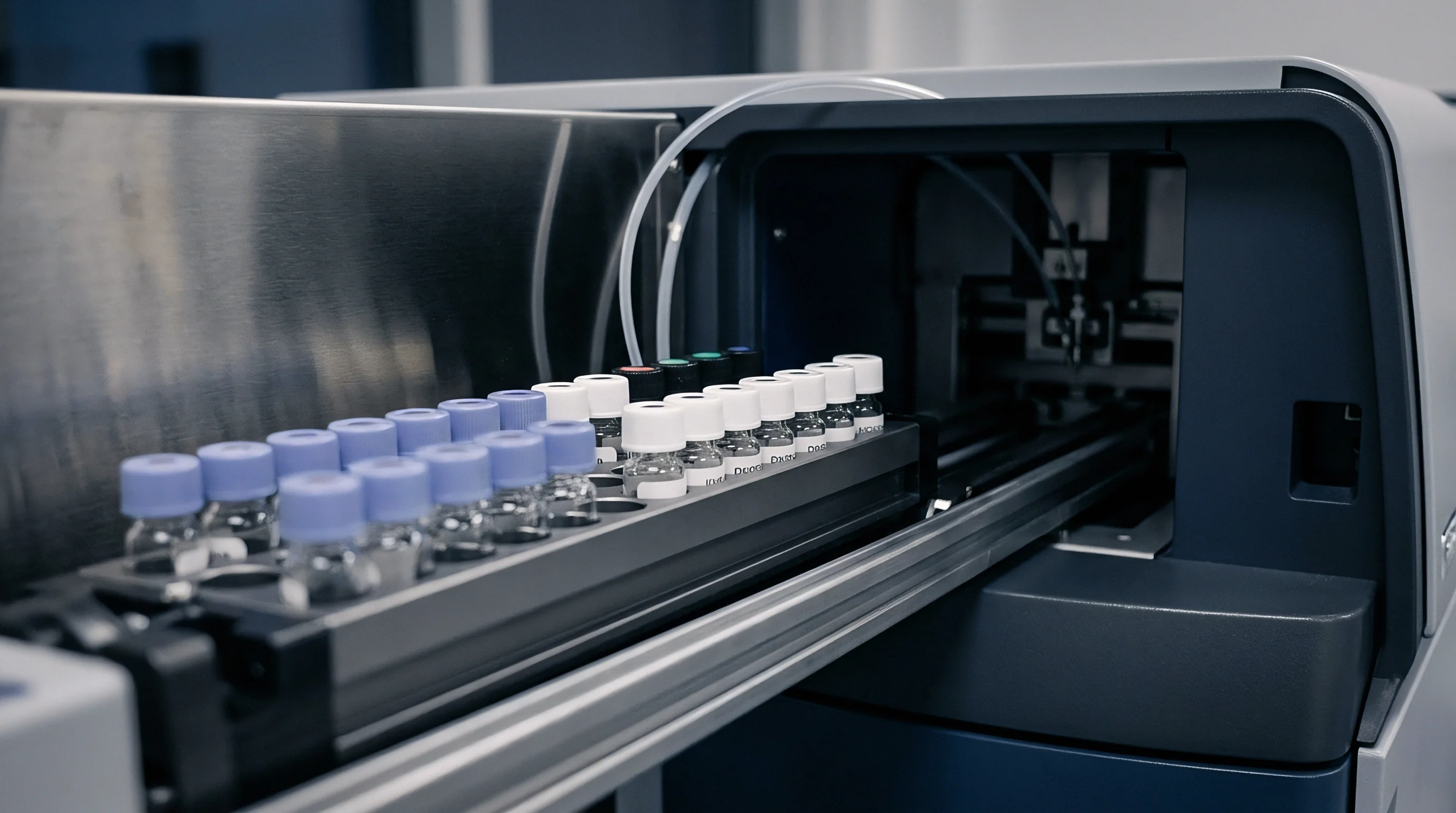
Quantifying leached species requires analytical instrumentation capable of sub-part-per-billion detection limits. European regulations establish a default detection limit of 0.01 milligrams per kilogram of food for unassessed compounds, including potential mutagens or carcinogens. Gas chromatography-mass spectrometry targets volatile and semi-volatile species, such as residual monomers (vinyl chloride, butadiene, styrene), volatile plasticizers, slip additives, and residual solvents.
Liquid chromatography with tandem mass spectrometry quantifies polar, non-volatile, high-molecular-weight compounds including phenolic antioxidants, ultraviolet light absorbers, and fluorinated surface-active processing aids.
Aqueous matrices (Simulants A and B) undergo direct injection or solid-phase extraction prior to separation. Water disrupts reverse-phase liquid chromatography and degrades gas chromatography capillary columns. Concentrating aqueous samples by nitrogen blow-down risks losing light volatile migrants, introducing negative bias.
Solvent exchange replaces the aqueous phase with volatile organic solvents like dichloromethane or ethyl acetate, enabling clean chromatographic separation and efficient ionization.
Fatty matrices present severe analytical interference. Direct injection of vegetable oil fouls injection ports, guard columns, and ion sources. Isolating target migrants from olive oil requires liquid-liquid extraction using acetonitrile or ethanol-water mixtures.
Size-exclusion and gel-permeation chromatography isolate low-molecular-weight migrants from heavy triglycerides by hydrodynamic volume, preventing lipid accumulation on mass spectrometer sources and columns.
| Instrument Platform | Ionization Technique | Target Compound Classes | Typical Detection Limit | Matrix Interference Vulnerability |
|---|---|---|---|---|
| GC-MS (Headspace) | Electron Ionization (EI) | Residual monomers, solvents, light VOCs | 0.002 mg/kg | Low interference from aqueous matrices |
| GC-MS (Direct Injection) | Electron Ionization / CI | Phthalates, slip agents, photoinitiators | 0.005 mg/kg | High fat contamination from vegetable oil |
| LC-MS/MS | Electrospray Ionization (ESI) | Hindered phenols, phosphites, PFAS compounds | 0.0005 mg/kg | Ion suppression from acetic acid salts |
| ICP-MS | Inductively Coupled Plasma | Heavy metals, catalyst residues, organometallics | 0.0001 mg/kg | Polyatomic interferences from chlorine/sulfur |
| GC-QTOF-MS | High-Resolution EI/CI | Unknown NIAS, degradation products, oligomers | 0.01 mg/kg | High background noise in complex Tenax extracts |
Non-intentionally added substances (NIAS) complicate analytical identification during packaging qualification. These compounds arise from melt-processing degradation, additive interactions, raw material impurities, or recycled content. Characterizing unknown peaks requires high-resolution mass spectrometry, such as quadrupole time-of-flight instruments.
Electron ionization generates reproducible fragment spectra for library matching, while electrospray or atmospheric pressure chemical ionization modes establish molecular weights for non-targeted compounds.
Inductively coupled plasma mass spectrometry measures trace element leaching from inorganic pigments, fillers, and organometallic catalysts. Acidic Simulant B extracts are analyzed directly for heavy metals, including lead, cadmium, mercury, hexavalent chromium, antimony, and arsenic. Matrix-matched calibration standards are necessary because minor variations in acetic acid strength alter nebulization efficiency within the plasma torch, biasing quantitative results.
Quantitative mass spectrometry must incorporate matrix-matched calibration standards to eliminate ion suppression artifacts during trace analysis.
Internal standards correct for signal drift, extraction loss, and ionization suppression. Isotopically labeled analogs (deuterated or carbon-13 enriched) mirror target analyte behavior during cleanup while separating cleanly on mass spectrometers. Spiking known quantities of target analytes directly into simulant aliquots via standard addition offsets non-linear matrix suppression during LC-MS/MS analysis of fatty extracts.
Screening for unknown migrants relies on evaluation thresholds derived from the threshold of toxicological concern. Any unidentified peak exceeding this threshold requires structural elucidation or toxicological risk assessment. Non-targeted workflows merge GC-MS and LC-MS datasets to cover both polar and non-polar fractions.
Continuous baseline monitoring is necessary to ensure laboratory air, plastic tubing, or column bleed does not produce false identification signals.
An uncalibrated mass spectrometer library match led a third-party laboratory to misidentify a harmless polypropylene oligomer peak as a regulated photoinitiator, causing a thirty-two thousand euro rejection loss.
Margin
Analytical results are judged against statutory limits defined in food contact regulations. The overall migration limit sets a ceiling on total non-volatile substance transfer, fixed at ten milligrams per square decimeter of surface area or sixty milligrams per kilogram of food matrix. This cap prevents gross chemical leaching and preserves organoleptic properties regardless of specific toxicities.
Gravimetric analysis quantifies overall migration by evaporating simulant extracts to dryness and weighing non-volatile residue on microbalances.
Specific migration limits govern individual substances based on toxicological evaluations, acceptable daily intake, and tolerable daily intake thresholds. Highly toxic additives face strict caps: primary aromatic amines from polyurethanes or black pigments hold an individual specific migration limit of 0.01 milligrams per kilogram, with non-detectable limits required for carcinogenic variants. Chromatographic findings are evaluated directly against positive list inventories, accounting for measurement uncertainty inherent in trace analysis.
Compliance assessments apply surface-to-volume conversion factors. For containers below five hundred milliliters or above ten liters, surface-area migration rates convert into exposure concentrations based on actual package geometry. Materials intended for infant contact bypass standard adult body-weight scaling, subject instead to zero-tolerance rules or reduced specific migration limits.
Measurement uncertainty defines the practical threshold of compliance. Standard procedures carry expanded uncertainties typically between fifteen and twenty-five percent at a ninety-five percent confidence level. If a specific migration measurement yields 4.8 milligrams per kilogram against a 5.0 milligram per kilogram limit, a twenty percent uncertainty pushes the upper bound to 5.76 milligrams per kilogram.
Applicable interpretation rules specify whether guard-banding is required ~ that is, whether compliance hinges on the measured mean or the upper confidence bound.
Operational fatigue in repeat-use materials complicates long-term compliance. While regulations evaluate specific migration on the third exposure pass, mechanical fatigue can produce micro-cracks that accelerate leaching later in service. Flexural stress on laminates can break adhesive bonds, forming pathways for low-molecular-weight compounds to migrate during prolonged use.
Protocols address mechanical wear by subjecting test coupons to simulated stress prior to simulant exposure.
Specific migration limits apply across all authorized substances listed on positive polymer inventories. Non-listed substances used behind functional barriers must remain below 0.01 milligrams per kilogram and cannot exhibit mutagenic, carcinogenic, or toxic-to-reproduction properties under any test condition.
Direct mass balance measurements are required before approving custom formulations to ensure structural additive levels do not exceed specific migration limits under worst-case thermal conversion scenarios.
The supply agreement mandates that the seller shall indemnify the buyer against all customs holds, product recalls, and testing costs arising from any specific migration result that exceeds statutory limits when tested according to European Standard EN 13130 parameters.
Governance
Maintaining regulatory compliance across international supply chains demands an unbroken paper trail linking resin production to distribution. A valid declaration of conformity must accompany food contact plastics at each commercial stage short of retail sale. This document serves as legal assurance of compliance with framework regulations, specific polymer measures, good manufacturing practice, and restricted substance rules.
Supporting dossiers require laboratory test reports, diffusion calculations, raw material specifications, and risk assessments covering non-intentionally added substances.
Tracing raw material inputs across multiple supplier tiers creates compliance hurdles for converters and brand owners. Masterbatch producers often classify pigment formulations, antistatic agents, and processing aids as trade secrets, withholding chemical identities from downstream partners. When declarations mask restricted additives under generic terms, converters cannot identify the appropriate migration testing parameters.
Resolving these gaps requires binding non-disclosure agreements that allow accredited third-party laboratories to review full formulations and perform targeted screening without releasing proprietary composition data.
Acceptance sampling rules dictate that laboratory test reports apply solely to the specific batch analyzed. Converters sometimes attempt to cover multiple product lines using historic reports generated years prior from different resin grades or lines. However, batch variations in molecular weight distribution, catalyst residues, oxidation, and regrind content alter migration profiles.
Quality assurance systems must enforce re-verification schedules, triggering fresh testing whenever resin suppliers switch feedstocks, modify catalyst packages, or adjust processing equipment.
Importers bear ultimate legal responsibility when placing food contact articles on destination markets. Customs authorities and market surveillance agencies perform targeted audits, sampling packaging shipments directly at ports of entry. If enforcement testing detects non-compliant migration or unlisted restricted substances, the entire shipment faces border rejection, destruction, or recall.
Relying on basic supplier declarations without holding verified test reports leaves importers exposed to administrative fines, civil liability, and severe supply disruption.
Integrating migration specifications directly into purchasing contracts places compliance accountability on resin manufacturers and masterbatch compounders. Procurement agreements should specify that supplied resins satisfy designated specific migration limits under agreed processing conditions. Contracts must establish threshold limits for non-intentionally added substances, oligomers, and degradation products, obligating suppliers to cover re-testing costs whenever batch variation causes downstream failures.
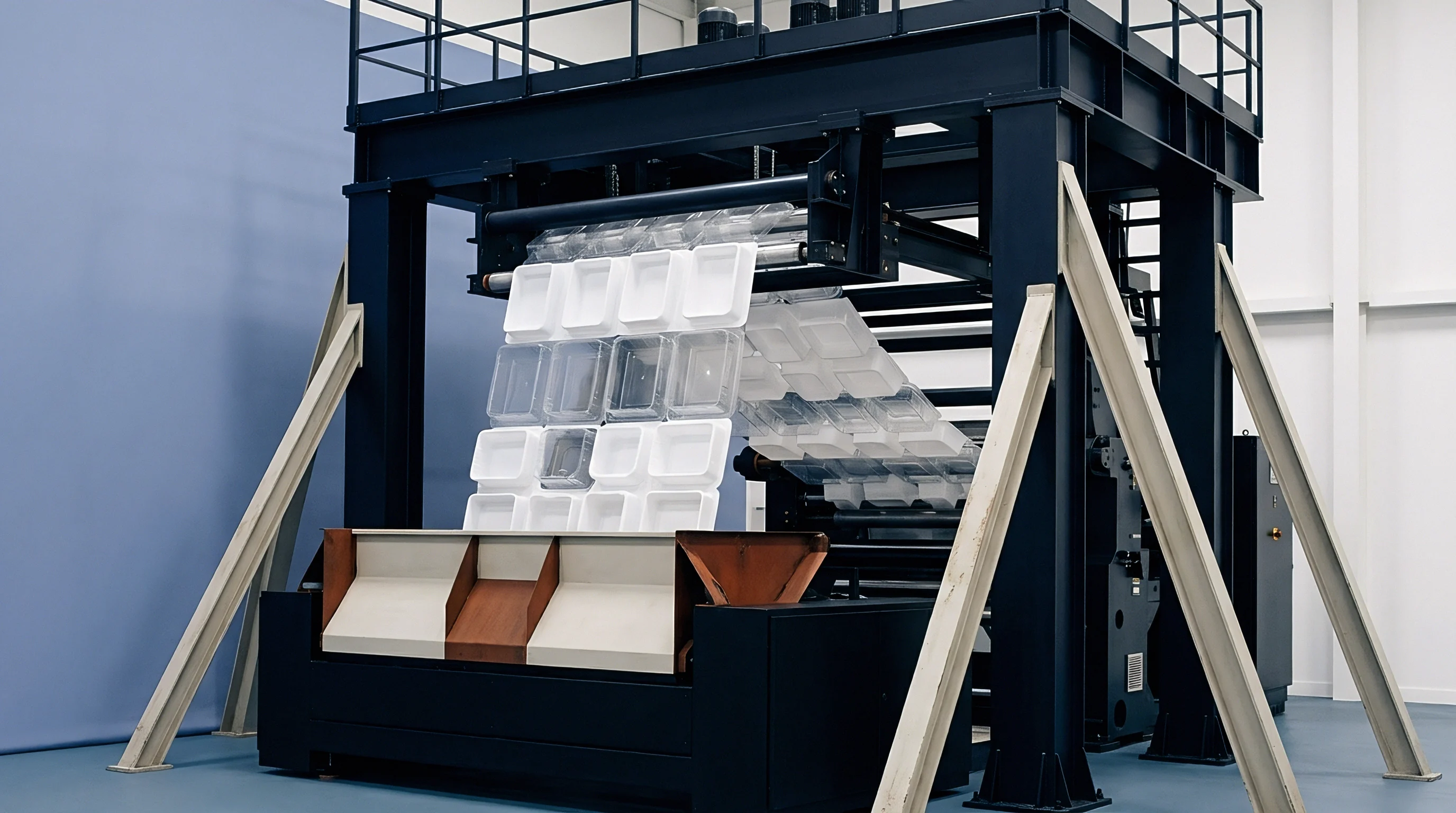
Packaging converters introduce compliance risks when incorporating unverified regrind material into the inner structural layers of co-extruded food trays without updating their declarations of conformity.
Audit trails must trace every physical batch from resin synthesis through converting, testing, clearance, and shipment, leaving no gap where unverified materials enter the production stream.