Post-Consumer Resin Decontamination Protocol Verification
Post-consumer resin decontamination requires challenge test validation using surrogate contaminants to ensure specific migration limits stay below toxicological thresholds.

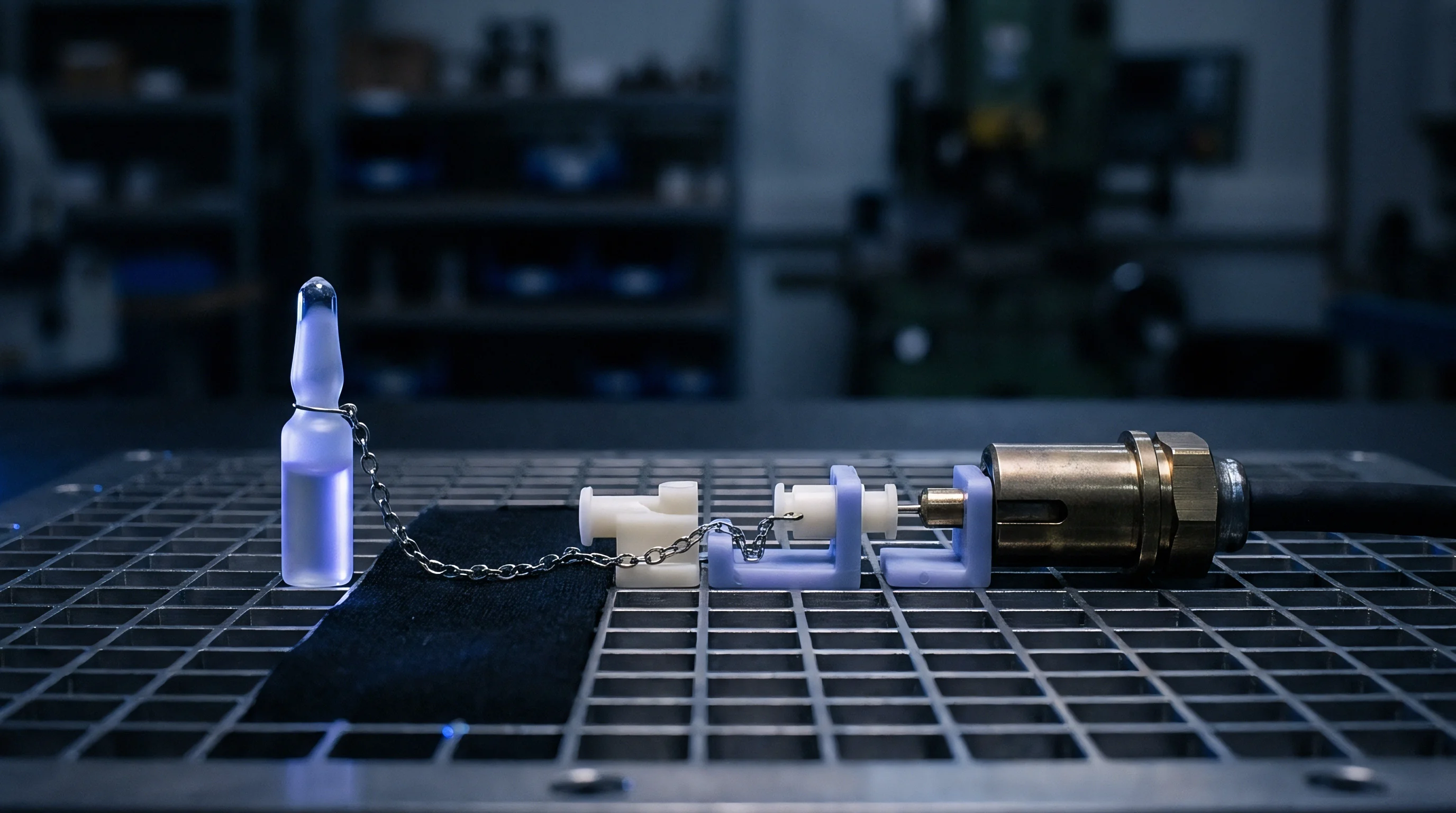
Spike
Surrogate Contaminant Selection and Dosing Mechanics
Decontamination verification for post-consumer resin relies on artificially introducing known chemical surrogates into contaminated polymer flakes prior to running a cleaning process. This challenge test measures the quantitative reduction of volatile, semi-volatile, non-volatile, polar, and non-polar substances across a super-clean decontamination reactor. Polymer matrices absorb ambient chemicals during consumer use and waste collection.
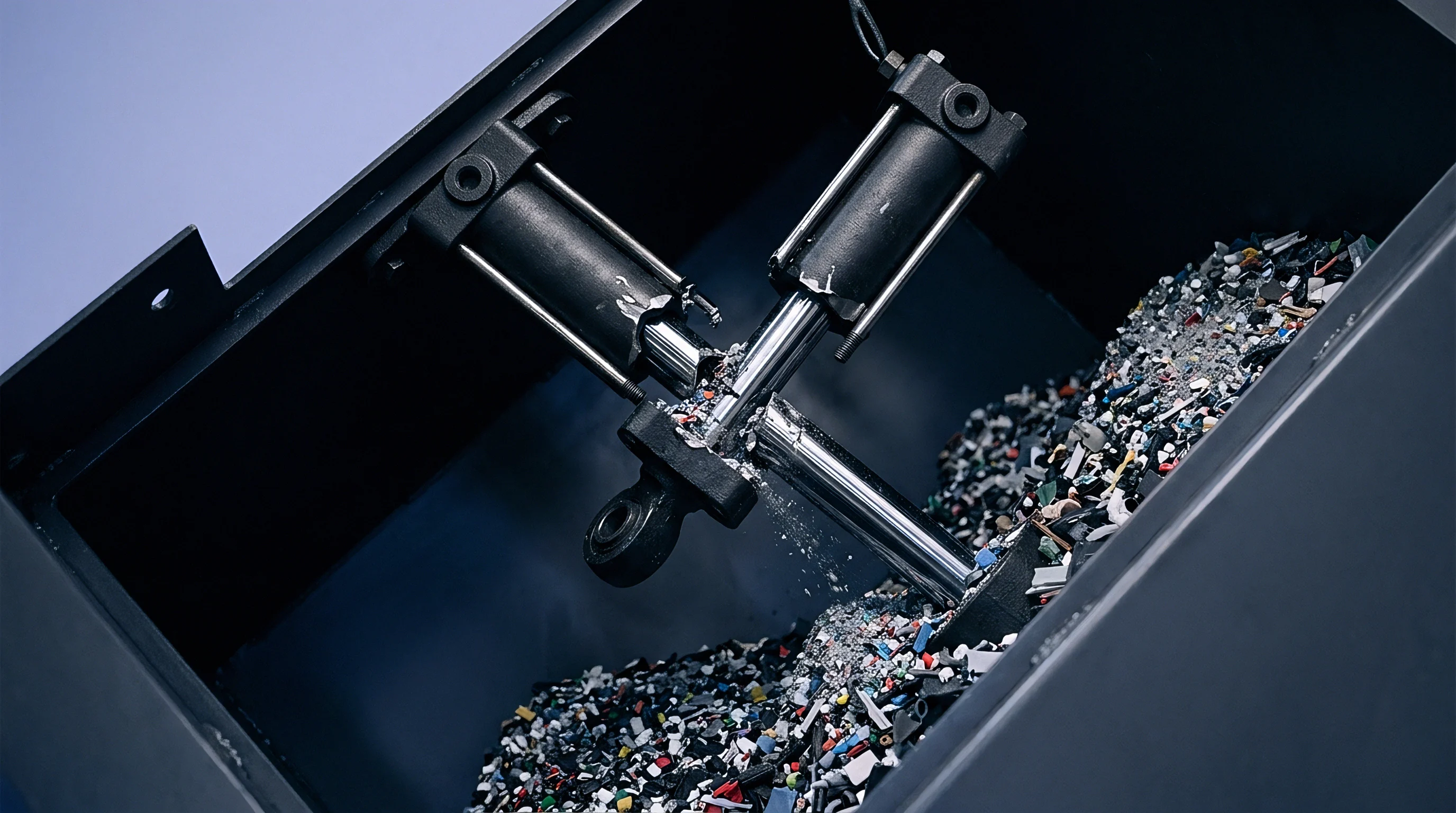
Clean flakes enter the hopper. Without verified decontamination efficiency, post-consumer resin recycled into food-contact materials leaks toxic industrial chemicals, pesticides, or degradation products directly into food simulants during storage.
Selecting surrogate compounds demands matching the physical and chemical properties of potential waste contaminants across five distinct chemical classes. United States Food and Drug Administration guidelines and European Food Safety Authority consensus models define standard surrogate cocktails. Toluene represents volatile non-polar compounds.
Chlorobenzene models volatile polar compounds. Phenylcyclohexane or tetradecane serves as the semi-volatile non-polar model. Benzophenone serves as the semi-volatile polar surrogate.
Methyl stearate or stearic acid represents high molecular weight non-volatile compounds. Each surrogate is dissolved in a solvent carrier, typically isopropyl alcohol or methylene chloride, and spiked onto uncleaned post-consumer flakes at target concentrations ranging between 100 mg/kg and 1000 mg/kg per chemical substance.
Dosing mechanics demand controlled migration into the polymer matrix rather than surface coating. Soaking flakes in the surrogate cocktail at elevated temperatures, typically 40 °C to 50 °C for 7 to 14 days, forces diffusion into the amorphous regions of the resin. Surface-coated surrogates evaporate prematurely during pre-heating stages, generating falsely optimistic cleaning efficiencies.
Analytical baseline measurements confirm deeply absorbed initial surrogate concentrations prior to running the decontamination trial.
Surrogate absorption into the flake core requires two weeks at 50 °C to prevent premature surface evaporation during initial thermal processing.
Flake thickness and crystallinity introduce variance during challenge cocktail dosing. Thicker bottle walls slow mass transfer rates, yielding uneven surrogate distribution between flake core and surface. Processors mitigate this by sieving challenge flakes to a defined fraction, typically 4 mm to 8 mm, and verifying initial concentration via solvent extraction followed by gas chromatography mass spectrometry.
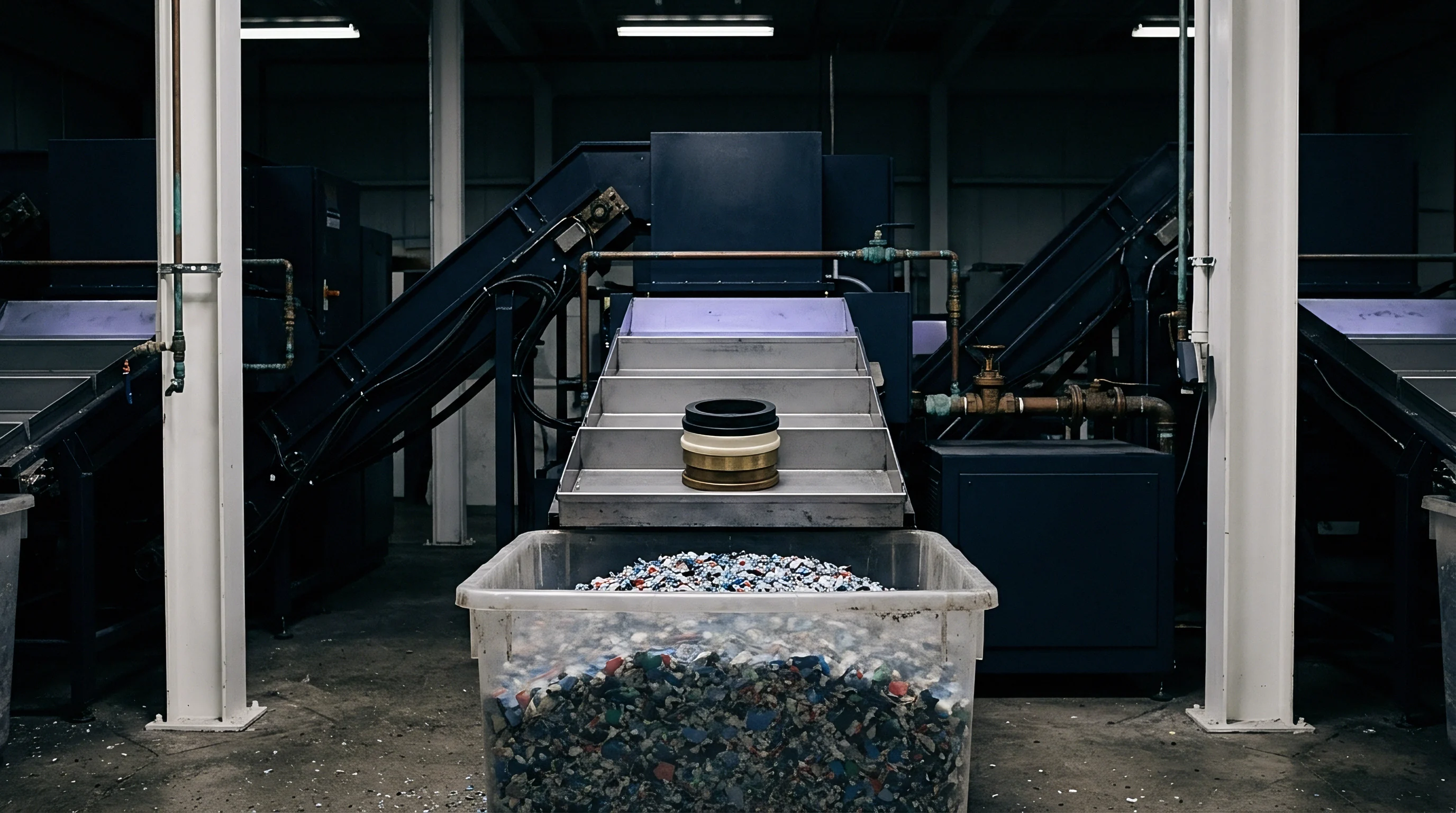
Flake Infiltration Failures and Experimental Errors
Flake swelling during the surrogate impregnation phase alters polymer morphology, invalidating challenge test results. High solvent concentrations relax polymer chains, accelerating artificial diffusion beyond real-world waste contamination dynamics.
- Solvent Swelling Interference Excessive exposure to aggressive carrier solvents increases free volume in the matrix, yielding artificially rapid decontamination kinetics inside the reactor.
- Premature Thermal Desorption Inadequate cooling during storage of spiked flakes allows volatile surrogates like toluene to escape into ambient air before entering the decontamination line.
- Uneven Surface Adsorption Rapid solvent evaporation during dosing leaves surrogate crystals deposited on flake surfaces rather than absorbed inside the bulk polymer bulk.
- Cross Contamination Spills Ineffective segregation of reference spiked material pollutes clean control samples, destroying analytical baseline calculations across gas chromatography runs.
Analytical laboratories frequently encounter supplier claims asserting that surface-coated challenge tests adequately reflect industrial decontamination performance. Refusing raw challenge data derived from surface-dosed flakes prevents accepting invalid decontamination efficiency percentages on material intended for direct food contact packaging.


Reactor

Thermal Desorption and Depolymerization Parameters
Decontamination reactors remove absorbed organic contaminants through thermal desorption, vacuum degassing, gas stripping, or solid-state polymerization. The physical transformation occurs under tightly controlled temperature, pressure, and residence time windows calibrated to specific polymer thermal properties. Polyethylene terephthalate processes frequently combine vacuum drying with solid-state polymerization at temperatures between 190 °C and 220 °C under deep vacuum below 1 mbar.
Polyolefins, such as high-density polyethylene and polypropylene, require gentler thermal regimes between 100 °C and 130 °C under hot air stripping or mild vacuum to prevent thermal degradation and melt agglomeration.
Vacuum pressure drives volatile removal. Lower absolute pressure inside the reactor vessel increases the chemical potential gradient between the polymer matrix and the gas phase, accelerating the mass transfer of volatile surrogates out of the flake melt or solid particle. Solid-state polymerization increases intrinsic viscosity while simultaneously purging volatile contaminants.
The residence time distribution inside continuous reactors determines the minimum thermal exposure for every flake passing through the system. Wide residence time distributions risk passing short-circuited flakes that retain surrogate levels exceeding safety thresholds.
Extrusion-based decontamination systems utilize high-vacuum degassing zones integrated directly into twin-screw extruders. Melt temperature controls diffusion rates. Screw configuration, melt seal design, vacuum port placement, and surface renewal rates govern volatile extraction efficiency.
Deep vacuum ports pulling down to 5 mbar remove volatile surrogates from thin polymer melt films created by high-shear mixing elements. Continuous melt filtration removes non-melting physical particulate down to 56 microns or 40 microns immediately upstream of pelletization.
Operating continuous solid-state polymerization reactors below 1 mbar absolute pressure guarantees volatile surrogate removal across high density post-consumer resin batches.

Validation Sequence for Super-Clean Extrusion Lines
Validating super-clean extrusion technology requires a formal industrial challenge test protocol executed on full-scale production machinery.
- Dose a minimum 50 kg batch of post-consumer resin flakes with the standardized surrogate cocktail to achieve uniform target absorption levels.
- Homogenize spiked flakes with clean reference virgin resin at a fixed ratio, typically 10% spiked to 90% unspiked, establishing a controlled input contamination level.
- Operate the decontamination reactor at minimum specified operating temperature, maximum mass throughput, and highest allowable operating pressure to simulate worst-case processing conditions.
- Collect output polymer samples at fixed time intervals corresponding to 1, 2, 3, and 5 theoretical residence times to confirm steady-state cleaning operation.
- Quantify residual surrogate concentrations in output pellets using complete solvent extraction and gas chromatography mass spectrometry analysis.
- Calculate decontamination efficiency percentages for each surrogate chemical across all residence time sampling points.
Higher processing temperatures accelerate surrogate removal but increase energy consumption and polymer degradation risks. Balancing thermal input against volatile extraction efficiency defines the viable operating envelope for every certified super-clean technology.


Evaluation

Mathematical Derivation of Decontamination Efficiency
Decontamination efficiency represents the quantitative percentage of a specific surrogate contaminant removed by the recycling process. Calculating this efficiency requires establishing initial surrogate concentration in the incoming contaminated resin and measuring residual surrogate concentration in the final decontaminated polymer pellet.
The mathematical expression defining decontamination efficiency follows a direct relative purge ratio:
Decontamination Efficiency (%) = ((C_in – C_out) / C_in) 100
Where C_in represents the measured surrogate concentration in the spiked polymer feed entering the reactor in mg/kg, and C_out represents the measured residual surrogate concentration in the output resin in mg/kg. When C_out falls below the analytical limit of detection, the limit of detection value substitutes for C_out, providing a conservative minimum efficiency figure.
Evaluating human exposure safety requires converting decontamination efficiency into a maximum permissible input contamination level. Toxicological safety thresholds set by regulatory authorities define the maximum acceptable dietary concentration for unknown migrated substances, established internationally at 0.0025 mg/kg body weight per day for non-carcinogenic substances, translating to a maximum consumer exposure threshold of 0.00015 mg/person/day.
Assuming a default packaging exposure scenario where 1 kg of food contacts 6 dm² of packaging containing post-consumer resin, specific migration limits are calculated using diffusion modeling software based on the threshold of toxicological concern. The maximum allowable concentration of a contaminant in the input resin stream, C_in_max, links directly to the specific migration limit and the demonstrated decontamination efficiency:
C_in_max = SML / ((1 – (Decontamination Efficiency / 100)) Migration Factor)
Where SML is the specific migration limit in mg/kg food, and Migration Factor accounts for polymer density, packaging thickness, contact temperature, and food simulant solubility characteristics.
The table below summarizes standard surrogate properties, model input concentrations, target residual limits, and required decontamination efficiencies calculated for food-contact packaging applications.
| Surrogate Chemical | CAS Number | Chemical Class Model | Input Conc. (C_in, mg/kg) | Target Limit (C_out, mg/kg) | Required Efficiency (%) |
|---|---|---|---|---|---|
| Toluene | 108-88-3 | Volatile Non-Polar | 500.0 | 1.00 | 99.80 |
| Chlorobenzene | 108-90-7 | Volatile Polar | 350.0 | 0.70 | 99.80 |
| Phenylcyclohexane | 4920-39-0 | Semi-Volatile Non-Polar | 400.0 | 2.00 | 99.50 |
| Benzophenone | 119-61-9 | Semi-Volatile Polar | 450.0 | 2.25 | 99.50 |
| Methyl Stearate | 112-61-8 | Non-Volatile High Mass | 300.0 | 3.00 | 99.00 |
European Union Regulation 2022/1616 mandates that individual decontamination processes obtain specific authorization from the European Commission based on an evaluation published by the European Food Safety Authority. European Food Safety Authority evaluations require challenge tests demonstrating decontamination efficiencies exceeding 99.5% for volatile surrogates and 99.0% for semi-volatile surrogates in high-percentage post-consumer resin applications.
In contrast, the United States Food and Drug Administration issues No-Objection Letters based on calculated consumer exposure thresholds derived from individual challenge test submissions. A Food and Drug Administration submission applies a 21 CFR 174.5 exposure evaluation model assuming a 50% post-consumer resin inclusion rate in final containers unless specific lower blend caps are specified in the petition.
Contractual supply agreements specifying post-consumer resin grades for direct food-contact applications insert explicit decontamination efficiency clauses linking batch acceptance to independent laboratory verification reports. Standard supply terms specify that any lot demonstrating surrogate residual concentrations exceeding 1.0 mg/kg for toluene equivalents triggers immediate batch rejection at supplier expense.


Spectrometry

Analytical Methods for Residuals and Non-Intentionally Added Substances
Analytical quantification of residual surrogates and non-intentionally added substances in processed post-consumer resin requires hyphenated chromatographic systems. Gas chromatography paired with mass spectrometry or flame ionization detection identifies and quantifies volatile and semi-volatile compounds. Sample preparation utilizes static headspace, headspace solid-phase microextraction, or total solvent dissolution followed by polymer precipitation.
Liquid chromatography coupled to high-resolution time-of-flight mass spectrometry targets non-volatile oligomers, photoinitiators, and antioxidant degradation products.
Gas chromatography reveals trace residuals. Static headspace extraction at 150 °C for 60 minutes releases volatile surrogates directly from resin pellets into the vapor phase for capillary column separation. Quantitative calibration curves constructed using certified reference standards determine exact residual surrogate levels down to detection limits of 0.01 mg/kg resin.
Total dissolution methods dissolve 1 gram of resin in hexafluoroisopropanol or dichloromethane, precipitate the polymer matrix with cold methanol, filter the liquid phase, and inject the clean extract into the chromatograph. Dissolution prevents underestimating high molecular weight surrogates like methyl stearate that exhibit low vapor pressure during headspace heating.
Non-intentionally added substances screening demands non-target high-resolution mass spectrometry. Post-consumer resin streams absorb complex mixtures of fragrance chemicals, printing ink components, plasticizer breakdown products, and pesticide residues during initial consumer usage. Non-target screening scans mass-to-charge ratios from 50 m/z to 1000 m/z, matching unknown spectral peaks against mass spectral libraries containing over 300,000 compound profiles.
Unidentified peaks exceeding a specific migration limit threshold of 0.01 mg/kg food equivalent require toxicological hazard evaluation based on chemical structure estimation models.
A test report lacking liquid chromatography time-of-flight mass spectrometry data fails to exclude non-volatile packaging additives.

Which Volatile Surrogates Escape Standard Gas Chromatography Screening?
Low molecular weight polar aldehydes and organic acids frequently escape detection during standard static headspace gas chromatography runs. Acetaldehyde, formaldehyde, and formic acid exhibit poor chromatographic retention on non-polar capillary columns and low response factors on flame ionization detectors. Trace acetaldehyde generated by thermal degradation of polyethylene terephthalate during extrusion masks volatile surrogate peaks, requiring polar capillary column chemistries or liquid chromatography derivatization with 2,4-dinitrophenylhydrazine to resolve compound overlap.
Mass spectrometry detection limits restrict false negative claims. Reporting non-detectable surrogate residues without specifying the method limit of detection invalidates compliance claims under food-contact safety standards.


Paperwork

Chain of Custody and Declaration of Conformity Auditing
Verifying decontamination protocols requires auditing the complete chain of custody from post-consumer waste input streams to final converted food packaging articles. Traceability documents prove that processing conditions matched parameters validated during initial challenge testing. A valid compliance file connects raw material sourcing records, super-clean reactor operating logs, third-party laboratory test reports, and the formal Declaration of Compliance issued under applicable regional regulations.
European Regulation 2022/1616 mandates detailed documentation for every lot of recycled plastic placed on the market. Recyclers generate continuous operational records showing reactor temperatures, vacuum levels, mass throughput rates, and residence times. Quality managers compare these continuous parameters against the operating envelope defined in the European Food Safety Authority safety evaluation opinion.
Deviations in operating parameters invalidate the food-contact status of affected production lots.
The Declaration of Compliance serves as the legal instrument accompanying every shipment of post-consumer resin intended for food-contact packaging. The document states the exact identity of the decontamination technology authorization, the validated maximum post-consumer resin inclusion percentage, maximum permitted food contact temperatures, food type restrictions, and confirmation that an effective quality assurance scheme complies with Regulation 2023/2006 on good manufacturing practice.
Auditing compliance dossiers requires checking information flow across supply chain tiers. Buyers verify that converter declarations match raw resin compliance claims without altering intended application parameters.
- Challenge Test Authorization Reference Inclusion of exact regulatory authorization numbers linking the physical reactor line to published food safety opinions.
- Operating Envelope Verification Records Automated continuous sensor logs proving processing temperature and vacuum pressure remained within certified validation boundaries.
- Batch Traceability Sourcing Codes Identification tags linking finished resin lots back to specific input waste collection batches and sorting facilities.
- NIAS Screening Certificates Analytical report summaries verifying non-target chemical screening results remained below threshold limits.
- Food Simulant Application Boundaries Explicit instructions defining permitted contact times, contact temperatures, and food simulant type restrictions.
Incomplete compliance files create immediate border detention risks and product recall liabilities. Importing converted plastic packaging lacking traceable challenge test documentation results in mandatory port-of-entry rejections, container destruction orders, and financial penalties assessed directly against the legal importer of record.
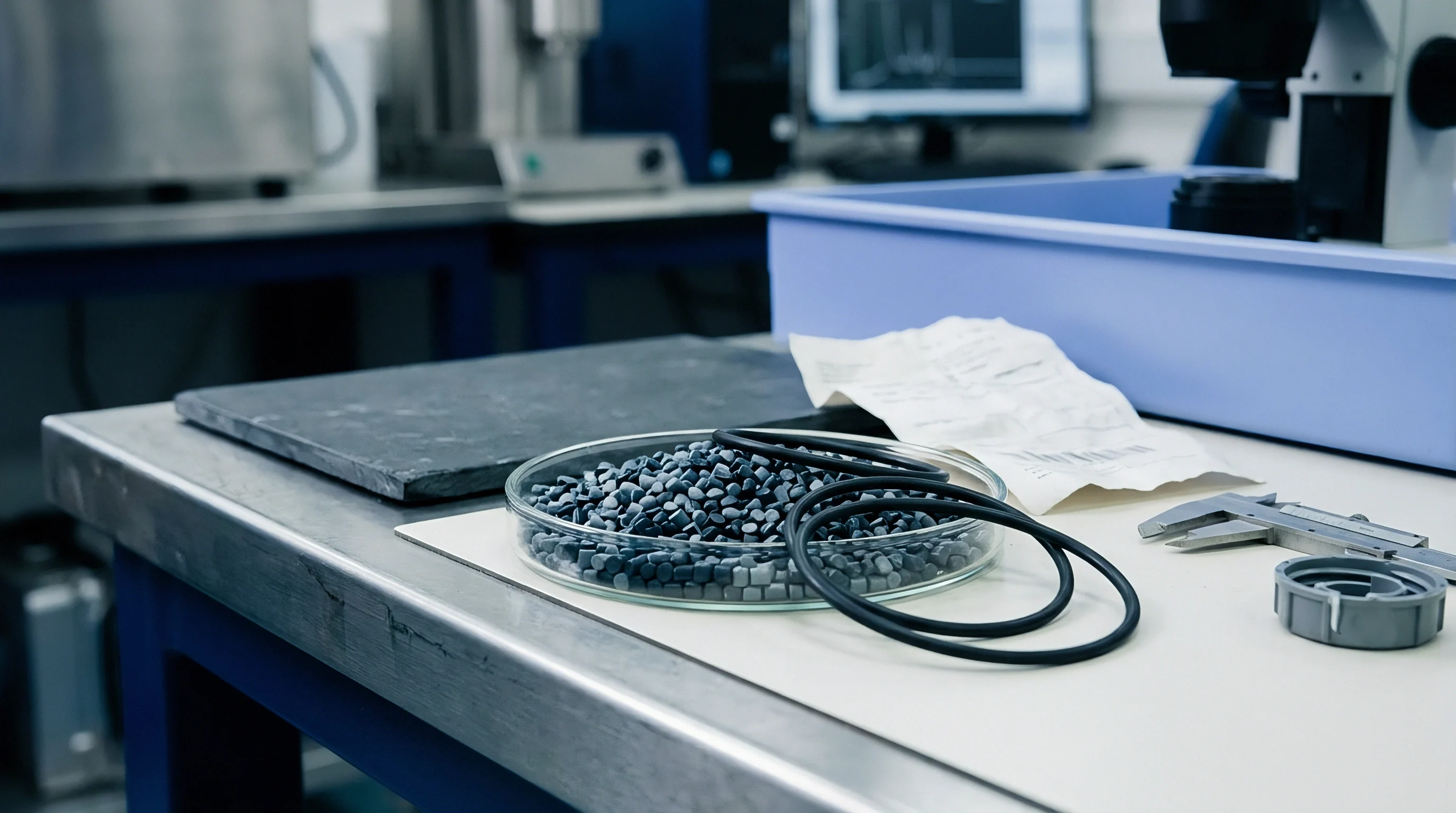

Exposure

Modulated EPR Fees, Packaging Taxes, and Batch Rejection Economics
Commercial utilization of post-consumer resin introduces complex financial trade-offs between regulatory compliance costs, extended producer responsibility fee discounts, national plastic taxes, and batch rejection exposures. Governments increasingly leverage economic instruments to incentivize recycled content usage in packaging materials. Plastic packaging taxes, such as the United Kingdom Plastic Packaging Tax assessed at 217.85 GBP per tonne or the European Union national plastic levy calculated at 0.80 EUR per kilogram of non-recycled plastic packaging waste, directly penalize virgin polymer usage.
Extended producer responsibility schemes modulate eco-contributions based on post-consumer resin inclusion rates and packaging recyclability design choices. Modern fee schedules grant substantial discounts to brand owners incorporating certified post-consumer resin into food-contact applications. Claiming these financial credits requires presenting audited compliance dossiers proving that decontamination protocols satisfy food safety standards.
Utilizing unverified post-consumer resin leads to retroactive fee adjustments, tax penalty surcharges, and public brand exposure.
Batch rejection mechanics carry high financial impact in automated packaging converting lines. Off-spec post-consumer resin exhibiting elevated residual solvent levels, thermal degradation products, or unremoved fragrance compounds causes off-odor contamination in packaged food products. Sensory defects prompt consumer complaints, retailer shelf removal, and complete lot withdrawals.
Testing costs compound with delay.
The regulatory compliance matrix in the table below maps regional food-contact decontamination standards against key operational and commercial parameters across common polymer types.
| Polymer Matrix | Decontamination Technology | Regulatory Framework | Max PCR Inclusion (%) | Migration Threshold |
|---|---|---|---|---|
| Polyethylene Terephthalate | Vacuum Solid-State Polymerization | EU Regulation 2022/1616 | 100.0 | 10 ppb per individual NIAS |
| Polyethylene Terephthalate | Extrusion Vacuum Degassing | US FDA 21 CFR 174.5 | 100.0 | 0.5 ppb dietary concentration |
| High-Density Polyethylene | Hot Gas Stripping & Thermal Wash | US FDA NOL Criteria | 100.0 | 1.5 ppb dietary concentration |
| Polypropylene | Thermal Desorption Extrusion | EFSA Panel Guidelines | 30.0 | 10 ppb per individual NIAS |
Commercial contracts between resin recyclers, packaging converters, and consumer goods brand owners establish precise financial liabilities covering off-spec deliveries. Standard supply agreements require recyclers to indemnify downstream buyers against third-party recall costs, packaging line downtime expenses, and regulatory fines resulting from unverified decontamination failures. Quality assurance audits mandate retaining representative batch samples for a minimum of three years to support forensic chemical analysis during contested contamination disputes.