Rheological and Purity Test Selection for Post Consumer Resin Qualification
Pair high-shear capillary rheometry with DIN EN 13900-5 filtration and DSC enthalpy testing to qualify post-consumer resin before silo discharge.
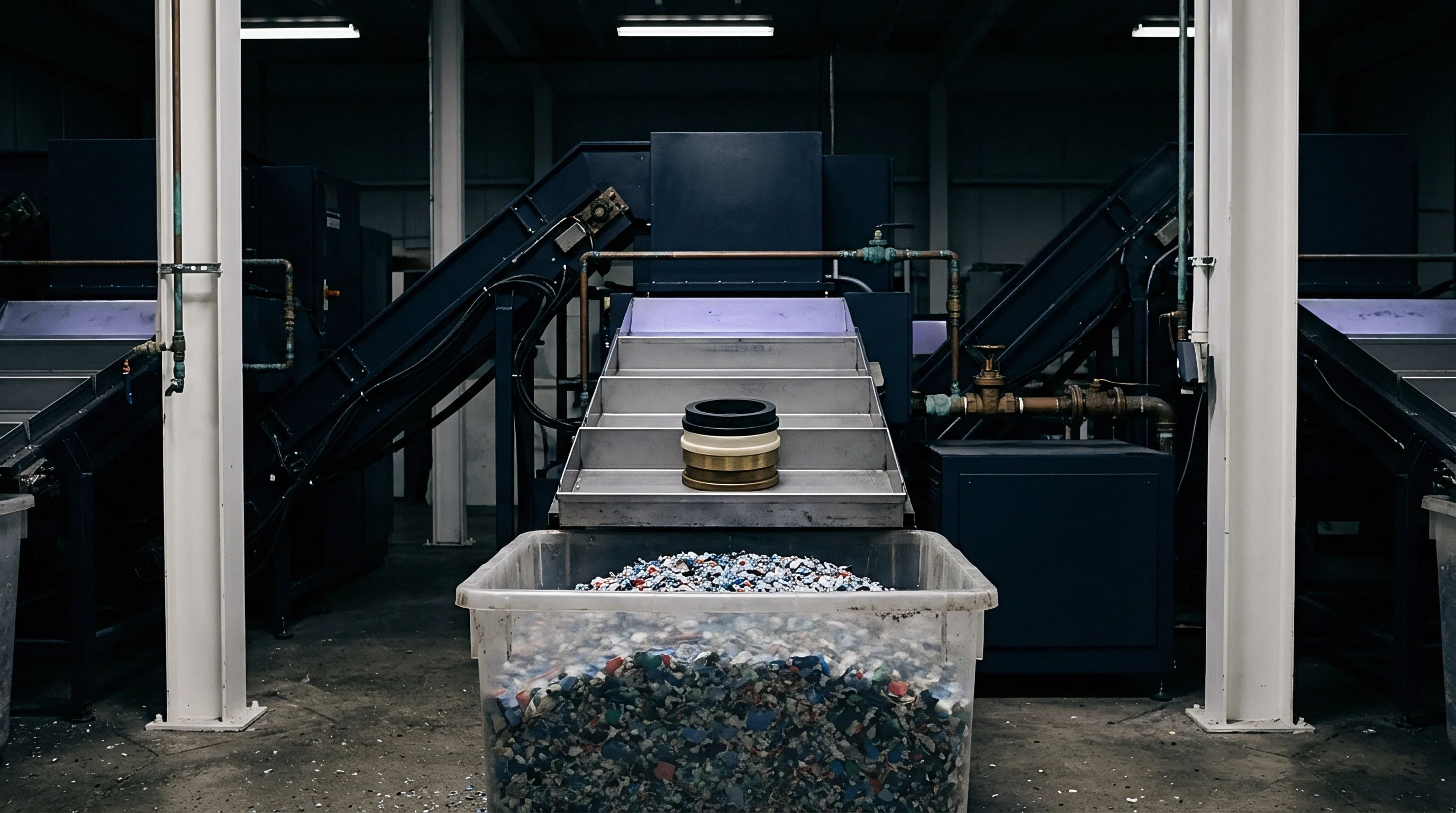

Screen
Incoming post-consumer flake and re-pelletized feedstocks arrive with solid particulate burdens that bypass standard melt flow indexing entirely. Sand, unground thermosets, cellulose flakes from paper labels, and aluminum foil slivers carry dimensions from 15 to 450 micrometers without altering low-shear capillary discharge rates during basic lot acceptance testing. Standard melt filters inside single-screw lab extruders mask these foreign bodies while hot runner tips and gate orifices in production moulds retain them.
Pressure differential testing through an automated continuous screen changer quantifies particulate loading before resin moves to production silos. The pressure filter test defined in DIN EN 13900-5 measures the pressure rise across an agreed wire mesh filter package at a fixed melt temperature and continuous mass throughput. For a high-density polyethylene blow-moulding grade, the test runs on a 34-millimeter single-screw laboratory extruder at 190 degrees Celsius through a 44-micrometer screen package using a gear pump calibrated to 50 grams per minute.
A pressure rise exceeding 4.2 bar per kilogram of polymer across a 44-micrometer wire cloth indicates particulate loading that plugs hot runner gates during thin-wall packaging cycles.
The resulting pressure filter value, expressed in bar per kilogram of polymer, separates clean industrial post-consumer stream lots from contaminated household collections. Post-consumer polyolefins intended for cosmetic and thin-wall injection mouldings show acceptable process behavior below 1.5 bar per kilogram. Blow-moulding applications producing 20-liter industrial containers handle materials up to 6.0 bar per kilogram before pinhole formation weakens drop-impact performance.
Particulate clusters trigger brittle wall fracture.
Continuous screen pack testing produces the primary mechanical sorting criteria detailed below.
- Filtration pressure value quantifies solid unmelted contamination by recording pressure accumulation per kilogram extruded through woven stainless steel mesh. High values correlate with pinhole defects in blown films.
- Laser diffraction residue count determines particle sizing within solvent-extracted ash, cataloging non-combustible solids between 1 and 100 micrometers. The distribution confirms whether inorganic contamination stems from airborne dirt or fine glass fragments.
- Optical surface tape inspection passes extruded unpigmented cast ribbon beneath a line-scan camera to record dark speck frequency per square meter. Finished parts show aesthetic rejections when foreign bodies exceed 150 micrometers in visible surfaces.
Gel count dictates surface finish.
Unmelted flakes jam hot runner gates.
Omission of mechanical filtration indexing exposes downstream operations to continuous tool abrasion, gate blockage, and progressive cavity venting deposits that halt manufacturing shifts without warning.

Shear
Melt flow rate measured under static dead-weight conditions via ISO 1133 or ASTM D1238 provides a single rheological data point at an unrepresentative shear rate between 1 and 10 reciprocal seconds. Post-consumer resins feature broad and bimodal molecular weight distributions caused by blended manufacturing lots, mechanical recycling passes, and chain crosslinking. Injection moulding operates across shear rates spanning 1,000 to 100,000 reciprocal seconds within gates and thin-wall runners, where non-Newtonian pseudoplasticity dominates material response.
Two post-consumer polypropylene lots exhibiting identical melt flow values of 12.0 grams per 10 minutes at 230 degrees Celsius under a 2.16-kilogram load frequently separate by 40 percent in apparent viscosity when measured at 10,000 reciprocal seconds. High capillary shear testing via ASTM D3835 reveals true flow profiles under commercial injection velocities. A dual-piston capillary rheometer equipped with a 1-millimeter diameter die and a 30-to-1 length-to-diameter ratio isolates wall shear stress, true shear viscosity, and entrance pressure losses through Bagley corrections.
Viscosity ratios determine phase morphology.
Divergent viscosity indices provoke wall thinning.
| Polymer Matrix | Test Standard | Test Parameters | Acceptable Processing Window | Failure Indicator |
|---|---|---|---|---|
| rHDPE Blow Moulding | ISO 1133-1 Proc A | 190 °C, 5.0 kg | 1.2 to 1.8 g/10 min | Melt flow variance above 0.35 g/10 min |
| rHDPE Pipe Grade | ASTM D3835 | 190 °C, 100 s⁻¹ | 1,450 to 1,900 Pa·s | Viscosity drop below 1,200 Pa·s from scission |
| rPP Injection Moulding | ASTM D3835 | 230 °C, 10,000 s⁻¹ | 22 to 38 Pa·s | Apparent shear thinning index exceeding 0.75 |
| rPET Bottle Preforms | ASTM D4603 | 30 °C, Phenol/TCE | 0.76 to 0.84 dL/g | Intrinsic viscosity decline exceeding 0.04 dL/g |
| rPP Low-Shear Damping | ISO 6721-10 | 200 °C, 0.1 rad/s | 2,100 to 3,400 Pa·s | Storage modulus crossover shift from crosslinking |
Small-amplitude oscillatory shear measurements conducted on parallel-plate rotational rheometers per ISO 6721-10 evaluate the low-shear viscoelastic plateau. The storage modulus and loss modulus crossover frequency indicates polydispersity and relative molecular weight shifts. Post-consumer lots suffering thermal degradation display lower crossover frequencies and elevated zero-shear viscosities, signalling branched or crosslinked networks that generate melt fracture along extrusion die lips.
Parallel-plate rheometry confirms polymer degradation states when low-frequency viscoelastic curves separate lots that pass standard melt flow tests.
High zero-shear viscosity resists sag.
The processing window narrows when linear viscoelastic limits shrink during storage modulus sweeps, leaving open the degree to which compounding re-stabilization packages can recover elongational stability during high-speed parison inflation.
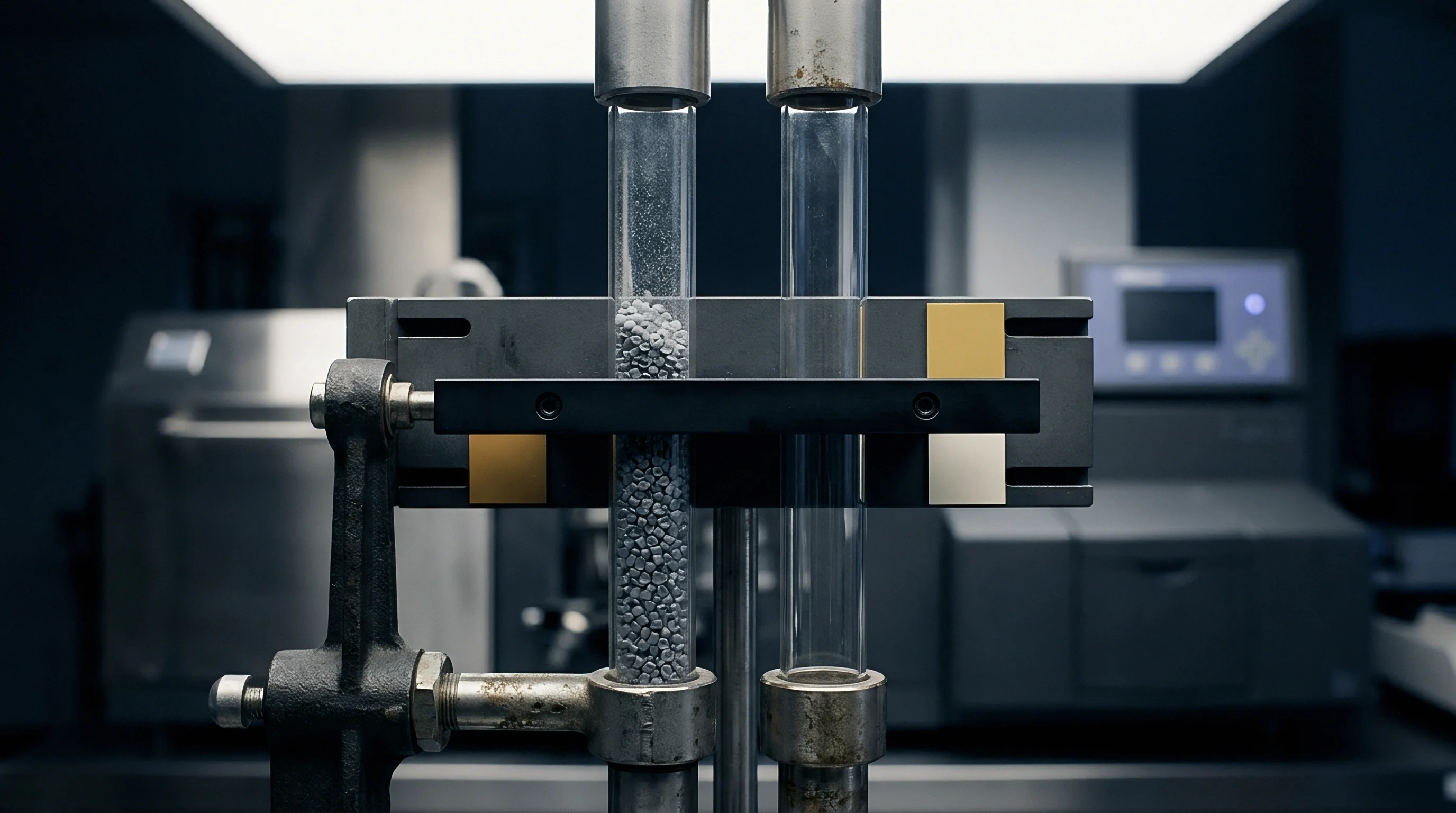
Volatiles
Residual entrapped liquids, unreacted additives, printing ink solvents, and low-molecular thermal oxidation products degrade both operational tool steel and component odor profiles. Thermal gravimetric analysis per ASTM E1131 coupled with evolved gas detection traces mass losses across temperature plateaus. For polyolefins, mass losses recorded between 50 and 200 degrees Celsius represent volatile low-boiling organic fractions and adsorbed ambient moisture.
Karl Fischer coulometric titration under ASTM D6869 provides precision water determination for condensation polymers like post-consumer polyethylene terephthalate and polyamide. Standard oven drying methods yield deceptive weights due to additive vaporization. In PET processing, moisture levels exceeding 50 parts per million provoke instantaneous hydrolytic chain cleavage inside the extruder barrel, dropping intrinsic viscosity below blow-moulding thresholds.
Moisture initiates hydrolytic chain cleavage.
Moisture vaporization blisters extruded sheet.
Polymer feedstocks containing volatile fractions above 0.35 percent by weight generate persistent steam voids and surface splay in unvented injection barrels.
Gas chromatography with mass spectrometry following static headspace sampling via VDA 277 quantifies volatile organic compounds and non-intentionally added substances. Limonene, pinene, and aliphatic degradation aldehydes derived from detergent packaging dominate the volatile fraction of sorted post-consumer polyolefins. Packaging intended for cosmetic containers or closed automotive cabins requires strict thresholds on emission intensities to avoid internal air quality penalties.
Organic volatiles generate cavity gassing.
Off-gassing corrodes chrome tool steel.
The compounding operation routinely attributes surface splay and venting deposits to atmospheric dampness in storage hoppers rather than admitting inadequate devolatilization venting along the extruder barrel.

Inclusion
Polymer recycling infrastructures fail to separate structurally similar thermoplastics cleanly, leaving secondary polymeric fractions dispersed throughout incoming pelleted lots. Differential scanning calorimetry performed according to ISO 11357-3 reveals foreign polymeric contamination by tracing distinct melting and crystallization endotherms. In post-consumer high-density polyethylene, polypropylene fractions emerge as secondary melting peaks between 160 and 168 degrees Celsius during the second heating cycle at a rate of 10 Kelvin per minute.
Polypropylene inclusions embrittle polyethylene matrices.
Thermal history broadens crystal distribution.
Even small polypropylene fractions disrupt polyethylene spherulite crystallization along inter-spherulitic boundaries. The resulting phase-separated domains form micro-crack initiation sites under low-temperature mechanical impact. Secondary crystallization traces identify exact polymeric fractions through calibrated enthalpy calculations.
| Contaminant Class | Primary Matrix | Measurement Method | Critical Acceptance Ceiling | Observed Material Consequence |
|---|---|---|---|---|
| Polypropylene | rHDPE Extrusion | DSC (Melting Enthalpy) | 2.5 mass percent | Notched Izod impact drops 45% at -20 °C |
| High-Density PE | rPP Copolymer | DSC (Melting Enthalpy) | 3.0 mass percent | Flexural modulus reduction exceeding 150 MPa |
| Polyvinyl Chloride | rPET Flake | Total Chlorine by XRF | 50 mg/kg (50 ppm) | Hydrochloric gas production corroding tool surfaces |
| Polystyrene | rHDPE Blow Moulding | FTIR Spectroscopy (ATR) | 0.5 mass percent | Environmental stress crack resistance collapse |
| Mineral Residue | rPolyolefins | Ash Testing ASTM D5630 | 1.5 mass percent | Abrasive wear on screw flights and nozzle orifices |
| Thermal enthalpy evaluations assume a 100% crystalline PP reference heat of fusion of 207 J/g and PE reference of 293 J/g per ISO 11357-3. | ||||
Inorganic contamination requires ash residue verification via ASTM D5630 Procedure B. Pellets burned in a muffle furnace at 600 degrees Celsius isolate talc, calcium carbonate, titanium dioxide pigments, and abrasive road silts. Total ash weight exceeding 1.5 percent alters compound density calculations, increases part mass, and accelerates barrel flight scouring during continuous production.
Ash content reflects mineral loading.
Heavy metals concentrate in fines.
Contaminated resin devalues finished mouldings.
Laboratory validation follows a strict operational path across analytical workstations.
- Fourier transform infrared spectroscopy inspects thirty individual pellets per gaylord box using attenuated total reflectance to verify bulk matrix identity and screen for polyamide or polystyrene surface contaminants.
- Differential scanning calorimetry records melting transitions between minus 50 and plus 300 degrees Celsius to determine exact cross-polymer contamination levels through heat of fusion calculations.
- Energy dispersive X-ray fluorescence tracks halogen signals, detecting chlorine from polyvinyl chloride contamination down to 10 parts per million.
- Microwave digestion with ash analysis burns the combustible matrix to expose abrasive glass and inorganic filler percentages.
Single-origin post-consumer lots maintain impact strength while mixed-origin collections lose ductile deformation under environmental stress.
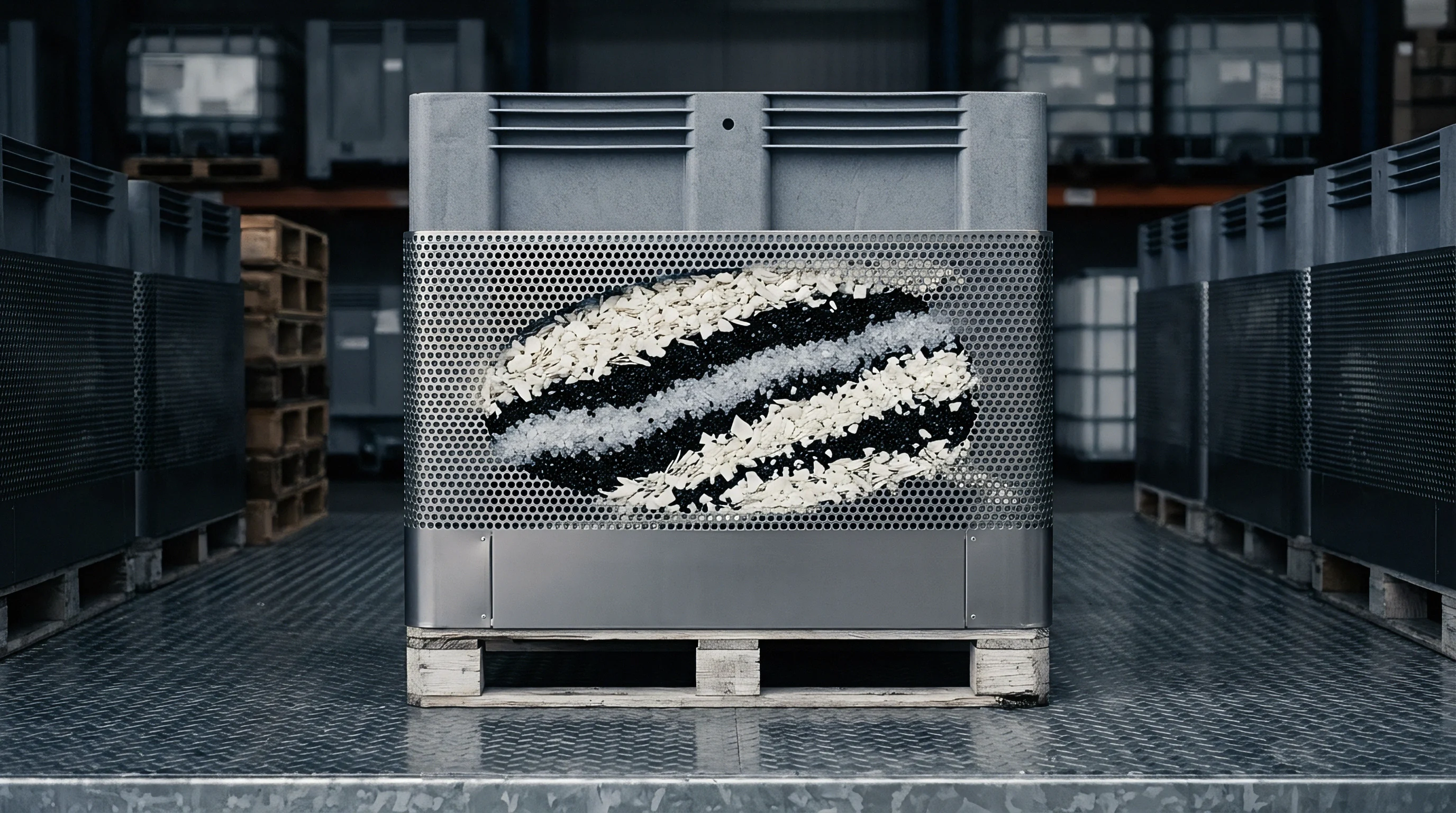
Settlement
Laboratory data translates directly into commercial clearance, price adjustment, or shipment rejection at the unloading terminal. Post-consumer polymer purchase contracts require explicit physical and rheological boundary conditions rather than broad commodity classifications. Buyers setting up incoming quality agreements define allowable tolerance bands around melt index, ash, and thermal contamination limits to protect finished part yields.
A delivered 40-tonne railcar of post-consumer high-density polyethylene priced at 1,180 euros per tonne carries substantial economic risk when foreign polymer fractions deviate from contract declarations. If differential scanning calorimetry testing reveals a polypropylene contamination level of 4.8 percent against a contract specification capping foreign polyolefins at 2.0 percent, the material cannot run cold-temperature industrial container tooling. The buyer exercises documented rebate schedules or initiates return logistics at the supplier expense.
| Observed Material Deviation | Threshold Range | Commercial Penalty Action | Operational Downstream Impact |
|---|---|---|---|
| MFR Variance (ISO 1133) | ±15% to ±25% of target | 50 EUR per tonne rebate | Cycle time adjustment on injection presses |
| MFR Variance (ISO 1133) | Exceeding ±25% of target | Immediate rejection of lot | Short-shots or severe cavity flashing |
| PP in rHDPE (DSC Enthalpy) | 2.1% to 4.0% by mass | 75 EUR per tonne rebate | Down-rating parts to non-impact applications |
| PP in rHDPE (DSC Enthalpy) | Exceeding 4.0% by mass | Rejection and freight recovery | Drop impact test failure on finished packaging |
| Ash Content (ASTM D5630) | 1.5% to 3.0% by mass | 40 EUR per tonne rebate | Tooling wear acceleration and cycle mass gains |
| Filtration Value (DIN 13900-5) | Exceeding 6.0 bar/kg | Return of shipment at vendor cost | Screen pack blinding and tool tip freeze-offs |
Standard delivery terms under ISO 17088 and related trade definitions assign inbound demurrage costs to the material producer whenever incoming certificate audits contradict gate-side laboratory findings within forty-eight hours of vehicle arrival.