Contractual Definitions of Virgin Resin Purity Standards
Virgin resin purity standards require defined cross-polymer limits, certified ISO testing methods, and explicit zero-regrind contract clauses.


Contamination
Unintended polymer blends, thermal degradation products, and foreign matter in virgin resin shipments degrade melt behavior during processing. Cross-grade mixing destroys value. High-purity manufacturing demands strict definitions of what enters the reactor and the packaging line.
Contractual specifications establish legal and technical boundaries between prime virgin material and off-spec resin contaminated with regrind, off-grade carryover, or environmental debris.

Standard Purity Baseline Specifications
Polymer specifications define virgin status as material resulting directly from synthesis without prior compounding with post-consumer or post-industrial scrap. Primary polymer synthesizers maintain rigorous mechanical and thermal property baselines. The presence of secondary polymer phases alters crystallization kinetics, shear response, and environmental stress crack resistance.
Contractual purity definitions quantify acceptable non-target polymer limits down to parts per million.
In polyolefin supply agreements, cross-contamination between high-density polyethylene and polypropylene represents a recurring quality dispute. Melt blending of these incompatible polymers creates phase separation at microscopic scales. Small fractions of polypropylene inside a high-density polyethylene blow-molding grade reduce environmental stress crack resistance by forming weak interfacial boundaries.
A contractual reference to ISO 1043-1 forces explicit labeling of all virgin polymer blends and eliminates ambiguity surrounding compound additives.

Categorization of Non-Virgin Impurities
Invasive materials entering resin streams originate from reactor carryover, line switchover failures, or external airborne debris. Particulate matter includes degraded oxidized gels, black specks from extruder walls, metal fragments from wear components, and cross-grade resin pellets. Volatiles compromise structural integrity.
Residual solvent fractions, unreacted monomers, and absorbed ambient moisture introduce internal porosity during high-temperature forming operations.
| Polymer Family | Virgin Purity Standard (%) | Max Cross-Polymer Content (ppm) | Max Ash Content (ISO 3451 %) | Max Moisture (ppm) |
|---|---|---|---|---|
| Polyethylene (HDPE/LLDPE) | 99.90 | 300 | 0.02 | 100 |
| Polypropylene (Homopolymer) | 99.85 | 500 | 0.03 | 150 |
| Polyethylene Terephthalate (PET) | 99.95 | 50 | 0.01 | 50 |
| Polyamide (PA66) | 99.80 | 100 | 0.05 | 200 |
| Polycarbonate (PC) | 99.95 | 20 | 0.01 | 100 |
Categorizing impurities dictates appropriate analytical methods for lot qualification. Inorganic debris remains after high-temperature combustion, while organic cross-contaminants demand spectroscopic or thermal analysis. Solid particulates cause physical flow blockages in processing equipment.
Thermal history changes color stability. Clean resin specifications set tight limits on particulate count and chemical purity.
- Cross-Polymer Phase Separation ~ Incompatible polymer chains like polypropylene in low-density polyethylene create localized stress concentrators that cause premature impact failure.
- Thermal Degradation Black Specks ~ Carbonized polymer particles generated in extruder dead zones obstruct narrow gate channels and create visual defects on thin-wall parts.
- Volatile Hydrocarbon Trapping ~ Remaining monomer or solvent fractions vaporize during injection molding to form interior voids and splay patterns on surface finishes.
- Inorganic Catalyst Residue ~ Unneutralized transition metals accelerate thermal aging and color shift during service under ambient ultraviolet exposure.
Failure to bind suppliers to tight purity tolerances results in compromised mechanical performance, elevated scrap rates at the molding line, and unresolvable liability disputes when finished parts fail prematurely in service.


Mesh
Particulate filtration during extrusion isolates solid contaminants before molten polymer enters the pelletizing die. Particulate size dictates screen life. Sieve size choices during production and quality audit steps dictate the lower limit of particulate detection.
Sieve analysis exposes foreign matter. Contractual language specifies maximum particle counts per unit mass retained on standard mesh wire screens.

Particulate Size Distribution Limits
Sieve analysis measures foreign particles, unmelts, and cross-linked gels retained on wire screens. Screen dimensions correspond to standardized ISO 3310-1 mesh sizes. Polymer melts passing through a fine filter pack experience shear heating, which alters local viscosity.
Specification clauses bound both the screen opening size and the maximum allowable pressure drop rate during compounding test runs.
Gel count metrics rely on visual and optical inspection of extruded blown films or cast sheets. Gels consist of high-molecular-weight, cross-linked polymer networks that refuse to melt at standard processing temperatures. Optical gel counters measure gel sizes spanning fifty to five hundred micrometers.
Contracts state maximum gel area density per square meter of film sample.
Filter pack pressure rise during compounding indicates particulate contamination long before visual discoloration appears in molded parts.
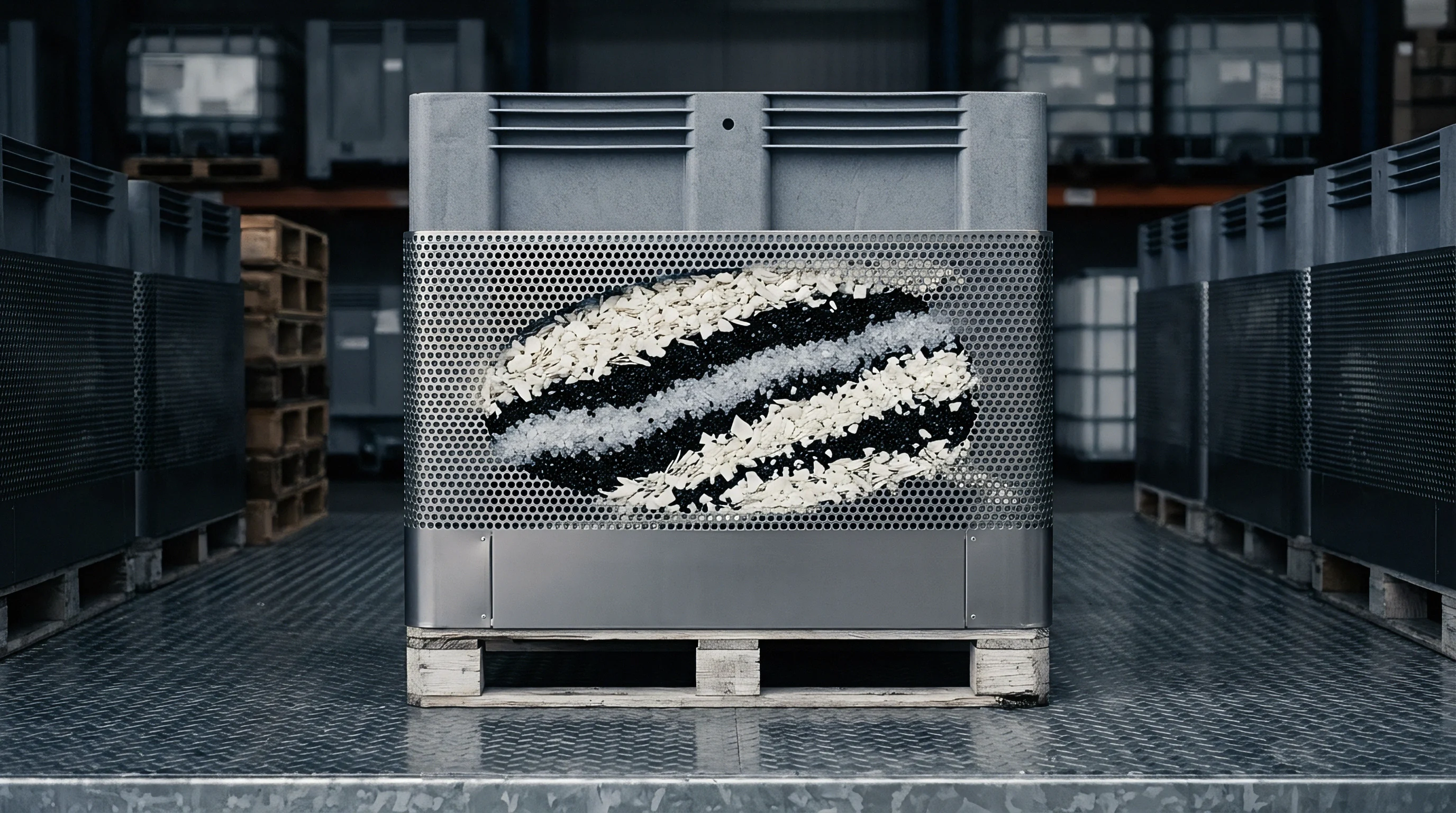
Screen Mesh Audit Procedure
- Draw five random samples of twenty grams each from top, middle, and bottom sections of the packaging unit.
- Melt the combined sample inside a heated high-pressure extruder fitted with a clean ten-micron filter disk.
- Run thirty kilograms of material through the filter pack at standard process temperatures.
- Remove the screen pack and flush remaining polymer using an appropriate solvent.
- Count remaining particulate specks under an optical microscope at fifty-times magnification.
Suppliers routinely argue that particulate counts exceeding specified thresholds represent environmental contamination introduced during the buyer’s unbagging process rather than inherent synthesis defects.


Assay
Laboratory analysis verifies polymer purity through thermal, spectroscopic, and chromatographic testing. Baseline purity sets part lifetime. Chemical assays confirm the absence of recycled content, unlisted additives, or foreign polymers.
Spectroscopic checks detect mislabeling. Contractual definitions link purity standards to certified testing standards with clear sample preparation conditions.

Thermal and Spectroscopic Identification Protocols
Differential scanning calorimetry isolates thermal transitions, exposing secondary polymer peaks down to low concentrations. A polypropylene impurity inside a polyethylene matrix exhibits a distinct melting peak around one hundred and sixty degrees Celsius, even when present at levels near zero point five percent by weight. Thermogravimetric analysis quantifies inorganic filler levels and volatile content by monitoring mass loss during programmed heating cycles.
Fourier-transform infrared spectroscopy provides chemical fingerprinting for foreign phase identification. Attenuated total reflectance techniques allow rapid surface examination of suspicious pellets. Fourier-transform infrared spectroscopy identifies cross-contaminants like polyvinyl chloride or polyamide in polyolefin lots down to five hundred parts per million.
Nuclear magnetic resonance spectroscopy provides precise determination of monomer ratio and branch architecture in copolymer systems.
Thermogravimetric analysis under nitrogen atmosphere at ten degrees Celsius per minute resolves inorganic fill levels above zero point zero five percent by mass.

When Can Standard Differential Scanning Calorimetry Fail to Detect Secondary Polymer Traces?
Overlapping melting points between chemically similar polyolefins obscure distinct endothermic signals during single-pass heating runs. Linear low-density polyethylene and high-density polyethylene display co-melting regions when thermal heating rates exceed ten degrees Celsius per minute. High-resolution step-scan differential scanning calorimetry or temperature rising elution fractionation resolves these closely aligned fractions.
| Test Method | Standard Reference | Target Impurity | Detection Limit | Primary Limitation |
|---|---|---|---|---|
| Differential Scanning Calorimetry | ISO 11357-3 | Secondary Crystalline Phases | 0.1 wt% | Requires distinct melting peaks |
| Fourier-Transform Infrared | ASTM E1252 | Chemical Structure / Additives | 0.05 wt% | Surface sensitive without extraction |
| Thermogravimetric Analysis | ISO 11358-1 | Inorganic Fillers / Volatiles | 0.01 wt% | Destructive thermal decomposition |
| Ash Content Analysis | ISO 3451-1 | Inorganic Particulate Residue | 0.005 wt% | Combusts all organic fractions |
| Headspace Gas Chromatography | ISO 11890-2 | Residual Monomers / Solvents | 1 ppm | Volatile compounds only |
Ash testing reveals inorganic filler. Quantitative ash determination under ISO 3451-1 requires burning off organic polymer matrices in a muffle furnace at six hundred degrees Celsius. Pure virgin resin yields residual ash figures below zero point zero two percent by weight.
Elevated ash levels signal inorganic pigments, talc, glass fibers, or heavy catalyst residues from dirty synthesis reactors.
Which analytical combinations remain commercially defensible when trace level cross-polymer contamination sits exactly at the detection limit of standard quality control tools?


Remedy
Commercial contracts address purity failures through defined financial penalties, lot rejections, and replacement schedules. Pure virgin polymer holds value. Material specifications include cure periods for supplier replacement and precise rules for allocating retesting costs.
Off-spec shipments incur price deductions. A structured remedy section converts technical purity parameters into self-executing commercial mechanics.

Financial Deductions and Batch Rejection Thresholds
Off-spec purity parameters trigger tiered price adjustments calculated against delivered container volume. Minor deviations in moisture or gel count incur processing allowance deductions. Severe foreign polymer contamination triggers total lot rejection rights.
Contract terms stipulate clear timeframes for issuing notices of defect following material delivery.
| Defect Parameter | Contract Tolerance Range | Actionable Deviation | Contractual Remedy / Deduction |
|---|---|---|---|
| Ash Content | 0.00 – 0.02 wt% | 0.03 – 0.05 wt% | 2% invoice value deduction per 0.01% excess |
| Ash Content | 0.00 – 0.02 wt% | > 0.05 wt% | Full lot rejection and replacement at supplier cost |
| Cross-Polymer Content | < 300 ppm | 301 – 1000 ppm | 5% invoice value deduction |
| Cross-Polymer Content | < 300 ppm | > 1000 ppm | Full lot rejection and freight reimbursement |
| Moisture Level | < 100 ppm | 101 – 300 ppm | Drying energy cost allowance credited to buyer |
Handling quarantined lots requires formal procedures to prevent mix-ups inside processing facilities. Material hold notices block automated silo transfer valves. Clear contractual definitions establish whether a buyer retains damaged resin for re-granulation or returns the shipment to the seller’s compounding site.
Unprocessed resin lots held in original sealed packaging retain full legal recourse rights during commercial purity disputes.
Clear specs prevent spot claims. Acceptance sampling adheres to ISO 2859-1 single sampling plans for normal inspection. Sampling protocols dictate drawing resin from multiple bags or bulk silo compartments to establish a statistically representative composite sample.
- Isolate Quarantined Silos ~ Lock mechanical feed valves immediately upon detection of out-of-spec test results to prevent contamination of plant distribution lines.
- Issue Formal Quality Defect Notice ~ Transmit primary analytical evidence and sampling logs to the resin producer within forty-eight hours of delivery.
- Execute Joint Third-Party Retest ~ Conduct split-sample evaluation at an accredited independent laboratory if supplier metrics conflict with incoming inspection findings.
- Apply Contractual Price Adjustment ~ Deduct calculated off-spec penalties directly from pending invoice settlements according to agreed contractual schedules.
When impurity levels breach critical mechanical thresholds, immediate batch rejection protects processing equipment from catastrophic downtime.


Clause
Legal definitions of virgin purity require precise contractual wording regarding feedstock origin, processing history, and contamination thresholds. Supply contracts mandate complete chain of custody documentation from polymer synthesis to final delivery dock. Moisture drives hydrolytic degradation.
Standard agreement templates incorporate strict warranties of virgin status alongside defined technical limits.

Specification Drafting Mechanics for Virgin Polymeric Feedstocks
Purchase contracts bind suppliers to explicit physical property ranges, certified analytical methods, and origin warranties. A robust purity clause defines virgin status while prohibiting post-industrial regrind, post-consumer recyclate, and off-spec wide-spec re-blends. Clauses detail specific test standards, sample preservation steps, and dispute resolution venues.
- Polymer Synthesis Certificate ~ Verification of primary polymerization conditions, monomer source, and catalyst system details for every lot shipment.
- Batch Certificate of Analysis ~ Lot-specific test records matching batch numbers printed on physical container labels and shipping manifests.
- Zero Scraps Attestation ~ Written declaration confirming zero inclusion of post-industrial or post-consumer regrind inside the delivered resin lot.
- Chain of Custody Manifest ~ Transport documentation proving sealed, dedicated container carriage from synthesis plant directly to buyer receiving dock.
The core warranty clause reads: “Seller warrants that all delivered resin consists exclusively of prime virgin polymer resulting directly from primary polymerization, containing zero post-consumer or post-industrial recycled content, and meeting all chemical purity limits specified in Annex A under certified ISO testing methods.” This line eliminates ambiguity regarding wide-spec blended lots.