Quantifying Hydrolytic Chain Scission Kinetics and Viscosity Degradation in Contaminated Post-Consumer Recycled PET Regrind
Drying post-consumer PET regrind below 50 ppm moisture at minus 40 degrees dew point prevents acid-catalyzed hydrolytic scission and catastrophic viscosity collapse during melt processing.

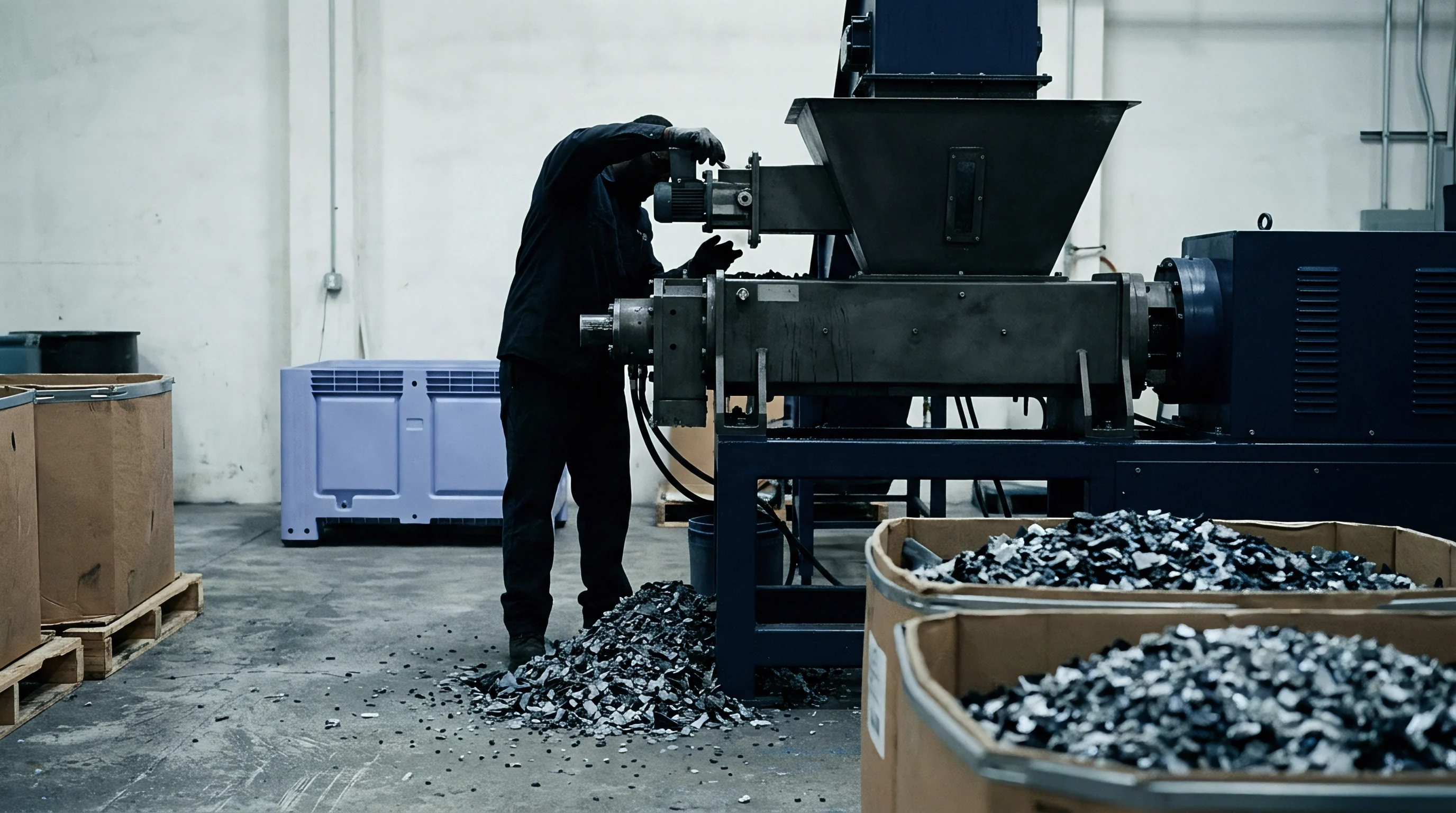
Flake
Incoming post-consumer polyethylene terephthalate regrind carries an inherent molecular history dictated by its prior thermal processing and wash-line drying efficiency. Unprocessed recycled regrind typically enters processing facilities with intrinsic viscosity values ranging from 0.68 dL/g to 0.78 dL/g, depending on whether the input stream originates from thermoformed sheet scrap or carbonated soft drink bottles. Moisture absorption occurs rapidly in ambient storage, where hygroscopic polycondensation polymers reach equilibrium moisture contents between 0.15 percent and 0.40 percent by weight.
Water molecules lodge within the amorphous domains of the polymer matrix, establishing the exact reactant concentration needed for cleavage once the resin enters the melt state.
Molecular weight distribution broadens during wash cycles and flaking operations due to localized mechanical stresses and non-uniform thermal exposure. The number-average molecular weight directly governs mechanical properties such as impact resistance and tensile yield strength, whereas the weight-average molecular weight dictates melt elasticity and zero-shear viscosity. The relationship between intrinsic viscosity and molecular weight follows the classical Mark-Houwink equation, written as:
left = K · Mva
For polyethylene terephthalate dissolved in a 60/40 phenol/1,1,2,2-tetrachloroethane mixture at 30 degrees Celsius, standard empirical constants are K = 2.1 × 10⁻⁴ dL/g and a = 0.82. A drop in intrinsic viscosity from 0.80 dL/g to 0.65 dL/g corresponds to a loss of over thirty percent in number-average molecular weight, dropping the polymer below the critical entanglements threshold necessary for structural integrity.
Thorough surface drying fails to prevent core moisture from cleaving ester bonds during high-temperature extrusion.
Processing un-dried regrind exposes the ester linkages along the backbone to rapid nucleophilic attack at temperatures exceeding the melting point of 250 degrees Celsius. Surface-bound water evaporates quickly inside the feed zone of an extruder, but interior moisture diffuses slowly through the semi-crystalline matrix. Deeply embedded water molecules remain inside the polymer matrix as the resin transitions into a viscous melt, providing the immediate chemical reactant for hydrolytic degradation.
Dry air dew points inside desiccant hoppers set the upper limit for melt-phase stability. When moisture concentrations exceed 0.005 percent by weight prior to melting, hydrolytic scission dominates all thermal and oxidative degradation mechanisms. Regrind geometry further complicates drying dynamics, as non-uniform flake thickness creates varying moisture residence times within standard desiccant bed dryers.
Thicker regrind fractions retain moisture cores even after four hours at 160 degrees Celsius. Thin thermoformed flakes dry completely within two hours under identical conditions, leading to non-uniform hydrolytic degradation inside the barrel.
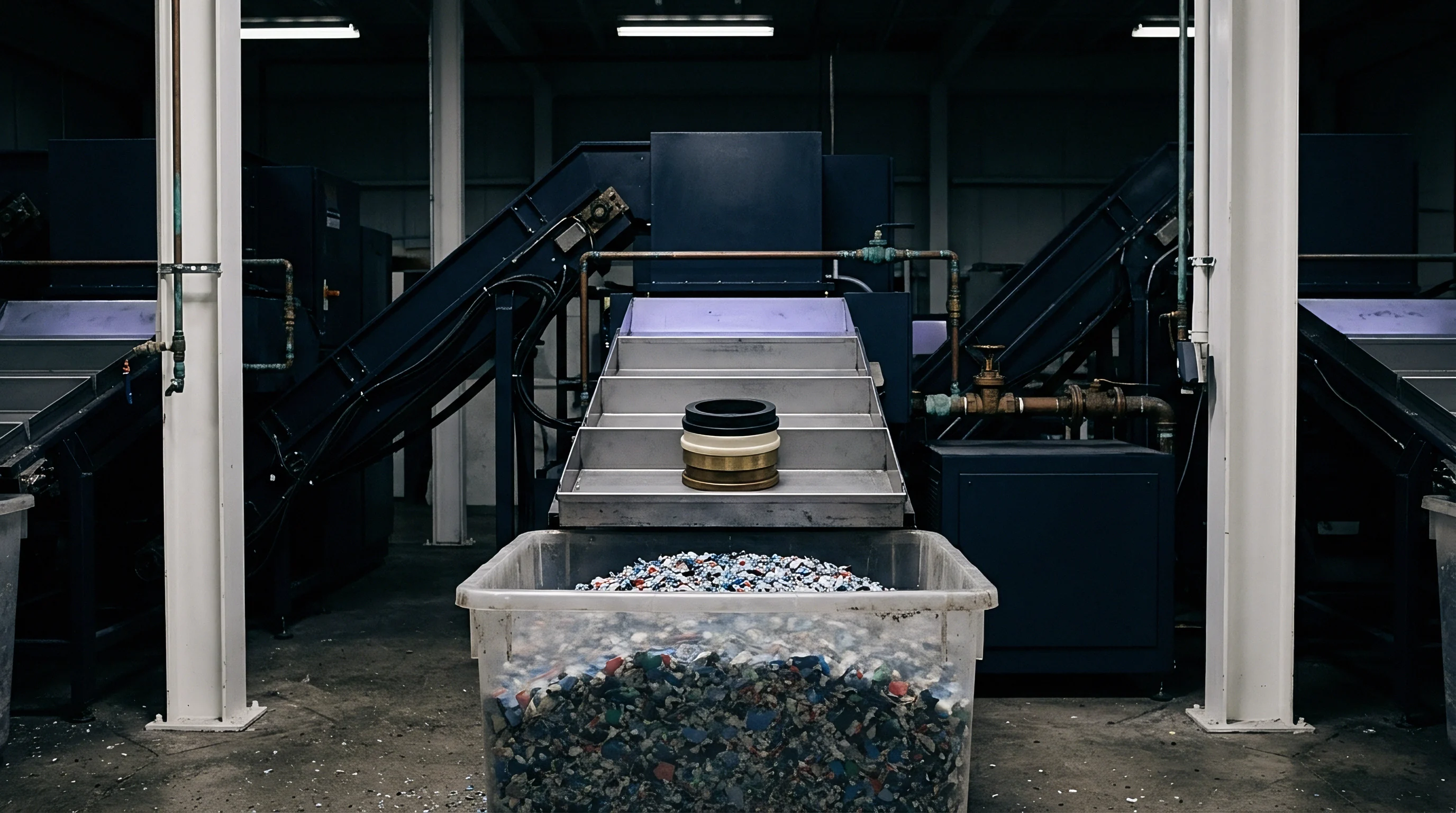
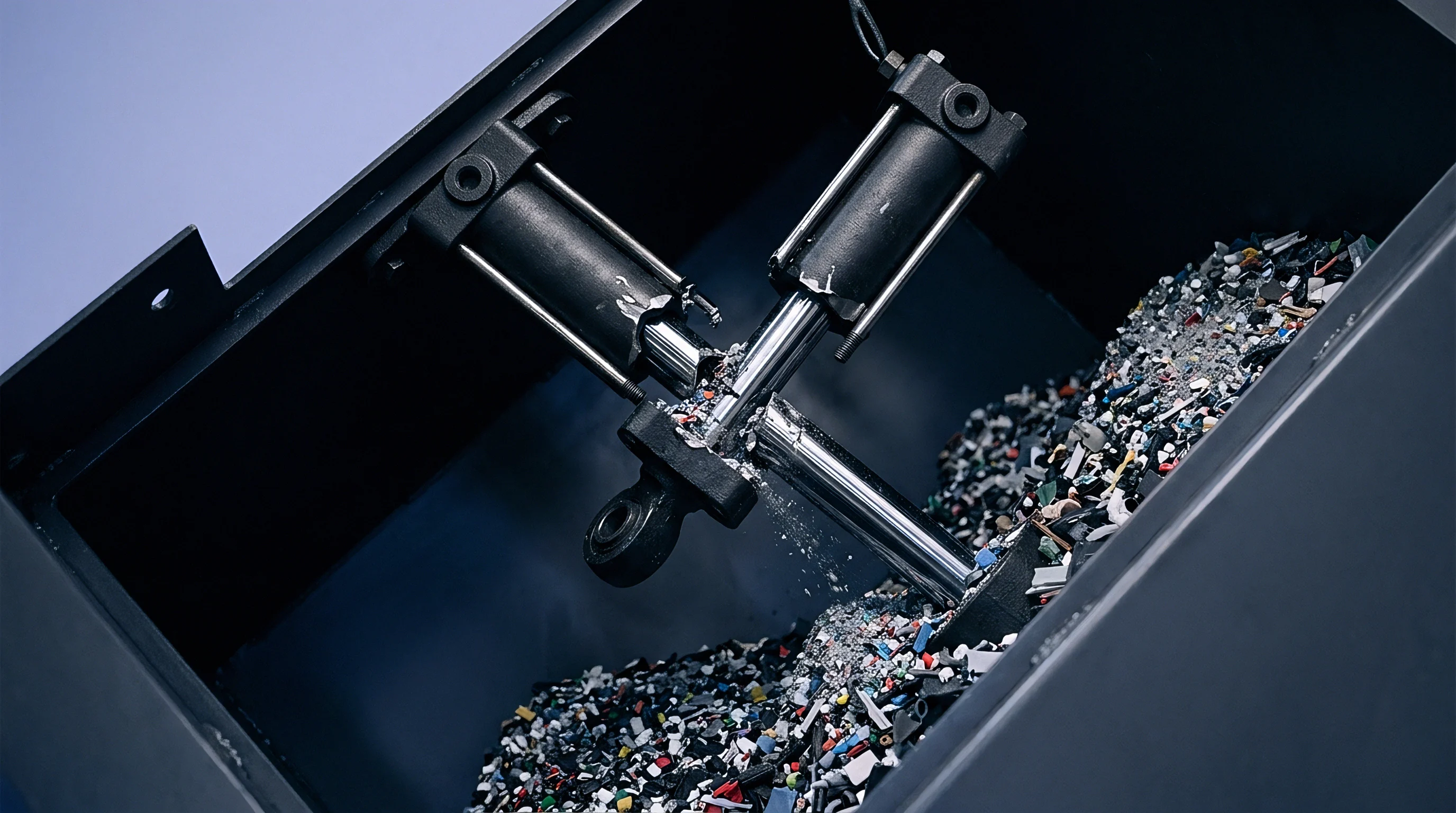
Stoichiometry
Direct chemical cleavage of the ester linkage by water yields one terminal carboxyl group and one terminal hydroxyl group for every reaction event. The reaction proceeds through a reversible second-order mechanism, but in molten polymer processing, the vast excess of ester linkages reduces the kinetics to a pseudo-first-order relationship relative to water concentration. The scission rate equation is expressed as:
fracdleft dt = kh · left · left
Here, kh represents the hydrolytic rate constant, left is the concentration of water dissolved in the polymer melt, and left is the concentration of ester bonds, which remains effectively constant at approximately 10.4 mol/kg. The temperature dependence of kh follows an Arrhenius relationship with an activation energy of approximately 92 kJ/mol to 108 kJ/mol, causing reaction rates to double for every 12 degrees Celsius rise in melt temperature above 270 degrees Celsius.
Carboxylic acid end groups generated during scission act as intrinsic acid catalysts, lowering the activation energy of subsequent cleavage steps. This auto-catalytic behavior accelerates viscosity decay as reaction time progresses, making late-stage degradation significantly faster than initial scission rates.
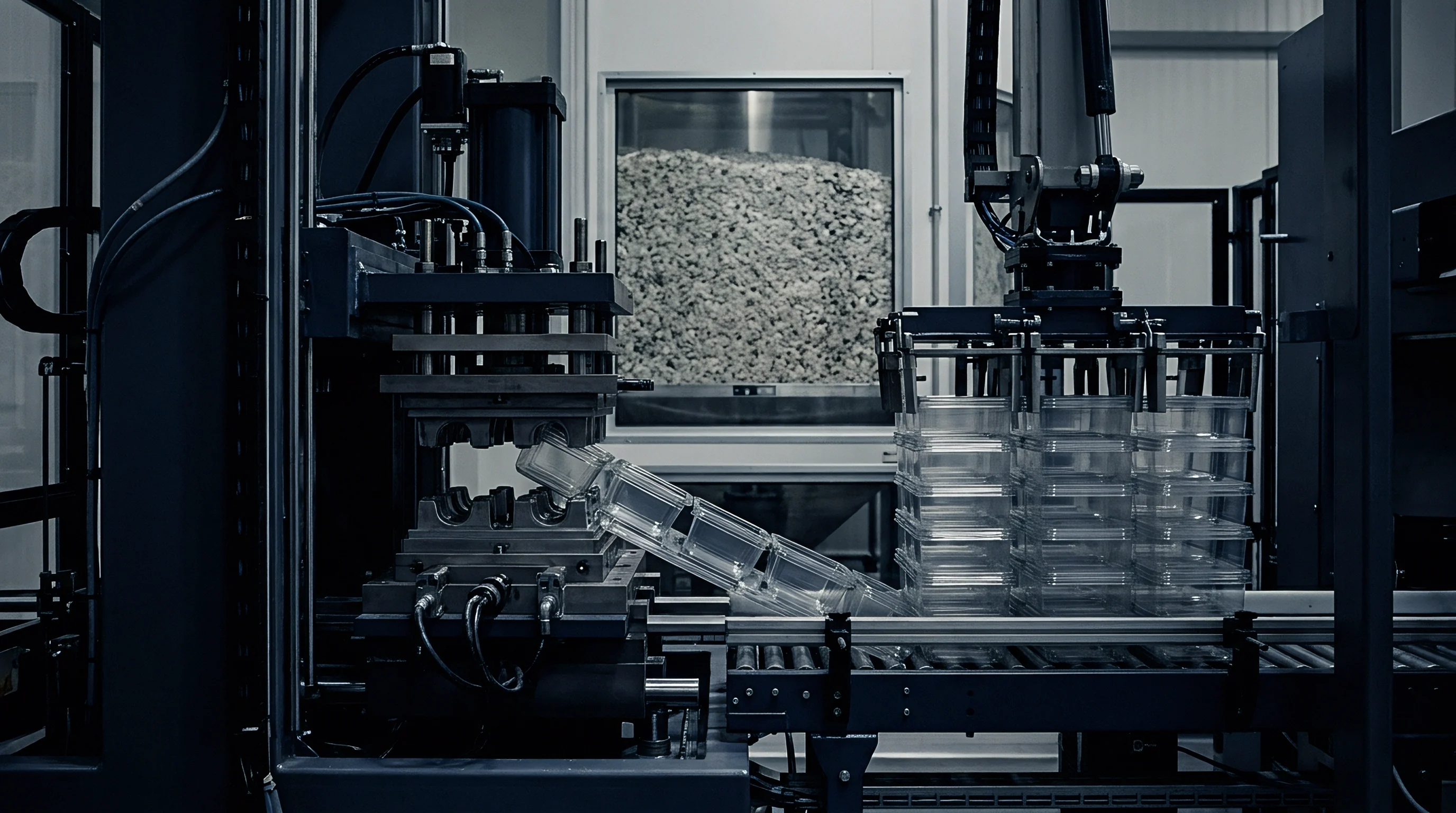
Can Drying Parameters Mitigate Acid End Group Catalysis?
Controlling carboxylic acid end-group concentration before melt processing delays the onset of auto-catalytic scission. Virgin bottle-grade resin typically maintains acid end group values between 15 to 25 mmol/kg, whereas post-consumer regrind frequently arrives with values exceeding 35 to 50 mmol/kg due to prior thermal cycles. Elevated initial acid end groups increase the hydrolytic rate constant, causing contaminated regrind to degrade twice as fast as virgin resin at identical moisture levels.
- Initial Moisture Content dictates the total potential scission events during the first thirty seconds of barrel residence time.
- Carboxylic Acid Concentration accelerates the kinetic rate constant through proton donation at ester carbonyl sites.
- Melt Processing Temperature increases molecular mobility and kinetic rate constants exponentially according to Arrhenius relationships.
- Extrusion Residence Time determines total reaction progress before melt cooling freezes the molecular structure.
Quantifying kinetic progression requires mapping the reciprocal of number-average molecular weight against processing time. The slope of this linear plot directly yields the experimental hydrolytic rate constant under specific temperature and moisture conditions.
Small variations in residual moisture produce disproportionate drops in final molecular weight. Processing regrind at 280 degrees Celsius with a moisture content of 0.02 percent reduces intrinsic viscosity by 0.18 dL/g within two minutes of barrel residence time. Lowering the moisture content to 0.002 percent restricts intrinsic viscosity loss to less than 0.02 dL/g over the same time frame.
Neglecting residual water concentrations during extrusion causes immediate melt strength collapse, sending wall thickness out of tolerance and triggering automated part ejection on downstream blow molding lines.
Rheology
Melt viscosity responds to molecular weight decay according to power-law relationships established across linear condensation polymers. Zero-shear viscosity scales with the weight-average molecular weight raised to the power of 3.4. A small drop in chain length yields an immediate collapse in melt resistance, destabilizing parison formation during blow molding and causing melt sagging during sheet extrusion.
Extruders measure process stability through inline capillary rheometry or melt volume-flow rate instruments. Melt volume-flow rate testing conducted according to ISO 1133-1 at 275 degrees Celsius under a 2.16 kg load provides a rapid proxy for molecular degradation, though solution intrinsic viscosity testing remains the definitive reference standard.
Solution intrinsic viscosity testing at 30 degrees Celsius in 60/40 phenol/1,1,2,2-tetrachloroethane yields precise molecular weight determinations unconfounded by thermal history.
Capillary rheometry demonstrates that chain scission shifts the Newtonian plateau to higher shear rates while reducing non-Newtonian shear-thinning behavior. Degradation reduces molecular entanglement density, causing the molten polymer to behave like a lower molecular weight species with diminished elasticity.
| Intrinsic Viscosity (dL/g) | Weight-Average Mw (g/mol) | Melt Volume-Flow Rate (cm3/10 min) | Zero-Shear Viscosity (Pa·s) |
|---|---|---|---|
| 0.85 | 48,500 | 12.5 | 2,450 |
| 0.78 | 42,100 | 24.0 | 1,420 |
| 0.70 | 35,800 | 51.2 | 780 |
| 0.62 | 29,400 | 115.0 | 360 |
| 0.55 | 24,200 | 245.0 | 160 |
The transition from ductile to brittle failure in solid PET products aligns directly with the intrinsic viscosity threshold of 0.60 dL/g. Below this boundary, impact energy absorption drops sharply, leading to premature cracking under environmental stress tests.
High shear rates inside injection molding nozzles generate viscous dissipation, elevating local melt temperatures by 10 to 15 degrees Celsius above barrel setpoints. Localized heating accelerates hydrolytic scission kinetics, producing non-uniform viscosity profiles across the injected shot volume.
ASTM D4603 specifies a maximum allowable intrinsic viscosity variance of plus or minus 0.02 dL/g across incoming resin lots to ensure stable processing without continuous machine parameter adjustments.
Contamination
Polyvinyl chloride represents the most destructive polymeric contaminant in post-consumer recycled polyethylene terephthalate streams. At typical processing temperatures between 260 and 290 degrees Celsius, polyvinyl chloride undergoes rapid thermal dehydrochlorination, releasing free hydrochloric acid gas and forming conjugated polyene sequences. Hydrochloric acid acts as an aggressive strong-acid catalyst for the hydrolytic scission of ester bonds, accelerating chain breakdown by orders of magnitude relative to un-contaminated polymer melts.
Even trace polyvinyl chloride contamination levels as low as 50 parts per million generate sufficient hydrochloric acid to induce severe intrinsic viscosity loss, accompanied by intense yellowing and black-spec formation. Additional post-consumer contaminants, including residual polyamides from barrier layers, polyolefins from bottle closures, and moisture-retaining adhesive residues, introduce competing degradation mechanisms.
ASTM D5222 limits total acidic halogen contaminants in recycled PET to under 50 parts per million to prevent catastrophic catalytic chain scission during melt processing.
Polyamides undergo transamidation reactions with polyethylene terephthalate, forming hybrid copolymers with reduced thermal stability and lower glass transition temperatures. Residual polyolefin caps introduce immiscible dispersed phases that act as stress concentrators, drastically lowering notch impact strength even when intrinsic viscosity appears acceptable.
| Contaminant Species | Concentration (ppm) | Primary Mechanism | Relative Scission Acceleration Factor |
|---|---|---|---|
| Polyvinyl Chloride (PVC) | 100 | HCl Acid Catalysis | 4.8x |
| Polyamide (PA 6,6) | 1,000 | Transamidation and Scission | 1.9x |
| Ethylene Vinyl Acetate (EVA) | 500 | Acetic Acid Generation | 2.3x |
| Residual Water (H2O) | 200 | Direct Nucleophilic Cleavage | 3.5x |
| Polypropylene (PP) | 5,000 | Phase Separation / Stress Sites | 1.0x |
Inorganic contaminants such as residual wash-line caustic sodas convert ester linkages into carboxylate salts, altering melt rheology and promoting thermal gas formation. High-alkali washing conditions without adequate rinsing stages leave residual sodium ions on the flake surface, triggering thermal-oxidative degradation cascades during extrusion.
- Acidic Halogen Release generated by polyvinyl chloride degradation donates protons that accelerate ester hydrolysis.
- Organic Acid Residues from EVA adhesives decompose at melt temperatures, adding volatile carboxylic acids to the reaction matrix.
- Residual Alkaline Salts left from wash flakes catalyze ester cleavage and cause rapid yellowing during processing.
- Barrier Layer Polyamides undergo chain interchange reactions, broadening molecular weight distribution and creating haze.
Commercial flake suppliers frequently attribute sudden viscosity drops during processing to baseline moisture spikes rather than acknowledging low-level halogen contamination inside delivered super-sacks.
Silo
Preventing hydrolytic scission requires systematic drying protocols optimized for post-consumer regrind geometry. Standard desiccant drying systems must deliver dry air with a dew point of minus 40 degrees Celsius or lower to the bottom of the drying hopper. Air flow rates must maintain a minimum of 3.1 cubic meters per hour for every kilogram per hour of resin throughput, ensuring sufficient heat transfer and mass transfer to strip absorbed moisture.
Drying temperatures must be held precisely between 160 and 170 degrees Celsius for standard bottle regrind. Operating below 150 degrees Celsius fails to drive off deeply bound moisture within reasonable residence times, while exceeding 185 degrees Celsius induces surface sintering and premature thermal oxidation on fine flake fractions.
- Pre-condition incoming regrind in a crystallization vessel at 140 degrees Celsius for thirty minutes to eliminate amorphous stickiness.
- Transfer crystallized flake into a sealed desiccant hopper operating at a dew point of minus 45 degrees Celsius.
- Heat the air stream to 165 degrees Celsius while maintaining a residence time of four to five hours.
- Monitor exhaust air dew points continuously to confirm moisture extraction profiles before initiating extruder feeding.
- Dose pyromellitic dianhydride or multi-functional epoxy chain extenders at 0.2 to 0.5 percent by weight via gravimetric feeders directly at the throat to rebuild lost molecular weight.
Reactive extrusion using chain extenders reverses intrinsic viscosity degradation by coupling cleaved hydroxyl and carboxyl end groups. Pyromellitic dianhydride reacts rapidly with hydroxyl end groups, reforming ester linkages and generating tetra-functional branch points that boost melt strength.
Over-dosing chain extenders risks gel formation and excessive cross-linking, creating high-viscosity fish-eyes in finished sheet or film products. Precise metering relies on stable bulk density, which varies significantly in regrind lots containing non-uniform flake dimensions.
Which drying profile optimizes energy consumption while maintaining moisture levels below twenty parts per million in high-pvC regrind streams?
Margin
Producers specifying post-consumer recycled polyethylene terephthalate trade lower raw material purchase costs against higher operational risks and processing penalties. Clean virgin resin priced at 1,450 USD per metric tonne provides consistent intrinsic viscosity values and zero risk of halogen-catalyzed degradation. Post-consumer regrind offered at 980 USD per metric tonne delivers an initial purchase discount of 470 USD per tonne, but un-controlled hydrolytic degradation rapidly erodes this upfront margin.
Scrap rates increase exponentially when processing regrind with unstable intrinsic viscosity. In sheet extrusion lines feeding thermoforming operations, a drop in intrinsic viscosity below 0.70 dL/g reduces top-load stiffness in finished containers, forcing an increase in nominal wall thickness to meet product specifications. Adding 0.05 millimeters of wall thickness to offset reduced mechanical modulus increases total resin consumption by seven percent, consuming the entire initial material cost savings.
| Resin Feedstock Type | Landed Material Cost (USD/Tonne) | Drying and Additive Cost (USD/Tonne) | Average Part Scrap Rate (%) | Effective Net Cost Per Good Tonne (USD) |
|---|---|---|---|---|
| Virgin Bottle Grade (0.80 IV) | 1,450 | 35 | 1.5 | 1,507 |
| Un-stabilized Flake (0.72 IV) | 980 | 85 | 8.5 | 1,163 |
| Additivated Flake (0.78 IV Recycled) | 1,120 | 115 | 3.0 | 1,273 |
| Solid-State Polymerized Granules | 1,620 | 35 | 1.2 | 1,675 |
Solid-state polymerization processes restore intrinsic viscosity from low baseline values back to 0.84 dL/g or higher by holding crystallized pellets under vacuum at 200 degrees Celsius for 12 to 20 hours. This thermal treatment drives polycondensation equilibrium forward, eliminating water and glycol reaction byproducts. Solid-state polymerization adds between 200 and 350 USD per metric tonne in tolling costs, elevating total material expense above virgin resin benchmarks.
Procurement specifications for post-consumer regrind must incorporate strict financial penalty structures linked to incoming moisture, intrinsic viscosity, and halogen content. Material arriving with moisture levels above 0.3 percent or polyvinyl chloride content exceeding 50 parts per million incurs immediate price deductions or rejection, insulating conversion margins from hidden chemical degradation costs.
Downstream scrap credit calculations must account for the degraded state of internal regrind generated from failed production runs. Re-extruding already-degraded regrind causes cumulative chain scission, driving intrinsic viscosity down to levels where the polymer becomes unusable without expensive reactive chain coupling agents.
Calculating the true cost of recycled PET regrind requires balancing raw material discounts against the expenses of extended drying times, additive dosing, elevated scrap rates, and potential tool wear from thermal degradation byproducts.