Meaning
A statutory safety threshold determines the maximum quantity of non-volatile substances permitted to leach from food contact packaging into contained materials per unit of surface area. Regulatory frameworks establish an overall migration limit to prevent chemical contamination from plastic polymers, additives or degraded breakdown products during typical storage conditions. This fixed value sets an absolute mass constraint for all substances capable of transferring to food, regardless of individual toxicological profiles for specific monomers or auxiliary agents.
Analytical procedures for measuring compliance involve exposing packaging samples to standardized food simulants for a prescribed duration at designated temperatures. Solvents then undergo evaporation to leave behind the non-volatile residue which is weighed to ascertain the total migrated mass. Authorities set this universal ceiling to ensure consumer safety across varied polymer applications where individual identification of every compound proves chemically impossible.
Regulatory Boundary
Legal requirements focus on the finished plastic article because processing steps alter the chemical profile of raw resins. Moulding cycles and extrusion temperatures change the volatility of auxiliary substances through thermal degradation or accelerated crosslinking. Fabricators maintain strict documentation of these parameters to ensure that production variability does not push residue concentrations above the prescribed safety threshold.Virgin material specifications provide a starting point for assessing the risk of leaching but do not guarantee final compliance.
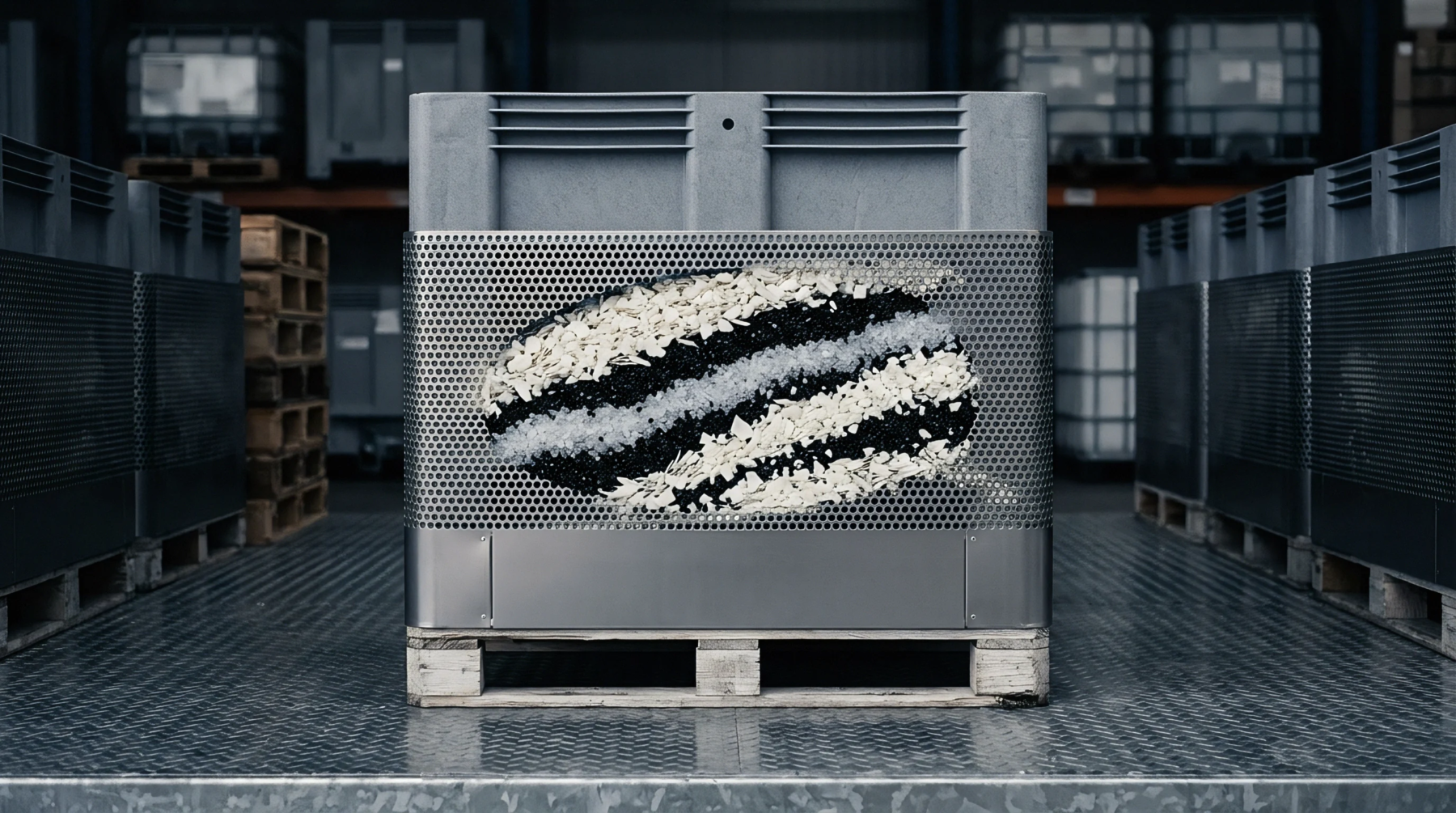
Moulders frequently incorporate regrind into production flows to improve cost efficiency and reduce waste. This practice necessitates tighter control of thermal history since repeated heating cycles increase the potential for low molecular weight species to migrate. Quality control protocols evaluate the integrity of the part rather than the resin pellets alone.
Production Metric
Process engineers select specific polymers based on their resistance to solvent penetration and molecular stability under high heat. The overall migration limit acts as a gatekeeper for material selection in packaging design, dictating the choice between polyolefins, polyesters and high barrier films. When trials indicate results near the legal ceiling, producers adjust cooling rates or residence times to mitigate the release of mobile species.
Uncontrolled variations in wall thickness or cooling distribution cause uneven migration performance across a moulded part, leading to local failure points in compliance testing. Tooling designs that incorporate complex geometries create areas with disparate cooling rates that potentially trap residual solvents.
Performance Constraint
Material science dictates that the surface chemistry of a polymer film determines the rate at which mass transfer occurs during contact with fats or water. High crystallinity reduces the free volume available for small molecules to navigate the polymer matrix and exit into the food environment. Production runs must account for these internal structural properties because the overall migration limit remains the final arbiter of commercial eligibility for any container.
Failure to stay under this limit forces the disposal of entire batches and necessitates a complete reassessment of the manufacturing parameters or the base resin formulation. Consistent adherence to these physical boundaries confirms the quality of the polymer synthesis and the final moulding execution.