
Non Targeted Screening Methodologies for Food Contact Polymer Extractables
Non-targeted screening uses high-resolution mass spectrometry and toxicological thresholds to isolate and clear unknown migrants in food-contact polymers.
Non-targeted screening uses high-resolution mass spectrometry and toxicological thresholds to isolate and clear unknown migrants in food-contact polymers.

Toxicological evaluation of closed loop polyolefin oligomers requires chromatographic separation of Class III oxidates to avoid restrictive default thresholds.

Polyolefin decontamination efficiency requires challenge tests measuring surrogate reduction alongside batch headspace VOC monitoring to satisfy food contact limits.

Polyolefin migration compliance demands simulant-specific exposure verification and mass-spectrometric screening for unlisted oligomeric hydrocarbons.

Semi-quantifying unidentified migrants requires applying empirical detector uncertainty factors to surrogate peak areas to prevent false-negative safety files.

Non-target screening by high-resolution mass spectrometry identifies and triages polymer degradation NIAS against the ten ppb food migration threshold.

Polyolefin stabilizer thermal degradation kinetics generate volatile non-intentionally added cleavage products that invalidate virgin resin compliance declarations.

Analytical screening thresholds require adjustment for packaging surface-to-volume ratios, extraction concentration, and ionization response variations.

Specific migration limits restrict migrant transfer from plastics into food, verified via standardized simulants, time-temperature windows, and area ratios.


Analytical migration report verification requires aligning production lot numbers, food simulants, exposure regimes, and detection limits with customs entries.

Verify food contact compliance by aligning accredited migration data, batch traceability, and full component declarations before cargo arrival.

Differentiating photoinitiator isomers in recyclate requires high-resolution CID fragmentation thresholds and chromatography, preventing regulatory rejections.

Mass spectrometry quantification of photoinitiators in recyclate requires matrix-matched LC-MS/MS and GC-MS to verify migration limits under EU 10/2011.

Polyolefin food contact compliance demands high-vacuum decontamination, multi-mode mass spectrometry screening, and validated functional barriers.

Analytical measurement uncertainty in post-consumer resin testing establishes the statistical confidence band required to defend compliance limits at borders.

Non-linear kinetic swelling in recycled polyolefins invalidates standard migration models, requiring empirical swelling corrections to prevent compliance failures.

Composite compliance testing of post-consumer polyolefins fails without cryogenic milling and Gy sampling models to eliminate massive fundamental error.

High-resolution mass spectrometry and GC×GC-ToF-MS resolve POSH from MOSH humps, preventing false petroleum rejections through diagnostic fragment and biomarker analysis.

Polyolefin melt stripping caps photoinitiator removal near 50%, leaving unlisted residues that routinely exceed the 10 ppb migration limit in fatty foods.

Gas chromatography screening verifies that post-consumer polyolefin resins meet strict food-contact migration limits before packaging enters commercial markets.

High-resolution mass spectrometry elucidates migrating cyclic adhesive oligomers in recycled laminates to verify structural safety against toxicological limits.
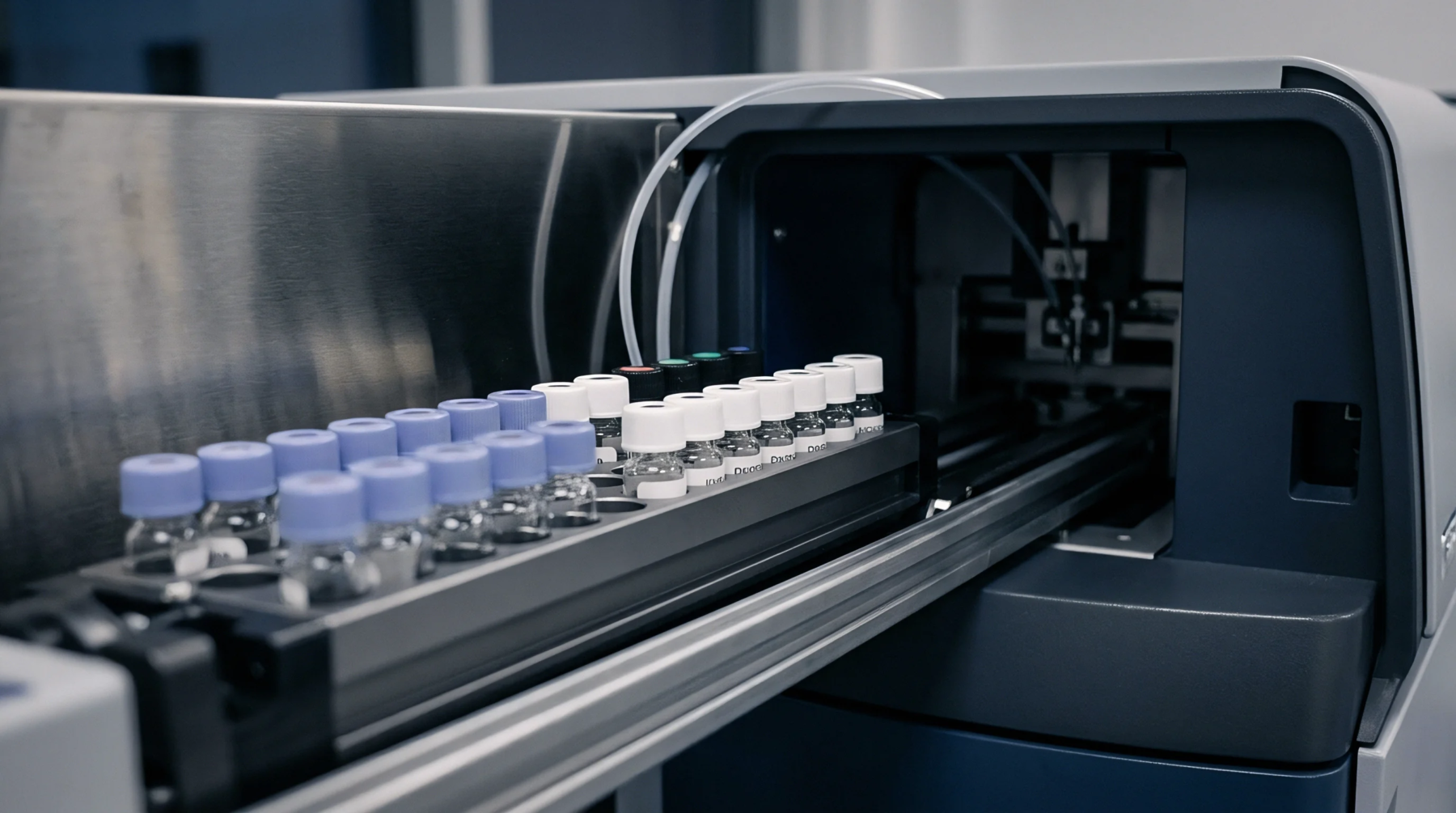
Deriving an analytical evaluation threshold converts toxicological intake limits into chromatographic screening baselines using actual container contact ratios.

Non-targeted screening uses high-resolution mass spectrometry and analytical evaluation thresholds to isolate and assess unassigned migrating plastic additives.

Resolving chemical recycling customs disputes requires single-site mass balance records that deduct fuel gas and process tars from declared credits.

Pyrolysis oil mass balance factors require deducting feed moisture, ash, fuel-gas losses, and upgrading purge streams before declaring recycled content.

Third-party regulatory escrow audits unredacted polymer formulations to verify migration compliance while shielding proprietary masterbatch recipes.

Converters must secure precise masterbatch additive identities, specific limits, and dual-use statuses to verify food contact migration compliance legally.

Uncharacterized degradation products in recycled food-contact polyolefins require non-target GC/LC-MS screening evaluated against TTC exposure thresholds.

Relative response factor calibration requires surrogate class matching and safety buffers to prevent tenfold underestimation of food contact migrants.
Expertise is a utility, not a secret. sentiention™ publishes its working knowledge as open reference: intelligence layer covering the materials it sources, the markets it enters, and the reference that serves both.