Meaning
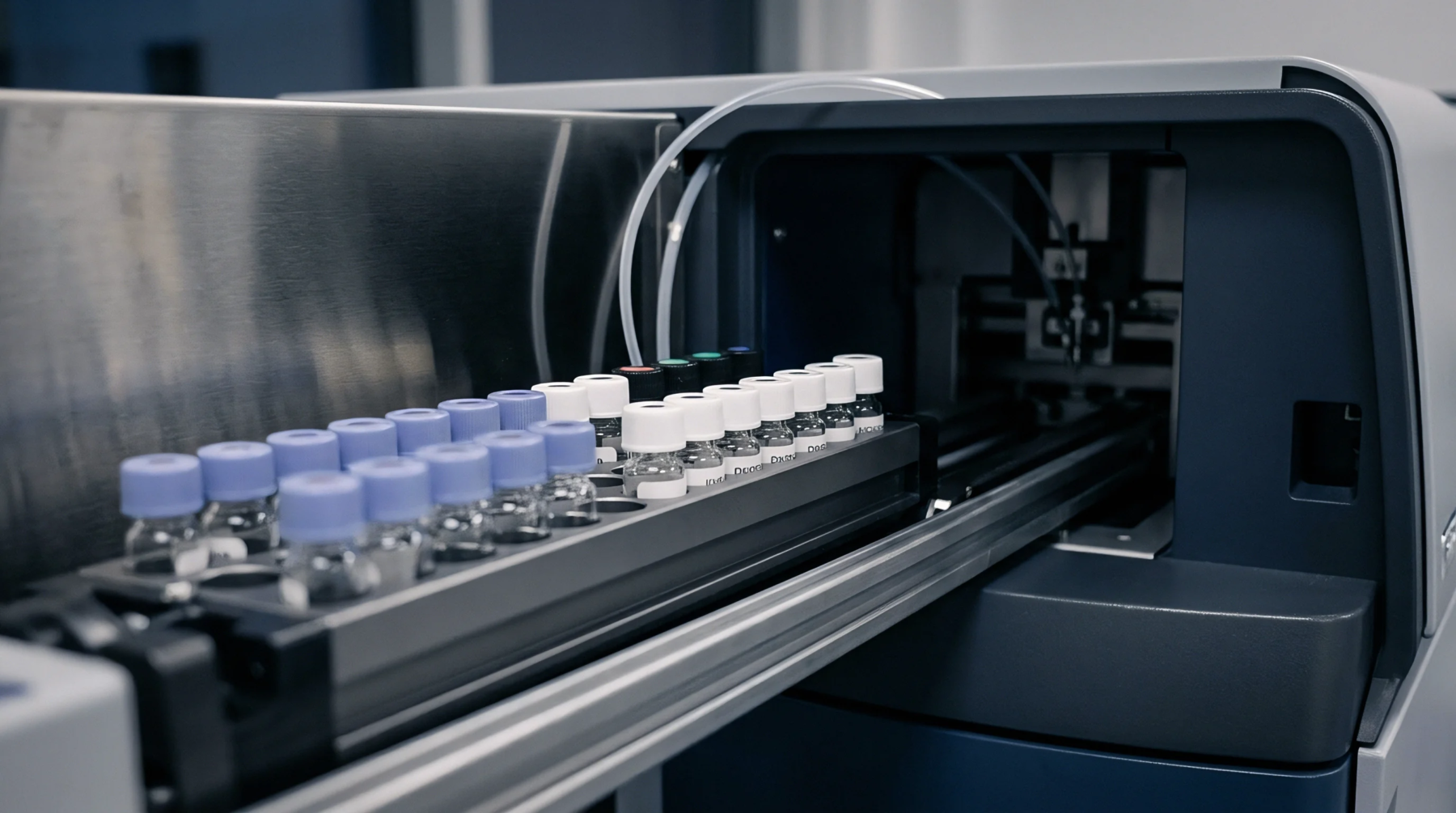
Analytical instrumentation known as gas chromatography separates vaporized organic compounds by passing a gaseous mobile phase through a capillary column coated with a stationary phase. Polymer laboratories employ this analytical technique to quantify residual monomer content, residual solvents in extrusion coatings, and low molecular weight volatile additives within polyolefins. The mobile phase consists of an inert carrier gas such as helium or nitrogen, which sweeps the volatilized sample matrix into a heated injection port.
Volatile molecules partition between the moving carrier gas and the immobilized liquid or solid film lining the interior of the column. Separation efficiency depends upon compound boiling points and the specific affinity each molecule holds for the stationary phase. Quantitation relies upon detectors such as flame ionization or mass spectrometry, which produce electrical signals proportional to the mass elution rate of each analyte.
Analytical limits terminate at compounds exhibiting extremely low volatility or thermal lability, requiring derivatization or alternative methods when molecular weights exceed operating thresholds.
Solvent Residue
Residual solvents inside extruded films originate from polymer synthesis or compounding additives, and gas chromatography isolates these trace organic compounds to prevent regulatory noncompliance. Extrusion temperatures vaporize trapped volatiles, generating surface bubbles, pinholes, and objectionable odors in food packaging films. Analytical methods dissolve polymer pellets in a compatible solvent or release volatiles via headspace extraction prior to column introduction.
Headspace sampling traps the vapor phase above a heated polymer sample, injecting only the volatile fraction to protect the chromatographic column from nonvolatile polymer chains. Analytical quantification detects parts per million levels of residual hexane, toluene, or tetrahydrofuran trapped within low density polyethylene resins. High residual solvent concentrations weaken seal integrity in flexible packaging laminates and accelerate delamination during retort sterilization processes.
Monomer Content
Unreacted monomers remaining in thermoplastic raw materials alter polymer rheology and compromise the safety profile of medical grade injection molded parts. Gas chromatography measures residual styrene in polystyrene or residual ethylene in polyethylene, verifying that polymer batches meet stringent health standards. Production technicians draw representative pellet samples from railcar deliveries, dissolving the material in a volatile solvent to precipitate the polymer matrix while keeping monomers in solution.
Chromatographic peak areas translate directly to concentration values through multipoint calibration curves established with certified reference standards. Elevated monomer levels soften the Vicat softening point of molded components, causing dimensional distortion during high temperature ejection cycles. Moulders adjust drying hopper residence times and barrel temperatures to drive off excess volatiles before the polymer enters the mold cavity.
Additative Formulation
Polymer manufacturers incorporate slip agents, plasticizers, and antioxidants into base resins, and gas chromatography verifies that additive concentrations match the certified datasheet specifications. Extrusion processing temperatures can thermally degrade sensitive stabilizers, reducing their effectiveness and leading to yellowing or chain scission during long production runs. Sample preparation extracts organic additives from molded plaques using ultrasonic solvent baths before injecting the extract into the chromatograph for component resolution.
Retention times identify specific antioxidant molecules, while peak heights determine exact mass fractions present within the compounded material. Deviations from target additive windows alter surface friction coefficients, causing jamming in automated part handling and high speed assembly equipment. Process engineers rely on these chromatographic profiles to distinguish between virgin resin performance and the degraded polymer chains characteristic of excessive regrind incorporation.