Mathematical Calibration Models for Non-Linear Baseline Drift in Electrochemical Gas Sensors
Nonlinear electrochemical baseline drift requires combined Arrhenius thermal modeling and creep-resistant housing resins to maintain zero-point stability.

Shell
Electrochemical gas cells generate baseline current offsets when ambient temperature moves outside factory reference conditions. The physical cell body provides structural retention for working, reference, and auxiliary electrodes while containing liquid acid or ionic electrolyte reservoirs. Changes in polymer morphology directly modify the zero-point current response of the sensor element.
Injection moulded engineering resins display dimensional relaxation, chemical leaching, and gas permeation that distort baseline measurement circuits over operating lifetimes.
Zero-point stability defines the lower detection threshold of toxic gas sensing hardware. Standard three-electrode amperometric cells measure electrical current generated by oxidation or reduction of target gas molecules at a catalyst interface. When no target gas is present, the working electrode produces a residual zero current ranging from minus ten nanoamperes to plus fifty nanoamperes under nominal factory conditions of twenty degrees Celsius and fifty percent relative humidity.
Thermal swings alter this background signal through accelerated electrolyte activity, changing dissolved oxygen reduction kinetics, and mechanical shifts at the electrode contact interface.
Physical Origins of Zero Current Instability
Catalytic working electrodes produce nanoampere background signals through water splitting and trace oxidation even without analyte exposure. Platinum black, gold, and ruthenium catalytic coatings adhere to porous polytetrafluoroethylene membranes clamped against current collectors. Thermal expansion of the surrounding plastic chassis changes the mechanical clamping pressure across the catalyst layer.
Baseline currents drift upward. Viscoelastic flow in thermoplastic cell housings relaxes mechanical preloads applied during ultrasonic welding or mechanical staking.
Electrochemical zero drift exhibits non-linear temperature behavior governed by heterogeneous charge transfer kinetics. At temperatures above forty degrees Celsius, residual baseline currents increase exponentially. The background current follows temperature-dependent reaction dynamics described by activation energy relationships.
Internal resistance across the porous separator varies with temperature, modifying the cell polarization voltage established by the potentiostat circuit. Physical changes in cell chassis dimensions alter internal electrolyte film thicknesses between working and counter electrodes, introducing resistive voltage drops that shift the apparent baseline current measured at the potentiostat output.
Mechanical Creep across Capillary Gas Apertures
Polyoxymethylene and polybutylene terephthalate structural bodies undergo time-dependent viscoelastic relaxation under compressive seal loads. Gas enters the electrochemical cell via a precision capillary hole or laser-drilled diffusion aperture that fixes mass transfer rates. Compressive loading from threaded retainers or housing snaps forces the polymer matrix to deform over time according to ISO 899-1 tensile creep standards.
Creep compresses the membrane seal. As the compression increases, the elastomer gasket yields into the gas cavity, reducing the effective diffusion path volume.
The effective diffusion coefficient across a porous membrane or capillary opening depends on geometric stability. A two percent shrinkage in aperture diameter reduces analyte mass flow while simultaneously shifting the equilibrium partial pressure of dissolved ambient oxygen over the working electrode. This mechanical constriction produces an artificial downward baseline drift that mimics target gas depletion.
Glass-fiber reinforcement stabilizes cell dimensions under sustained thermal cycling. Unfilled polyolefins exhibit tensile creep moduli below 800 MPa at twenty-three degrees Celsius, leading to rapid mechanical distortion and uncalibrated zero shifts.
A grade transition that increases melt flow rate from 14 g/10 min to 22 g/10 min at 230 C under 2.16 kg elevates pinhole dimensional variance by sixteen percent.

Additive Leachates and Working Electrode Contamination
Phenolic antioxidants migrate from injection-moulded cell walls into sulfuric acid electrolytes during extended elevated-temperature storage. Commercial resin packages contain processing stabilizers including tris(2,4-di-tert-butylphenyl)phosphite and octadecyl 3-(3,5-di-tert-butyl-4-hydroxyphenyl)propionate. These organic compounds dissolve into aggressive aqueous acids or organic solvents.
Migrated chemical additives adsorb onto active catalytic sites on the working electrode. Antioxidants poison catalytic surfaces. The electrochemical oxidation of leached additives creates a continuous, irreversible parasitic baseline current that conventional factory calibration fails to correct.
The following structural and chemical degradation modes originate in the cell housing resin and induce baseline signal errors:
- Capillary Aperture Creep deforms entry dimensions under compressive sealing forces, restricting mass transfer and generating an artificial negative zero current baseline offset.
- Antioxidant Plasticizer Desorption releases sterically hindered phenols into aqueous acid electrolytes, producing electrochemical oxidation currents that drift upward over months of field deployment.
- Hydrolytic Volume Swelling expands hygroscopic resin matrices, altering mechanical electrode separation distances and elevating internal cell resistance across operating thermal ranges.
- Trace Monomer Outgassing discharges residual styrene or formaldehyde vapors into the internal headspace, triggering continuous faradaic background reactions on noble metal catalysts.
Compounders routinely defend subtle base resin modifications by asserting that minor molecular weight shifts remain well within broad catalog processing tolerances.
Formulation
Zero-point signal stability relies on empirical and physics-based equations running in sensor microcontroller firmware. Calibration routines convert analog-to-digital converter counts into corrected gas concentration values. Standard linear temperature coefficients fail across wide industrial operating envelopes between minus forty degrees Celsius and plus fifty degrees Celsius.
Non-linear mathematical models capture both steady-state thermodynamic shifts and transient diffusion dynamics across the sensor assembly.
Nonlinear Thermal Acceleration and Arrhenius Offsets
Background currents in three-electrode amperometric cells double roughly every ten degrees Celsius. Standard Faraday and Arrhenius expressions govern zero-point thermal behavior. The baseline current represents the sum of background water oxidation or reduction and non-faradaic capacitive charging.
The baseline current equation expresses this relationship:
I_zero(T) = I_offset + A exp(-E_a / (R T))
In this equation, I_offset represents the temperature-independent background current in nanoamperes, A denotes the pre-exponential kinetic constant, E_a defines the apparent activation energy for baseline electrochemical reactions in joules per mole, R is the universal gas constant (8.314 J/(mol K)), and T is absolute temperature in Kelvin. The apparent activation energy values for platinum black working electrodes in 4 to 5 molar sulfuric acid typically range between 35 kJ/mol and 55 kJ/mol. The Arrhenius curve steepens nonlinearly.
At elevated temperatures, the exponential term dominates the signal output.
Microcontroller implementations calculate baseline subtraction values using lookup tables or polynomial expansions to avoid floating-point math overhead. A third-order polynomial approximates the exponential response across limited operating spans:
I_comp(T) = c_0 + c_1 (T – T_ref) + c_2 (T – T_ref)^2 + c_3 (T – T_ref)^3
Here, T_ref represents the calibration reference temperature, usually 293.15 Kelvin, and c_0 through c_3 are empirical coefficients extracted during factory multi-point thermal calibration. Second-order and third-order coefficients accommodate the non-linear curvature caused by simultaneous changes in electrolyte viscosity, oxygen solubility, and membrane permeability. Temperature shifts electrode potential.
Fixed coefficients derived from nominal batch data introduce significant error when applied to individual sensors exhibiting distinct activation energies.

Does Baseline Drift Track Electrolyte Volume Expansion?
Aqueous acid reservoirs draw atmospheric moisture or lose solvent as ambient relative humidity deviates from equilibrium. Sulfuric acid electrolytes exhibit hygroscopic behavior. At fifty percent relative humidity and twenty degrees Celsius, a 5 molar sulfuric acid solution maintains osmotic equilibrium with the atmosphere.
If the sensor operates in ninety percent relative humidity, the electrolyte absorbs water vapor through the porous PTFE gas diffusion membrane. Relative humidity drives electrolyte dilution. Absorbed water increases electrolyte volume, diluting acid concentration and changing internal pressure against the polymer cell wall.
Dilution alters the reference electrode potential and modifies electrolyte conductivity according to Kohlrausch dynamics. The resulting baseline current shift follows water vapor activity across the boundary layer. Mathematical calibration models incorporate relative humidity terms coupled with ambient temperature to correct for this dilution effect:
I_baseline(T, RH) = I_zero(T) + k_RH (RH – RH_ref) exp(beta (T – T_ref))
The parameter k_RH represents the humidity coupling coefficient in nanoamperes per percent relative humidity, RH_ref is the calibration humidity, and beta is an interaction parameter accounting for accelerated water sorption at higher temperatures. Neglecting the thermal coupling factor beta causes substantial calibration errors when sensors transition between cold, dry environments and hot, humid operating conditions.

Biexponential Mathematical Decay Modeling
Time-domain baseline drift splits into fast initial settling curves and slow asymptotic background shifts. Newly manufactured electrochemical cells exhibit transient stabilization currents upon initial potentiostat bias activation. Double-layer capacitive charging and electrode surface oxide reduction cause rapid initial decay over forty-eight hours.
Slower baseline movement continues over months due to catalyst restructuring, trace chemical leaching from cell polymers, and slow electrolyte equilibration. Biexponential decay functions isolate these distinct temporal regimes:
I_drift(t) = a_fast exp(-t / tau_fast) + a_slow exp(-t / tau_slow) + I_infinity
The time constant tau_fast characterizes initial capacitive and electrochemical stabilization, typically spanning twelve to seventy-two hours. The long-term time constant tau_slow reflects structural degradation, material creep, and additive migration, spanning 2,000 to 10,000 hours. The parameter I_infinity defines the projected steady-state baseline current at infinite time.
Factory burn-in protocols utilize this biexponential relationship to project long-term zero stability from short-term chamber logging data.
Mathematical calibration models span several algorithmic architectures, categorized by mathematical formulation, memory footprint, and computational overhead:
- Piecewise Linear Interpolation applies localized slopes across discrete temperature bands, executing rapidly on eight-bit microcontrollers but failing to eliminate inflection errors at band boundaries.
- Coupled Polynomial Response Surface computes interactive temperature and humidity compensation factors via second-order matrix calculation, resolving steady-state environmental zero shifts efficiently.
- Nonlinear Modified Arrhenius Regression evaluates real activation energy parameters to match physical electrochemical charge transfer kinetics across broad thermal ranges.
- Discrete Dynamic State Space Filtering tracks rate-of-change vectors alongside static environmental inputs, isolating rapid transient baseline disturbances from true target gas exposures.
| Model Classification | Mathematical Formulation | Calibration Points | Microcontroller RAM | Error Band |
|---|---|---|---|---|
| Piecewise Linear | I_zero = m_i T + b_i | 5 points | 64 bytes | +/- 4.5 nA |
| Bivariate Polynomial | I_zero = Sum(c_ij T^i RH^j) | 9 points | 256 bytes | +/- 1.8 nA |
| Arrhenius Hygroscopic | I_zero = A exp(-E/RT) + k RH | 6 points | 512 bytes | +/- 0.9 nA |
| Recursive State Space | x_k = A x_k-1 + B u_k + w_k | Continuous | 2048 bytes | +/- 0.3 nA |
Engineering teams continue to debate whether polynomial surface fits or dynamic state-space equations maintain calibration integrity across five years of uncontrolled ambient operation.

Hysteresis
Rapid humidity swings create severe transient baseline spikes that lag environmental changes by hours. Static calibration equations fail during environmental transitions because moisture diffusion through polymer housings and porous membranes proceeds at finite rates. Electrochemical cells display significant baseline hysteresis during thermal and moisture cycling.
The baseline current measured at thirty degrees Celsius during a heating cycle differs from the baseline current measured at thirty degrees Celsius during a cooling cycle. Dynamic mathematical filters eliminate these transient discrepancies.
Transient Water Transport through Fluoropolymer Barriers
Porous membrane films experience localized capillary condensation when relative vapor pressure rises suddenly. Expanded polytetrafluoroethylene (ePTFE) membranes provide a hydrophobic barrier that retains liquid electrolyte while permitting gas diffusion. Pore size distributions range between 0.1 and 0.5 micrometers.
Rapid humidity increases cause transient capillary condensation within submicron pores. Moisture blocks gas diffusion paths. Condensation restricts oxygen transport to the counter electrode, upsetting the internal potential balance of the cell.
The potentiostat compensates by driving current through the working electrode, generating a sharp, transient baseline spike.
The duration of this transient spike corresponds to the moisture diffusion rate through the membrane matrix and the water absorption kinetics of the electrolyte. Membrane thickness, porosity, and fluoropolymer grade dictate diffusion times. Standard ePTFE films with eighty percent porosity reach equilibrium within fifteen to forty minutes.
Thicker composite membranes backed with woven polyester or polypropylene supports require several hours to stabilize. Dual electrodes isolate parasitic drift. During this transient period, uncompensated sensors generate false positive toxic gas alarms.
Purchase specifications referencing ISO 10993-18 chemical characterization reject resin deliveries yielding volatile organic compound headspaces above fifty parts per billion.

Do Differential Dual Electrodes Suppress Thermal Hysteresis?
Four-electrode topologies incorporate an auxiliary sensor element shielded from target analyte diffusion. The working electrode reacts with both target gas molecules and background environmental changes. The auxiliary electrode remains submerged in the same electrolyte volume but lacks exposure to the external gas aperture.
The auxiliary electrode generates a baseline current that tracks background temperature and humidity shifts without responding to target gas exposures.
Simple linear subtraction assumes identical electrochemical behavior between working and auxiliary electrodes:
I_corrected = (I_working – I_zero_w) – (I_auxiliary – I_zero_a)
In actual operation, the working and auxiliary electrodes exhibit different catalytic activity and thermal response rates. The working electrode interfaces directly with the ambient gas phase across the ePTFE membrane, whereas the auxiliary electrode remains fully immersed in electrolyte behind an impermeable polymer barrier. Thermal mass differences between the two electrode configurations induce transient phase lags.
Platinum dissolution accelerates above forty Celsius. The working electrode heats and cools faster than the auxiliary electrode during ambient temperature transients, causing an immediate differential error.
Mathematical calibration models resolve this thermal lag by incorporating differential gain and phase shift parameters:
I_corrected(t) = I_w(t) – gamma I_a(t) – delta (dI_a / dt)
The scaling factor gamma compensates for surface area and catalytic activity imbalances between working and auxiliary electrodes. The derivative parameter delta corrects for thermal mass phase lags between the two structures. Setting gamma and delta via individual sensor calibration minimizes transient baseline peaks during temperature ramps exceeding two degrees Celsius per minute.
| Polymer Chemistry | CTE (ppm/K) ISO 11359 | Moisture Absorption (%) ISO 62 | Tensile Creep Modulus (MPa) ISO 899 | Volatile Headspace (ppm) VDA 278 |
|---|---|---|---|---|
| Polyphenylene Sulfide (PPS 40% GF) | 22 | 0.02 | 12500 | 12 |
| Polyetheretherketone (PEEK Unfilled) | 45 | 0.10 | 3800 | 8 |
| Modified PPO/PPE Blend | 58 | 0.07 | 2400 | 45 |
| Polybutylene Terephthalate (PBT 30% GF) | 35 | 0.08 | 8200 | 65 |
| High Density Polyethylene (HDPE) | 130 | 0.01 | 650 | 110 |

Dynamic State Space Compensation Algorithms
Recursive discrete-time filters track rate-of-change variables to decouple transient environmental shocks from true gas exposures. A dynamic state-space calibration model represents the sensor as a linear or non-linear dynamic system. The state vector includes the true baseline current, internal electrolyte hydration state, and housing temperature gradients.
The model formulation updates state estimates at each sampling interval:
x_k = F x_(k-1) + G u_k + w_k
y_k = H x_k + v_k
In these equations, x_k represents the internal sensor state vector, u_k contains measured environmental inputs including ambient temperature, relative humidity, and their time derivatives, and y_k represents the raw current output. Matrices F, G, and H define system dynamics, input coupling, and measurement mapping. Vectors w_k and v_k model process and measurement noise covariances.
Kalman filtering algorithms estimate the true baseline current in real time, even during rapid environmental transitions. When ambient humidity spikes, the state-space model recognizes the signature rate-of-change on the auxiliary electrode and temperature sensor. The filter attributes the transient current spike to moisture sorption rather than toxic gas exposure.
The system subtracts the calculated dynamic offset before passing concentration data to external monitoring networks.
Fast humidity spikes require differential baseline subtraction while gradual seasonal swings respond best to thermodynamic equilibrium tracking.

Gate
Receiving docks inspect resin shipments against tight molecular purity and rheological boundaries. Polymer pellets destined for electrochemical sensor housings require verification beyond standard commercial datasheets. Subtle lot-to-lot variations in additive packages, molecular weight distribution, and residual solvent fractions shift baseline drift behavior in finished sensing hardware.
Incoming quality procedures enforce physical and chemical screening before material enters production silos.

Incoming Pellet Lot Chemical Extraction Audits
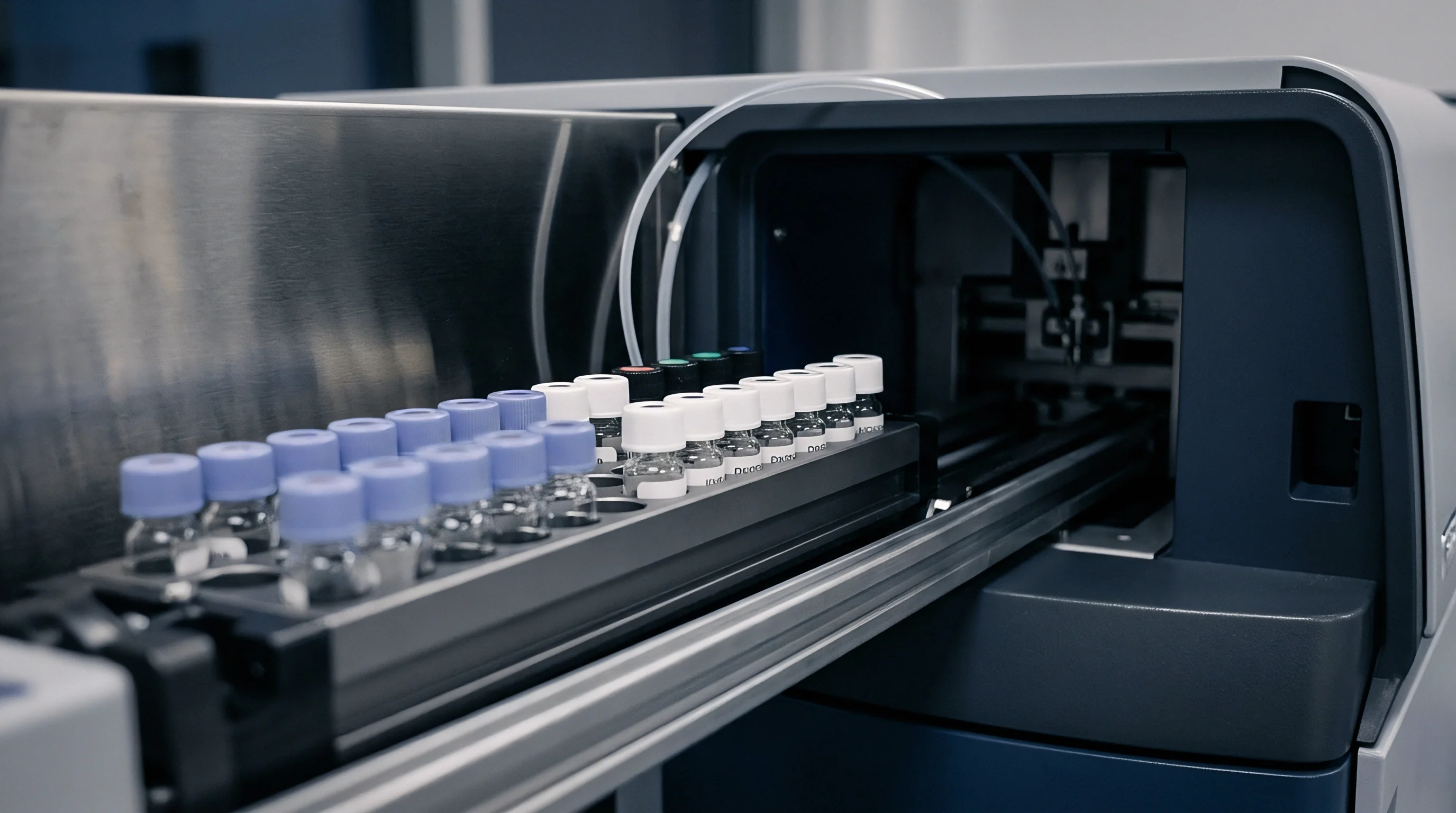
Gas chromatography coupled with mass spectrometry screens supplier granules for low-molecular-weight plasticizer residues. Quality inspectors sample resin lots according to ISO 2859-1 acceptance sampling plans. Technicians mill incoming polymer pellets to a uniform particle size below 500 micrometers, followed by Soxhlet extraction in high-purity dichloromethane or methanol for twenty-four hours.
Methanol extraction isolates unreacted monomers. Concentrated extracts undergo GC-MS analysis to identify and quantify volatile and semi-volatile organic compounds.
Total extractable organic content must not exceed 100 parts per million by weight. Unreacted monomers, polymerization catalysts, and mold release agents such as zinc stearate or ethylene bis-stearamide migrate into cell electrolytes over time. These organic species undergo catalytic oxidation on platinum working electrodes, causing unpredictable baseline drift.
Sourcing specifications mandate rigorous purity certificates for every delivery lot. Resins containing recycled feedstocks or broad-distribution masterbatches face immediate rejection at the receiving dock.

Thermal Desorption Bounds for Volatile Organics
Outgassing limits prevent volatile species from settling onto platinum black catalytic surfaces. Volatile organic compounds outgassing from internal cell walls contaminate the internal gas headspace. Thermal desorption gas chromatography testing per VDA 278 protocol characterizes resin outgassing behavior.
Test samples undergo heating to ninety degrees Celsius for thirty minutes to quantify volatile organic compounds (VOC), followed by heating to one hundred twenty degrees Celsius for sixty minutes to quantify semi-volatile condensation products (FOG).
Total VOC emissions must remain below twenty-five micrograms per gram of polymer, and total FOG emissions must remain below fifty micrograms per gram. Aromatic hydrocarbons, aliphatic aldehydes, and siloxane lubricants degrade catalytic performance. Volatile outgassing shifts sensor zero.
Siloxane contamination permanently poisons noble metal catalysts, destroying zero-point stability and eliminating gas sensitivity. Injection moulding facilities utilize dedicated oil-free all-electric moulding machines to prevent hydraulic fluid contamination during housing fabrication.

Rheological Consistency across Sourced Resins
Melt flow rate testing verifies batch uniformity before compounders feed base polymer into multi-cavity moulds. Molecular weight distribution governs polymer melt viscosity and mold cavity packing density. Variations in cavity packing induce uneven residual stress in molded sensor chassis.
Molded-in stress relaxes during subsequent ultrasonic welding and product operating life, resulting in housing warpage, seal relaxation, and capillary aperture deformation. Polymer creep degrades baseline accuracy.
Incoming inspection procedures enforce the following material verification sequence before approving resin lots for sensor production:
- Capillary Rheometry Profiling measures shear viscosity curves per ISO 11443 across processing shear rates from 100 to 10,000 reciprocal seconds, confirming tight molecular weight uniformity.
- Differential Scanning Calorimetry monitors glass transition and peak melting temperatures per ISO 11357-3, ensuring lot-to-lot polymer crystallinity variations remain within two percent.
- Karl Fischer Titration quantifies moisture content per ASTM D6869 before processing, enforcing an absolute ceiling of 200 parts per million for hydrolytically sensitive polymers.
- Thermogravimetric Ash Testing validates reinforcing glass fiber and mineral loading fractions per ISO 3451-1 to prevent mechanical creep stiffness degradation.
ASTM D6869 moisture limits inserted into delivery terms permit incoming quality teams to return moisture-saturated containers before processing begins.

Yield
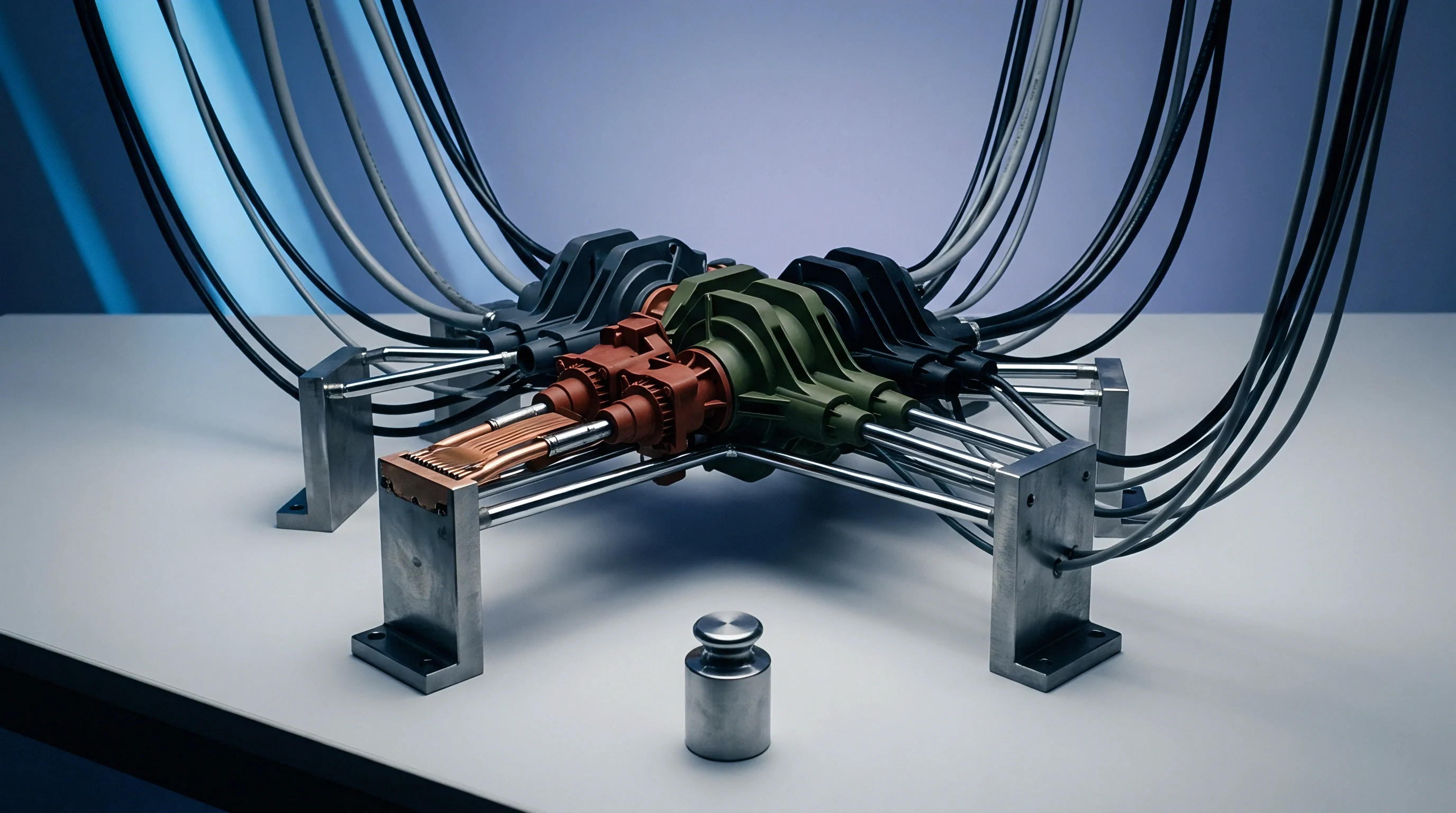
Manufacturing cost structures reflect calibration burn-in overhead and thermal stabilization chamber capacity. Electrochemical gas sensors represent complex multi-component electrochemical systems where material choices dictate line throughput and end-of-line yield. Baseline stability directly controls final quality verification costs.
Sensors displaying excessive zero-point drift fail factory release criteria, requiring extended burn-in cycles or absolute disposal. Cycle time dictates manufacturing margin.
Thermal Chamber Dwell Times and Line Throughput
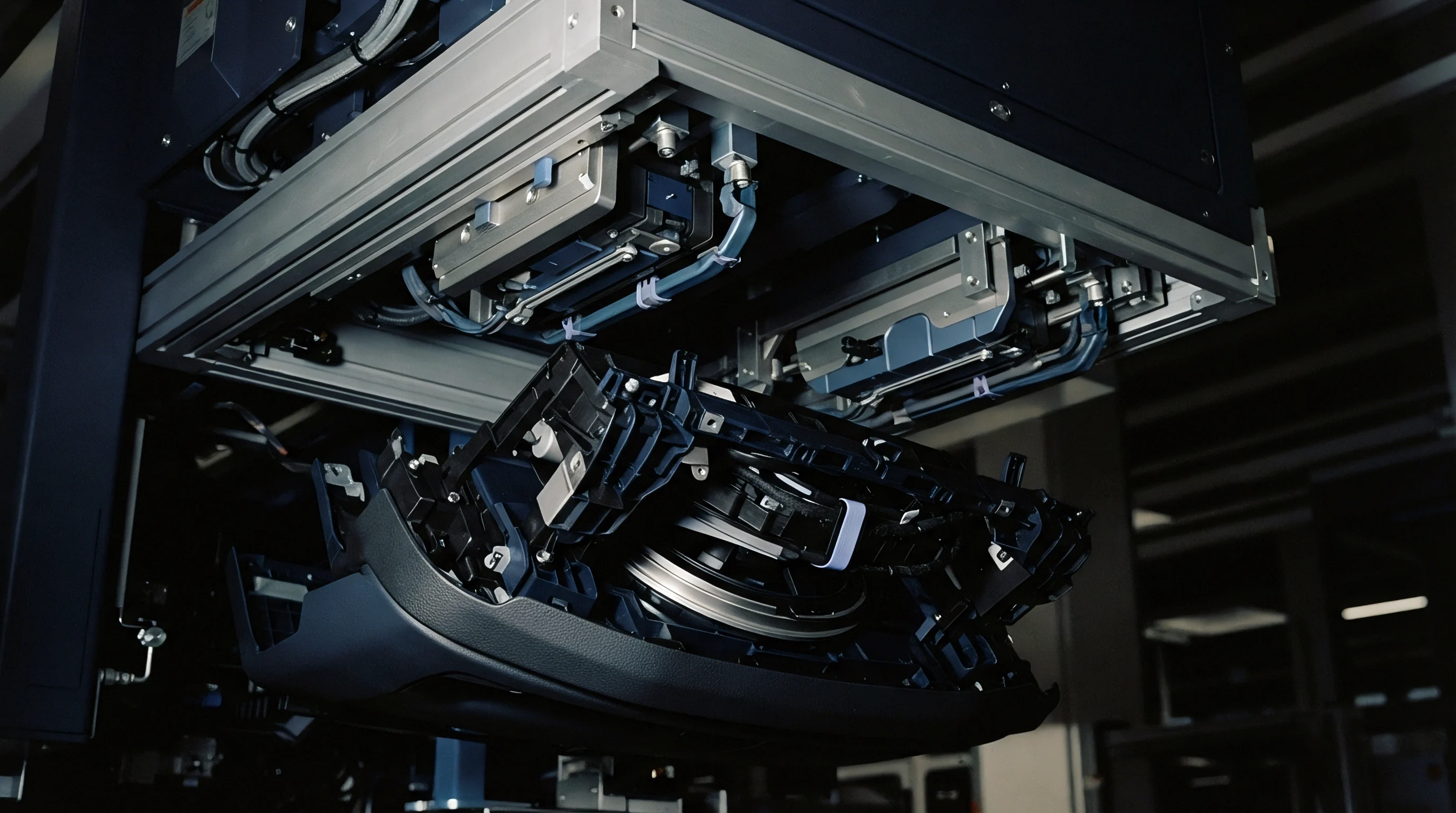
Environmental testing ovens consume sixty percent of total factory cycle hours during multi-point temperature programming. Factory calibration procedures expose assembled sensors to temperature profiles across their rated operating range. Sensors dwell at each temperature plateau until electrochemical equilibrium is established.
Standard profiles test minus twenty, zero, twenty, and forty degrees Celsius. Settling times depend entirely on the thermal mass of the housing resin and the moisture absorption kinetics of the membrane and electrolyte.
Sensors molded from resins with high moisture absorption and poor thermal conductivity require up to eight hours to achieve baseline stabilization at each temperature step. Total calibration dwell times exceed thirty-two hours per batch. Switching cell housings to low-absorption polyphenylene sulfide compounds reduces required dwell times to ninety minutes per plateau.
Thermal stabilization consumes factory space. Shorter dwell times quadruple factory chamber capacity and decrease electrical power consumption per calibrated unit.
Uncompensated baseline thermal drift mimics genuine toxic gas exposure in municipal monitoring networks.
Defect Rates from Uncompensated Zero Shifts
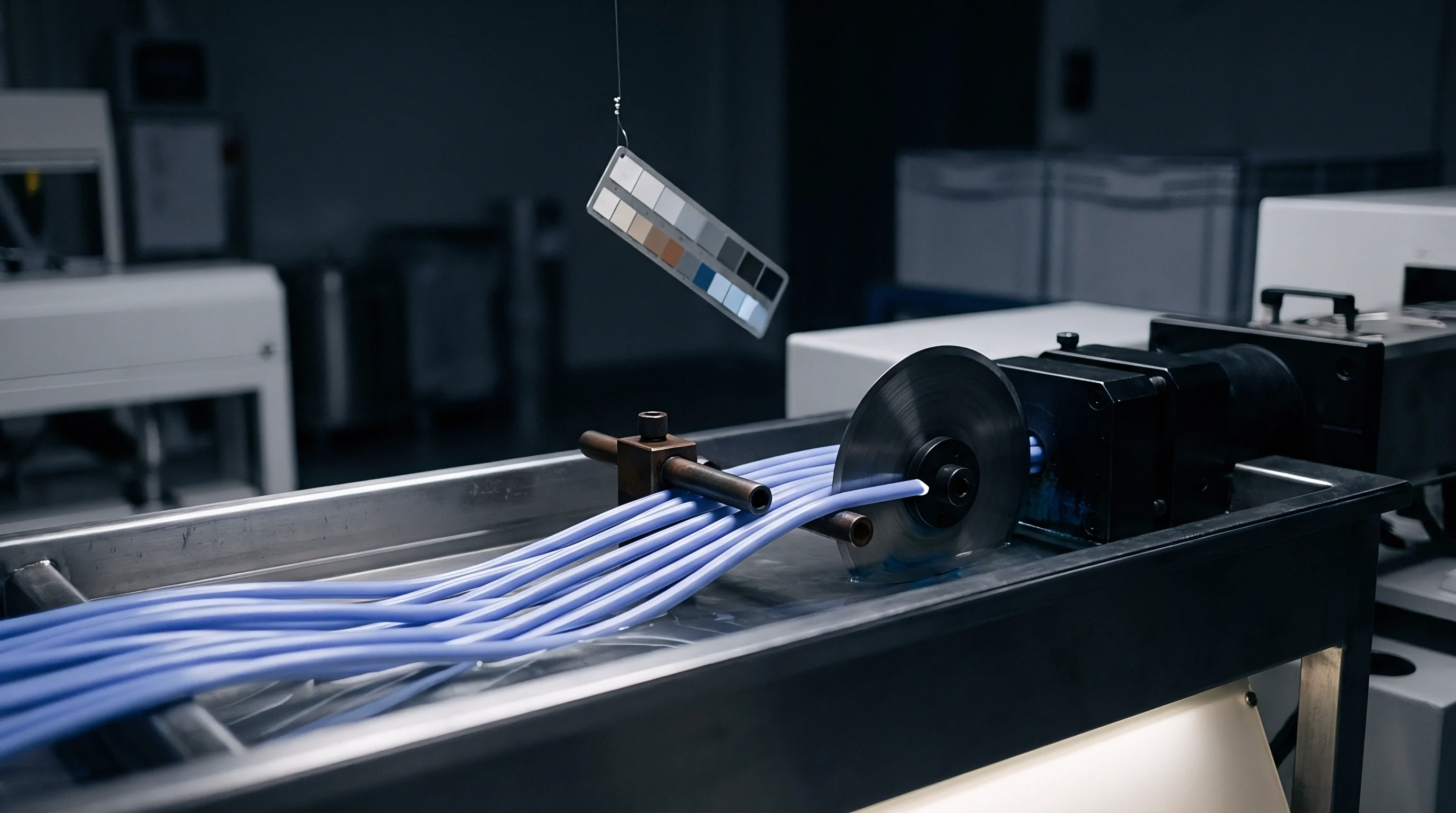
False alarms in portable safety monitors trigger costly nuisance plant shutdowns and sensor replacement dispatches. Final production screening enforces strict baseline tolerance windows. A typical industrial carbon monoxide sensor must display a baseline current within plus or minus five nanoamperes of theoretical zero at twenty degrees Celsius.
When unmodeled baseline drift causes units to settle outside this limit, technicians mark the parts as scrap. Scrap rates on unoptimized product lines frequently reach twelve to eighteen percent.
Implementing non-linear Arrhenius calibration models combined with high-purity resin selection compresses baseline distributions significantly. Factory scrap drops below two percent. Compensating for non-linear zero drift allows sensor manufacturers to loosen initial hardware tolerances while maintaining tight digital output accuracy in microcontroller firmware.
| Cost Component | Standard Polybutylene Terephthalate | High-Purity Polyphenylene Sulfide | Impact Mechanism |
|---|---|---|---|
| Raw Pellet Cost ($/kg) | $4.80 | $16.50 | High-performance polymer pricing premium |
| Tool Wear Expense ($/part) | $0.04 | $0.12 | Abrasive glass filler tool hardening |
| Chamber Dwell Cost ($/part) | $2.85 | $0.95 | Accelerated thermal-moisture stabilization |
| Factory Scrap Cost ($/part) | $1.80 | $0.22 | Tighter baseline distribution yield gains |
| Warranty Reserve ($/part) | $3.50 | $0.65 | Reduced field zero drift false alarms |
| Net Unit Cost ($/part) | $12.99 | $8.44 | Total finished manufacturing cost benefit |

Field Warranty Reserves and Unit Economics
Production margins erode when unmodeled baseline movement causes early returns before the twenty-four-month service lifespan expires. Portable gas detection equipment operating in heavy industrial environments faces severe vibration, wide thermal swings, and fluctuating humidity. Drift errors inflate warranty payouts.
If mathematical baseline compensation models fail to account for long-term polymer creep and additive leaching, zero-point signals drift out of regulatory compliance within six to nine months of field operation. Safety regulations require field recalibration or outright sensor replacement when zero drift exceeds five percent of full-scale measurement range.
Warranty replacement costs include not only the physical sensor hardware but also customer service processing, logistics, and field technician labor. Allocating four dollars per sensor in warranty reserves balances the financial risk of high-drift commodity resins. Sourcing high-purity, creep-resistant engineering thermoplastics increases raw resin expenditure by pennies per part while eliminating dollars of downstream warranty liability.
Mathematical models and material purity operate as mutually reinforcing pillars of long-term zero-point stability.
Neglecting nonlinear zero-point drift models forces product recalls, exhausts warranty reserve funds, and forfeits customer field reliability certifications.