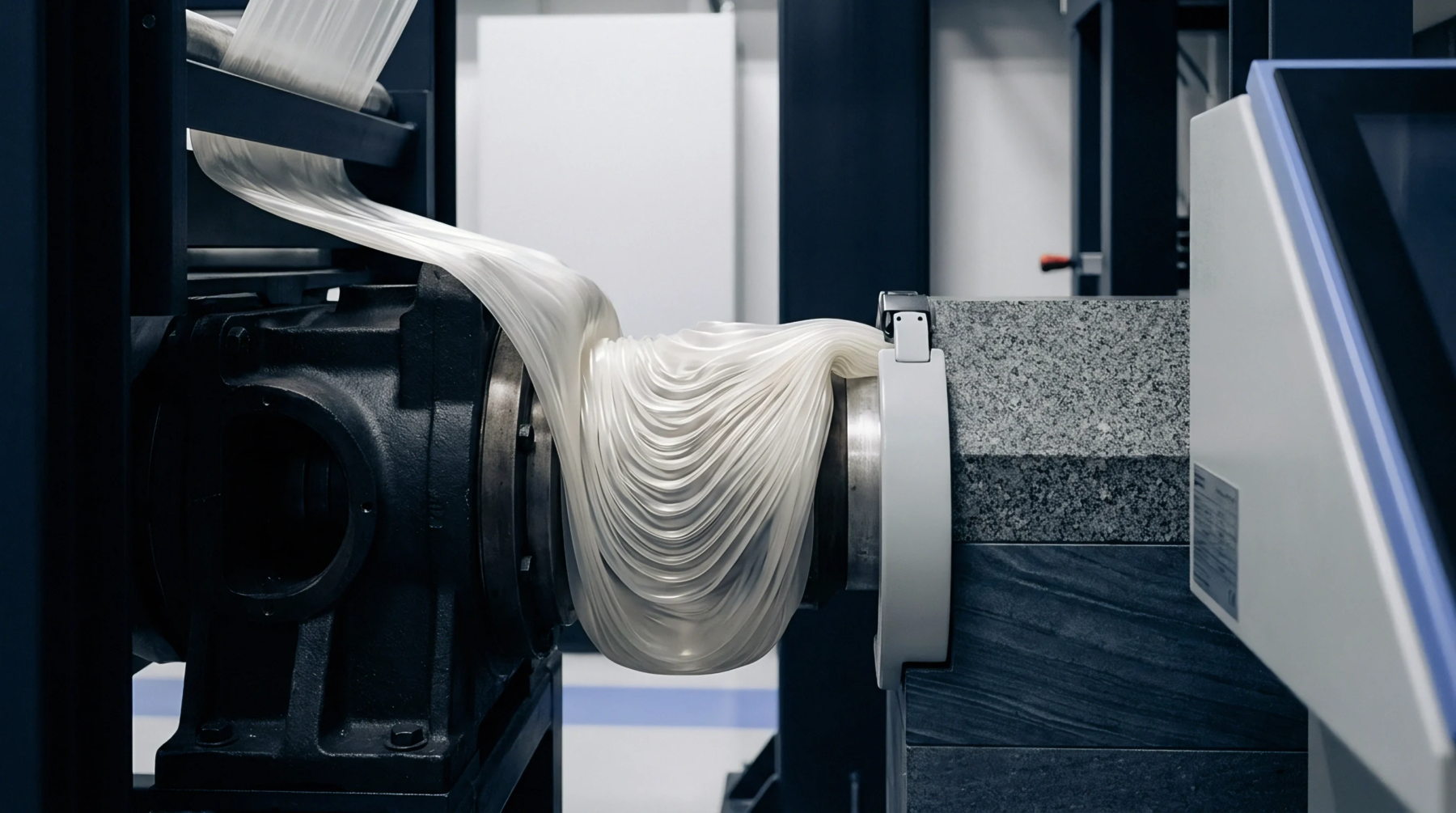
Evaluating Melt Flow Rate Limitations in Recycled Polypropylene Testing
Single point melt flow index testing fails to predict recycled polypropylene processing behavior due to shear thinning and contaminant induced melt instability.
Single point melt flow index testing fails to predict recycled polypropylene processing behavior due to shear thinning and contaminant induced melt instability.

Maintain manifold shear rates below 300 s⁻¹ and specify 25-minute minimum OIT to prevent catastrophic molecular weight loss in recycled polyethylene extrusion.

Capillary rheometry establishes binding high-shear viscosity limits that prevent multicavity tool imbalance and part weight variance in post-consumer resins.

High shear molding relies on pseudoplastic shear thinning, requiring capillary rheometry over melt flow index to control viscous heating and pressure losses.

Visbroken polypropylene risks organoleptic contamination and thermal degradation; verify residual peroxide, NIAS limits, and OIT before food contact use.

Select high flow polypropylene homopolymers by balancing melt flow rate against impact loss, verifying narrow molecular weight distribution and peroxide residues.

High shear compounding degrades ultra-high molecular weight tails through mechanochemical scission, best quantified by zero-shear viscosity and Mz tracking.

Low frequency storage modulus G prime below 0.1 rad/s isolates high molecular weight elastic recovery to predict bimodal pipe swell and prevent over-extrusion.

Interfacial viscous fingering during melt fractionation is controlled by tuning temperature gradients and limiting viscosity ratios across polymer phase boundaries.

Controlled rheology visbreaking lowers sub-zero polypropylene drop toughness by removing high molecular weight tie chains, demanding elastomer modification to prevent brittle container shatter.

Polypropylene impact copolymers sacrifice flexural modulus to gain sub-zero toughness through dispersed ethylene-propylene rubber domains in an isotactic matrix.

Polyethylene terephthalate trace moisture determination relies on Karl Fischer coulometric oven extraction at 170 to 180 degrees Celsius to prevent chain scission.
Expertise is a utility, not a secret. sentiention™ publishes its working knowledge as open reference: intelligence layer covering the materials it sources, the markets it enters, and the reference that serves both.