Meaning
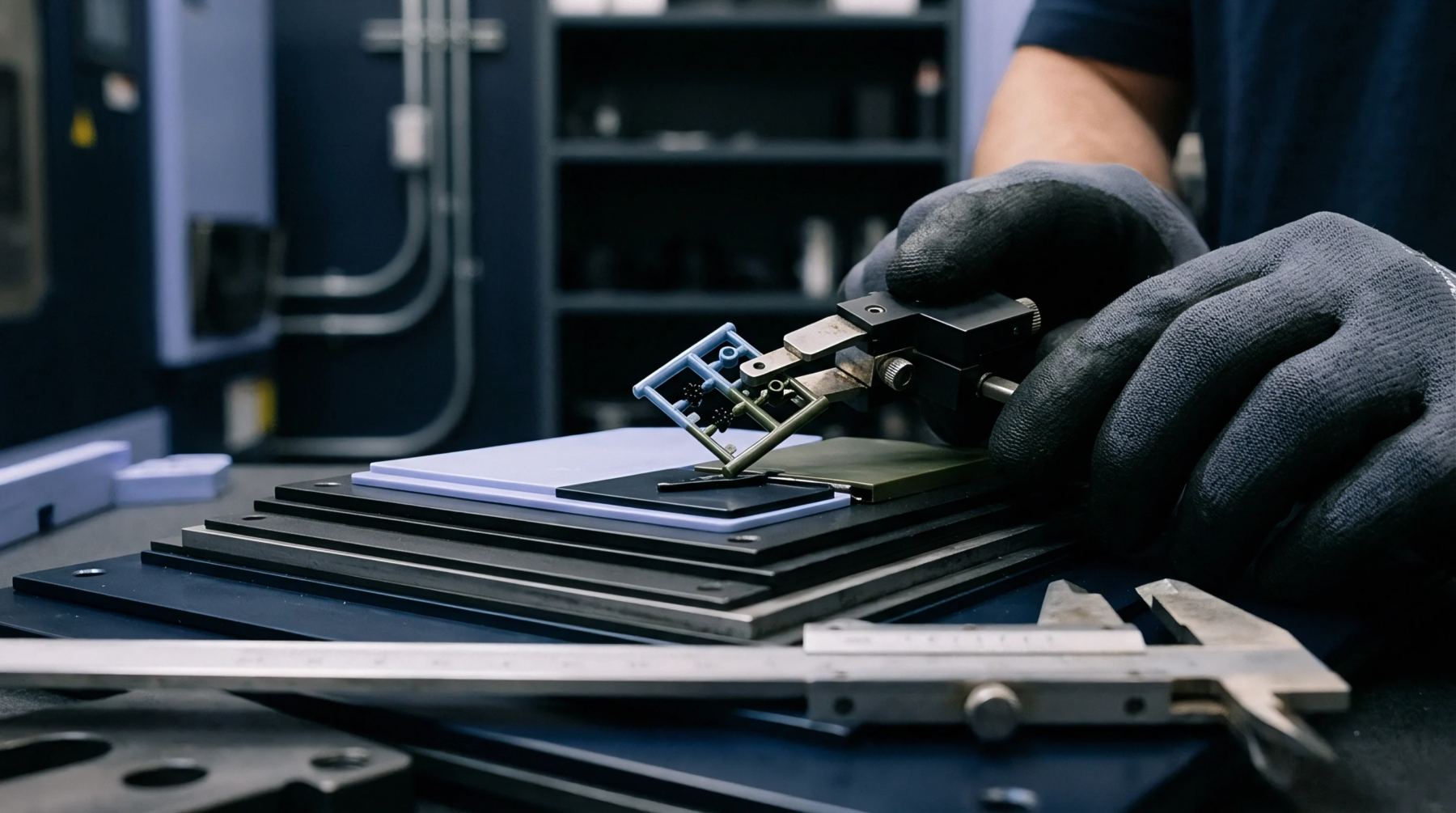
Precise manufacturing operations producing plastic components with mass below one gram utilize micro-injection moulding to reach high geometric complexity. This production method functions by scaling down standard screw-based plasticating units to accommodate shot sizes measured in cubic millimetres. It maintains strict control over melt temperature and residence time to prevent polymer degradation.
High-speed injection pressures overcome the viscous drag inherent in flow through extremely narrow gates. The boundary for this technology exists where traditional moulding machines fail to deliver repeatable dosing accuracy or where the clamping force exceeds the requirement for miniature cavity pressure.
Production Parameter
Cavity pressure monitoring remains the primary metric for maintaining part consistency across large batches. Micro-injection moulding hardware incorporates specialized sensors to capture transient pressure data during every single shot cycle. These sensors reside within the mould insert to track the filling front as it reaches thin wall sections.
Drift in peak pressure indicates either variation in material viscosity or partial clogging of the flow channel. If the pressure profile deviates from the established baseline, the control system adjusts injection velocity to compensate for the change. Operators verify these values against the set points defined during initial mould qualification to ensure geometric stability.
Resin Characteristic
Viscosity at high shear rates dictates the success of filling thin cavities. Polymeric chains must flow through gates measuring fractions of a millimetre without freezing before the cavity reaches full volume. Manufacturers prefer materials with low melt flow indices that remain stable during the long thermal history imposed by small shot sizes.
Regrind levels require absolute limits because recycled particles change the effective viscosity and introduce contaminants that block micro-channels. Specifications for these resins differ from standard injection moulding grades because they emphasize molecular weight distribution and consistent additive concentrations over bulk mechanical strength. A datasheet value provides only a baseline while the actual process requires a controlled melt viscosity that prevents flash formation.
Tooling Constraint
High thermal conductivity steel alloys protect the integrity of delicate mould inserts. These tools experience extreme mechanical loads as the machine pushes molten plastic into narrow orifices. Micro-injection moulding requires venting paths etched at depths smaller than the particle size of the resin to allow air to escape without admitting polymer leakage.
Errors in venting geometry result in trapped gas and incomplete mould filling even when the heating elements operate correctly. Rigid alignment of the mould halves prevents shearing of the thin walls during clamping and opening phases. Proper cooling circuit placement keeps the cycle time stable while ensuring that internal stresses within the finished part stay low enough to prevent warping after removal from the cavity.
Accurate thermal management within the tool determines the overall dimensional tolerance of every produced unit.