Meaning
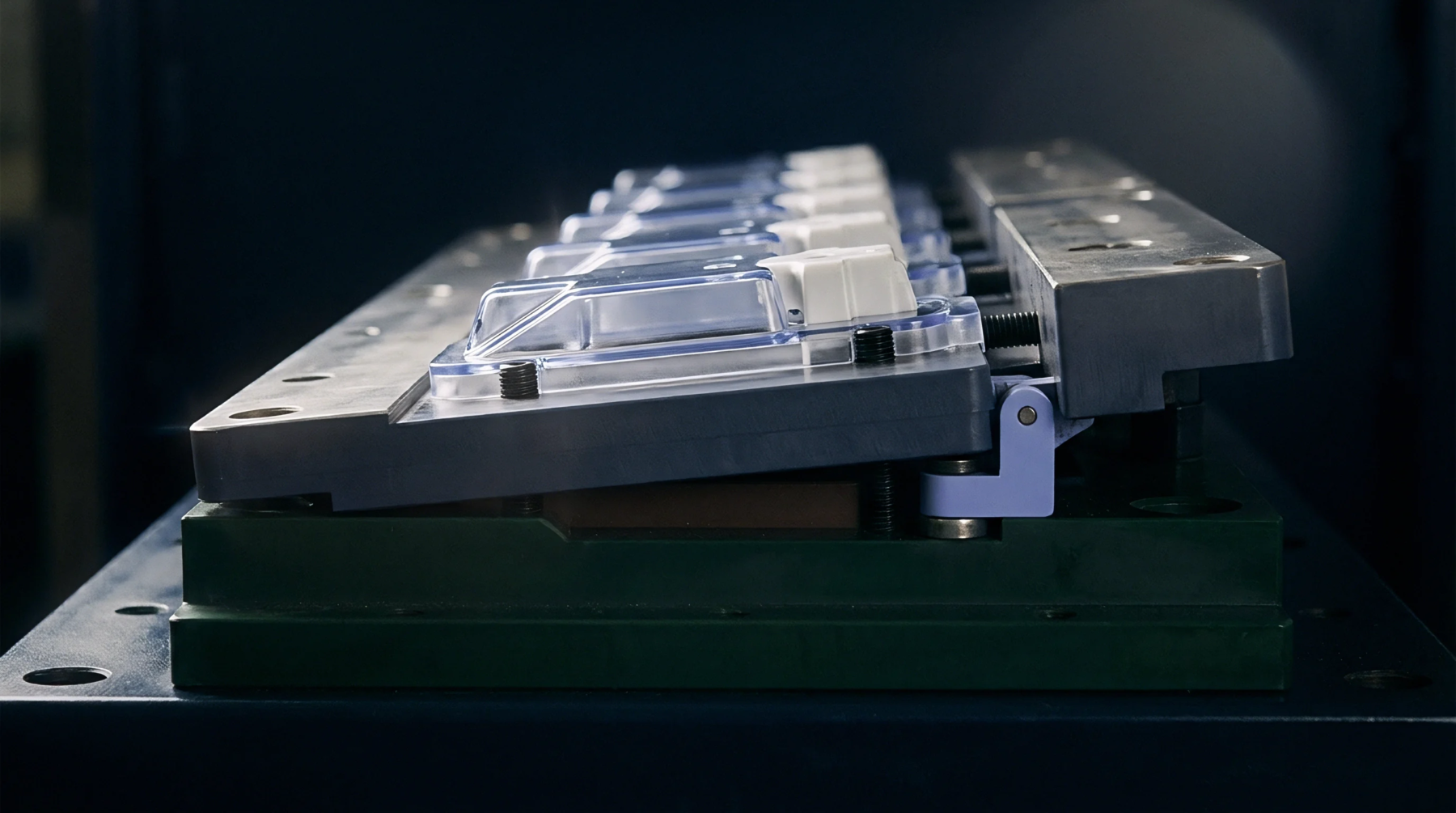
Controlled compressive force applied to a transducer or tooling component during installation ensures continuous contact and linear signal output under external loads. Utilizing mechanical preload prevents the separation of mating surfaces when high cavity pressures push against the sensor. This variable is set during mold assembly and must be maintained throughout the production run.
Force Application
Installation of a cavity pressure sensor requires a specific torque to squeeze the transducer. This mechanical preload generates a baseline charge that the system registers as zero. The force must lie within manufacturer limits.
Sensor Response
Piezoelectric crystals generate a charge only when they experience a change in force. By establishing a high mechanical preload, the sensor remains in its linear operating region even when the injection moulding cycle generates rapid pressure spikes. If the preload is too low, the sensor output becomes nonlinear and fails to capture the peak cavity pressure.
Mould Assembly
Incorrect pocket dimensions or worn spacer plates reduce the clamping force on the sensor body. When the mechanical preload drifts below the threshold, the sensor may register negative pressures or show severe signal hysteresis. Toolmakers use calibrated torque wrenches to verify the clamping force, ensuring that the regrind and virgin resins are molded under identical, highly controlled pressure profiles.