Meaning
Heat transport inhibition at the boundary where two distinct solids touch characterizes this thermal property. Interfacial thermal resistance quantifies the temperature jump occurring across a junction when energy flux passes through that microscopic gap. Molecular vibrations fail to bridge this divide efficiently because phonon scattering dominates at the contact plane.
Disordered regions or atomic voids between surfaces impede the conduction of heat, forcing a localized temperature gradient that deviates from bulk material predictions. Thermal contact conductance is the mathematical inverse of this metric, providing a scale for how well energy crosses the divide. This phenomenon stops applying when the junction merges into a monolithic structure where atomic bonding eliminates the physical discontinuity.
Polymer Boundary
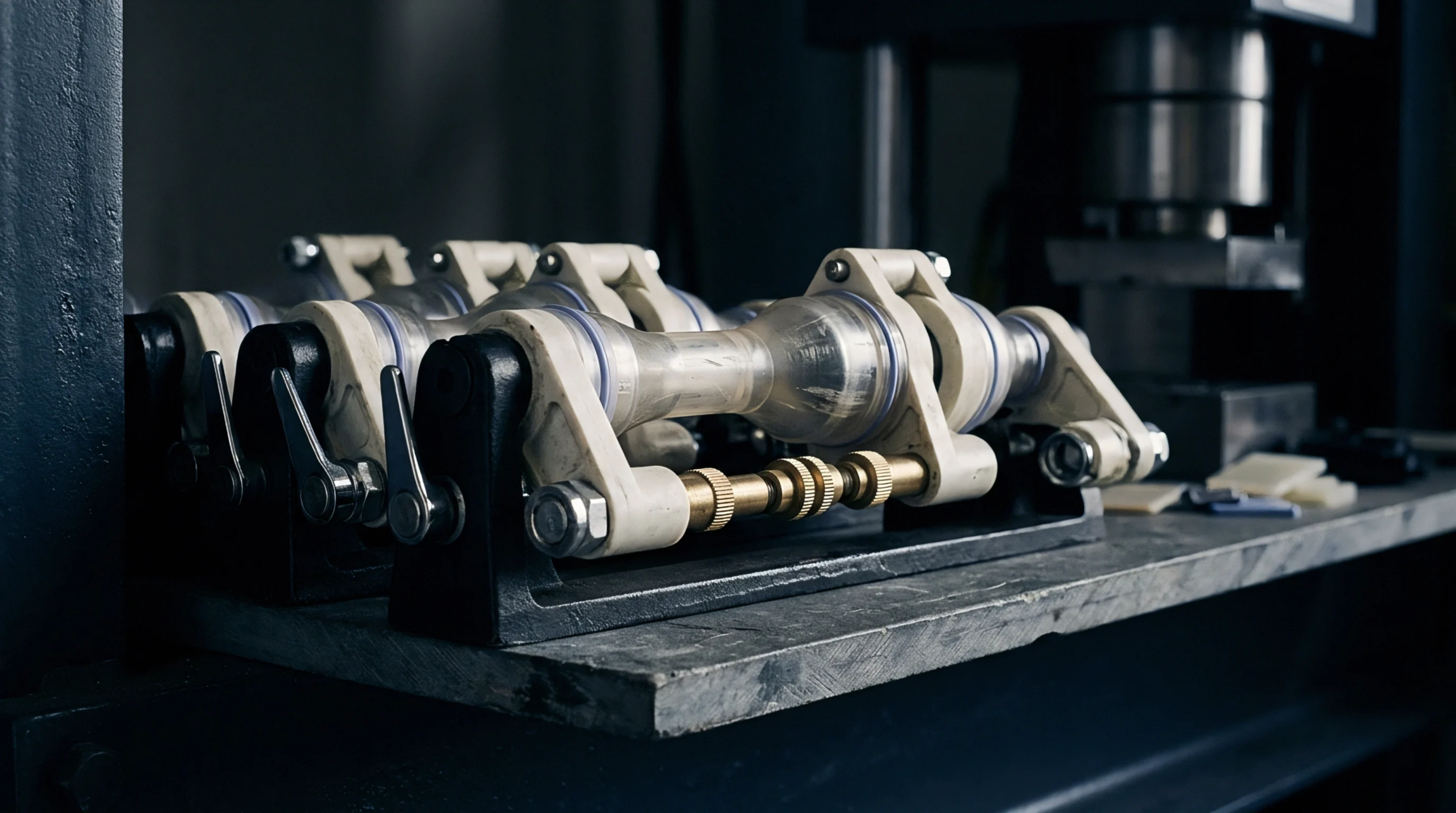
Injection moulding processes generate distinct thermal hurdles during the transition from the hot melt to the cold steel wall of the cavity. Interfacial thermal resistance rises as the resin shrinks and separates from the tool surface during the cooling cycle. Air pockets act as insulators that trap heat inside the part and extend cycle times.
Proper thermal management of the mould surface depends on minimizing this gap through controlled packing pressures and cooling channel design. Consistency in this variable governs the stability of the dimensions across a mass production run.
Material Constraint
Virgin resins and recycled compounds exhibit different levels of contact impedance due to variations in surface energy and additive concentrations. Additives or fiber reinforcement change the acoustic impedance of the polymer, altering how phonons behave at the interface between the plastic and the metal tool. Datasheet values for thermal conductivity rarely account for these junction effects, leading to discrepancies between theoretical cooling rates and actual part temperature profiles.
A moulder compensates for these variations by adjusting cooling times based on the physical state of the polymer batch rather than relying on standard material properties. Parts produced with higher levels of regrind often display erratic cooling patterns that trace back to altered surface chemistry and inconsistent interfacial thermal resistance.
Thermal Penalty
Production costs escalate when this junction impedance reaches excessive levels during high speed manufacturing. Extended dwell times inside the mould reduce the total volume of parts produced per hour while increasing utility consumption for the cooling systems. Defects like warpage or internal voids follow when the uneven extraction of heat leaves the core of the component at a higher temperature than the skin.
Heavy parts with thick sections suffer most from this effect as the time required for heat to reach the tool interface becomes the limiting factor for the entire production line. Process optimization involves reducing the barrier to flow by maintaining uniform clamping forces that keep the material in contact with the cooled wall. High contact quality translates into predictable cycle times and lowers the energy footprint of the moulding cycle.