Radiant Furnace Thermal Absorption and Gravity Sag Calibration for Amorphous Polymer Sheet
Calibrating emitter wavelength to polymer absorption bands and setting optical sag triggers prevents core temperature deltas exceeding five degrees Celsius.
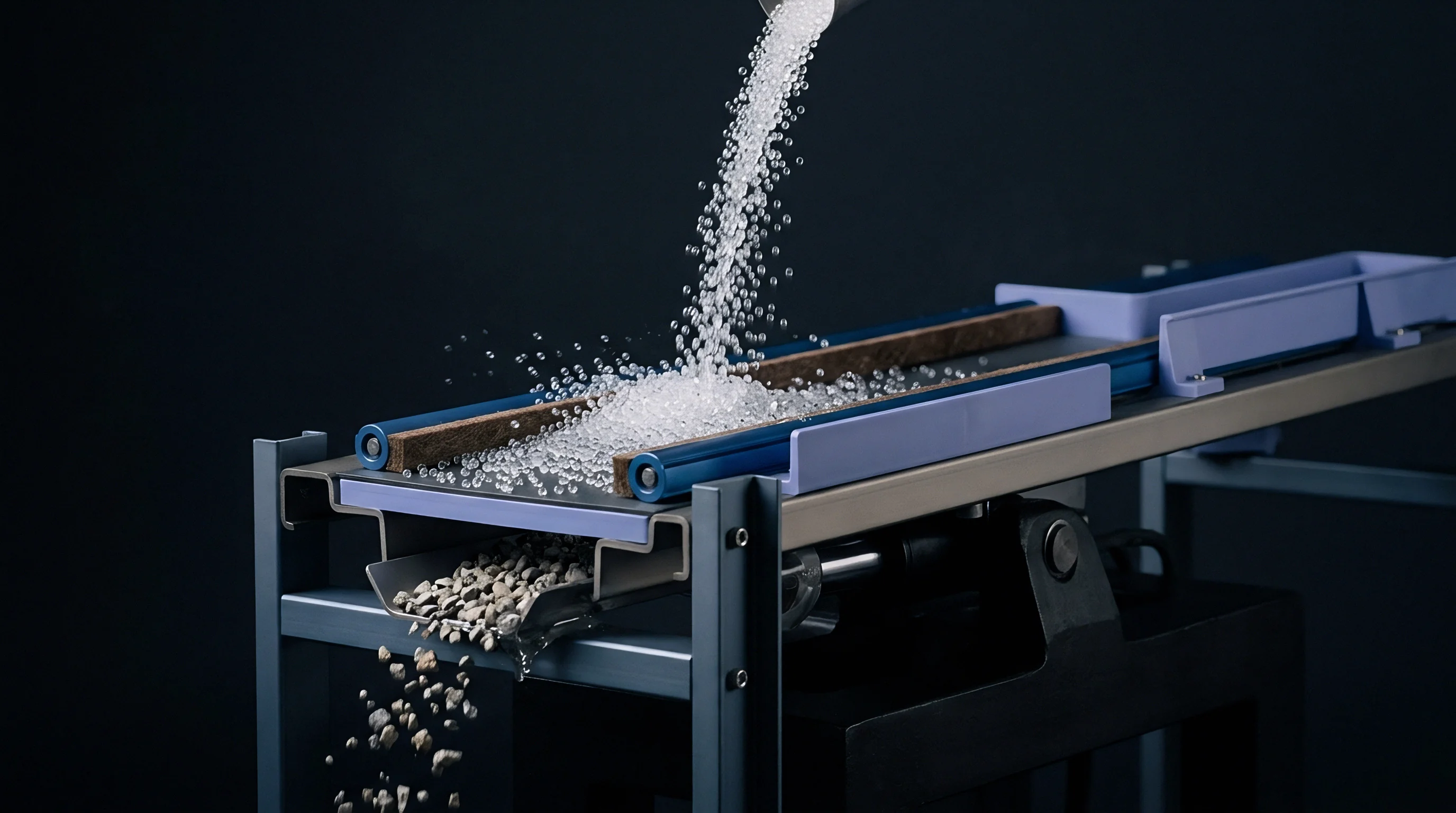
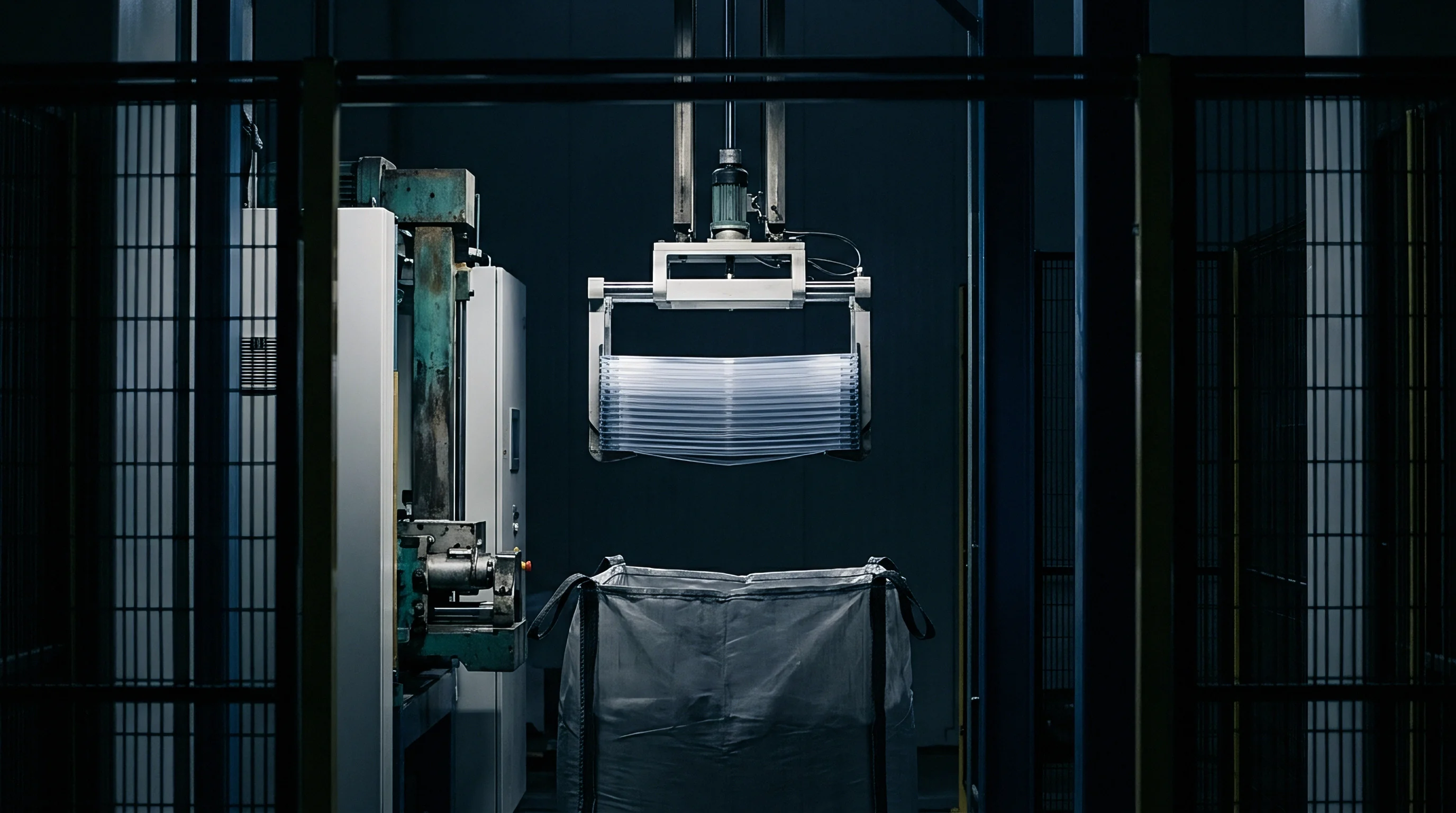
Emission
A four-millimeter extruded sheet of clear polycarbonate entering a shuttle thermoforming oven at twenty-one degrees Celsius registers a radiant flux deficit across its lower surface within fourteen seconds of element energization. Ceramic heating banks tuned to a single setpoint generate an infrared spectrum centered between 3.0 and 5.0 micrometers, coinciding with the primary molecular vibration modes of ester linkages and benzene rings in amorphous thermoplastics. Absorption concentrates in the outer 300 micrometers of the sheet.
The interior relies entirely on conductive heat transfer from the surface inward, creating a steep thermal slope that destabilizes mechanical behavior during vacuum forming.
Filament temperatures inside medium-wave quartz tubes reach 950 degrees Celsius within two seconds, shifting peak output toward 2.2 to 2.8 micrometers, a band that penetrates deeper into unfilled polymers before complete attenuation. Short-wave halogen elements reach 2200 degrees Celsius, yielding peak energy near 1.2 micrometers. At this wavelength, unmodified amorphous sheet acts almost like an optical window, letting seventy percent of the energy pass directly through clear resin to the oven floor without warming the core.
Medium-wave quartz elements operating at 650 degrees Celsius focus eighty-two percent of their radiant energy between 2.5 and 4.0 microns.
Solid ceramic platens maintain steady background radiation, but their thermal inertia prevents quick cycle adjustments when sheet thickness or resin grades change between extrusion runs. Black ceramic tiles show an emissivity coefficient of 0.94 across the 2.0 to 10.0 micrometer band, whereas standard white glazed elements drop to 0.82 in the medium-wave region. When forming transparent amorphous grades like polymethyl methacrylate or glycol-modified polyethylene terephthalate, energy delivery has to balance skin transmission against core conductance to avoid boiling the surface.

Spectral Distribution across Industrial Heat Sources
Tungsten filaments enclosed in translucent silica envelopes produce high-density radiant flux with fast switching cycles. Filament resistance rises quickly as current flows, stabilizing the power factor within 200 milliseconds. That rapid response allows zoned profiling across the clamp frame to offset perimeter chill from cold clamping steel, running edge rows twenty percent hotter than center zones to keep the temperature field uniform across the forming aperture.
Table 1 outlines operational characteristics across primary radiant emitters deployed in commercial sheet furnaces, detailing wavelength distribution and energy density parameters measured under steady-state operating conditions.
| Emitter Construction | Element Temperature (°C) | Peak Wavelength (µm) | Thermal Response Time | Radiant Efficiency (%) |
|---|---|---|---|---|
| Solid Cast Ceramic | 350 to 680 | 3.0 to 4.8 | 420 to 900 seconds | 68 to 74 |
| Medium-Wave Carbon Quartz | 800 to 1050 | 2.0 to 2.7 | 3 to 8 seconds | 78 to 86 |
| Standard Quartz Tube | 900 to 1250 | 1.8 to 2.4 | 15 to 30 seconds | 72 to 80 |
| Short-Wave Halogen Lamp | 1800 to 2400 | 1.1 to 1.4 | 1 to 2 seconds | 85 to 92 |

Band Alignment with Infrared Resonance Peaks
Fourier-transform infrared spectrometry defines the exact transmission troughs where polymer backbones absorb radiant photons directly. Polycarbonate displays intense absorption bands at 3.4 micrometers for aliphatic carbon-hydrogen stretching, 5.7 micrometers for carbonyl stretching, and 8.1 micrometers for ether bonds. Tuning emitter power to deliver maximum spectral density into these specific windows reduces oven residency time by eighteen percent compared with uncalibrated broad-spectrum ceramic heaters.
Ambient air circulation inside the furnace compensates for element spectral mismatch by scrubbing convective heat across the sheet faces.
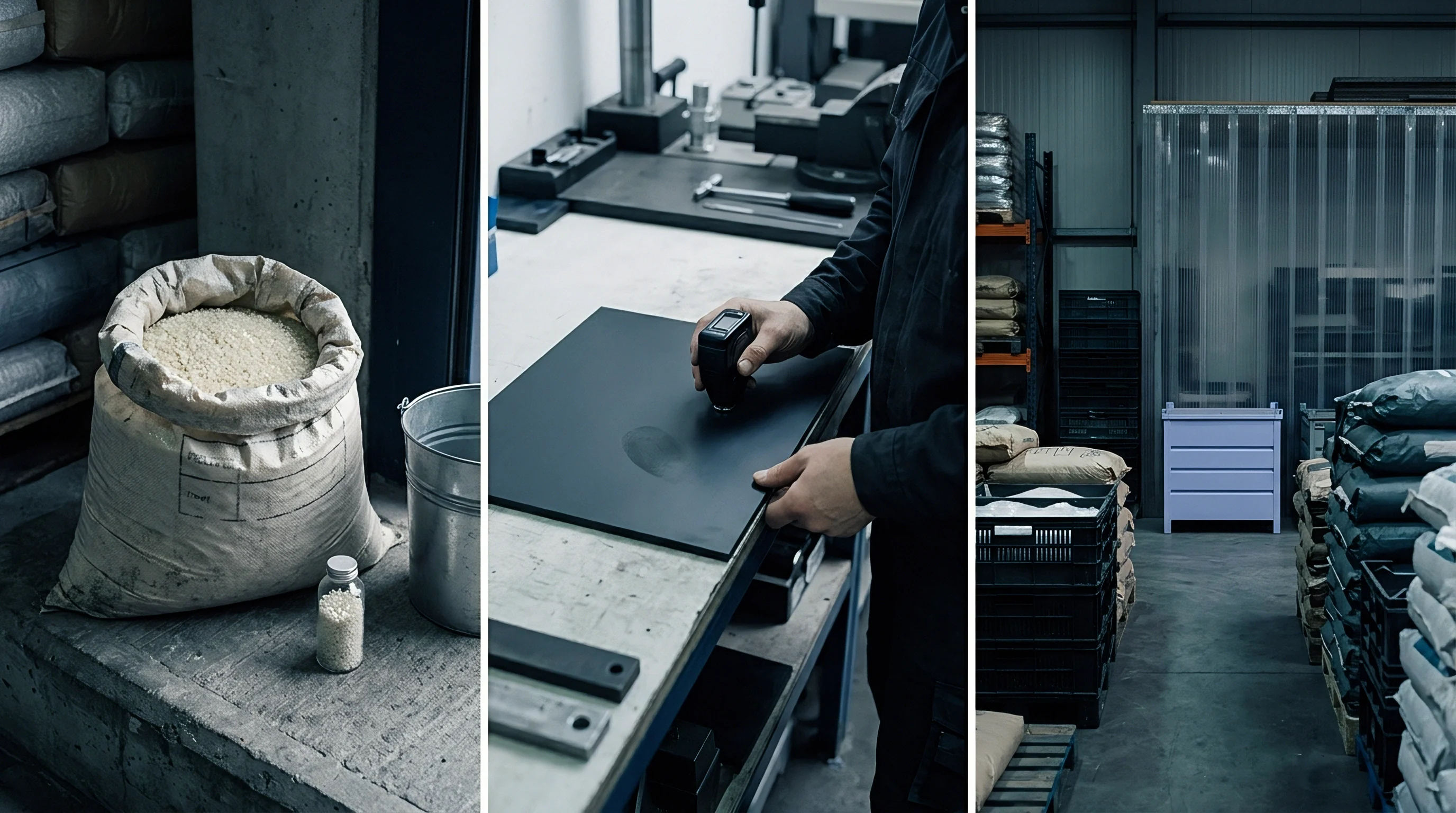
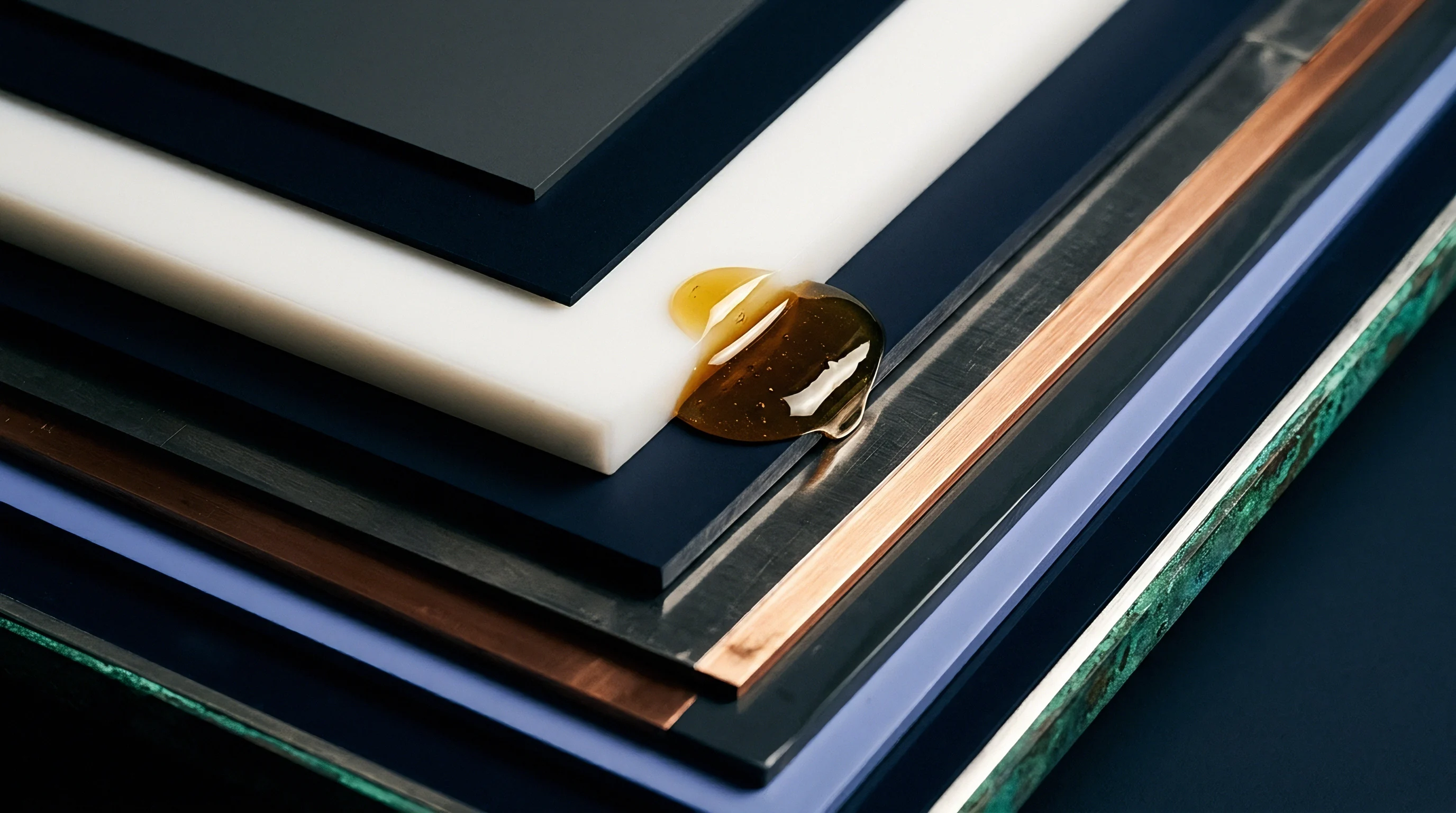
Gradient
Temperature differences between the external skins and the mid-plane of a thick thermoplastic plate dictate whether a thermoformed part maintains uniform wall distribution or fractures across sharp tool radii. When radiant energy strikes the surface, localized volumetric heating follows the Beer-Lambert relationship, with intensity decaying exponentially as a function of depth and absorption coefficient. Transparent polycarbonate exhibits an average absorption coefficient of 4.2 inverse centimeters in the 2.5 to 3.5 micrometer band, absorbing seventy percent of the energy within the first 1.8 millimeters of material.
Because thermal gradients induce severe internal stress and amorphous polymers have low thermal conductivities ~ typically 0.19 to 0.23 Watts per meter-Kelvin for acrylic and polycarbonate resins ~ conductive transfer into the core proceeds slowly. When heaters run at high output levels to shorten cycle times, skin temperature can exceed the glass transition threshold by eighty degrees Celsius while the mid-plane remains too rigid to stretch cleanly.
Surface pyrometry registers the skin temperature while the center of a six-millimeter sheet lags by more than twenty degrees.
Carbon black additives elevate the bulk absorption coefficient beyond fifty inverse centimeters, collapsing radiant penetration into a surface layer less than eighty micrometers thick. Pigmented sheets therefore heat almost entirely through solid-state conduction from the skin inward. Before tool engagement, the maximum allowable temperature differential across sheet thickness is six degrees Celsius for optical clarity parts and twelve degrees Celsius for general industrial moldings.
Through Thickness Energy Attenuation
Modeling through-thickness thermal saturation relies on the one-dimensional unsteady heat conduction equation augmented by a radiative internal generation term. The local volumetric absorption rate matches the spatial derivative of the radiant flux profile. Integrating this relationship across successive time increments confirms that continuous one-sided heating produces an intolerable thirty-five degree gradient across an eight-millimeter sheet.
Table 2 contrasts physical and thermal properties governing heat propagation through five common amorphous thermoplastics processed in sheet thermoforming operations.
| Resin Designation | Glass Transition (°C) | Thermal Conductivity (W/m·K) | Thermal Diffusivity (mm²/s) | Penetration Depth at 3 µm (mm) |
|---|---|---|---|---|
| Polycarbonate Unfilled | 145 to 150 | 0.20 | 0.144 | 2.38 |
| Polymethyl Methacrylate | 105 to 110 | 0.19 | 0.126 | 1.85 |
| Polyvinyl Chloride Rigid | 78 to 84 | 0.16 | 0.118 | 1.42 |
| Polystyrene High Impact | 96 to 102 | 0.17 | 0.128 | 1.15 |
| Polyetherimide Optical | 215 to 220 | 0.22 | 0.138 | 1.94 |

Can Dual Pyrometers Resolve Core Equilibrium?
Single non-contact infrared sensors measure thermal emission from the surface, failing to capture internal heat distribution through the substrate. Dual pyrometers operating at matched wavelength bandwidths monitor both upper and lower skins, providing inputs to transient models that calculate internal temperatures. In a 2021 laboratory test on six-millimeter polycarbonate, an analytical finite-difference model calibrated against embedded thermocouples estimated core temperatures within 1.8 degrees Celsius across ninety production cycles, though draft variations from exhaust blowers shifted the calculated center temperature by up to 4.2 degrees Celsius.
Process setters evaluate sheet readiness by inspecting visible indicators and thermal instrumentation records prior to tool indexing:
- Optical surface sheen shifts from a matte extrusion finish to a glossy texture as microscopic draw marks relax above the glass transition temperature.
- Pyrometer drift limits trigger machine cycle holds whenever top-to-bottom surface temperature divergences exceed four degrees Celsius.
- Infrared heating duration scales with the square of sheet thickness, following standard conductive diffusion physics.
- Heater bank retraction pauses permit thermal soaking on thick gauges, allowing conduction to equalize mid-plane temperatures without degrading the polymer skin.
Ignoring core equilibrium results in localized thinning along corners, unrelaxed orientation stresses, and sudden failure during impact loading in the field.

Drape
Gravitational deflection transforms a flat, horizontally clamped plate into an unstable catenary basin once bulk sheet temperature crosses the glass transition boundary. Below that threshold, storage modulus holds near 2.4 Gigapascals, keeping the sheet rigid. As the core reaches the rubbery plateau, the storage modulus plunges by three orders of magnitude to roughly 1.5 Megapascals, and self-weight overcomes shear resistance, pulling the sheet down toward the lower heater array.
Because polycarbonate displays high melt elasticity, entanglement molecular weight dictates how long the rubbery plateau lasts before viscous flow takes over. High molecular weight grades with low melt flow rates resist catastrophic droop, maintaining structural integrity across a twenty-five degree Celsius forming window. Low molecular weight extrusion grades drop suddenly, leaving setup technicians narrow margins to transfer the heated plate into the mold cavity before sag creates web defects.
Thicker sheet tolerates broader furnace cycles but amplifies center-to-surface stress differentials during forming.
A resin grade exhibiting a melt volume rate of three cubic centimeters per ten minutes holds its catenary shape for fifty seconds in the rubbery region, whereas an injection-grade sheet with a flow rate of eighteen collapses toward the oven floor within twelve seconds. Clamping frame geometry governs stress distribution: rectangular apertures produce elliptical sag troughs with maximum deflection at the geometric center, while cold clamping frames cause premature edge chill.

Viscoelastic Behavior along the Rubbery Plateau
Dynamic mechanical thermal analysis traces storage and loss moduli as thermal inputs approach the forming window. In amorphous polymers, the transition from glassy rigidity to rubbery compliance spans eight to fifteen degrees Celsius. During this transition, the loss factor peaks at maximum internal damping, and the material acts as a viscoelastic membrane, stretching under its own weight while storing elastic energy.
Sheet thickness directly influences the balance between gravitational load and bending stiffness. Gravitational weight scales linearly with thickness, while initial flexural rigidity scales with the cube of sheet thickness. Once the modulus collapses in the oven, gravitational weight dominates.
A six-millimeter sheet experiences the same unit-area tension as a two-millimeter sheet at equal sag-to-span ratios, but carries three times the total downward force, transferring heavy loads to perimeter clamp pneumatics.

Catenary Deflection Geometry under Sheet Weight
Deflection contours across unsupported spans resemble membrane catenary surfaces governed by Poisson’s ratio and planar tensile strain. In rapid cycles, heat transfer to the clamping perimeter remains incomplete, leaving a cold border that restrains lateral displacement. As the sheet center drops, it undergoes biaxial tensile strains of two to six percent before tool contact, aligning polymer chains along the major sag axis and altering ultimate impact strength.
Predicting an exact universal coefficient for the transition from linear viscoelastic sag to nonlinear plastic yield under varying oven air drafts remains difficult. Given this uncertainty, tooling engineers specify empirical oven sag trials on five consecutive production sheet lots to establish baseline process limits rather than relying on theoretical membrane simulations.
Sheet sag beyond the allowable geometric envelope creates uneven wall distribution, thinning the crown while gathering material folds along bottom clamp margins.


Trigger
Photoelectric sensors, laser triangulation displacement heads, and optical vision cameras provide the physical signals that terminate the heating cycle. When the descending underbelly of the sagging polymer crosses an optical beam path set beneath the clamping frame, the control PLC records the event and indexes the sheet into the forming station. Positioning this sensing datum requires micro-metric adjustments to compensate for thermal expansion, gauge shifts, and ambient light fluctuations.
Laser triangulators provide micrometer precision by projecting a red or blue laser diode spot onto the bottom of the sagging plate while a CMOS linear array detects the reflected angle. This measures vertical sag continuously, tracking deflection speed and acceleration to identify thermal runaway: when sag velocity doubles from 0.5 to 1.0 millimeter per second, the core has reached full plastic compliance.
Like high-speed inspection sensors on semiconductor photolithography tracks, furnace displacement monitors detect surface plane distortions before gross physical collapse occurs. Standard optical sensors struggle with clear sheet because unpigmented acrylic and polycarbonate transmit visible laser wavelengths directly through their bulk, returning erratic reflections from the upper oven structure. Deploying diffuse blue laser triangulation sensors operating at 405 nanometers overcomes this, capturing stable surface reflections from transparent films down to fifty micrometers thick.

Optical and Laser Detection Hardware
Through-beam photo eyes mounted outside the oven perimeter project infrared beams through slots in the furnace side panels, detecting interruption when the sagging sheet belly drops thirty to fifty millimeters below the clamp line. Aligning these sensors requires water-cooled mounting brackets so thermal expansion of the oven frame does not pull the receiver out of alignment during continuous multi-shift production.

Pneumatic Ballooning and Sag Countermeasures
Deep-draw thermoforming machines use pneumatic ballooning to counteract gravitational droop. Controlled air pressure beneath the sheet lifts the heated membrane into an upward bubble, eliminating catenary sag. This counter-pressure prevents the hot sheet from touching lower heating elements while introducing uniform biaxial pre-stretching before plug entry.
Standardizing the sag calibration routine involves a five-step sequence:
- Clamp a calibrated test sheet into the transport rails with thirty-two kilonewtons of perimeter clamping force.
- Index the clamping frame into the radiant oven between pre-stabilized heating banks set to target operational temperatures.
- Continuously record laser displacement coordinates while observing pyrometer surface readings until deflection reaches fifteen millimeters.
- Trigger lower chamber air injection at 0.08 bar pressure to establish bubble equilibrium, maintaining zero net vertical deflection for twenty seconds.
- Index the thermally balanced sheet into the forming press, logging elapsed furnace cycle time as the production baseline.
Can real-time closed-loop laser displacement control maintain wall thickness repeatability across wide ambient temperature swings without manual operator intervention?


Ledger
Financial performance in heavy-gauge thermoforming hinges on cycle execution, material efficiency, and energy control. Hourly rates for large single-station and rotary presses range from 180 to 340 dollars depending on platen dimensions and tonnage capacity. An unoptimized heating phase consumes sixty to seventy-five percent of total cycle duration.
Trimming furnace dwell time by eight seconds across a ninety-second cycle on a press running 5,000 annual hours adds 26,000 dollars directly to gross operating margin.
A four-zone radiant furnace spanning two meters by three meters consumes eighty to one hundred forty kilowatt-hours of power during steady-state processing. Poor element tuning, long soak times, and unnecessary over-heating drive up electricity costs while accelerating ceramic emitter degradation. Calculating true component cost requires linking material thickness tolerances directly to furnace cycle consistency.
An extrusion gauge guarantee under DIN 16742 Grade TG4 eliminates perimeter clamp slip without requiring oven recalibration between sheet lots.
Quantifying the commercial impact of furnace calibration and sag control requires looking at an industrial program producing thick-gauge enclosures. Take an annual volume of 25,000 units formed from five-millimeter high-impact polystyrene, sheet size of 1,200 by 1,800 millimeters, an uncalibrated reject rate of 4.5 percent, a machine rate of 220 dollars per hour, and a raw sheet price of 3.40 dollars per kilogram.
Table 3 compares an uncalibrated setup governed by basic timers against a calibrated line using laser sag detection and spectral emitter tuning.
| Operational Cost Parameter | Uncalibrated Production Line | Calibrated Process Line | Variance Impact (Annual) |
|---|---|---|---|
| Furnace Heating Cycle Time | 112 seconds | 88 seconds | -24 seconds per part |
| Total Press Cycle Time | 145 seconds | 121 seconds | -16.5% cycle duration |
| Machine Operating Hours (25k parts) | 1,007 hours | 840 hours | -167 machine hours |
| Press Machine-Hour Cost | $221,540 | $184,800 | $36,740 savings |
| Part Scrap / Reject Rate | 4.5% (1,125 parts) | 1.2% (300 parts) | -825 scrapped units |
| Scrap Material Loss (Net of Regrind) | $31,365 | $8,364 | $23,001 savings |
| Electrical Consumption (Furnace) | 118,800 kWh | 89,040 kWh | $4,166 savings (@ $0.14/kWh) |
| Total Direct Production Cost | $257,071 | $202,204 | $54,867 net savings |

Cycle Time Budgets and Energy Consumption
The financial leverage in Table 3 comes from trimming idle dwell and avoiding scrap. Skeletal web trim returns to reclaim granulators, but re-extruding that scrap into calibrated sheet carries a secondary conversion fee of 0.65 to 0.95 dollars per kilogram. Sheet thickness variations of plus or minus ten percent ~ permitted under commercial grade standards ~ cause severe heating variances across consecutive parts.
A thinner sheet heats faster and sags prematurely, triggering mold closure before the perimeter reaches forming temperature. A thicker sheet reaches the press with a chilled core, causing excessive wall thinning or vacuum blow-outs. In a multi-cavity tool trial, a six percent variation in gauge across an extruded acrylic lot shifted sag velocity by fourteen percent, tripling web mark defects.

Yield Losses across Heavy Gauge Extrusion
Tooling capital commitments also reflect forming window precision. Machined aluminum molds with integral cooling channels hold tight tolerances over long runs, costing 35,000 to 80,000 dollars for large automotive or structural skins. Uncalibrated furnace controls force setup technicians to widen radii and add draft so sagged parts clear the mold, compromising the design and requiring larger sheet sizes to maintain perimeter seal margins.
A complete tooling agreement incorporates DIN 16742 tolerance grades and specifies maximum allowable sheet sag, binding the extruder to tight gauge control and protecting the buyer from compounding scrap costs.