Environmental Stress Crack Resistance and Bottom Pinch off Seam Degradation in Light Weight Blown Containers
Bottom pinch seam stress crack resistance depends on bimodal molecular mass distribution, steep mold relief angles, and controlled melt fusion.

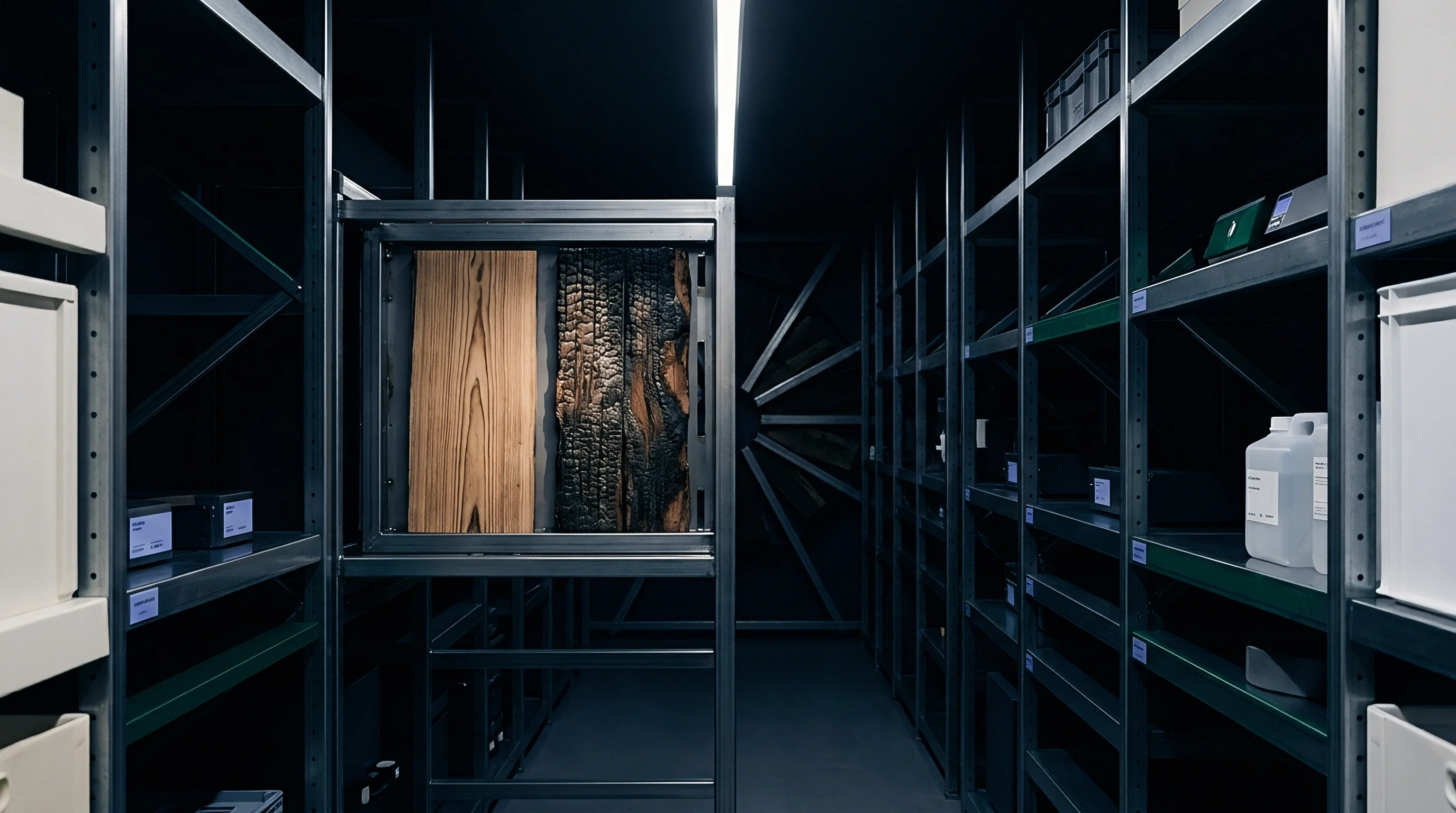
Resin
Polyethylene molecular architecture dictates resistance against slow crack growth in blown hollow goods. Standard unimodal high-density polyethylene grades provide sufficient tensile modulus for upright container stability, yet they possess a narrow distribution of molecular weight that leaves the interlamellar amorphous regions vulnerable to chemical attack. Short polymer chains pack efficiently into crystalline lamellae, creating rigid crystal formations separated by thin amorphous zones.
In these unimodal resins, few tie molecules bridge adjacent lamellae. When mechanical stress pulls the crystalline structure, the sparse tie molecules bear the entire localized tensile load. Density governs stiffness.
Melt strength governs parison sag.
Bimodal high-density polyethylene synthesizes two distinct molecular populations inside dual reactors configured in series. The low-molecular-weight fraction yields crystallite rigidity and processability, while the high-molecular-weight fraction concentrates exclusively into extended tie molecules and inter-crystalline entanglements. These long chains resist disentanglement when subjected to long-term low-level mechanical strain.
Polyethylene grades tailored for aggressive surfactants feature a high-load melt flow index below ten grams per ten minutes under standard conditions of twenty-one point six kilograms at one hundred ninety degrees Celsius. Molecular entanglement density remains the physical foundation of slow crack growth suppression.
Unimodal polyethylene resins trade stress crack longevity for rapid extruder output and fast cycle times.
Extrusion blow moulding operations running lightweight containers encounter immediate material trade-offs. Reducing parison wall thickness from one point two millimetres to zero point seven five millimetres increases the working hoop stress generated by container contents. A bottle thinned to satisfy corporate resin reduction targets elevates mechanical strain right at the container base.
If the processor runs a standard injection-grade or high-melt-index unimodal blow moulding grade to maximize output, the thin-walled container yields to microcracking along amorphous boundaries within seventy-two hours of contact with industrial detergents.
Chain entanglements resist slow crack growth. Virgin bimodal materials offer high environmental stress crack resistance values exceeding five hundred hours under standard ASTM D1693 condition B, yet current packaging programs demand substantial fractions of post-consumer recycled resin. Post-consumer feedstocks introduce thermal history, degraded chain fragments, crosslinked gel particles, and polypropylene contamination.
Contamination levels as low as two weight percent polypropylene disrupt the polyethylene crystalline matrix, forming localized boundary defects that initiate stress cracks under low mechanical stress.
Whether bimodal resins containing post-consumer recycled content can match virgin stress crack thresholds across sixty-day surfactant storage remains an open technical challenge across industrial container supply chains.
Weld
Melt temperature at the pinch blade dictates how polymer chains interdiffuse across the split mold parting boundary. As the parison drops between open mold halves, the bottom pinch-off tooling captures the molten polyethylene tube, compresses the walls together, and severs excess flash. Complete molecular fusion demands sufficient thermal energy and dwell time while the polymer resides above its crystalline melting point of one hundred thirty-two degrees Celsius.
If the parison outer surface cools below one hundred twenty degrees Celsius before the mold clamps shut, polymer chains lack the mobility required to cross the mechanical seam interface.
Flash cold-welds below fusion temperature. The tool steel geometry machined into the bottom of the blow mold governs the pressure field generated during parison compression. Standard pinch designs feature a flat cutting land paired with an angled relief pocket.
The land severs the parison, while the relief cavity accepts displaced molten material without forcing the mold parting line open. Pinch lands require precise relief angles.
Why Does Parison Pinch Geometry Accelerate Failure?
The pinch land width and relief pocket angle dictate mechanical stress concentration factors directly at the seam root. A wide pinch land blunts the cutting action, leaving a thick, poorly consolidated seam that contains internal voids. Conversely, an excessively sharp pinch blade acts like an intentional razor notch cut into the container bottom.
The geometry creates a sharp internal groove, known as the seam v-notch, on the container interior where product accumulates.
Sharp pinch pockets generate notch sensitivity. When the container inflates under five to eight bar of blow air pressure, the molten resin stretches outward against the cold tool surface. The internal seam groove experiences sharp tensile strain.
If the pinch land width measures less than zero point two millimetres, the cutting edge creates a deep, narrow slit rather than a smooth, radiused seam. This notch multiplies applied mechanical stress by a factor of three to five, concentrating all hydrostatic and top-load forces directly at the unbonded seam root.
Pinch-off performance degrades when production shifts adjust process parameters to shave seconds off the cycle clock. The mechanical sequence governing seam formation follows a precise physical path:
- Parison Capture occurs as the mold halves close at rapid clamp velocity, forcing opposing molten walls into mechanical contact before air evacuation completes.
- Squeeze Flow Displacement drives excess molten polyethylene out of the cavity boundary and into the relief pocket, creating biaxial chain orientation along the seam flank.
- Thermal Quenching solidifies the external flash against the cold tool steel, locking residual orientation stresses into the polymer matrix before molecular relaxation occurs.
- Internal Cavity Pressurization forces the still-molten inner core outward, generating sharp localized bending moments across the semi-solidified pinch line notch.
- Mold Separation Ejection pulls the welded seam under tensile shock, risking micro-tears across the seam root if cooling times were trimmed too aggressively.
Tooling wear compounds these geometric faults over multi-cavity production runs. Blow molds cut from aircraft-grade 7075-T6 aluminum experience rapid deformation along the pinch-off cutting edge. The repeated impact of clamping steel or aluminum lands peens the metal, widening a zero point three millimetre land to zero point eight millimetres over three hundred thousand cycles.
The widened land fails to sever the parison cleanly, generating high residual tensile stresses and cold welds that yield immediately when exposed to surfactant formulations.
| Tooling Parameter | Standard Container Spec | Lightweight Container Spec | Impact on Seam Morphology |
|---|---|---|---|
| Pinch Land Width | 0.35 mm to 0.50 mm | 0.15 mm to 0.25 mm | Narrower lands reduce notch radius but demand precise clamp alignment |
| Relief Angle | 30 degrees to 45 degrees | 15 degrees to 25 degrees | Shallower angles increase squeeze pressure, improving melt interdiffusion |
| Flash Pocket Depth | 0.75 mm to 1.00 mm | 0.40 mm to 0.60 mm | Prevents hydraulic locking of displaced flash, ensuring complete mold closure |
| Dam Pocket Gap | 0.25 mm to 0.35 mm | 0.12 mm to 0.20 mm | Maintains back-pressure against molten seam during inflation phase |
Tooling maintenance logs reveal that worn pinch lands double the geometric stress concentration factor at the seam root.
Tool shops frequently claim that flash trimming knives cannot maintain seam integrity if parison extrusion drop temperatures rise above standard production setpoints.
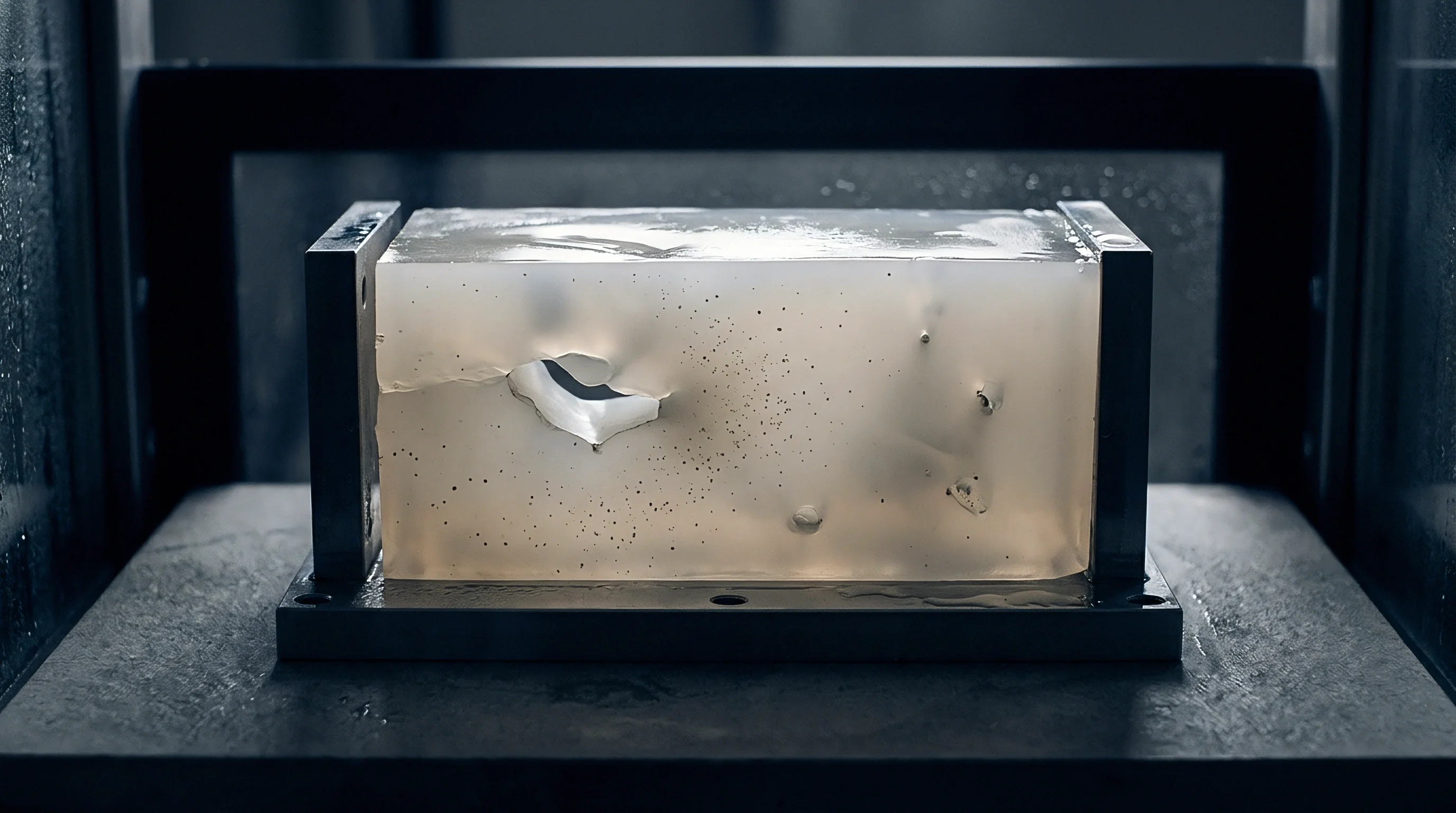
Base
Container bottom architecture concentrates mechanical strain across the push-up chime when internal contents exert hydrostatic pressure. In conventional extrusion blow moulding, the container base features a concave dome, known as the push-up, designed to recess the pinch seam above the standing surface. This recess ensures the bottle rests flat on its outer perimeter, or chime, without rocking on the trimmed flash nub.
Lightweighting programs thin the base aggressively, reducing the resin mass in the bottom push-up by twenty to thirty-five percent.
Thinning the base alters the distribution of internal stress. A thick push-up behaves as a rigid diaphragm that deflects minimally under the hydrostatic head of the liquid and the downward thrust of top-load stacking. When resin mass drops, the push-up dome loses structural stiffness.
Under stacking loads, the thinned dome flexes downward, transforming static compressive forces into severe tensile hoop stresses centered across the pinch seam. Hoop stresses peak at push-up corners.
A blown container subjected to pallet storage experiences continuous combined stress modes that degrade seam integrity:
- Hydrostatic Bulging forces the concave push-up downward, imposing continuous mechanical tension across the internal seam notch.
- Pallet Top Load transmits vertical compressive force through the sidewalls into the chime, generating outward bending moments at the seam termination points.
- Internal Vapor Pressure expands the bottom profile outward, maximizing stress concentration factors where wall thickness transitions sharply.
- Dynamic Transport Vibration imparts cyclic fatigue pulses that accelerate slow crack growth along cold-welded polymer boundaries.
Container push-up deflection under warehouse pallet loads converts compressive top weight into destructive tensile stress across the bottom weld.
Wall thickness transitions govern failure localization. During parison inflation, the parison stretches furthest to reach the corners of the base and the deep recess of the push-up. This high blow-up ratio thins the parison wall disproportionately.
A container with a nominal sidewall of zero point eight millimetres often exhibits a pinch-off seam root thickness below zero point three millimetres. The transition zone between the thick unoriented polymer near the flash pocket and the ultra-thin biaxially stretched wall inside the push-up forms a metallurgical notch equivalent, exhibiting high frozen-in orientation stresses.
Secondary cooling circuits suppress warpage. If cooling circuits inside the bottom mold inserts lack balanced flow, one mold half runs five to ten degrees Celsius hotter than its mate. The resulting asymmetric thermal contraction bends the solidified pinch seam off-center.
An off-center seam positions the vulnerable weld interface directly on the high-deflection radius of the container push-up, accelerating mechanical crack initiation during drops and warehouse stacking.
Incorrect push-up geometries lead directly to catastrophic pallet collapses during warehouse storage, destroying uncracked product lots and triggering massive commercial chargebacks.
Reagent
Surfactant molecules wet the microscopic crevices of the container bottom and accelerate tie-molecule relaxation under mechanical load. Environmental stress cracking differs fundamentally from chemical degradation. The chemical agent does not break covalent bonds or alter the polymer molecular weight through oxidation or hydrolysis.
Instead, active surfactants, such as nonylphenol ethoxylates, alcohol ethoxylates, and linear alkylbenzene sulfonates, lower the interfacial surface energy of the solid polyethylene.
Surfactants accelerate interlamellar tie-molecule disentanglement. When pure water contacts a stressed polyethylene surface, high surface tension prevents fluid penetration into microscopic sub-micron fissures. Surfactant formulations reduce surface tension from seventy-two millinewtons per metre to less than thirty millinewtons per metre.
The wetting fluid immediately penetrates the microscopic notch located at the interior root of the bottom pinch-off seam. Microcracks propagate along amorphous boundaries.
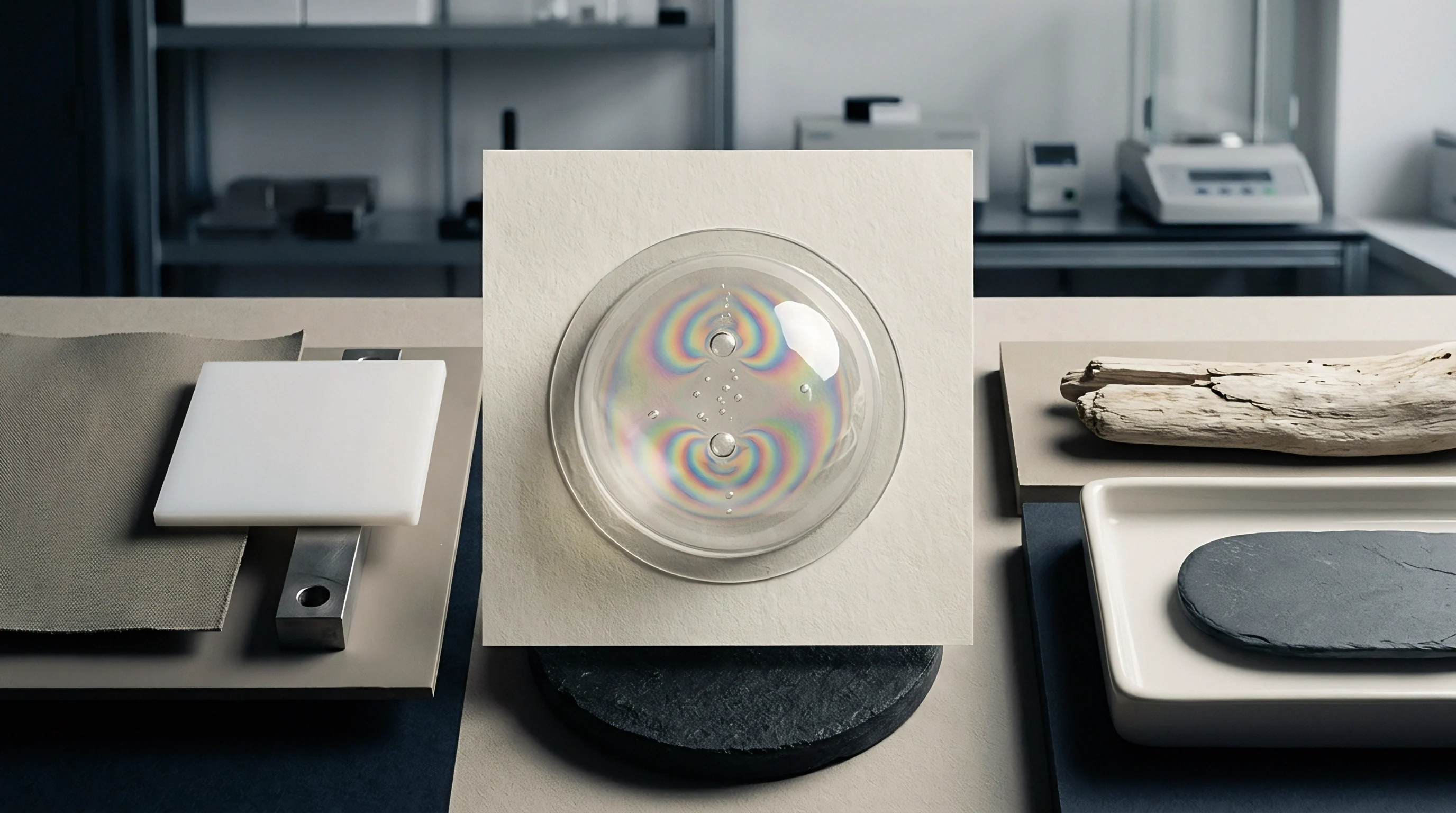
Where Does Environmental Stress Cracking Initiate?
Failure origins consistently align with the sharp interior root notch of the bottom seam. Mechanical stress concentrates at this geometric notch, stretching the amorphous tie molecules that bridge crystalline lamellae. Under normal dry conditions, tie molecules undergo slow plastic deformation, unraveling over thousands of hours before void formation occurs.
When exposed to an active surfactant, the hydrocarbon tail of the chemical molecule plasticizes the short amorphous loops and tie chains.
Test fluid temperature accelerates failure. Elevated temperatures swell the amorphous regions, expanding the interlamellar spacing and allowing rapid diffusion of surfactant molecules directly into the loaded tie-molecule network. The chemical plasticization reduces the energy barrier required for chain disentanglement.
Under constant tensile stress, tie molecules pull free from their anchored positions within the crystalline lamellae, generating microscopic voids known as crazes. These crazes coalesce into visible macro-cracks that traverse the seam wall until complete wall rupture occurs.
| Polyethylene Resin Grade | Container Weight | Surfactant Chemistry | Test Temp | ASTM D2561 Seam Life |
|---|---|---|---|---|
| Unimodal HDPE (0.954 g/cm³, MI 0.35) | 28 grams | 10% Igepal CO-630 | 50°C | 42 hours to failure |
| Unimodal HDPE (0.954 g/cm³, MI 0.35) | 22 grams | 10% Igepal CO-630 | 50°C | 14 hours to failure |
| Bimodal HDPE (0.952 g/cm³, HLMI 8.5) | 22 grams | 10% Igepal CO-630 | 50°C | 168 hours without failure |
| Bimodal HDPE with 30% PCR | 22 grams | 10% Igepal CO-630 | 50°C | 86 hours to failure |
| Bimodal HDPE with 30% PCR | 19 grams | 10% Igepal CO-630 | 50°C | 28 hours to failure |
Lightweight containers amplify this mechanism because their thinner base sections experience higher strain energy densities. In a heavy twenty-eight gram container, the hoop stress at the seam root remains well below the critical threshold required to initiate crazing in the presence of mild surfactants. Lightening the container to twenty-two grams doubles the localized stress, crossing the critical threshold where surfactant-induced disentanglement occurs spontaneously at ambient warehouse temperatures.
Continuous chemical sorption into the stressed amorphous boundary lowers the activation energy for crazing, allowing stable slow crack growth to split the seam wall.
Proof
Laboratory qualification regimes subject finished containers to controlled chemical and thermal exposure to predict five-year shelf integrity. Standard testing under ASTM D2561 Procedure A evaluates container stress crack resistance by filling units with an aggressive stress crack agent, typically a ten percent solution of nonylphenoxypoly(ethyleneoxy)ethanol, known commercially as Igepal CO-630. The filled containers undergo conditioning inside an air-circulating oven maintained precisely at fifty degrees Celsius or sixty degrees Celsius.
Technicians inspect units periodically for leaks, pinhole ruptures, and structural splitting along the bottom pinch-off line.
A container design that survives five hundred hours in dry oven conditions can fail within twenty hours under surfactant exposure at fifty degrees Celsius.
Accelerated bench testing isolates the seam failure mechanism from overall bottle geometry. The Full Notch Creep Test, governed by ISO 16770, cuts miniature tensile specimens directly across the bottom pinch-off seam of moulded bottles. A precision razor blade applies a sharp coplanar notch through the seam weld.
The specimen is submerged in an aqueous surfactant bath at eighty degrees Celsius under a constant tensile deadweight stress of four to six megapascals. Measuring the time to rupture under these conditions isolates the weld quality from the stiffness of the push-up dome, identifying cold welds and resin embrittlement within days rather than months.
Quality engineers verify pinch integrity before signing off on commercial lightweighting tooling programs using an operational sequence:
- Microtome Cross-Sectioning cuts five-micron slices perpendicular to the pinch seam to measure inner v-notch depth, seam root radius, and flash weld width under polarized light microscopy.
- Differential Scanning Calorimetry checks the crystalline fraction and melting enthalpy across the seam weld to verify that thermal quenching did not freeze unknitted amorphous polymer into the joint.
- High-Stress Air Pressurization tests empty blown bottles submerged in fifty-degree-Celsius water while ramping internal pneumatic pressure to thirty-five kilopascals to detect micro-voids along the parting line.
- Drop Impact Validation drops filled containers from one point eight metres onto concrete at four degrees Celsius to verify that high-ESCR resin formulations retain essential low-temperature ductile impact resistance.
A statistical sample of thirty containers provides the necessary confidence band for qualification. If testing reveals an average failure time of one hundred twenty hours with a standard deviation of forty hours, the lower three-sigma limit sits at zero hours, indicating that random field failures will occur in volume distribution. Stable blow moulding operations maintain a process capability index above one point three three, holding average failure times above two hundred fifty hours with a standard deviation under twenty-five hours under ASTM D2561 Procedure B test conditions.
ASTM D2561 Procedure B specifies continuous internal pressurization at thirty-four point five kilopascals under sixty degrees Celsius, establishing a definitive quantitative pass criterion that voids supplier liability exemptions when ten out of ten units survive forty-eight consecutive test hours.
Margin
Production economics hinge on the delicate balance between tooling insert wear and container cycle time. Toolmakers face competing objectives when selecting alloys for pinch-off inserts. High-strength tool steels, such as AISI 420 stainless or 1.2316 steel, resist mechanical deformation across millions of clamping cycles, preserving sharp pinch lands and precise flash relief dimensions.
Steel, however, possesses poor thermal conductivity, typically around twenty watts per metre-kelvin. Polyethylene captured inside steel pinch pockets cools slowly, forcing the press setter to extend mold cooling times to prevent container bases from sagging or distorting during ejection.
Beryllium copper conducts heat rapidly. Alloys such as Ampcoloy 83 or MoldMAX exhibit thermal conductivity values exceeding one hundred thirty watts per metre-kelvin, pulling heat from the molten pinch seam four times faster than tool steel. Rapid cooling shortens the blow moulding cycle time from fourteen seconds to eleven point five seconds on a one-litre container tool.
On a multi-cavity platform producing forty million bottles annually, a two-point-five-second cycle reduction saves hundreds of machine operating hours and thousands of dollars in direct press amortisation.
Cycle seconds govern direct piece price. Cavitation count drives amortization timelines. Beryllium copper inserts exhibit lower surface hardness, typically thirty-six to forty Rockwell C, compared to fifty-two Rockwell C for hardened tool steel.
The high clamping forces required to cut through dense parison flash gradually coin the copper pinch lands. Over an eighteen-month production run, the softened lands mushroom outward, widening the pinch land, reducing cutting efficiency, and introducing the wide, blunt seam geometry that accelerates environmental stress cracking.
| Insert Material | Thermal Conductivity | Insert Hardness | Tool Life to Seam Degradation | Insert Set Replacement Cost |
|---|---|---|---|---|
| Beryllium Copper (C17200) | 130 W/m·K | 38 HRC | 450,000 to 600,000 cycles | $4,200 per 8-cavity set |
| Hardened Stainless (AISI 420) | 24 W/m·K | 52 HRC | 2,500,000 to 3,500,000 cycles | $6,800 per 8-cavity set |
| Hybrid Steel Body / BeCu Land | 95 W/m·K | 48 HRC | 1,800,000 to 2,200,000 cycles | $9,400 per 8-cavity set |
| Aircraft Aluminum (7075-T6) | 130 W/m·K | 150 HB | 200,000 to 350,000 cycles | $2,100 per 8-cavity set |
A hybrid tooling configuration delivers optimal commercial performance for high-volume lightweight packaging runs. Machine builders integrate hardened steel pinch blades into a high-conductivity copper backing block. This structure maintains a clean zero point two millimetre cutting land across three million cycles while transferring heat away from the seam rapidly enough to protect aggressive cycle budgets.
The procurement contract specifies replacement thresholds for pinch insert inserts based on measured land width expansion rather than calendar time.
Steeper pinch relief angles preserve weld integrity whenever parison wall dimensions drift toward lower thickness limits.