Conflict of Law Frameworks Governing Intercreditor Priorities in Subcontracted Moulding Tooling during Multi-Jurisdictional Insolvency Stays
Cross-border tooling recovery demands perfected local security filings, riveted title plaques, and senior lender lien waivers before tool relocation.

Clamp
A three-ton injection mould bolted across the platens of an idle six-hundred-tonne press ceases production the moment an insolvency administrator changes the factory locks. The physical custody of that hardened tool steel transforms from a manufacturing detail into a legal battleground. When a subcontracted plastic moulder enters formal restructuring or liquidation, original equipment manufacturers discover that legal title on paper does not guarantee physical extraction of the tool.
Tooling engineers watch cycle times, cooling line flow, and cavity pressures, yet an insolvency court looks exclusively at possession, perfected security filings, and local statutory retention rights.
Production continuity halts instantly. Subcontract moulders running polyamides, polybutylene terephthalate, or polyoxymethylene components frequently hold high-cavitation tooling on consignment. The buyer paid the design and machining invoices months earlier, but the tool sits inside a debtor facility subject to domestic court orders.
Local bailiffs execute domestic orders. If the moulder secured bank financing through an all-assets enterprise charge, that senior lender asserts that the tool constitutes facility equipment or an accession to the press. Steel cut offsite remains hostage.
The operational takeaway demands immediate action long before financial distress surfaces: title retention clauses drafted under the buyer home jurisdiction fail against local statutory retention rights unless accompanied by local registry filings, physical title plates riveted to the mould base, and explicit intercreditor subordinations signed by the moulder senior lenders.
The moulder asserts that unpaid electricity bills and resin inventory carrying charges entitle their facility to keep the tool bolted to the platen indefinitely.

Situs
Cross-border tooling recovery collides immediately with territorial jurisdiction because tangible production assets obey the physical territory of their physical location. Under private international law, the doctrine of lex rei sitae dictates that the law of the jurisdiction where the property physically resides governs proprietary rights in rem. Even if a master supply agreement specifies English law or the laws of Delaware, a German, French, or Mexican insolvency court applies domestic property law to resolve whether a party holds absolute ownership or an unperfected security interest.
What Law Governs Mould Ownership across Borders?
Determining property rights over tangible factory equipment forces courts to untangle three competing bodies of jurisprudence. The contract between the OEM and the Tier-1 or Tier-2 moulder operates under lex contractus, which the parties freely select through choice-of-law clauses. The corporate existence, governance, and general insolvency estate of the debtor operate under lex incorporationis or the debtor Center of Main Interests under the European Insolvency Regulation Recast (Regulation EU 2015/848) and the UNCITRAL Model Law on Cross-Border Insolvency.
Property rights in the steel itself operate strictly under lex rei sitae.
A cross-border tooling asset physically residing in Lower Saxony remains subject to German property law even when the supply contract designates the jurisdiction of New York.
Article 8 of Regulation (EU) 2015/848 explicitly shields rights in rem belonging to third parties from the opening of insolvency proceedings in another Member State. If a French automotive buyer owns an eight-cavity hot-runner mould located at a contract facility in Poland, the French insolvency court presiding over a French Tier-1 parent debtor cannot extinguish the possessory pledge or property rights governed by Polish law. Polish property rules settle whether the physical asset falls inside the debtor estate.
Unregistered interests forfeit primary standing.

Statutory Property Categories across European Boundaries
National legal systems classify specialised industrial dies under disparate proprietary definitions. In Germany, a consignment tool constitutes a simple bailment (Leihe or Besitzkonstitut), but ambiguity arises if the moulder performed engineering modifications or maintains unpaid maintenance invoices. The German Federal Court of Justice treats manufacturing equipment permanently integrated into plant operations with suspicion if third-party ownership markings are absent.
In France, the retention of title mechanism (clause de réserve de propriété) faces severe publication hurdles under the French Commercial Code, demanding strict proof that the equipment remains identifiable in kind without damaging the host machinery during extraction.
| Jurisdiction | Governing Property Doctrine | Perfection Mechanism for Tooling | Insolvency Estate Presumption | Cross-Border Recognition Basis |
|---|---|---|---|---|
| Germany | Lex Rei Sitae (BGB § 929, § 930) | Physical identification plate plus unambiguous bailment agreement | Debtor holds rebuttable custody; ownership separates via Aussonderung | EU Insolvency Regulation Art. 8; bilateral treaties |
| United States | UCC Article 9 (§ 9-301) | UCC-1 Financing Statement filed in debtor state of incorporation | Tangible goods on debtor premises presumed subject to blanket liens | Chapter 15 (UNCITRAL Model Law adoption) |
| Mexico | Código de Comercio (Lex Situs) | Registration in the Registro Único de Garantías Mobiliarias (RUG) | Possession presumes debtor property unless public registry confirms bailment | Ley de Concursos Mercantiles; UNCITRAL alignment |
| United Kingdom | English Common Law (Lex Situs) | Companies House charge registration if deemed security rather than bailment | Fixed and floating chargees assert custody over unplated assets | Cross-Border Insolvency Regulations 2006 |
United States buyers operating under the Uniform Commercial Code miscalculate European and Latin American jurisdictions when they treat an unfiled bailment as self-proving title. Under UCC Article 9, true bailments technically sit outside filing mandates, yet sophisticated practitioners routinely file protective UCC-1 financing statements under § 9-505. In civil law jurisdictions, protective UCC filings carry zero legal authority over physical dies situated in a Mexican maquiladora or an Italian press room.
Local registries govern enforceable ownership priority. Asset recovery demands judicial intervention.
Disputes over ownership documentation escalate rapidly when insolvency practitioners seize production halls. The debtor records often list the mould under capital equipment ledgers to inflate asset bases for secured revolving credit facilities. When the true owner produces an unrecorded purchase order and wire receipts, the local court demands evidence satisfying local transfer formalisms.
- Absolute Vindication asserts that the asset never entered the debtor estate and commands immediate physical surrender through German Aussonderung or French revendication.
- Security Interest Conversion recharacterizes the bailment into an unperfected pledge, stripping the buyer of absolute title and demoting the claim to unsecured status.
- Accession Absorption treats the mould as an inseparable component of the injection moulding press, extinguishing independent ownership under national property codes.
- Consignment Seizure treats the stored asset as merchant inventory available to satisfy general distribution pools under commercial insolvency statutes.
Physical possession in a foreign shop floor overrides domestic contract text during initial liquidation filings.


Priority
Competing claims over subcontracted production equipment ignite as soon as insolvency proceedings freeze debtor distributions. Three distinct classes of claimants battle for dominion over the tool: the industrial buyer who funded its construction, the senior asset-based lender holding a floating lien on the moulder enterprise, and the toolroom technicians or material suppliers exercising possessory statutory liens.
The Clash between Bailees and Floating Charges
Commercial equipment financiers routinely secure sweeping security packages over every asset situated on a supplier factory floor. In common law jurisdictions, a floating charge attaches to all chattels present in the facility, crystallizing into a fixed charge upon the appointment of an administrator. Under United States commercial practice, a blanket security interest covering all equipment, inventory, and general intangibles attaches automatically to after-acquired property.
When an OEM ships a multi-cavity injection mould to the debtor plant, the bank filing attaches prima facie to the physical hardware unless an effective negative pledge carveout or pre-delivery subordination agreement exists.
A standard reservation of title fails to defeat a prior crystallized floating charge when the physical tool lacks visible external ownership badging.
The priority dispute pivots on notice. If the supplier lender perfected its blanket lien three years prior, and the buyer delivered the tooling six months ago without filing a local financing notice, the lender asserts priority over the steel. In Germany, the bank security transfer (Sicherungsübereignung) encompasses all items within the perimeter of the factory floor unless explicitly excluded by demarcated third-party ownership lists.
Third-party claims supersede unperfected paper.

Mechanics Liens in Subcontract Toolrooms
Toolmakers and maintenance technicians who modify, repair, or store production steel invoke possessory encumbrances under regional commercial statutes. In the United States, specialised statutes such as the Michigan Special Tools Lien Act (MCL 570.541) or the Moldbuilder Lien Act grant toolmakers and moulders a super-priority possessory lien over dies in their possession for unpaid fabrication and processing balances. These statutory liens prime prior perfected bank security interests and defeat bare ownership claims.
- Establishment of Fabricator Debt occurs the instant tooling invoices, engineering changes, or scheduled maintenance fees fall delinquent under the commercial processing contract.
- Perfection by Physical Retention locks the toolroom doors, establishing possessory control that prevents extraction until judicial determination or bond posting.
- Formal Notice of Intent to Sell issues under strict statutory timelines, compelling the asset owner to pay the disputed balance or forfeit the steel at public auction.
- Subordination of Equity Title terminates original buyer property rights, transferring clear title to the auction purchaser to satisfy the outstanding toolroom ledger.
In Germany, the contractor statutory lien (Werkunternehmerpfandrecht under BGB § 647) grants the moulder a security interest over assets brought into their workshop for processing or repair, provided the items belong to the customer. When the customer does not own the mould because a downstream OEM retains title, the German Federal Court limits the direct operation of § 647, yet moulders counter by asserting a general right of retention (Zurückbehaltungsrecht under BGB § 273). This right enables the receiver to halt surrender until the estate receives payment for all part production batches manufactured on that tool.
Unpaid subcontractors hold physical dies.
Failure to subordinate the floating charge results in the senior bank liquidating specialised production steel to satisfy general working capital overdrafts.

Stay
Insolvency declarations trigger immediate moratoria designed to shield debtor assets from piecemeal liquidation by aggressive counterparties. The scope and extraterritorial enforcement of these stays vary radically across jurisdictions, creating acute legal friction when tooling resides outside the primary insolvency forum.

Which Filing Establishes Bailee Priority across Borders?
International recognition of proprietary recovery demands formal procedural alignment across both insolvency venues. Under the United States Bankruptcy Code, filing a Chapter 11 petition triggers the § 362 automatic stay, which purports to exercise worldwide jurisdiction over all debtor property, including possessory interests in bailed goods. An OEM seeking to retrieve its own mould from a US debtor facility must file a motion for relief from the automatic stay under § 362(d), demonstrating either lack of adequate protection or that the debtor lacks equity in the tool and the asset is unnecessary for effective reorganization.
A cross-border bankruptcy stay does not automatically invalidate physical self-help recovery unless local courts grant formal ancillary recognition under Model Law statutes.
In European cross-border situations, Regulation (EU) 2015/848 governs jurisdictional priority. Main insolvency proceedings opened in the Member State of the debtor COMI trigger automatic recognition across the European Union. However, Article 8 prevents the main proceeding from affecting third-party rights in rem over assets located within another Member State.
If secondary insolvency proceedings open in the country of the tool physical situs, the secondary administrator controls the physical perimeter under local procedural law. Moratorium orders halt factory gates.
| Jurisdiction | Moratorium Trigger Mechanism | Extraterritorial Reach of Stay | Third-Party Property Carveout Procedure | Typical Recovery Window |
|---|---|---|---|---|
| United States (Chapter 11) | Immediate upon petition filing (11 U.S.C. § 362) | Asserts worldwide jurisdiction over all property interests | Motion for Relief from Stay; Rule 6007 abandonment motion | 60 to 180 days |
| Germany (InsO) | Preliminary measures order (InsO § 21); formal opening (§ 80) | Restricted to territorial sovereignty absent treaty recognition | Demand for Aussonderung (separation) under InsO § 47 | 30 to 90 days |
| United Kingdom (Insolvency Act 1986) | Moratorium upon administration filing (Schedule B1, para 43) | Extraterritorial within common law assistance principles | Application to court or administrator consent for repossession | 45 to 120 days |
| Mexico (Concursos Mercantiles) | Court declaration of concurso (Art. 84) | Strictly territorial; coordinates via Chapter 15 abroad | Separation action (Separación de Bienes) under Art. 70 | 90 to 270 days |
Administrative delays compound daily losses. If an injection mould sits detained behind an insolvency stay for four months, the automotive or medical assembly line it supplies faces catastrophic disruption. Tier-1 buyers frequently capitulate to extortionate estate demands, paying disputed unsecured debts simply to secure physical release of the steel.

Worked Recovery Calculation for Detained Multi-Cavity Tooling
Evaluating the commercial cost of cross-border asset detention demands rigorous financial modelling. Take an active injection moulding scenario involving a family mould running thirty-percent glass-filled PBT electrical junction boxes. Assume a six-cavity tool fabricated from hardened DIN 1.2343 (H13) tool steel with a replacement build cost of 240,000 EUR, an eighteen-week toolroom lead time, and a cycle time of twenty-four seconds producing 900 parts per operating hour across two daily shifts.
The contract moulder situated in northern Italy enters liquidation under an Italian insolvency procedure, while the Tier-1 buyer operates in Munich under German supply agreements. The Italian administrator freezes the plant, asserting an estate possessory interest and demanding 95,000 EUR in disputed historical component production fees before allowing plant access. The OEM evaluates three procedural paths:
- The buyer files an immediate German emergency injunction seeking turnover, costing 18,000 EUR in legal fees, which the Italian court declines to enforce immediately pending an Article 8 rights in rem examination.
- The buyer negotiates an expedited administrative settlement, paying a compromised 45,000 EUR fee release directly to the estate plus 12,000 EUR in local notary, logistics, and press rigging costs, securing release within sixteen days.
- The buyer commissions a replacement tool from an alternate toolmaker at 240,000 EUR, incurring fourteen weeks of assembly downtime penalties assessed at 15,000 EUR daily, generating total operational losses exceeding 1,710,000 EUR.
Settlement under path two secures steel release at a total cost of 57,000 EUR, whereas protracted litigation under path one risks exceeding eight weeks of production paralysis. Secondary courts resist foreign mandates. When replacement lead times exceed three months, paying compromised possessory fees delivers financial survival.
Local insolvency administrators hold sovereign custody over physical assets within their national borders regardless of foreign court declarations.
Cross-border recognition remains unresolved regarding whether an ancillary court will enforce an extraterritorial turnover decree against an intransigent domestic lienholder.

Carveout
Protecting proprietary production tooling against third-party insolvency claims rests entirely upon pre-insolvency contractual structuring and field verification. Sourcing teams that rely on standard terms of purchase without local security perfection expose their supply continuity to catastrophic vulnerability.

Tripartite Bailment Agreements and Direct Undertakings
Securing enforceable legal isolation for injection dies demands explicit multilateral agreements prior to physical machine installation. A bilateral agreement between the buyer and the subcontract moulder leaves the senior lender free to attach their floating charge over unsegregated property. The buyer secures an enforceable intercreditor carveout by incorporating the moulder senior lenders as direct signatories to a Tripartite Tooling Custody Deed.
This tripartite deed establishes that the lender acknowledges the sole, absolute, and unencumbered ownership of the buyer in the tooling. The financier waives all present and future rights, liens, floating charges, and rights of detention over the tool base, core inserts, cavity blocks, hot-runner manifolds, and associated ancillary jigs. The agreement explicitly confirms that the tooling does not constitute equipment, fixtures, or inventory of the debtor under local personal property security statutes.
Bailment agreements establish explicit custody.
| Mechanism | Contractual Documentation | Public Notice Requirements | Enforceability in Bankruptcy |
|---|---|---|---|
| Tripartite Senior Lender Waiver | Direct deed with asset-based financier excluding tooling from general lien | Filing of UCC-3 partial release or local registry amendment | High; directly binds the primary secured creditor from asserting claim |
| Protective Registry Perfection | Protective financing statement (UCC-1 § 9-505 or Mexican RUG filing) | Public record searchable by subsequent lenders and insolvency receivers | High; defeats bankruptcy trustee avoidance powers as a hypothetical lien creditor |
| Dual-Key Facility Escrow | Specialized storage depot lease isolating tooling between production campaigns | Physical segregation off debtor operating premises | Maximum; eliminates debtor possession and defeats all facility-level liens |
| Bailment Title Badging | Conspicuous riveted metal plaque specifying non-debtor ownership | Direct visual notice to inspecting bailiffs, appraisers, and trustees | Moderate; establishes vital evidentiary proof to support extraction demands |
Physical Identification and On-Site Verification
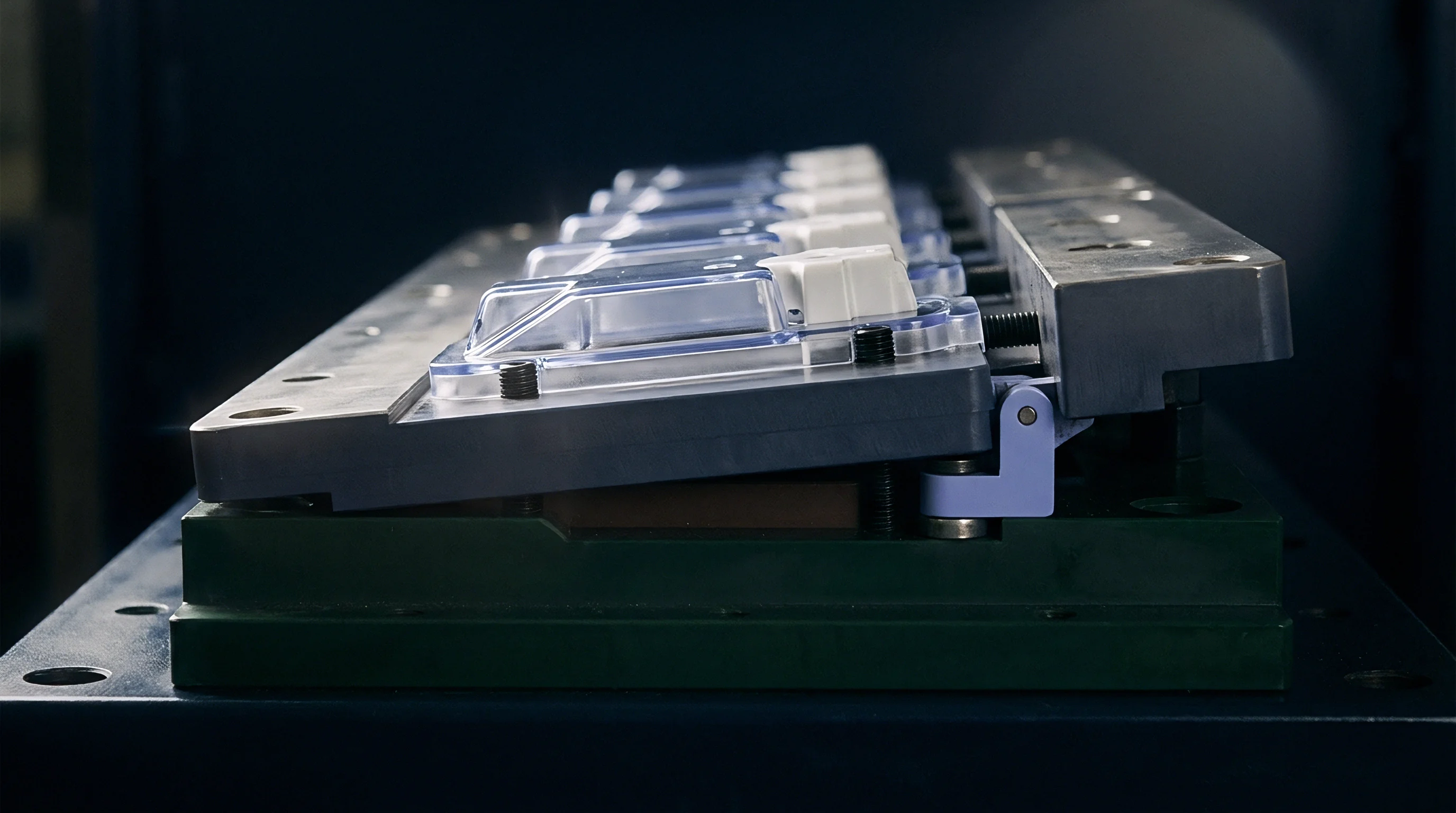
Judicial officers inspecting an insolvent production facility look for overt visual markers of third-party title before granting property release. Stamping an internal cavity block with an invisible CAD part number fails to provide legal notice to an administrator. The tool requires an anodized aluminium or stainless steel plaque riveted permanently to the operator-side clamp plate and the ejector housing.
The plaque specifies the legal name of the true owner, contact details, the master asset inventory code, and an explicit declaration that the die remains property of the named entity and cannot be pledged, encumbered, or detained by any party. Toolroom audits verify these plaques during every preventative maintenance cycle. Plaques establish clear visual notice.
Field engineers photograph the tool mounted inside the press, logging press serial numbers, GPS factory coordinates, and plaque conditions into the global tooling dossier.
Registry searches reveal prior liens. Before shipping an expensive multi-cavity tool across international boundaries, sourcing managers perform asset registry searches against the subcontractor in their domestic jurisdiction. If searches reveal existing blanket enterprise mortgages, the tooling stays offsite until the lender issues an executed waiver and partial release.
Physical evidence of third-party title prevents an insolvency administrator from inventorying consignment steel among debtor liquidation assets.
An express lien waiver clause declaring that the subcontractor holds the mould strictly as a temporary bailee without possessory pledge rights bars the plant receiver from encumbering the asset.