Meaning
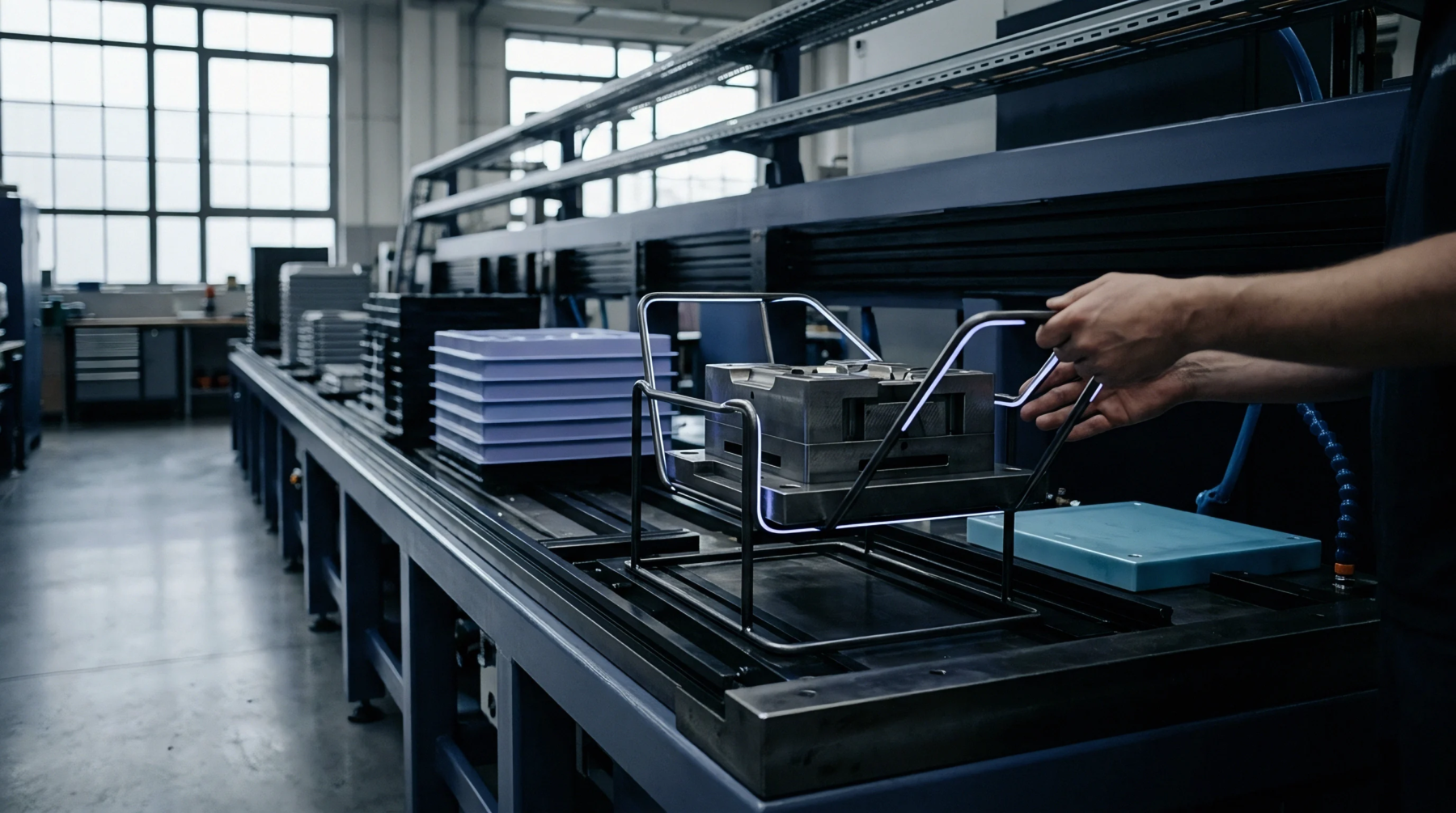
Fluid-powered mechanical actuation systems integrated into injection moulds drive sliding steel cores into and out of part cavities prior to ejection. Core pull hydraulics create undercut geometry and transverse holes that cannot be demoulded through simple tool opening motion. Hydraulic cylinders mounted on tool plates move core pins in synchronized sequence controlled by the injection moulding machine interface.
Improper timing causes catastrophic tool collisions and severe damage to core slides.
Actuation Mechanics
Pressurized fluid units deliver precise mechanical force to actuate heavy slides inside complex injection tooling. Utilizing core pull hydraulics allows moulders to produce complex technical components such as automotive intake manifolds and pipe fittings. Position sensors verify full core retraction before the machine ejector pin plate advances.
Pressure drops during the hold phase can cause core movement, resulting in dimensional flash or thick wall sections.
Sequence Integration
Timing parameters configured on the press controller synchronize fluid pressure with mould opening and closing phases. Operating core pull hydraulics requires dedicated directional control valves and high-pressure hydraulic lines connected to the tool interface. Process engineers set limit switch positions to ensure cores seal tightly against cavity walls during high-pressure injection.
Inadequate hydraulic force permits melt pressure to blow back the slide, forming heavy flash on finished parts.
Hydraulic Maintenance
Cylinder seals and moving slide wear plates require routine inspection to prevent hydraulic fluid leaks inside tool cavities. Fluid contamination from leaking core pull hydraulics ruins resin charges and causes severe stress cracking in polycarbonate parts. Toolmakers apply specialized high-temperature lubricants to sliding surfaces to prevent galling under continuous production cycles.
Scheduled maintenance preserves dimensional accuracy across high-volume production runs.