Active Core Micro Moulding Resonator Dimensional Control
Active core micro moulding controls resonator dimensions by displacing sub-micron pins during fill, suppressing volumetric sink and frequency drift.
Stroke
Micro-injection moulding of acoustic and radio-frequency resonators demands positional repeatability below one micrometre across feature depths often thinner than fifty micrometres. Fixed-cavity tooling routinely fails this threshold because volumetric shrinkage in high-flow engineering polymers varies with minor thermal oscillations across production runs. Dynamic core actuation circumvents rigid cavity constraints by altering the boundary geometry during the filling and packing phases.
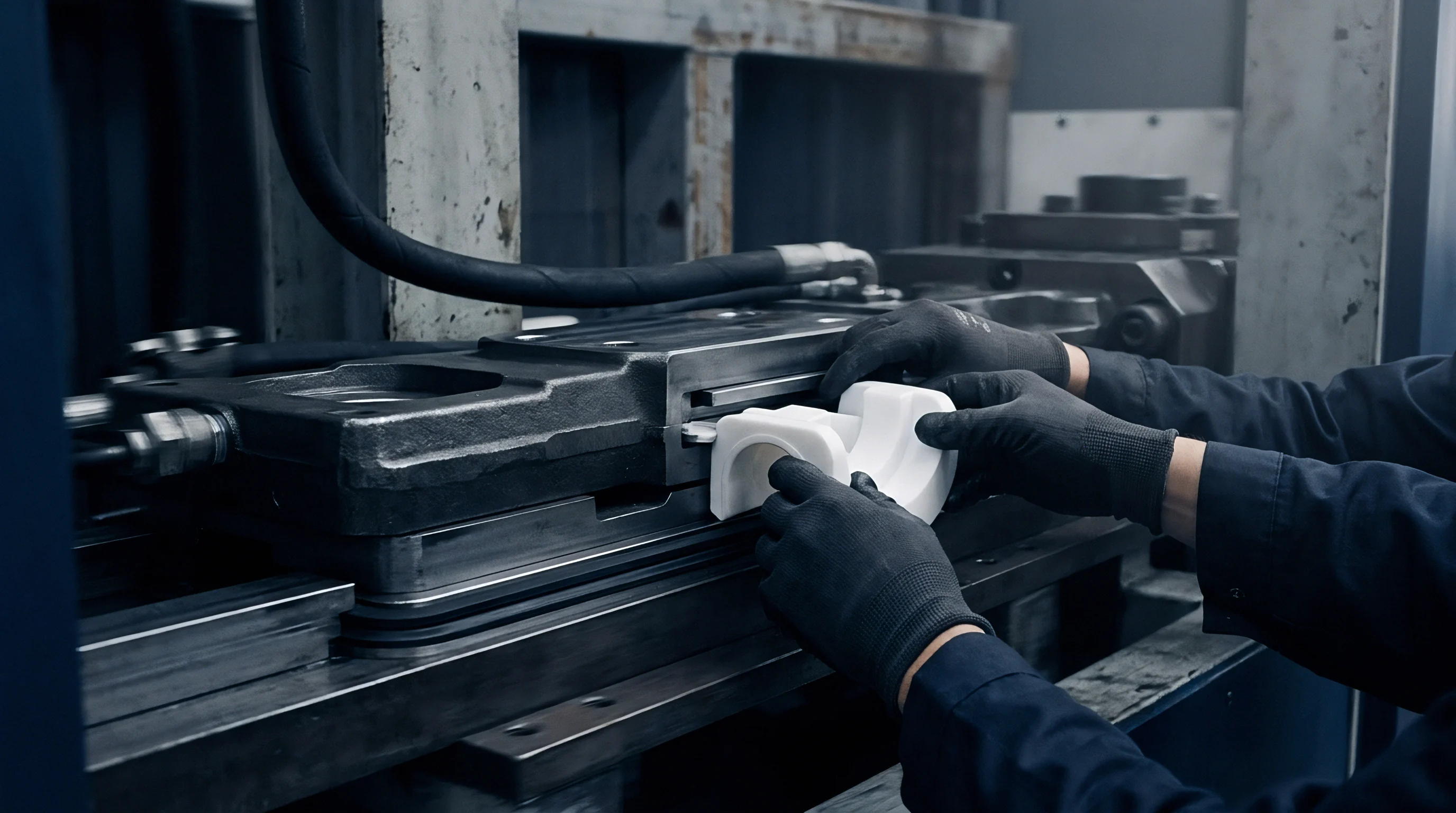
Piezoelectric or high-speed servo-electric actuators drive core pins with sub-micron resolution inside the tool plate assembly. The actuator advances or retracts the pin while the polymer melt remains above its glass transition temperature, directly governing the resonant cavity volume.
Precision displacement of the active pin alters both the local cavity pressure and the frozen skin formation rate. Setting the displacement profile requires coordination with the screw injection velocity. Ultrasonic transducers embedded directly behind the active pin register the acoustic impedance changes as the advancing melt front touches the pin face.
Upon contact, the control loop triggers an incremental secondary forward stroke. That secondary displacement compacts the core region, collapsing localized micro-voids without demanding excessive hydraulic pack pressure from the machine barrel.
A secondary core advance of two micrometres applied within four milliseconds of cavity contact suppresses volumetric sink across thirty-micrometre resonator diaphragms.
Resonator performance hinges on mechanical stiffness and acoustic velocity. The table below outlines achievable operational tolerances when deploying active core actuation across common resonator polymer candidates under micro-moulding conditions.
| Polymer Substrate | Nominal Wall (µm) | Actuator Stroke (µm) | Stroke Speed (mm/s) | Dimensional Variance (± µm) | Resonant Frequency Drift (%) |
|---|---|---|---|---|---|
| Liquid Crystal Polymer (LCP) 30% Glass | 45 | 12 | 120 | 0.35 | 0.12 |
| Polyetheretherketone (PEEK) Unfilled | 60 | 18 | 85 | 0.60 | 0.28 |
| Cyclic Olefin Copolymer (COC) Optical Grade | 80 | 22 | 60 | 0.45 | 0.19 |
| Polyoxymethylene (POM) High Flow | 50 | 15 | 100 | 0.80 | 0.41 |
Cycle stability depends on mechanical synchronization. If the secondary actuation begins fifty milliseconds late, the polymer vitrifies before achieving full densification. The resulting freeze-off produces uneven internal stresses, skewing the acoustic resonant modes and generating high scrap rates during final frequency testing.

Rheology
Viscous heating dominates polymer behaviour when forcing molten resin through micro-scale runner gates into a resonator cavity. Shear rates frequently exceed one hundred thousand reciprocal seconds inside runner diameters smaller than three hundred micrometres. At these velocities, non-Newtonian shear thinning lowers apparent viscosity, allowing fluid ingress into tight geometries.
The thermal mass of the tool steel rapidly pulls enthalpy out of the melt, competing directly against shear-induced heat generation. The frozen layer grows outward from the chilled mould wall within milliseconds, choking the flow passage before nominal pack pressure reaches the functional resonator features.
Managing this narrow processing corridor necessitates dynamic wall manipulation. Core pins driven by micro-positioning drives provide targeted pressure right where the flow channel constricts. Conventional micro-moulding machinery struggles to meter shot volumes below five milligrams consistently via screw recovery alone.
Modulating the effective cavity volume during injection provides the primary volumetric metering mechanism.
Does Viscous Dissipation Interfere with Dynamic Pin Timing?
Thermal gradients across micro-cavities distort theoretical fill predictions. Melt front temperature measurements reveal that extreme shear elevates local resin temperatures thirty degrees above barrel setpoints right at the gate entrance. Rapid cooling takes over instantly as the stream enters the main resonator chamber.
Active pins respond by adjusting their retraction rate to compensate for real-time viscosity variations.
Polymer morphology dictates response dynamics during core displacement. Molecular orientation aligns along the primary flow vectors, generating anisotropic elastic moduli across resonator membranes. Liquid crystal polymers display extreme orientation sensitivity.
The rigid rod-like polymer chains align parallel to the micro-mould walls under high shear, generating high longitudinal stiffness alongside low transverse compliance. An active pin descending across the flow direction disrupts this alignment, redistributing polymer chains and equalizing biaxial acoustic propagation velocities.
A moulder will routinely argue that raw barrel temperature alone resolves short shots in high-aspect micro-ribs.
Tool setters cannot compensate for frozen runner channels by raising nozzle temperatures. Excessive heat degrades resin molecular weight, causing acoustic damping losses in the final component.
Deflection
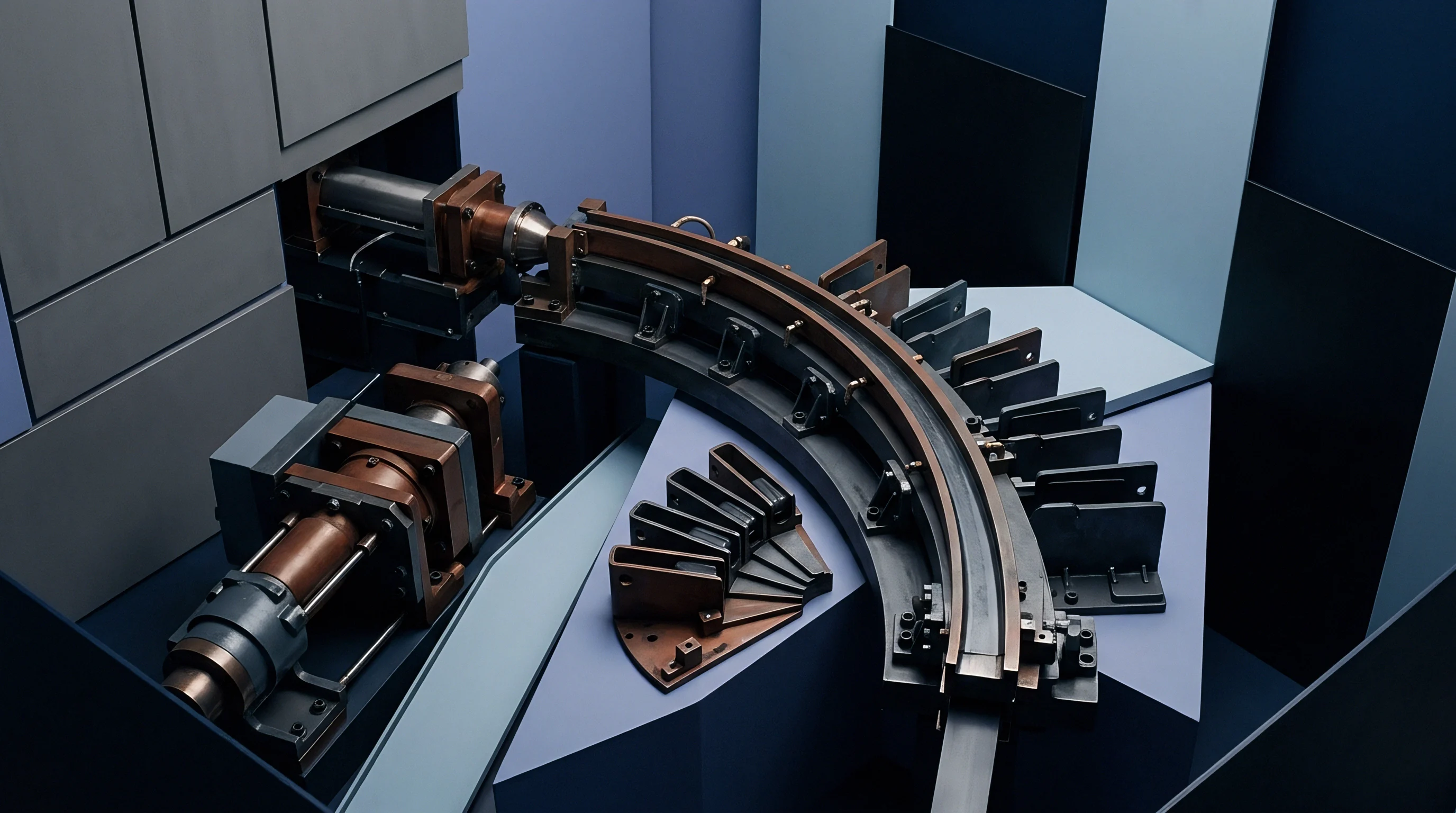
Cavity pressures generated during micro-injection cycles generate tremendous force concentrations over small contact surfaces. Peak internal pressures regularly surpass one hundred fifty megapascals inside the resonator formation zone. A pin measuring five hundred micrometres in diameter experiences axial compressive loads sufficient to induce physical elastic compression of its supporting shank.
Elastic compression within the mechanical stack creates dimensional error in the finished component.
Actuator mount rigidity governs final part accuracy. Tool designers balance actuator thermal isolation against mechanical coupling stiffness. Piezoelectric ceramics exhibit high compressive stiffness along their operational axis, yet shear loads or bending moments cause rapid mechanical failure.
Guiding bushings must maintain coaxial clearances under two micrometres to prevent radial play while accommodating cyclic operational temperatures up to one hundred eighty degrees Celsius.
- Mechanical preloading blocks hold the piezoelectric stack under twenty megapascals of permanent compression to suppress tensile stress during rapid retraction phases.
- Decoupling flexure hinges isolate the fine micro-pin from parasitic radial expansion caused by tool block thermal differentials.
- High-bandwidth quartz force links monitor dynamic cavity reaction force at twenty kilohertz sampling frequencies to detect melt front arrival.
- Thermal barrier collars manufactured from low-conductivity ceramics shield the drive ceramics from barrel radiation and heated tool plates.
Pin deflection alters membrane thickness profiles. A three-micrometre pin stem bending under asymmetric melt entry produces an uneven membrane profile, shifting primary resonant peaks and exciting unwanted parasitic modes across the acoustic spectrum.
Dynamic back-pressure control counters injection deflection. When the melt hits the pin face, the actuator delivers an opposing displacement stroke rather than remaining passive. The servo amplifier outputs high instantaneous current, holding pin coordinates rigid against the incoming hydraulic surge.
Piezoelectric hysteresis introduces minor positioning drift across extended automated shifts. Charge-based control amplifiers mitigate this drift, replacing voltage-mode drivers to suppress positioning errors below fifty nanometres.
DIN 16742 Group 1 tolerance limits do not account for mechanical tool steel deflection under micro-cavity pressures above one hundred megapascals.
Uncertainty persists regarding whether closed-loop capacitive distance sensing directly at the micro-pin face can survive millions of continuous cycles in abrasive glass-filled resin environments without signal degradation.

Toolroom
Fabricating active core micro-moulds tests the outer limits of modern subtractive machining. Hardened tool steels like AISI H13 and powder metallurgy grades like Uddeholm Elmax require heat treatment to fifty-six Rockwell C before final feature cutting. Finishing resonator cavities involves diamond micro-milling and precision wire electrical discharge machining using brass wires twenty micrometres in diameter.
Tool clearances between moving core pins and stationary cavity plates must hold below one and a half micrometres. Larger clearances invite polymer melt ingress, forming microscopic flash that jams active sliding mechanisms within dozen cycles.
The manufacturing procedure follows a strict dimensional qualification sequence. Grinding the core pin blanks establishes absolute runout control before micro-machining the critical forming tip.
- Cylindrical blanks undergo centerless grinding to three millimetres outside diameter with radial runout held within two hundred nanometres.
- The tip geometry receives focused ion beam machining or micro-EDM to define the resonator acoustic cavity step pattern.
- Sleeve bores are wire-EDMed, followed by precision diamond paste lapping to achieve mirror surface roughness below Ra ten nanometres.
- Actuator mounting pockets are jig-ground directly into the hardened ejector base to establish mechanical squareness relative to the main guide pillars.
- The assembled core assembly undergoes bench testing under an optical white-light interferometer to calibrate actuator voltage against mechanical displacement.
Thermal management within the tool block demands meticulous planning. Active piezoelectric actuators generate waste heat during continuous high-frequency operation. Left unchecked, that internal energy expands the actuator stack, shifting the zero-point datum of the forming pin.
Conformal cooling channels vacuum-brazed into the tool inserts carry temperature-stabilized oil within two millimetres of the moving core sleeve. Coolant temperature variation must stay within zero point two degrees Celsius across thirty-second production cycles to maintain dimensional stability.
A thermal shift of half a degree Celsius across a forty-millimetre tool insert induces three hundred nanometres of linear expansion.
Quality documentation forms the commercial foundation of tool acceptance. Procurement contracts must mandate compliance with ISO 20753 specimen preparation procedures and explicit verification of core pin alignment under full thermal operating load, preventing suppliers from validating tools purely at ambient room temperatures.
Ledger
Financial commitment to active core tooling carries front-loaded capital risk alongside substantial operational gains. Standard multi-cavity micro-moulding tools cost between thirty thousand and sixty thousand dollars for simple, passive components. Integrating multi-axis piezoelectric micro-actuation, load-cell instrumentation, high-speed controller cards, and sub-micron lapped guide systems escalates upfront tooling expenses into the range of one hundred twenty thousand to two hundred thousand dollars for a four-cavity development tool.
Tool amortization models depend on scrap reduction to justify this significant initial outlay.
High-frequency polymer resonators command premium pricing in telecom and medical diagnostic fields, yet standard manufacturing scrap rates hover between fifteen and thirty percent under fixed-cavity processing. Active core tooling suppresses parts rejection below two percent by driving post-gate dimensions inside critical acoustic tolerances. The economic viability hinges entirely on production volume and cavity count balance.
| Cost Component | Passive Tool (8-Cavity) | Active Core Tool (4-Cavity) | Variance Impact |
|---|---|---|---|
| Initial Tooling Capital Expenditure | $65,000 | $160,000 | +$95,000 Initial Commitment |
| Actuator and Sensor Replacement Reserve | $0 | $24,000 | +$24,000 Lifecycle Maintenance |
| Cycle Time per Shot | 4.2 s | 3.6 s | -0.6 s Dynamic Packing Benefit |
| Machine Hourly Rate (50-Tonne All-Electric) | $45.00/hr | $55.00/hr | +$10.00/hr Controller Overhead |
| Unprocessed Scrap Rate | 22% | 1.8% | -20.2% Part Reject Volume |
| Net Unit Part Cost at Break-Even Volume | $0.142 | $0.098 | -$0.044 Landed Unit Savings |
Cycle times shrink because active pin displacement replaces conventional long hydraulic pack phases. Rather than waiting for the entire runner system to cool while holding thirty megapascals of barrel pressure, the active pin seals and densifies the resonator membrane locally. The mould opens the moment the membrane skin solidifies, trimming tenths of a second off every cycle.
Across millions of parts, fractional seconds compound into significant press-hour reductions.
Wear costs balance cycle gains. Piezoelectric stacks experience mechanical fatigue after approximately ten million displacement cycles under full compressive load. Tooling budgets require planned reserve funds to replace actuator modules every twelve to eighteen months during high-volume production.
Spare core assemblies must sit inventory-ready in the press room to prevent weeks of machine downtime when a sub-micron pin galls.
Tooling capital determines long-term margin. Stable dimensions eliminate secondary frequency trimming operations downstream. Active steel pays for itself whenever scrap drops faster than actuator maintenance accumulates.