Uniform Commercial Code Filing Mechanics for Production Mould Assets at Contract Moulders
File precautionary UCC-1 statements and fasten engraved steel asset tags before shipping production moulds to contract processors.


Perfection
Tooling packages routinely represent six-figure commitments before the first qualified production shot leaves the press. When an original equipment manufacturer pays for an injection mould, title vests in that buyer by contract. Possession, conversely, transfers immediately to the contract moulder whose press platen receives the steel.
That split between legal title and physical custody generates immediate legal exposure under Article 9 of the Uniform Commercial Code. Commercial lenders holding blanket security interests over the contract moulder view presses, ancillary chillers, and resident moulds as debtor collateral. Without a public filing on record, the true owner stands in the exact legal posture of an unperfected creditor.
Article 9 treats true bailments differently from credit transactions, yet commercial practice ignores that distinction when a moulder enters insolvency. Secured lenders assert that undocumented tooling constitutes equipment of the debtor. Section 9-505 provides a specific statutory mechanism to eliminate this hazard.
An equipment owner files a financing statement using the alternative terms consignor, bailor, or owner instead of secured party, while naming the moulder as consignee, bailee, or debtor. The filing alerts all subsequent creditors that the tooling is third-party property, establishing priority without conceding that the transaction represents a financing arrangement.
Filing occurs in the jurisdiction of the moulder’s legal formation rather than the physical location of the moulding facility. A contract moulder operating forty presses in Ohio may hold Delaware corporate registration. A filing placed with the Ohio Secretary of State under that circumstance confers zero protection against a bankruptcy trustee.
The baseline rule directs the UCC-1 financing statement to the central filing office of the debtor’s state of incorporation.
| Filing Element | Statutory Rule | Operational Risk | Corrective Filing Method |
|---|---|---|---|
| Debtor Identification | UCC Section 9-503 exact public record name | Trade names render the filing ineffective against searchers | Extract entity name verbatim from certified formation charter |
| Filing Location | UCC Section 9-301 debtor corporate domicile | Filing in press physical location produces complete loss of perfection | File UCC-1 in jurisdiction of debtor entity registration |
| Asset Classification | UCC Section 9-102 commercial equipment classification | Vague category references invite lender challenges during liquidation | Specify discrete tooling assets with serialised identification |
| Protective Terminology | UCC Section 9-505 precautionary bailment election | Lender characterises mould delivery as unsecured seller financing | Designate parties as Bailor and Bailee on face of statement |
Timing governs every outcome in commercial disputes. Filing a precautionary financing statement thirty days after steel lands on the supplier’s shop floor leaves a thirty-day window where an intervening bank lien attaches to the mould. The owner files the UCC-1 prior to the mould crossing the toolroom threshold.
Doing so insulates the tooling asset against pre-existing blanket liens held by the moulder’s working-capital lenders.
Purchase Money Security Interest rules provide an additional protective mechanism under Section 9-324. When a buyer finances tooling through progress payments credited against initial piece prices, the arrangement resembles vendor credit. Perfection under purchase-money provisions grants super-priority over prior floating liens, provided the buyer perfects the filing before the moulder takes physical delivery of the tool.
Contract language reinforces this perfection structure. A master tooling bailment agreement establishes that physical delivery conveys only a revocable, non-exclusive license to operate the mould for the owner’s parts: “Bailor retains absolute title to all specified mould assemblies, cores, inserts, and replacement components, and Bailee executes this agreement solely as a gratuitous bailee without proprietary or transferable rights in the tooling.”

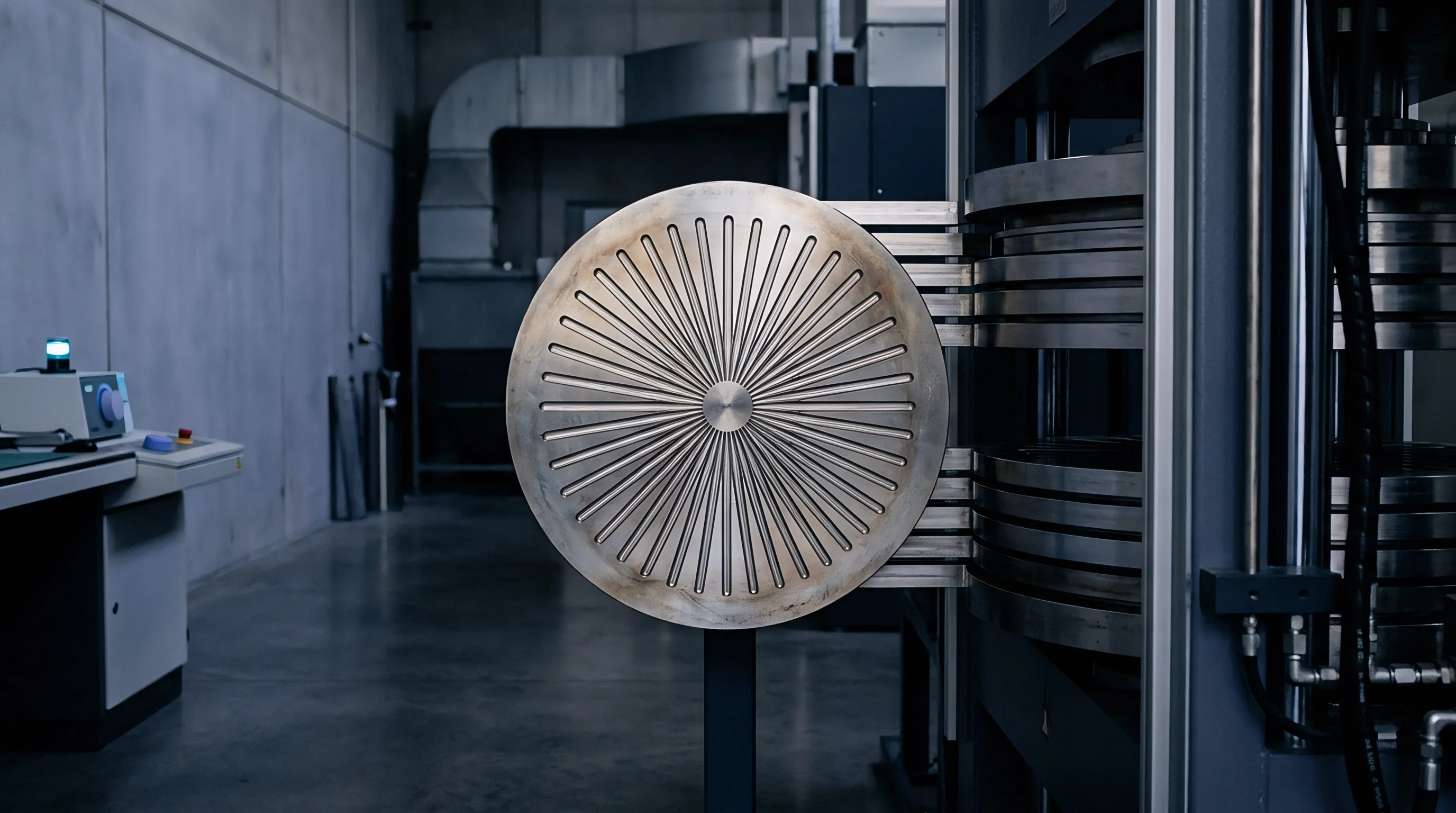
Plate
Physical stamping provides the evidentiary bridge between an abstract state filing and four thousand kilograms of hardened H13 tool steel. A UCC-1 financing statement describing an injection mould as a four-cavity automotive fascia tool remains vulnerable if three similar tools run on adjoining presses. Secured lenders and court-appointed receivers do not cross-reference CAD files or cooling circuit schematics during an asset seizure.
They look directly at the steel.
The physical identification plate attached to the tool clamp plate establishes legal notice before an inventory auditor enters the shop floor.
Asset tags fastened with standard adhesive fail rapidly under typical injection shop conditions. Oil mist, thermal cycling between ambient and eighty degrees Celsius, and high-pressure chemical washes disintegrate vinyl and foil labels within weeks. Toolmakers mill a recessed pocket directly into the non-operator clamping plate.
A stainless steel data plate mechanically fastens into that pocket with rivets or blind screws, protected from machine tie bars, crane chains, and overhead hoists.

Which Information Belongs on the Tool Tag?
The tag provides indisputable notice of ownership to any third party inspecting the mould. Incomplete markings create evidentiary ambiguity that court receivers exploit to delay asset release.
- Asset Title Holder names the true legal owner entity exactly as listed in the corresponding state UCC-1 financing statement.
- Secretary Of State Registration Number matches the filed financing document and identifies the filing state registry.
- Discrete Mould Serial Number establishes unique identity alongside core and cavity block serialisations.
- Dedicated Bailment Notice states flatly that the mould constitutes bailor property and cannot be pledged, encumbered, or transferred by the possessor.
Parting lines carry their own operational identification. Toolmakers stamp serial numbers across split lines, slides, and interchangeable cavity inserts. When a mould features multiple inserts producing left-hand and right-hand variants, untagged inserts left on a workbench risk inclusion in a bankrupt moulder’s general auction.
Every loose shut-off plate, hydraulic cylinder core pull, and hot runner manifold control box warrants matching serial numbers.
| Marking Method | Attachment Technique | Substrate Durability | Legal Defensibility |
|---|---|---|---|
| Milled Recessed Steel Tag | Blind drive screws in 1.4301 stainless steel | Impervious to cleaning solvents and operating temperatures up to 400 C | Conclusive evidence of visible third-party property notice |
| Laser Engraved Steel Pocket | Direct ablation onto P20 or H13 mould base | Permanent surface relief withstands mechanical contact and fluid exposure | Irrefutable physical integration with primary mould steel |
| Aluminium Dot Peen Plate | Pop rivets into tapped mould base pockets | Susceptible to corrosion from glycol chilling leaks over extended service | Acceptable if serialisation remains legible across full production life |
| Adhesive Mylar Label | Pressure-sensitive chemical backing | Fails under standard mould grease and hydraulic oil exposure | Low standing; receivers routinely disregard damaged or loose stickers |
Suppliers sometimes resist mechanical plates, arguing that client plates confuse internal maintenance records and that shop floor tracking relies entirely on local barcodes.
Priority
Tooling disputes rarely involve only the buyer and the supplier. A moulder sliding toward receivership brings landlords, asset-based lenders, tax authorities, and payroll claims into direct competition for plant equipment. Commercial banks holding floating liens over personal property claim all equipment inside the facility under after-acquired property clauses.
When an owner neglects a UCC-1 filing, the bank’s blanket lien attaches to the unperfected mould the moment the crane sets it down.

Why Priority Battles Expose Unfiled Buyers?
Possession creates a rebuttable presumption of ownership under state commercial codes. When a senior lender forecloses, its recovery agents seize the entire production floor. An unfiled tooling owner bears the expensive burden of proving that unplated, unfiled steel belongs to an external buyer rather than the debtor.
Proving true ownership through purchase orders, cancelled checks, and engineering change notices takes months in bankruptcy courts, during which the customer faces assembly line shutdowns.
Statutory moulder liens introduce another structural risk. More than thirty states maintain specific moulder lien statutes, such as the Michigan Special Tools Lien Act. These statutes give contract processors an automatic, possessory lien over customer tooling for unpaid part manufacturing invoices, maintenance costs, and resin payments.
Moulder liens frequently take priority over prior perfected UCC filings, depending on state statutory language.
Section 9-333 of the Uniform Commercial Code preserves possessory artisan liens ahead of previously perfected security interests unless the local statute explicitly directs otherwise.
Consider a practical exposure band. An automotive Tier 2 moulder runs a sixteen-cavity hot-runner tool producing polyoxymethylene pump housings. The tool represents a 180,000 dollar steel investment producing 40,000 parts monthly at 1.42 dollars per shot.
The moulder accrues 85,000 dollars in unpaid part deliveries and utility arrears before declaring bankruptcy. If the tooling owner failed to file a precautionary UCC-1, the moulder’s senior bank locks the facility and claims the 180,000 dollar asset to offset a 2,000,000 dollar revolving line of credit. If the owner filed correctly, the bank’s blanket lien yields to the bailment filing, yet the moulder’s statutory possessory lien remains active for the 85,000 dollar fabrication balance.
- Execute Master Tooling Agreement with explicit bailment covenants before paying tooling advance invoices.
- Conduct State Level Debtor Search to map existing blanket liens held by the moulder’s institutional lenders.
- File Precautionary UCC-1 identifying specific tool assemblies prior to shipping or toolroom transfer.
- Issue Lender Subordination Letters securing written acknowledgments from the moulder’s banks confirming zero interest in client steel.
- Maintain Escrow Release Logs matching milestone wire transfers to tool drawing approvals and physical serial numbers.
Lender subordination letters eliminate inter-creditor friction before disputes ignite. A disciplined buyer insists that the moulder’s commercial lender sign a short waiver acknowledging that client tooling, identified by serial number and customer tag, stands exempt from any bank lien. Banks execute these waivers routinely during ordinary solvency periods.
Securing that signature during a distress phase proves impossible.
Skipping precautionary filings allows third-party creditors to auction proprietary tooling to competitors at cents on the dollar, terminating active product supply lines without legal recourse.

Recovery
When a contract moulder ceases operations, extracting the steel becomes an urgent field operation. Machine platens cool, hydraulic lines vent, and plant gates lock. A secured party holding a perfected interest possesses statutory rights under UCC Section 9-609 to take possession of collateral upon default.
Exercising those rights requires disciplined execution to prevent plant landlords or bailiffs from claiming trespassing violations.
Judicial replevin remains the formal path when a defaulting moulder refuses peaceful surrender. An owner files a replevin petition in local county court, presenting the master bailment agreement, paid tool invoices, the stamped inspection acceptance, and the certified UCC-1 filing receipt. The court issues a writ of replevin, directing the county sheriff to enter the premises, secure the specified assets, and oversee physical extraction onto the owner’s rigging trucks.
Under UCC Section 9-609, repossession proceeds without judicial process only when extraction avoids breaching the peace.
Self-help repossession carries practical constraints. Removing a mould bolted between the platens of a 500-tonne press requires professional rigging, proper overhead crane operation, and safe handling of hot runner temperature controllers, hydraulic core pull units, and chiller hoses. Rushing a recovery without proper rigging damages tool alignment pins, parting lines, and delicate core details.
| Physical Checkpoint | Extraction Action | Documentation Requirement | Failure Hazard |
|---|---|---|---|
| Clamp Plate Bolting | Verify complete extraction of half-dog clamps and platen bolts | Photograph open platens after mechanical release | Craning against engaged bolts tears platen threads and bends tool rails |
| Hydraulic Core Pulls | Disconnect and cap manifold lines, locking slides in park position | Record mechanical slide lock pin engagement | Slide shifts during transit, crushing internal core pins |
| Hot Runner Manifolds | Secure zone wiring harnesses and temperature sensor conduits | Inventory separate hot-runner control consoles | Severed sensor leads generate multi-week electrical rebuilds at new moulder |
| Cavity Surface Preservation | Apply industrial rust inhibitor and install physical transport locks | Log signed handover inspection report with rigger | Condensation during warehouse storage produces pit corrosion across optical finishes |
Bankruptcy changes the extraction dynamic immediately. When a debtor files a voluntary Chapter 11 petition, Section 362 of the United States Bankruptcy Code imposes an automatic stay. The stay freezes all creditor actions, including pending replevin actions, crane extractions, and UCC enforcement.
An owner cannot simply unbolt steel once the bankruptcy petition lands.
Recovering assets under an automatic stay demands filing an emergency motion for relief from stay in federal bankruptcy court. The motion establishes that the debtor holds bare possessory interest without equity in the tooling, that the asset suffers continuous depreciation or physical threat, and that client production faces catastrophic harm. Bankruptcy judges grant relief far faster when presented with a pristine UCC-1 precautionary filing, clear serialised asset plates, and fully paid procurement receipts.
Unbolted steel moves smoothly only when legal priority matches physical custody.

Audit
Perfection is not a permanent condition. Section 9-515 sets the statutory life of a UCC-1 financing statement at exactly five years from the filing date. Long-running production programmes, such as those in medical equipment or aerospace assemblies, routinely span seven to twelve years across initial volume and aftermarket service runs.
A financing statement lapses automatically on its five-year anniversary unless the secured party files a UCC-3 continuation statement within the six-month window preceding expiration.
Filing a UCC-3 too early produces a legal nullity. Submitting a continuation seven months before the expiration date renders the document void in most jurisdictions. Filing one day after the five-year deadline causes the original perfection to lapse entirely.
Once lapsed, perfection ceases retroactively against other secured creditors who previously held subordinate positions. A junior bank lien then advances immediately to senior status.
The Michigan Special Tools Lien Act permits moulders to enforce possessory liens over customer equipment unless the customer issues written objection within ninety days of billing notices.
Physical verification matches legal maintenance. Operational auditors visit supplier facilities to verify that tools remain in assigned presses, tags remain legible, and preventative maintenance logs reflect agreed cavity life limits. Contract moulders occasionally sublet overflow production to secondary, unapproved facilities without notifying the asset owner.
Tool transfer to an unannounced contract shop breaks the territorial validity of state-level filings and introduces unauthorized third parties into physical possession.
Corporate restructuring creates silent traps. If the contract moulder merges into another operating entity, changes its registered corporate name, or reorganises from an Ohio corporation into a Delaware limited liability company, the original UCC-1 filing becomes misleading under Section 9-507. New assets acquired four months after such a name change fall outside perfection unless the owner files an amended UCC-3 statement within that statutory four-month window.
Cross-border asset deployment introduces foreign legal frameworks that do not acknowledge UCC mechanisms. Shipping production tooling to a manufacturing facility in Nuevo León, Mexico, or Suzhou, China, renders domestic UCC-1 filings legally inert. Mexican commercial courts recognise chattel mortgages and commercial pledges under the Ley General de Títulos y Operaciones de Crédito, requiring formal registration on the Registro Único de Garantías Mobiliarias.
Chinese plants operate under the Civil Code of the People’s Republic of China, demanding registration with the Credit Reference Center of the People’s Bank of China. Tooling owners transferring steel abroad must execute local security agreements compliant with host-nation statutes rather than relying on domestic state filings.
How state bankruptcy courts will ultimately reconcile overlapping artisan liens with cloud-monitored electronic injection telemetry remains an unsettled frontier in tooling asset recovery.