Cross Border Jurisdictional Enforcement of Production Tooling Repatriation in Insolvency and Default Scenarios
Cross-border tooling repatriation demands registered national bailment filings, rapid judicial relief from automatic stays, and verified customs discharge.


Title
Legal ownership of production tooling demands documented perfection long before steel touches an injection moulding machine platen. When an overseas tier-one supplier or contract moulder collapses financially, plant gates lock immediately. Secured creditors, liquidators, and local trade unions treat every piece of machinery inside the facility as bankruptcy estate inventory.
Establishing an unassailable legal barrier between the moulding contractor and your production assets requires dual-track operational discipline: explicit contractual bailment matched to formal statutory registration in the jurisdiction where the press physically runs.
Bailment structures separate asset ownership from manufacturing custody. A standard purchase order stating that tooling belongs to the buyer fails in cross-border disputes unless accompanied by an executed Tool Bailment Agreement. This agreement classifies the moulder as a bailee holding temporary custody solely to convert specified thermoplastic resins into finished goods.
The document identifies the tool by its unique asset number, original CAD drawing revisions, physical dimensions, steel chemistry, and cavity allocation. Retaining title on paper provides negligible protection if local statutes treat long-term machinery possession as presumptive evidence of corporate ownership.
A tooling bailment agreement specifying explicit owner title prevents the asset from falling into general bankruptcy distribution under local insolvency statutes.
Secured filings establish date precedence. In common law jurisdictions, perfection occurs through personal property security filings such as UCC-1 financing statements in the United States or PPSA registrations in Canada. Civil law manufacturing regions operate on distinct registries.
In Mexico, production moulds hosted under contract manufacturing arrangements demand registration on the Registro Único de Garantías Mobiliarias. In mainland China, equipment bailment interests require perfection on the Credit Reference Center of the People’s Bank of China. Failing to file in these national databases grants court-appointed receivers senior rights to liquidate the mould to satisfy outstanding vendor payroll or utility debts.
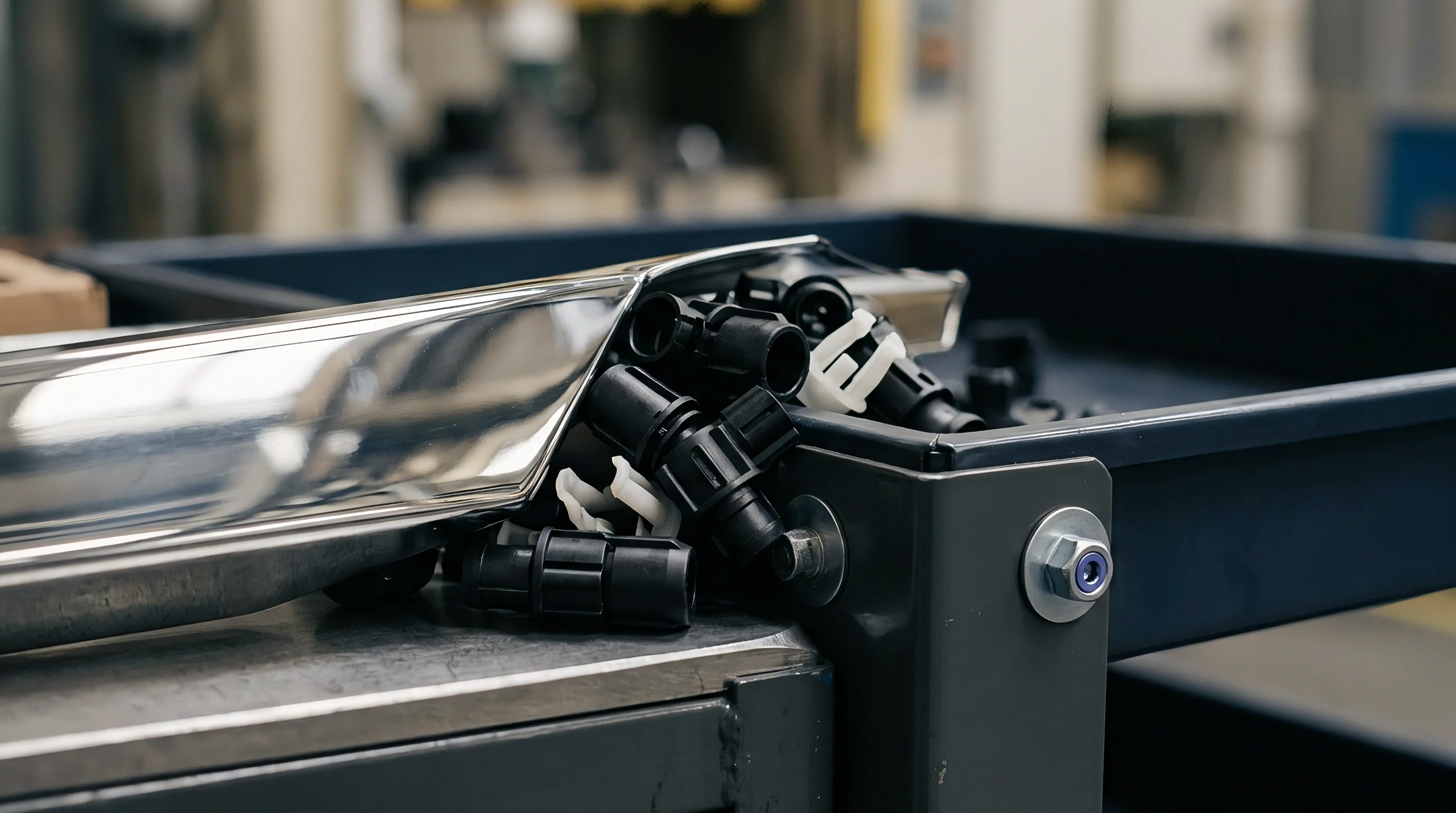
Mechanical Identification Meets Statutory Registration
Physical evidence of third-party ownership bridges the divide between national registries and the plant floor. Every production mould needs deep mechanical engraving directly into the outer surface of the clamping plates and mould base. A chemical-etched or laser-marked stainless steel asset placard mounted with non-reversible drive screws provides immediate visual confirmation to insolvency trustees.
Adhesive tags burn off during high-temperature processing of technical polymers such as polyetheretherketone or polyphenylene sulfide, leaving the tool bare and vulnerable to inventory seizure.
Photographic and technical documentation compiled during initial tool qualification establishes provenance. The initial dossier records cavity serialization, date stamps, cold runner gate geometries, and cooling circuit schematics. Coupling this physical dossier with stamped customs import receipts proves that the tool entered the foreign facility under temporary bailment rather than as a capital sale.
Receivers routinely exploit missing documentation to claim that an unidentified mould represents supplier-developed assets subject to liquidation.
| Jurisdiction | Statutory Registry System | Perfection Instrument | Priority Standard | Evidentiary Requirement |
|---|---|---|---|---|
| United States | State Uniform Commercial Code Filing | UCC-1 Financing Statement | First to file or perfect | Serial number and asset description |
| Mexico | Registro Único de Garantías Mobiliarias | RUG Electronic Filing Entry | Timestamp of registration | Bailment contract and pedimento aduanal |
| China | People’s Bank of China Credit Reference | Zhongdeng Net Movables Registry | First-in-time registration date | Mould contract and bilingual bailment pact |
| Germany | Handelsregister / Civil Code (BGB) | Eigentumsvorbehalt Bailment Deed | Delivery date and explicit title reservation | Engraved asset placard and inventory logs |

Security Interest Perfection across Civil and Common Law
Statutory classification systems handle production equipment through diverging procedural frameworks. Common law systems recognize purchase money security interests and simple bailment filings, granting the true owner priority over subsequent floating charges. Civil law codes prioritize physical possession, presuming that physical control equates to company property unless rebutted by registered legal deeds.
A foreign buyer attempting to assert title in a civil law jurisdiction without a registered security deed faces protracted judicial evidentiary hearings while production remains completely paralyzed.
Commercial registration numbers assigned during equipment importation create a public chain of custody. Matching the internal asset tag to the import declaration creates an irrefutable legal link. When insolvency strikes, the liquidator matches the machine base serial number against the national movables database.
Discrepancies of a single digit in a serial tag allow liquidators to impound the steel pending forensic appraisal.
Commercial Structuring of Amortisation against Ownership
Financial arrangements governing tooling costs dictate the vulnerability of the asset during supplier default. Tooling amortisation clauses, where the buyer repays mould fabrication costs across piece-part piece prices, create dangerous ambiguity. Until the final production piece clears and the final amortisation penny settles, the supplier’s balance sheet claims partial equity in the steel.
This fractional ownership gives insolvency receivers legal standing to block physical repatriation.
Direct capital purchase models establish absolute title from day one. Buyers protect operations by paying one hundred percent of tooling costs against milestone acceptance criteria: fifty percent at steel cutting, thirty percent at T1 dimensional qualification under DIN 16742, and twenty percent upon final production part approval. Amortisation structures save upfront capital expenditure but surrender legal clarity during insolvency.
Physical possession of an unencumbered asset remains the only posture that holds up under liquidation scrutiny.
- Certified Bill of Sale verifies that full cash consideration transferred directly from buyer to toolmaker before press mounting.
- Bilingual Bailment Agreement states unequivocally that the operating plant possesses zero equity or collateral rights in the physical hardware.
- Electronic Registry Confirmation establishes date-stamped public notice in national commercial databases prior to production startup.
- Customs Entry Pedimento links the specific serial number of the mould base to foreign owner tax identification codes.
A title reservation clause stating that physical possession conveys zero equity interest strips the tier-one supplier of balance sheet ownership rights upon first filing.

Freeze
The instant an overseas manufacturer petitions for bankruptcy reorganization, statutory insolvency moratoria snap shut around factory operations. In common law jurisdictions, the filing triggers an immediate automatic stay that bars all creditor actions, asset seizures, and contract terminations. Civil law regimes deploy equivalent judicial freezing orders to secure factory assets for orderly liquidation.
Physical security at the plant floor shifts overnight from friendly vendor staff to armed security firms or state-appointed bailiffs instructed to prevent any equipment from clearing the gatehouse.
Liquidators freeze plant floor assets. The administrator holds a fiduciary mandate to maximize the value of the debtor’s estate for the benefit of secured lenders, government revenue agencies, and unpaid workers. Your multi-cavity injection mould, sitting inside a five-hundred-tonne electric press, represents leverage.
Even when the administrator privately concedes that you hold ultimate legal title, the trustee routinely withholds physical release, demanding extraction ransoms disguised as storage fees, machine decommissioning surcharges, or lease settlement contributions.
Factory administrators routinely padlock plant bays to halt tool removals until outstanding utility and labor arrears clear the books.
Unregistered bailments face court seizure. When documentation contains flaws, the receiver assimilates the production mould into the debtor’s general liquidation pool under provisions like Article 30 of the PRC Enterprise Bankruptcy Law or Section 541 of the United States Bankruptcy Code. Retrieving the tool then demands formal adversary proceedings, turning a two-day physical transfer into an eighteen-month litigation war.
Meanwhile, automotive assembly lines or electronics distribution channels run dry.
Statutory Moratoria and Estate Property Claims
Judicial asset stays freeze active production schedules instantly. The court order halts ongoing cycle times, leaving resin degrading in heated barrels and parts half-formed in cavities. Moulders undergoing Chapter 11 reorganization or European administration possess legal authorization to reject executory supply contracts while retaining underlying tooling to demonstrate operational viability to potential corporate rescue buyers.
The tool owner cannot simply enter the plant and dismount the steel without facing severe civil and criminal contempt sanctions.
Exclusion petitions represent the standard legal weapon to puncture an insolvency moratorium. Known as a motion for relief from stay in common law or a droit de revendication / 取回权 (Qǔhuíquán) in civil jurisdictions, this petition asks the presiding judge to excise the tool from debtor property. Filing the petition requires proof of perfected title, evidence of default under the bailment agreement, and documented demand letters served prior to the bankruptcy petition date.
Possessory Retentions and Fabricator Lien Assertions
Local trade creditors assert possessory liens that clash directly with foreign asset title. In civil codes across Europe, Asia, and Latin America, commercial statutes provide artisan or fabricator liens (such as retención de bienes or liúzhìquán under Article 447 of the PRC Civil Code). These provisions grant a contractor legal authority to detain personal property currently in its custody until all outstanding debts owed by the property owner clear.
Moulders expand this concept by claiming that unpaid piece-part invoices or inventory obsolescence costs attach directly to the customer-owned mould base.
Subcontract toolmakers complicate possessory disputes. If your tier-one supplier outsourced the initial tool build to an independent toolroom and failed to settle final machining balances, the toolmaker retains physical custody of the mould or visits the moulding shop to register a possessory mechanic lien. The toolmaker argues that its labor enhanced the value of the steel, giving its artisan lien statutory seniority over the remote customer’s paper title.
- Commingled Part Debt Claims emerge when liquidators apply finished component arrears to the physical steel hosting the cavities.
- Subcontractor Non-Payment Liens freeze the toolroom when the tier-one assembler defaults on tool fabrication invoices.
- Facility Decommissioning Assessments appear as arbitrary invoices levied by building owners demanding cleanup funds before releasing hardware.
- Severance Indemnity Levies arise when local municipal labor bureaus block equipment departures until statutory worker severance pools fill.
Could Prejudgment Attachments Halt Plant Evacuation?
Emergency asset attachment orders filed by unpaid sub-tier suppliers can trap machinery during extraction. When news of an impending moulder collapse leaks onto the industrial estate, regional material vendors and local staffing agencies file ex parte petitions before local municipal courts. Judges unfamiliar with international supply contracts grant temporary asset freezing injunctions, stationing court clerks to affix paper seals across mould split lines and crane access doors.
These local court orders supersede contractual removal rights until formal evidentiary counter-hearings conclude.
Navigating attachment orders demands depositing financial counter-guarantees with the court. To free the steel from a municipal freezing order, the buyer places cash deposits or bank guarantees into court escrow equivalent to the disputed local claim. While paying counter-guarantees inflates immediate repatriation budgets, it breaks the plant-floor impasse, enabling crane crews to unbolt the mould while lawyers litigate the underlying commercial merits in separate legal sessions.
Failure to contest an administrative asset inventory within ten business days permanently surrenders the tooling to the bankruptcy pool for general creditor auction.

Hoist
Physical extraction of industrial production tooling transforms a legal dispute into an uncompromising rigging operation. When administrative clearance or an enforcement decree arrives, recovery teams must move quickly with industrial riggers, qualified toolmakers, and transport vehicles. Factory floors in distressed scenarios operate under volatile conditions.
Unpaid machine setters, stripped maintenance crews, and hostile site managers watch extraction teams closely. Every mechanical maneuver must adhere to established technical rigging standards to extract the tool undamaged.
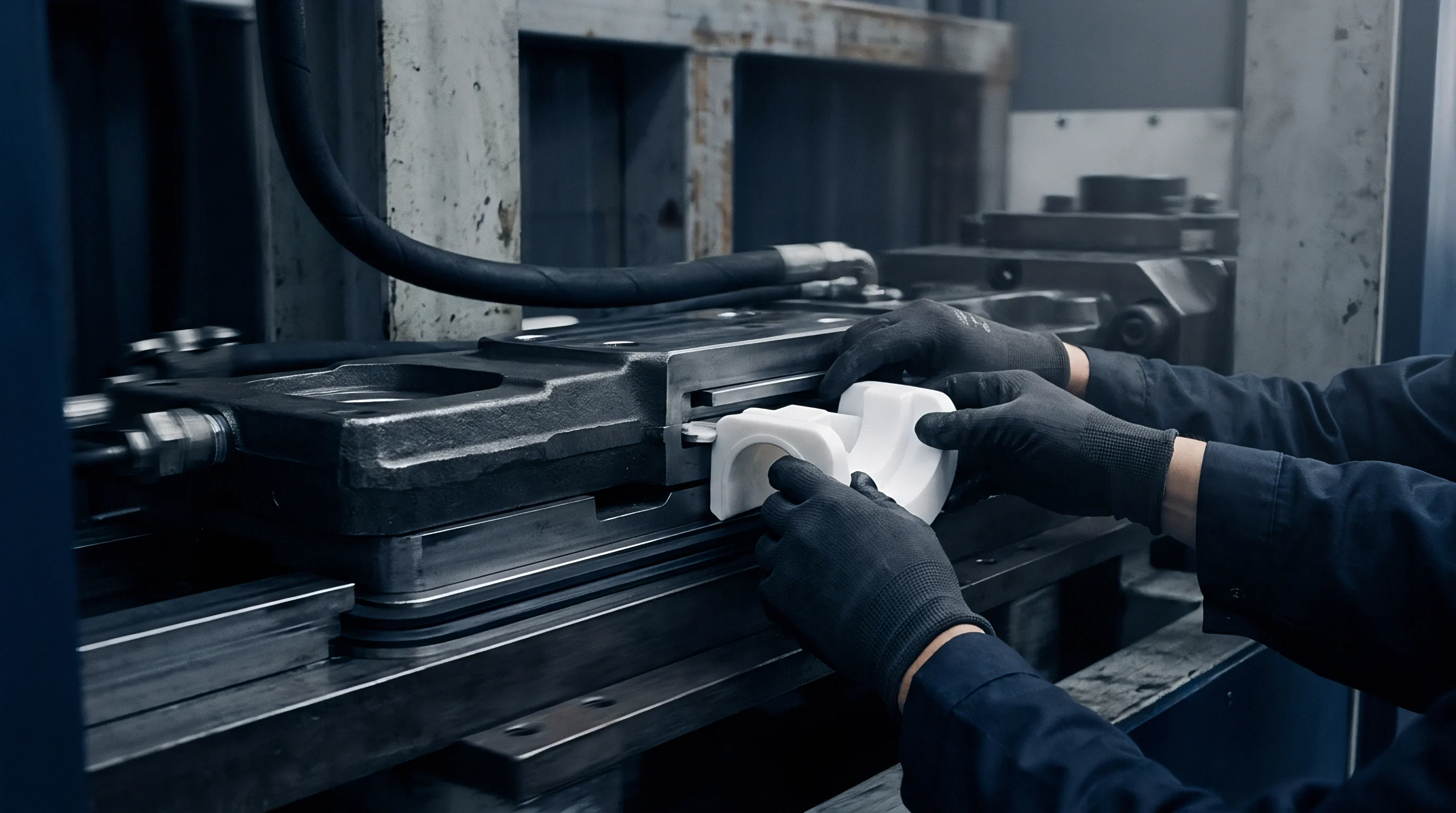
Rigging crews verify platen mounting configurations prior to lifting. Injection moulds ranging from five hundred kilograms to forty metric tonnes sit secured to machine platens via mechanical toe clamps, hydraulic clamping bars, or magnetic clamping interfaces. When hydraulic power to the host machine is severed due to plant utility shutoffs, disengaging automatic hydraulic clamps requires portable hand pumps or mechanical overrides.
Attempting to force an unreleased mould base using overhead crane power damages machine tie bars and deforms tool mounting plates, permanently destroying tool alignment tolerances under DIN ISO 286.
A 15-tonne injection mould requires four drop-forged M36 hoist rings rated at 7 metric tonnes each in a 45-degree sling geometry.
Overhead gantry crane capacities require immediate visual verification. In failing contract plants, facility maintenance logs are missing or falsified. Riggers check stamped crane hoist capacity plates against calculated tool mass before stringing slings.
If the plant overhead hoist cannot clear the shut height of the press platen, extraction teams position mobile hydraulic gantries or high-capacity forklifts rated for industrial rigging inside the press bay.

Press Demounting and Rigging Safety Protocols
Uncoupling a high-cavitation production tool demands a methodical technical sequence executed by experienced setters. The tooling mass calculation governs hardware selection. Take a 32-cavity automotive electrical connector mould with an overall shut height of 680 mm, width of 800 mm, and length of 1,000 mm, fabricated from 1.2311 (P20) pre-hardened steel.
Calculating the solid steel mass using a standard density of 7.85 tonnes per cubic meter yields approximately 4.27 metric tonnes. Factoring in a dynamic rigging safety factor of 2.0 to account for initial breakaway friction against platen locating rings and crane jerk demands rigging tackle rated for at least 8.54 metric tonnes.
Drop-forged swivel hoist rings with metric threads secure the lift. Fixed eye bolts induce catastrophic shear failure when angular side-loading occurs during platen extraction. Four M24 or M36 swivel hoist rings, torqued directly into tapped lifting holes on top of the clamping plates, distribute the load through a four-leg steel wire rope or grade-100 chain bridle.
The sling angle to the horizontal plane must remain greater than 45 degrees, as lower angles exponentially amplify internal vector forces on lifting hardware.
- De-energize Machine Power isolates all primary electrical feeds, auxiliary hydraulic power units, and pneumatic lines connected to core pulls.
- Purge Hot Runner Manifolds drives remaining molten resin from internal manifolds using manual screw purges or low-viscosity purging compounds before freeze-up.
- Disconnect Auxiliary Services uncouples high-pressure hydraulic core pull hoses, electrical thermocouple cables, and pneumatic valve gate lines from the mould junction box.
- Install Safety Transport Straps fastens thick mechanical steel retention plates across the parting line to lock the fixed and moving halves together rigidly.
- Disengage Platen Clamps loosens manual platen bolts or depressurizes hydraulic clamping cylinders holding the mould mounting flanges against the machine platens.
- Execute Controlled Crane Separation applies incremental hoist tension, guiding the tool locating ring cleanly out of the press platen bore without cocking the assembly.
Core Drainage and Toolroom Cavity Verification
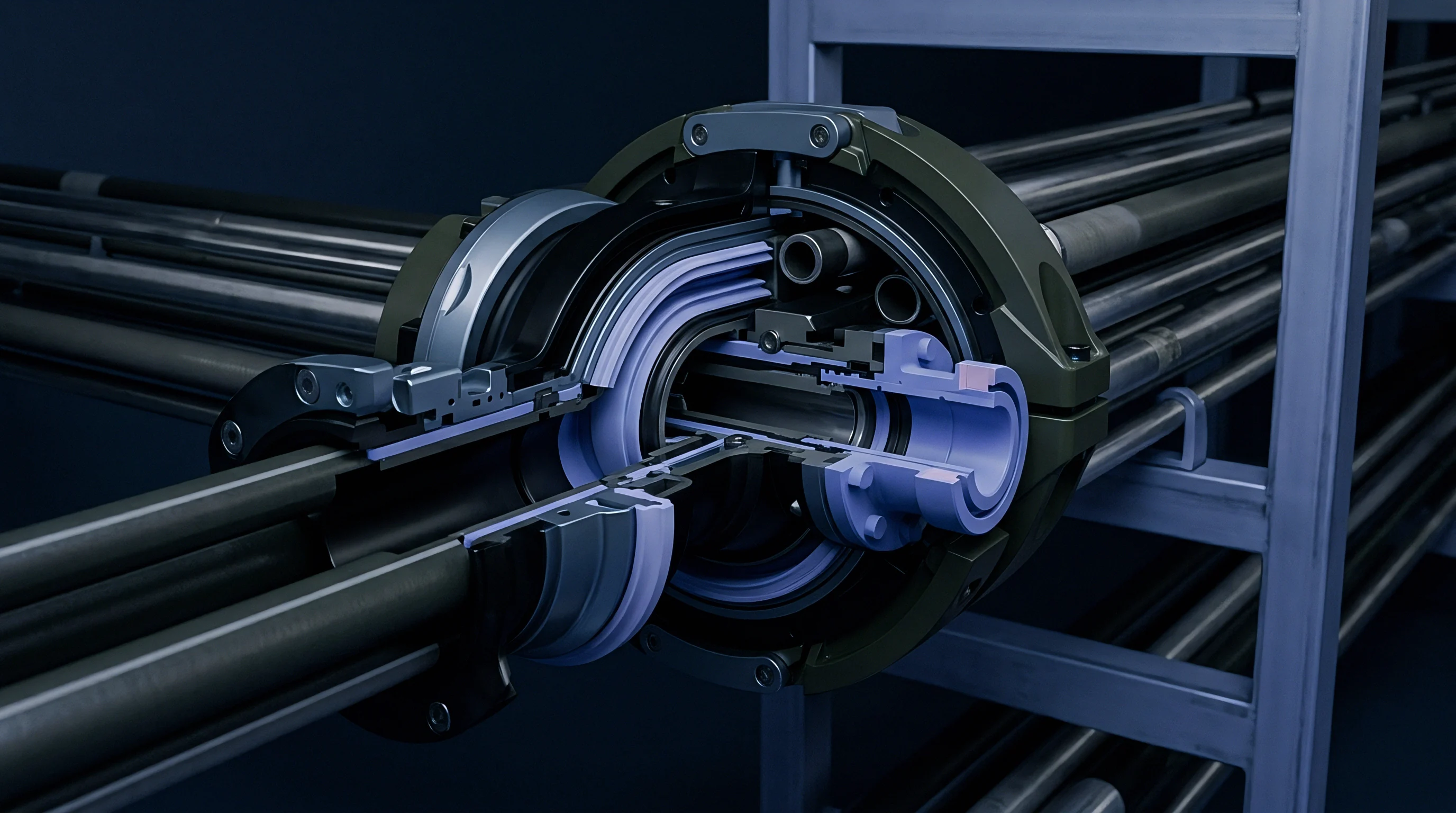
Water jacket evacuation protects tool steel from severe internal corrosion during international transit. Standard production moulds contain dense networks of internal cooling channels carrying chilled water or oil. When plant power ceases, residual cooling fluids pool inside the circuits.
Leaving untreated municipal water inside cooling passages of 1.2343 (H13) or 1.2083 (420 stainless) inserts initiates rapid galvanic oxidation, pitting internal baffle surfaces, clogging conformal cooling channels, and degrading future heat transfer coefficients.
Extraction teams deploy portable compressed air rigs or high-capacity nitrogen bottles to evacuate cooling circuits. Blasting air at 0.6 to 0.8 MPa through water manifolds expels stagnant moisture. Following drainage, maintenance technicians inject aerosolized water-displacing protective lubricants or rust-inhibiting oils directly into every cooling port, sealing the external quick-disconnect fittings with threaded brass caps.
Cavity inspection confirms that critical inserts remain intact before leaving the bay. In malicious default scenarios, disgruntled plant staff or predatory competitors strip sub-inserts, remove core pins, or steal hot runner temperature control cables. The recovery engineer conducts a visual inventory against the initial T1 qualification dossier, verifying that electrical connectors, limit switches for moving slides, hydraulic cylinders, and cavity inserts match drawing specifications.

Transport Locking Plates and Ancillary Hardware Retrieval
Parting line transport locks prevent fatal mould opening accidents during ground freight. Heavy three-plate or stack moulds contain multiple floating plates, stripper assemblies, and angle-pin slide carriages. If these plates shift during transit, precision alignment leader pins bend, and micro-machined cavity details crash.
Riggers bolt bright orange or yellow steel transport straps across every sliding plate interface using high-tensile grade 10.9 fasteners. These locking bars hold the tool assembly as a monolithic block capable of enduring multi-axis transport vibration.
Peripheral hardware recovery completes the tooling footprint. An injection mould cannot produce parts at a replacement facility without its dedicated peripheral infrastructure. Tooling extraction includes hot runner temperature control units, special robot end-of-arm tooling, dedicated water distribution manifolds, cavity pressure monitoring cables, and physical mould maintenance staging bucks.
Leaving this peripheral equipment behind forces the buyer to spend tens of thousands of dollars and months of lead time procuring replacement electronics.
The plant manager claimed the overhead crane had suffered a hydraulic seal rupture, preventing safe rigging until replacement parts arrived from Shanghai.


Forum
Judicial enforcement across borders tests the limits of international private law. A contract signed in Chicago or Frankfurt specifying local court jurisdiction means nothing to a police chief or court bailiff executing an asset extraction order in a manufacturing district in Guangdong or Querétaro. When peaceful commercial negotiation breaks down, recovery turns on resolving jurisdictional conflicts between the law governing the contract and the physical jurisdiction hosting the machinery.
The doctrine of lex rei sitae dictates property reality. Under international conflict of laws principles, proprietary rights, ownership claims, and possessory interests in tangible personal property are governed exclusively by the law of the place where the property is physically situated. Even when a master supply agreement contains valid choice of law clauses selecting English law or New York courts, the local courts where the mould sits assert absolute sovereignty over the physical equipment within their territorial borders.
Territoriality and the UNCITRAL Model Law
Cross-border insolvency frameworks attempt to balance competing territorial claims. The United Nations Commission on International Trade Law Model Law on Cross-Border Insolvency, adopted across major industrial jurisdictions, provides a structured mechanism for recognizing foreign insolvency proceedings. In the United States, Chapter 15 of the Bankruptcy Code incorporates the Model Law, enabling a foreign insolvency representative to petition federal courts to stay domestic lawsuits and protect local debtor assets.
Similar mechanisms operate under the European Union Insolvency Regulation.
Model Law recognition rarely provides rapid operational relief for tooling owners. Gaining foreign court recognition of a home-jurisdiction title order demands months of evidentiary verification, certified legal translations, and local legal representation. Furthermore, Article 6 of the Model Law contains a public policy exception, permitting local courts to deny recognition if enforcement contradicts fundamental legal principles of the host nation, such as protecting local worker wage priority or municipal tax liens.
| Jurisdiction | Primary Enforcement Tribunal | Emergency Relief Mechanism | Average Remedy Timeline | Bond / Guarantee Required |
|---|---|---|---|---|
| China | Basic People’s Court | Pre-litigation property preservation | 3 to 8 weeks | 30% to 100% of disputed asset value |
| Mexico | Juzgado de Distrito / Mercantil | Providencia precautoria / Secuestro | 4 to 12 weeks | Variable judicial counter-undertaking |
| Germany | Amtsgericht (Insolvenzgericht) | Aussonderungsklage (BGB § 985) | 6 to 16 weeks | Standard security for legal costs |
| United States | Federal Bankruptcy Court | Motion for relief from automatic stay | 2 to 6 weeks | None, unless contested by debtor |
| Timelines assume perfected pre-insolvency filings and contested liquidator opposition on site. | ||||

May Foreign Arbitral Awards Bypass Automatic Stays?
International arbitration awards offer powerful legal authority but lack direct mechanical enforcement power. Standard cross-border supply agreements incorporate dispute resolution clauses seated before the International Chamber of Commerce, Singapore International Arbitration Centre, or Hong Kong International Arbitration Centre. An emergency arbitrator can issue interim awards ordering the immediate handover and physical return of customer tooling.
The New York Convention on the Recognition and Enforcement of Foreign Arbitral Awards ensures international legal validity across more than one hundred and sixty sovereign nations.
Arbitrators possess no armed marshals. An arbitral tribunal holds zero police power to break a physical padlock on a factory gatehouse. The successful claimant must take the foreign arbitral award to the local intermediate court of the debtor’s jurisdiction to obtain a formal writ of execution.
During insolvency proceedings, local bankruptcy statutes frequently supersede general arbitration recognition, as bankruptcy courts preserve debtor assets regardless of commercial arbitral rulings.
Local Enforcement Tribunals and Bailiff Decrees
Securing physical possession requires direct partnership with local enforcement officers. In civil law manufacturing regions, execution powers rest entirely with court bailiffs, known as actuarios in Mexico or enforcement judges (执行法官, Zhíxíng Fǎguān) in China. When a valid local court repossession decree issues, the bailiff conducts the site visit, inspects the equipment, matches engraved serial tags against the judicial order, and formally commands plant management to permit crane access.
Logistical preparation decides the outcome of a court-supervised extraction. Bailiffs do not provide cranes, flatbed trucks, or industrial riggers. The tool owner coordinates all mechanical assets to arrive at the plant gate precisely when the bailiff serves the order.
If the recovery crew lacks the proper hoist rings, transport locks, or heavy freight clearance when the enforcement window opens, the bailiff reschedules the enforcement action for a subsequent judicial session weeks or months down the line.
Whether provincial judicial panels will enforce cross-border recognition treaties when domestic tier-two part sub-suppliers hold unadjudicated wage claims remains open.


Customs
Exporting a recovered production mould across international boundaries introduces intense regulatory and customs scrutiny. Once the steel leaves the distressed supplier’s gatehouse, transport vehicles head directly toward port facilities or land-border clearance depots. Customs officials at the border do not examine international commercial disputes.
They check Harmonized System tariff codes, equipment valuation declarations, original import status records, and dual-use export compliance certifications. Missteps at the customs border can result in immediate seizure and prolonged impoundment in state-controlled bonded warehouses.
Production tooling falls under specific global tariff headings. Injection moulds for plastic processing classify uniformly under HS Code 8480.71, while compression moulds, transfer moulds, and stamping dies occupy adjacent subheadings in Chapter 8480. When filing export paperwork, logistics brokers must declare the precise mechanical nature of the tool, matching the physical unit to commercial invoices and packing lists.
Any discrepancy between declared tool dimensions, cavity counts, and physical assets triggers secondary customs inspections.

Tariff Schedules and Asset Valuation Assessments
Depreciated asset valuation dictates the duty liability on replacement import lanes. When moving a used tool into a secondary manufacturing territory, such as transferring steel from an insolvent Chinese facility into Malaysia, Vietnam, or Mexico, customs authorities assess import duties based on the transaction value or residual replacement cost. Declaring the original fabrication cost of one hundred and fifty thousand dollars on a mould that has completed eight hundred thousand production shots artificially inflates import VAT and customs tariffs.
Independent engineering appraisal certificates substantiate adjusted book values. Prior to border crossing, a qualified valuation engineer inspects the mould, reviewing historical shot counts, cavity surface wear, parting line erosion, and remaining operational lifespan under Society of the Plastics Industry mould classification standards. An SPI Class 101 mould, built for over one million cycles with hardened steel cores exceeding 48 HRC, retains substantially higher residual valuation than a soft-tooled Class 104 prototype mould.
Submitting a formal engineering appraisal prevents border agents from rejecting declared asset valuations as fraudulent transfer pricing.
| Export / Import Mechanism | Primary Customs Documentation | Duty / VAT Relief Mechanism | Inspection Priority | Critical Operational Risk |
|---|---|---|---|---|
| Definitive Export / Import | Commercial Invoice and Packing List | None, full duties applied on valuation | Declared asset market value | Duty inflation based on original cost |
| Temporary Import Bond (TIB) | Customs Form 7501 with TIB bond | Full conditional duty exemption | Serial number and physical re-export | Bond forfeiture if tool stays past 12 months |
| ATA Carnet Regime | Standardized Green Carnet Document | Complete tax and customs bond waiver | Identification tags and carnet vouchers | Rejection by non-participating transit ports |
| Mexican IMMEX Discharge | Pedimento de Retorno (Clave H1/A1) | VAT exemption under annex 24 registry | Pedimento matching original entry tag | Severe fiscal fines for untracked equipment |
Special Customs Regimes and IMMEX Discharges
Special import-export frameworks govern foreign tooling in contract manufacturing nations. Under Mexico’s IMMEX maquiladora regime, foreign-owned production moulds enter the country under temporary import status without payment of general import duties or value-added tax, provided the equipment resides at an authorized corporate facility producing exported goods. When a Mexican contract moulder fails financially, the tool owner cannot merely load the mould onto a northbound trailer.
The asset holds an active temporary pedimento logged within the supplier’s Annex 24 customs software system.
Discharging the temporary status requires filing a return pedimento (pedimento de retorno) processed by a licensed Mexican customs broker. Removing equipment without formal customs discharge constitutes the federal crime of contraband under Mexican fiscal law, exposing company officers to criminal liability and equipment to permanent confiscation. The repatriation team works directly with customs brokers to cancel outstanding temporary guarantees before physical transport across the international border bridge.
Cross Border Freight Consignment and Clearance Execution
Logistics execution requires purpose-built heavy freight packaging suitable for international maritime or air transit. Precision injection moulds contain moving slides, ground parting lines, and polished optical mirror cavities that corrode rapidly when exposed to maritime humidity and salt air. Rigging shops pack cleaned moulds into heavy timber crates built to international phytosanitary standard ISPM-15, wrapping the entire steel base in vapor-corrosion inhibitor film and bolting the tool base directly to reinforced pallet timbers.
Transport bills of lading identify the true owner as the ultimate consignee. Freight forwarding agreements explicitly name the buyer as the export shipper and import consignee, preventing freight carriers from placing maritime transport liens on the cargo for historical unpaid freight bills run up by the insolvent supplier. With clean shipping papers, perfected ownership deeds, and discharged customs bonds, the mould clears international waters, ready for mounting inside a stable production facility.
An experienced logistics manager treats commercial invoices for used tooling as tax audits in advance, aligning bill-of-lading descriptions with original equipment declarations.