Quantifying Rheological Property Drift and Inter-Laboratory Measurement Divergence in Cross-Border Recyclate Arbitration
Cross-border recyclate arbitration relies on ISO 1133-2 displacement control, dual shear rate testing, and pre-agreed referee tolerance bands to resolve MFR drift disputes.

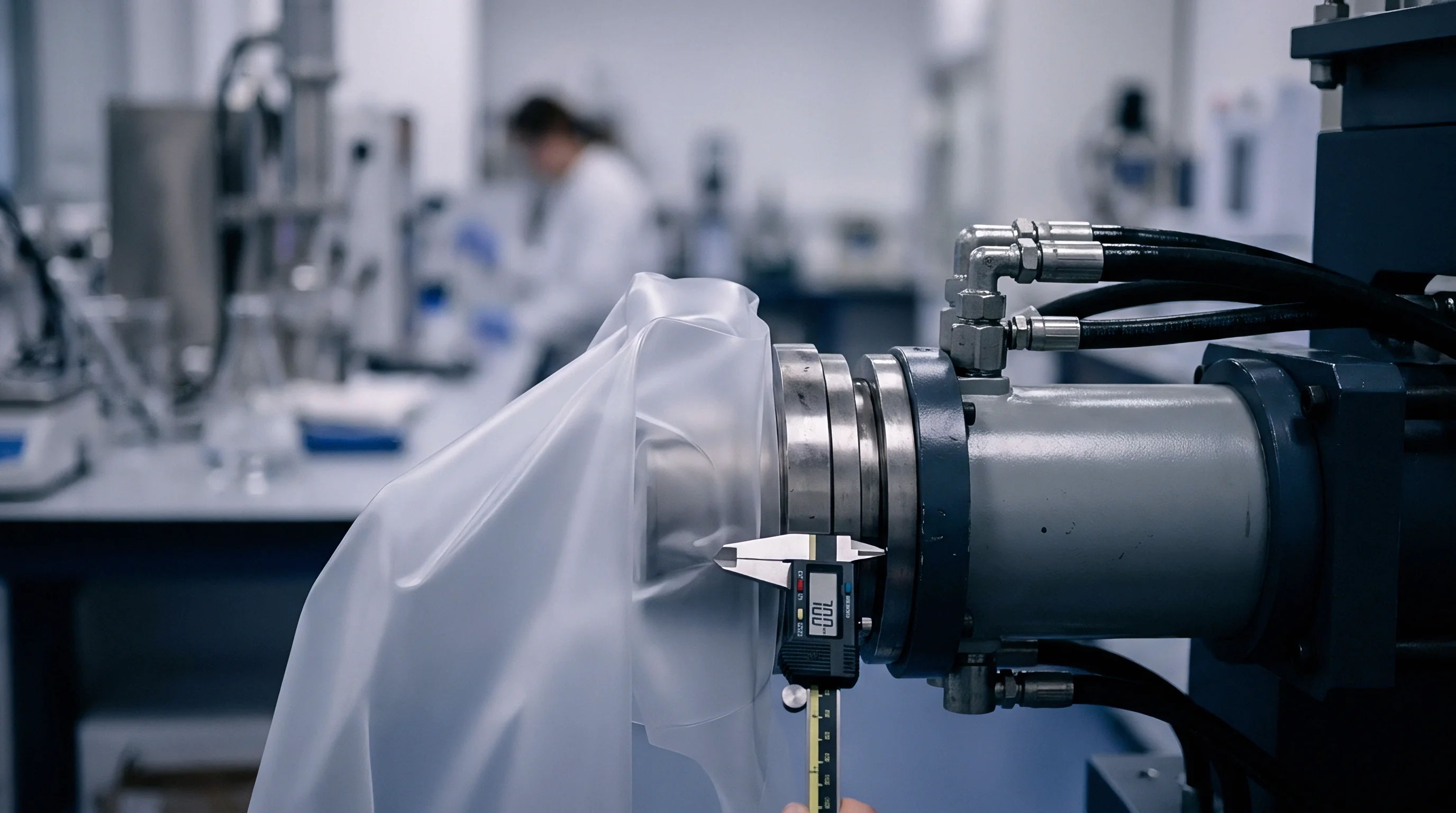
Viscosity
Molecular weight distribution in post-consumer polyolefins shifts continuously when exposed to shear stress and elevated thermal conditions. Recycled high-density polyethylene and polypropylene lots show significant melt flow acceleration after undergoing multiple heat cycles during washing, re-pelletization, and transoceanic shipping. When buyers measure melt mass-flow rate at destination ports, reported values frequently exceed the origin certificate of analysis figures by fifteen to forty percent.
This deviation originates from thermo-mechanical oxidation and polymer chain cleavage rather than simple laboratory error. Quantifying this property shift demands a clear separation between physical polymer degradation and measurement apparatus discrepancy.
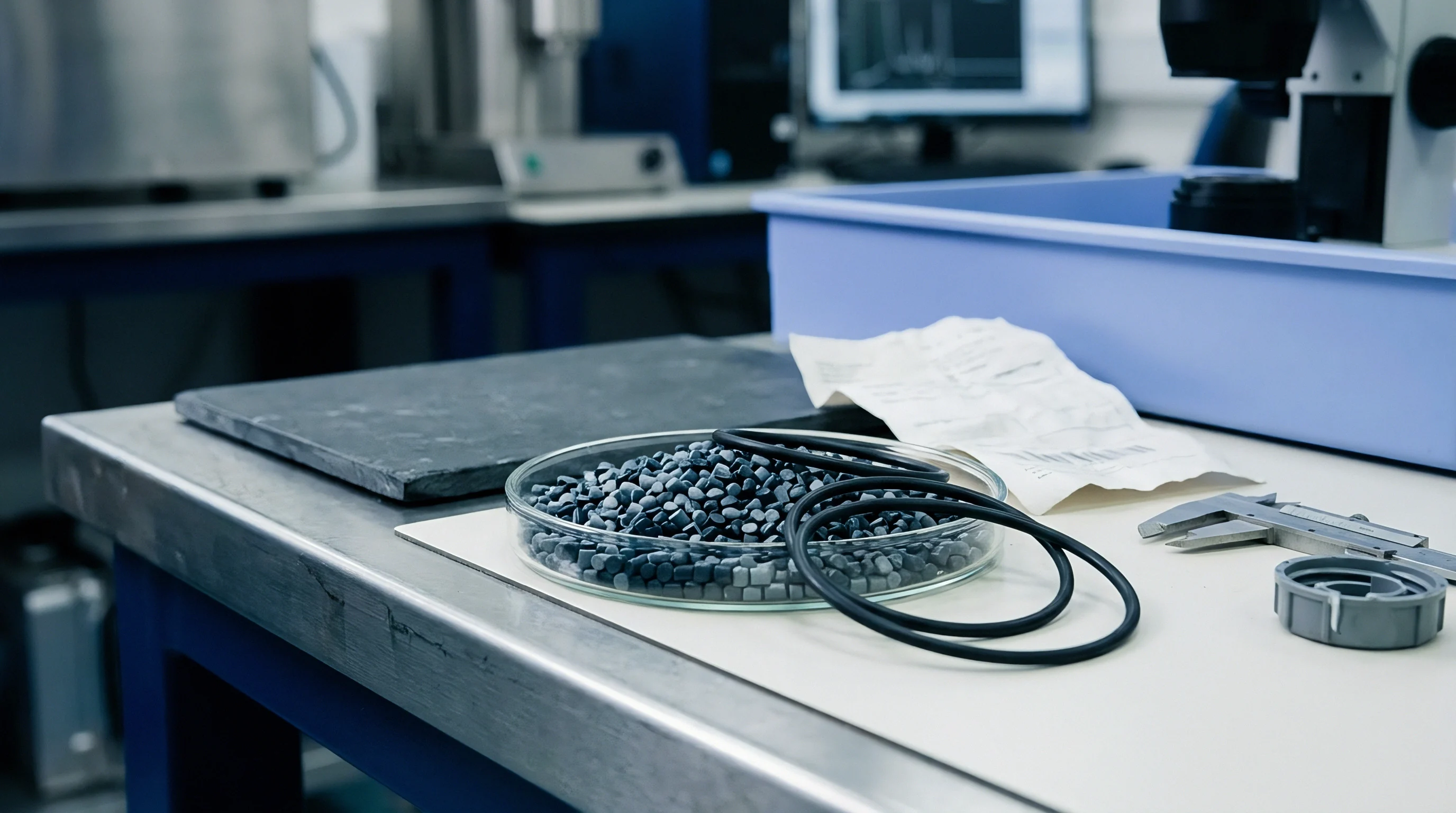
Molecular Scission Mechanisms in Regrind Polyolefins
Repeated extrusion cycles shorten polymer chains through thermo-mechanical degradation. Mechanically recycled polyolefins contain residual peroxides, catalytic residues, and reactive radical species generated during initial consumer use and subsequent processing. During re-pelletization, mechanical shear inside the compounder barrel splits long macromolecular chains into shorter segments.
Chain scission alters melt flow. This structural degradation directly lowers the zero-shear viscosity and elevates the melt mass-flow rate when tested under standard weights.
Polypropylene undergoes tertiary carbon radical formation under heat and shear, driving rapid chain scission. Polyethylene exhibits competing reactions where chain scission occurs alongside long-chain branching and cross-linking, depending on available oxygen levels during thermal exposure. In low-oxygen container environments held at elevated tropical temperatures for weeks, secondary thermal degradation continues.
Weak peroxide bonds formed during pelletization decompose, generating free radicals that further reduce average molecular weight before the cargo reaches the destination unloading dock.
Polypropylene post-consumer flake held at 190 degrees Celsius for 20 minutes under 2.16 kilogram load displays a melt mass-flow rate elevation of 38 percent due to thermal chain scission.
Thermal History and Additive Depletion during Transit
Phenolic antioxidants and phosphite stabilizers decompose inside sea containers during extended tropical transit. Primary antioxidants scavenge free radicals, while secondary antioxidants convert hydroperoxides into non-radical species. Once continuous heat exposure depletes these sacrificial additives, polymer degradation accelerates rapidly without additional mechanical work.
Recyclate streams sourced from post-consumer packaging often arrive with severely depleted antioxidant reserves compared to prime virgin resin grades.
Shipping containers parked on vessel decks absorb extreme solar radiation, driving internal air temperatures above sixty degrees Celsius for extended periods. Thermal history accumulates over four to six weeks of maritime transit. Pellets at the outer perimeter of flexible intermediate bulk containers experience higher thermal exposure than material at the core, creating intra-lot degradation gradients.
Destination sampling that mixes perimeter pellets with core material captures an average flow rate that fails to reflect the physical heterogeneity of the shipped batch.
Importers who evaluate recyclate solely on origin-port certificates face severe tool clogging, cavity flash, and unexpected rejection at destination molding plants.


Piston
Extrusion plastometers measure molten polymer flow under gravity-driven deadweight loading inside a heated barrel cavity. While the test appears simple, minor mechanical discrepancies in instrument geometry, temperature control, and material charging produce substantial measurement divergence between commercial testing facilities. Resolving cross-border recyclate disputes begins with auditing the physical dimensions and operating procedures of the plastometers used by both counter-parties.
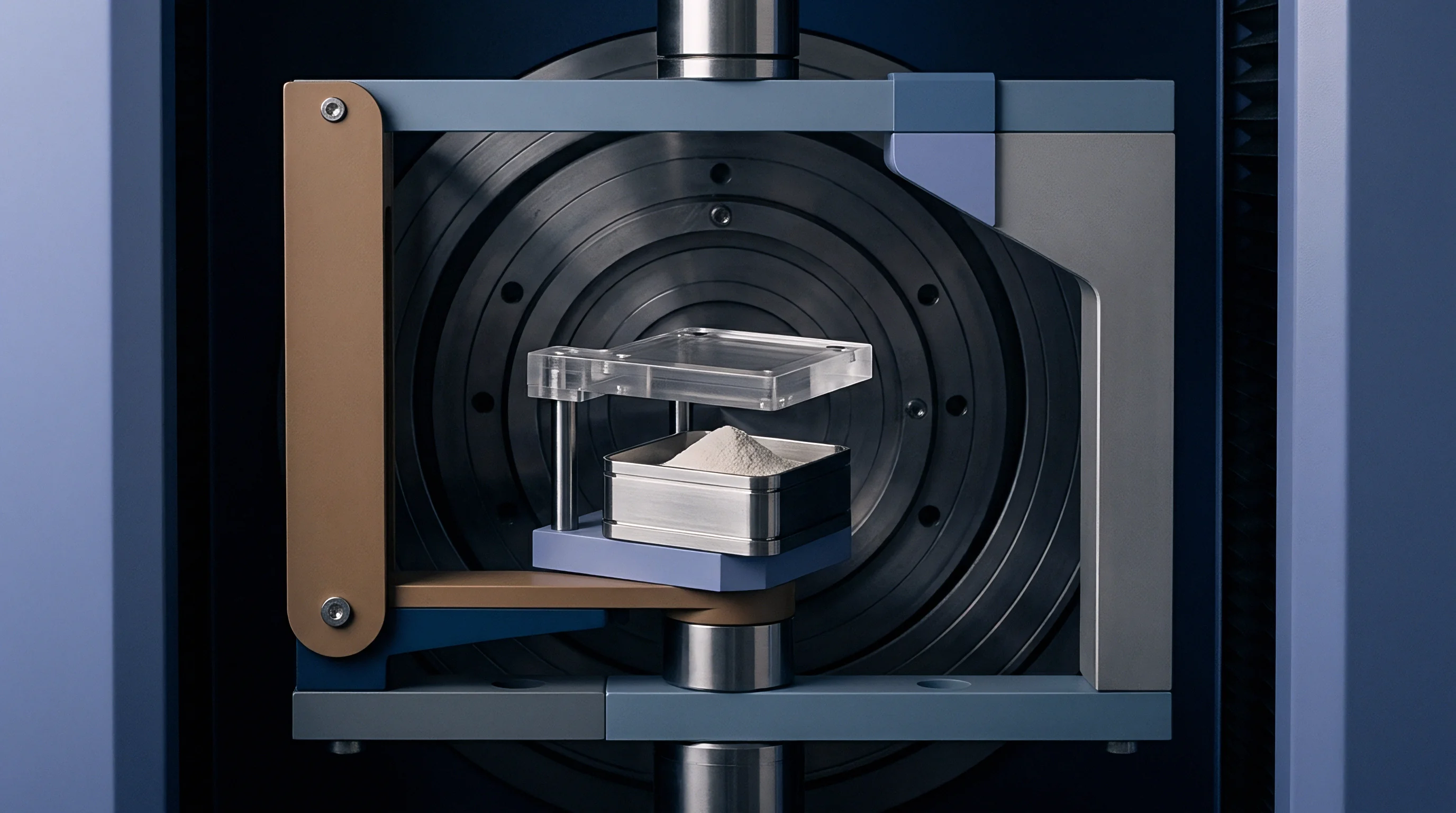
Extrusion Plastometer Geometry and Thermal Gradient Disparities
Bore diameter tolerances of 9.550 millimeters under ISO 1133-1 allow subtle volumetric differences when compared against ASTM D1238 specifications. Minor mechanical wear on the cylinder wall increases the effective cross-sectional area, altering the hydrostatic pressure exerted by the weighted plug assembly. Barrel diameter increases of merely twenty micrometers elevate reported flow rates by nearly three percent due to altered wall shear dynamics during extrusion through the capillary orifice.
Capillary die geometry presents another critical source of divergence. Standard dies feature a length of 8.000 millimeters and an internal diameter of 2.095 millimeters. Manufacturing tolerances allow die diameter variations of plus or minus 0.005 millimeters.
Because volumetric flow rate through a capillary tube scales with the fourth power of the internal radius according to the Hagen-Poiseuille relationship, a die at the upper tolerance limit delivers six percent higher flow values than a die at the lower limit under identical pressure and temperature conditions.
| Test Parameter | ISO 1133-1 Method A | ISO 1133-2 Method B | ASTM D1238 Procedure A | ASTM D1238 Procedure B |
|---|---|---|---|---|
| Measurement Type | Mass Measurement | Displacement / Timing | Mass Measurement | Piston Displacement |
| Bore Diameter Tolerance | 9.550 ± 0.007 mm | 9.550 ± 0.007 mm | 9.550 ± 0.025 mm | 9.550 ± 0.025 mm |
| Temperature Control | ± 0.5 °C (10 mm zone) | ± 0.2 °C (10 mm zone) | ± 0.2 °C at test point | ± 0.2 °C at test point |
| Die Length / Diameter | 8.000 / 2.095 mm | 8.000 / 2.095 mm | 8.000 / 2.095 mm | 8.000 / 2.095 mm |
| Preheat Dwell Time | 300 ± 30 seconds | 300 ± 10 seconds | 420 ± 30 seconds | 420 ± 30 seconds |

Moisture Dynamics and Preheating Dwell Times
Hygroscopic polymers like post-consumer polyethylene terephthalate undergo rapid hydrolytic breakdown if residual humidity exceeds 0.005 percent. When wet pellets enter a preheated plastometer barrel at 275 degrees Celsius, moisture induces instantaneous ester bond cleavage. Intrinsic viscosity drops rapidly within the five-minute preheat window.
Polyolefin recyclate streams containing traces of recycled PET, polyamide, or EVOH barrier layers exhibit similar moisture-induced flow instability during melt testing.
Die dimensions dictate wall shear. Operator technique during sample charging introduces further variation. Manual packing force dictates how much air remains trapped between packed pellets inside the heated cylinder.
Air pockets insulate the polymer charge, delaying heat transfer and yielding an incomplete thermal equilibrium prior to extrudate collection. Compacted charges trap air voids. Extended preheat times degrade heat-sensitive post-consumer polyolefins, while short preheat times leave un-melted crystalline domains that artificially restrict capillary flow.
- Bore Wear Fluctuations altered inner diameter measurements expand barrel volume, reducing wall shear rates during extrusion runs.
- Thermal Zone Asymmetry non-uniform heating along the lower barrel section introduces localized melt temperature shifts exceeding two degrees.
- Packing Technique Variations manual charge compaction introduces air void pockets that distort optical displacement sensors.
- Die Orifice Roughness residual carbon deposits from prior testing change flow resistance inside the 2.095 millimeter capillary orifice.
Overseas exporters frequently claim that divergent flow values stem entirely from shipping container humidity rather than inconsistent feedstock sorting at their washing plant.


Disparity
Round-robin testing programs across independent testing facilities consistently report substantial variation when evaluating identical recycled polymer batches. Inter-laboratory divergence stems from cumulative instrumentation errors, environmental differences, and sample non-homogeneity inherent to post-consumer streams. Commercial arbitration requires establishing whether a reported flow rate gap represents true lot non-compliance or simply sits within expected inter-laboratory measurement uncertainty.
When Does Measurement Noise Become Commercial Non-Compliance?
Statistical boundaries defined by ISO 5725 differentiate routine laboratory scatter from genuine material degradation. Repeatability limits express the maximum acceptable difference between two test results obtained on identical material in the same laboratory by the same operator using the same equipment. Reproducibility limits define the acceptable boundary when different laboratories test samples drawn from the same bulk batch.
Calibration drift alters reported values. For virgin polyolefins, inter-laboratory reproducibility limits for melt mass-flow rate tests hover around eight to ten percent. For post-consumer recyclate, reproducibility limits widen to fifteen or twenty percent due to particulate contamination, filler distribution variations, and molecular weight distribution breadth.
An international buyer claiming non-compliance based on a twelve percent flow rate increase often holds no legal claim if the contract fails to specify a tighter statistical acceptance band.
ISO 1133-2 specifies a temperature stability tolerance of plus or minus 0.2 degrees Celsius inside the barrel to prevent thermal degradation during test dwell periods.

Statistical Repeatability and Reproducibility Limits in Recyclate
Inter-laboratory reproducibility intervals often reach fifteen percent for recycled high-density polyethylene under standard load conditions. Evaluating compliance requires applying a critical difference formula that accounts for both shipping and destination laboratory precision parameters. The critical difference calculation determines if the absolute difference between two test averages exceeds the statistical threshold expected from measurement noise alone.
| Polymer Grade Type | Nominal MFR (g/10 min) | Test Condition | Repeatability r (%) | Reproducibility R (%) |
|---|---|---|---|---|
| Values calculated according to ISO 5725 guidance across twelve participating international test facilities. | ||||
| Recycled HDPE Blow Molding | 0.35 | 190 °C / 2.16 kg | 5.2 | 14.8 |
| Recycled HDPE Injection Molding | 7.50 | 190 °C / 2.16 kg | 4.1 | 12.3 |
| Recycled PP Injection Grade | 12.00 | 230 °C / 2.16 kg | 4.8 | 15.6 |
| Recycled PP High-Flow Grade | 45.00 | 230 °C / 2.16 kg | 6.3 | 18.9 |
| rPP / rPE Mixed Copolymer | 3.20 | 230 °C / 2.16 kg | 7.1 | 21.4 |
Consider a commercial dispute involving forty tonnes of recycled polypropylene injection grade pellets sold under a nominal specification of 12.0 grams per 10 minutes at 230 degrees Celsius under 2.16 kilograms load. The seller laboratory certified the shipment at 12.2 grams per 10 minutes. The buyer port laboratory reports 14.3 grams per 10 minutes upon arrival, claiming a 17.2 percent increase in melt flow.
Repeatability limits define test noise.
To determine if this difference constitutes legal breach, the tribunal calculates the critical difference using the standard inter-laboratory reproducibility limit of 15.6 percent for this material grade. The critical difference threshold formula is:
CD = 2.77 x sqrt( (s_R)^2 – (s_r)^2 x (1 – 1/(2 x n)) )
Where s_R represents the reproducibility standard deviation, s_r represents the repeatability standard deviation, and n represents the number of test runs performed by each laboratory. Assuming four replicate extrusions per lab, the calculated critical difference for a nominal 12.0 g/10 min stream equals 1.88 g/10 min. The measured difference between 14.3 and 12.2 equals 2.10 g/10 min.
Because 2.10 exceeds the critical difference threshold of 1.88, the deviation proves statistically significant at the ninety-five percent confidence level, establishing genuine property drift beyond inter-laboratory measurement noise.
Standard sale agreements referencing ASTM D1238 Condition 190/2.16 replace simple pass-fail thresholds with a two-sigma statistical tolerance band that absorbs normal inter-laboratory test noise.


Sampling
Extracting representative material from a thirty-tonne sea container demands structured multi-point specimen gathering across distinct depth zones. Standard grab sampling from the top of an opened bulk bag captures only surface material exposed to ambient headspace moisture and localized thermal degradation. Accurate cross-border arbitration relies on flawless sampling protocols that preserve material state from container opening to referee laboratory testing.
Stratified Extraction across Big Bags and Bulk Containers
Grain thief probes penetrate deeply into packed flexible intermediate bulk containers to collect multi-zone composite increments. Stratified sampling captures material from top, middle, and bottom tiers of every third container bag. In bulk silotruck or sea-bulk liner shipments, pneumatic sampling tubes extract continuous cross-sectional core samples during vacuum unloading.
Container temperatures spike during transport.
Particle size segregation occurs naturally when pelletized or flaked recyclate vibrates during maritime transport. Fine particulate matter and residual flake dust settle toward the bottom of shipping bags. Dust fractions exhibit significantly higher melt flow rates than virgin-sized pellets due to elevated thermal exposure during grinding and pelletizing cut-off stages.
Sampling exclusively from lower container zones over-represents fines, skewing reported rheological values upward.
Specimen Preparation and Moisture Retention Protocols
Immediate airtight sealing in aluminum foil laminated bags prevents ambient humidity exchange during air transport to neutral reference testing sites. Polyolefins absorb minimal water within their crystal matrix, but surface-active contaminants, residual washing detergents, and recycled paper fibers collect ambient moisture rapidly. Absorbed surface water turns to steam inside testing barrels, generating void bubbles that distort optical piston movement timing.
Sealed packaging preserves specimen moisture. Correct sample division requires mechanical rotary splitting or quartering boxes rather than manual scoops. Hand scoops favor larger pellets while leaving fine particulate behind.
Homogenized sample batches divided into three equal portions provide the necessary referee retention sets required under international commercial trade arbitration rules.
- Insert a segmented probe diagonally through five distinct access points across the upper, middle, and lower sections of each selected container.
- Combine individual probe increments inside a clean stainless steel mixing vessel to generate a ten-kilogram primary composite batch.
- Pass the primary composite through a rotary sample divider to reduce total mass while preserving particle size distribution.
- Seal three identical one-kilogram specimen packages in vacuum-evacuated barrier foil pouches labeled with tamper-evident serial seals.
- Dispatch package A to the destination lab, store package B under controlled climate conditions, and hold package C for referee tribunal testing.
Technical experts continue to debate whether dynamic moisture loss during air transportation invalidates destination test results for hygroscopic recyclate grades.

Clause
International sales contracts for recycled polymers require precise legal language specifying test parameters, acceptable variance bands, and arbitration mechanics. Generic clauses referencing standard commercial quality invite expensive legal gridlock when melt flow values drift during shipment. Contract drafting must bridge the gap between polymer rheology science and international commercial law.
Structuring Tolerances in Cross-Border Recyclate Contracts
Specifying a fixed melt index number without explicit standard designations invites legal deadlock when destination testing yields divergent flow figures. Contracts specifying post-consumer polypropylene must state the target melt mass-flow rate, the applied test standard, the exact procedure method, the test load, the barrel temperature, and the maximum allowable preheat duration. Omission of any single parameter creates a legal loophole that invalidates buyer non-compliance claims.
Correct test methods prevent claims. Tolerances written as asymmetrical bands reflect physical recyclate behavior better than symmetrical percentage allowances. Polyolefin recyclate streams rarely shift toward lower flow rates during transport; thermal degradation exclusively accelerates flow.
A contract specifying 10.0 g/10 min should define an acceptable delivery range of minus 0.5 to plus 2.0 g/10 min, incorporating expected thermal drift while establishing a clear ceiling where processing instability begins.
- Standardized Test Selection explicit references to ISO 1133-1 Method B or ASTM D1238 Procedure B eliminate procedural ambiguity between trading partners.
- Dual-Temperature Profiling contracts specify melt flow measurements at two distinct shear rates to detect regrind contamination and degradation.
- Referee Escrow Retention sealed reserve samples stored at neutral facilities provide immutable evidence when primary test results diverge.
- Variance Deductions agreed price adjustments scale proportionately with measured flow deviations outside the contracted tolerance band.
Arbitration agreements that fail to designate a single referee laboratory and capillary die geometric tolerance default to prolonged litigation over measurement variance.

Designating Neutral Referee Laboratories and Test Conditions
Pre-selecting an accredited laboratory certified under ISO/IEC 17025 eliminates jurisdiction disputes during formal commercial arbitration proceedings. The contract must designate a named independent laboratory equipped with displacement-controlled ISO 1133-2 testing instruments. Specifying ISO 1133-2 minimizes operator error by replacing manual extrudate cutting with automated optical piston displacement timing.
Referee testing protocols must stipulate that retain sample C will be tested using identical equipment, die dimensions, and preheat dwell times applied during initial origin certification. The agreement should explicitly state that the referee laboratory result overwrites both origin and destination certificates, binding both seller and buyer to the resulting financial adjustments.
Clear arbitration agreements establish single referee testing as final and binding to prevent endless re-testing cycles between conflicting commercial labs.

Valuation
Adjusting the commercial invoice price based on verified rheological property drift aligns financial settlement with technical part-molding reality. When recyclate flow rates drift upward during transport, the material loses structural viscosity needed for heavy-wall industrial molding, yet gains flow length suitable for thin-wall container applications. Financial remedies must reflect the true economic impact on destination manufacturing processes.
Financial Settlement Scales for Flow Rate Deviations
Discount schedules link delivered pellet cost directly to melt processing performance inside the customer injection molding machine. Flow rate shifts alter cycle times. When melt flow accelerates beyond contracted limits, injection molders must adjust machine settings, extend cooling cycles, or lower barrel temperatures to prevent mold flash.
These operational adjustments increase part cycle times, driving up energy consumption and reducing hourly machine output.
Viscosity drops increase mold flash. A structured price adjustment table specifies pre-agreed percentage deductions based on the magnitude of verified melt flow elevation beyond the baseline tolerance limit. Establishing explicit deduction tiers avoids complete shipment rejections, allowing buyers to consume non-conforming material at a reduced price point that offsets secondary processing costs.
| MFR Deviation Above Upper Contract Band | Processing Impact Category | Commercial Action / Penalty Rate | Remediation Mechanism |
|---|---|---|---|
| 0.0% to 5.0% | Negligible Noise Zone | 0% Invoice Adjustment | Full Acceptance at Contract Price |
| 5.1% to 12.0% | Minor Processing Shift | 3% Invoice Price Discount | Minor Cooling Cycle Adjustment |
| 12.1% to 20.0% | Moderate Viscosity Loss | 8% Invoice Price Discount | Blend 20% Virgin Low-Flow Resin |
| 20.1% to 30.0% | Severe Thermal Degradation | 18% Invoice Price Discount | Re-assign to Non-Structural Parts |
| Greater than 30.0% | Unprocessable Failure | 100% Rejection / Full Refund | Return Shipment or Seller Scrap Pickup |
Cross-border recyclate shipments degrade under dynamic moisture and thermal cycles during ocean container transit prior to destination port sampling.

Landed Cost Calculations and Remelt Processing Penalties
Excessive flow acceleration forces molders to lower barrel temperatures or blend virgin resin to restore part wall integrity. Calculating true landed cost adjustments requires factoring in shipping freight, import tariffs, port demurrage fees, and compounding intervention costs. If a buyer must add twenty percent prime low-flow virgin resin at two thousand dollars per tonne to restore processing viscosity, the seller bears the landed cost differential across the affected lot volume.
Commercial arbitrators apply published price adjustment matrices to establish fair final invoices that reflect actual delivered resin melt performance.