Cross Border Recognition of Possessory Injection Tool Liens under Chapter 15 Chapter 11 Stays
Foreign possessory injection tool liens resist US Chapter 11 automatic stays until the debtor posts cash collateral via local Chapter 15 recognition.
Jurisdiction
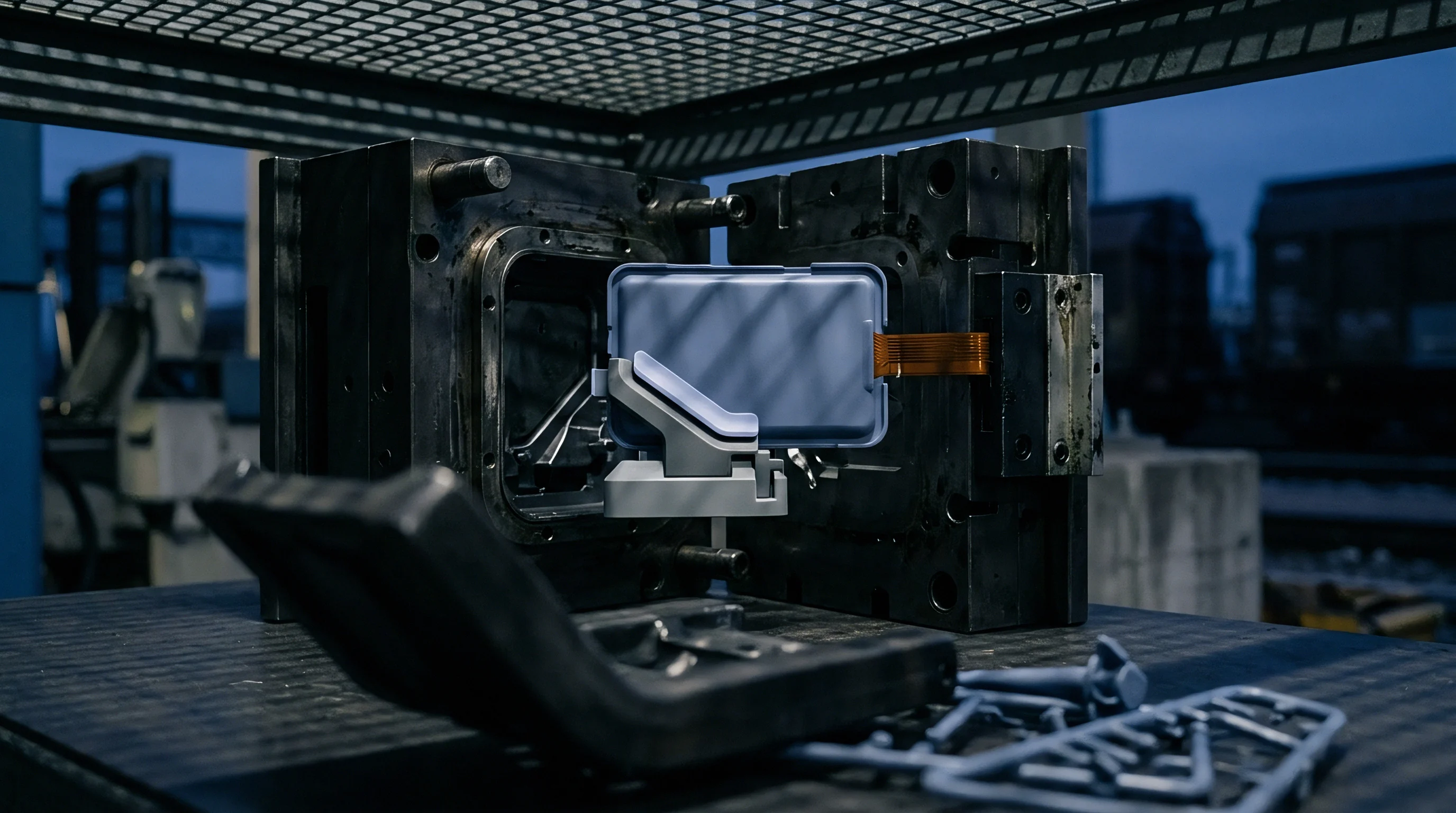
An eight-cavity hot runner tool for polybutylene terephthalate automotive electrical connectors rests bolted to the platens of a 350-tonne injection press in Windsor, Ontario. The United States Tier-1 customer defaults on three sequential part invoices, accumulating 240,000 dollars in unpaid production runs and mold modifications. Within forty-eight hours, that customer files a voluntary petition under Chapter 11 of the United States Bankruptcy Code in the District of Delaware.
The debtor immediately serves formal notice asserting that Section 362(a) of the Bankruptcy Code freezes all creditor actions worldwide. United States bankruptcy courts maintain subject-matter jurisdiction over estate property regardless of location under federal statute. Production schedules halt overnight.
Extraterritorial statutory assertions confront hard sovereign physical boundaries on the factory floor. United States bankruptcy judges lack direct enforcement machinery north of the Ambassador Bridge or south of the Rio Grande. A bankruptcy court cannot dispatch federal marshals into a Canadian or Mexican custom injection facility to unclamp a tool.
The debtor demands turnover of the mold under Section 542 to avoid automotive assembly line shutdowns that bill at 22,000 dollars per hour of downtime. The contract molder refuses tool release, asserting a statutory molder lien rooted in continuous physical custody of the steel.
A Delaware bankruptcy stay cannot dispatch marshals to physically unclamp foreign tooling.
This operational deadlock exposes the divide between equitable bankruptcy jurisdiction and territorial property law. Section 362 operates as an automatic stay against any act to create, perfect, or enforce liens against estate property. Cross-border enforcement depends entirely on foreign domestic courts granting comity through parallel recognition proceedings.
The debtor or foreign representative must petition the local court where the tool sits under statutes adopting the Model Law on Cross-Border Insolvency drafted by the United Nations Commission on International Trade Law. Canada enacts this framework within Part IV of the Companies Creditors Arrangement Act. Mexico integrates the provisions into its Ley de Concursos Mercantiles.
The local court determines whether an American bankruptcy injunction suspends an artisan lien rooted in physical retention.
Cross-border recognition proceedings rarely grant immediate unconditioned access to specialized tooling assets. The foreign court balances comity toward the United States reorganization against the statutory protections guaranteed to domestic suppliers under territorial lien legislation. Local judges routinely decline to strip local contractors of physical custody without cash substitution.
Steel remains where it rests.
Situs
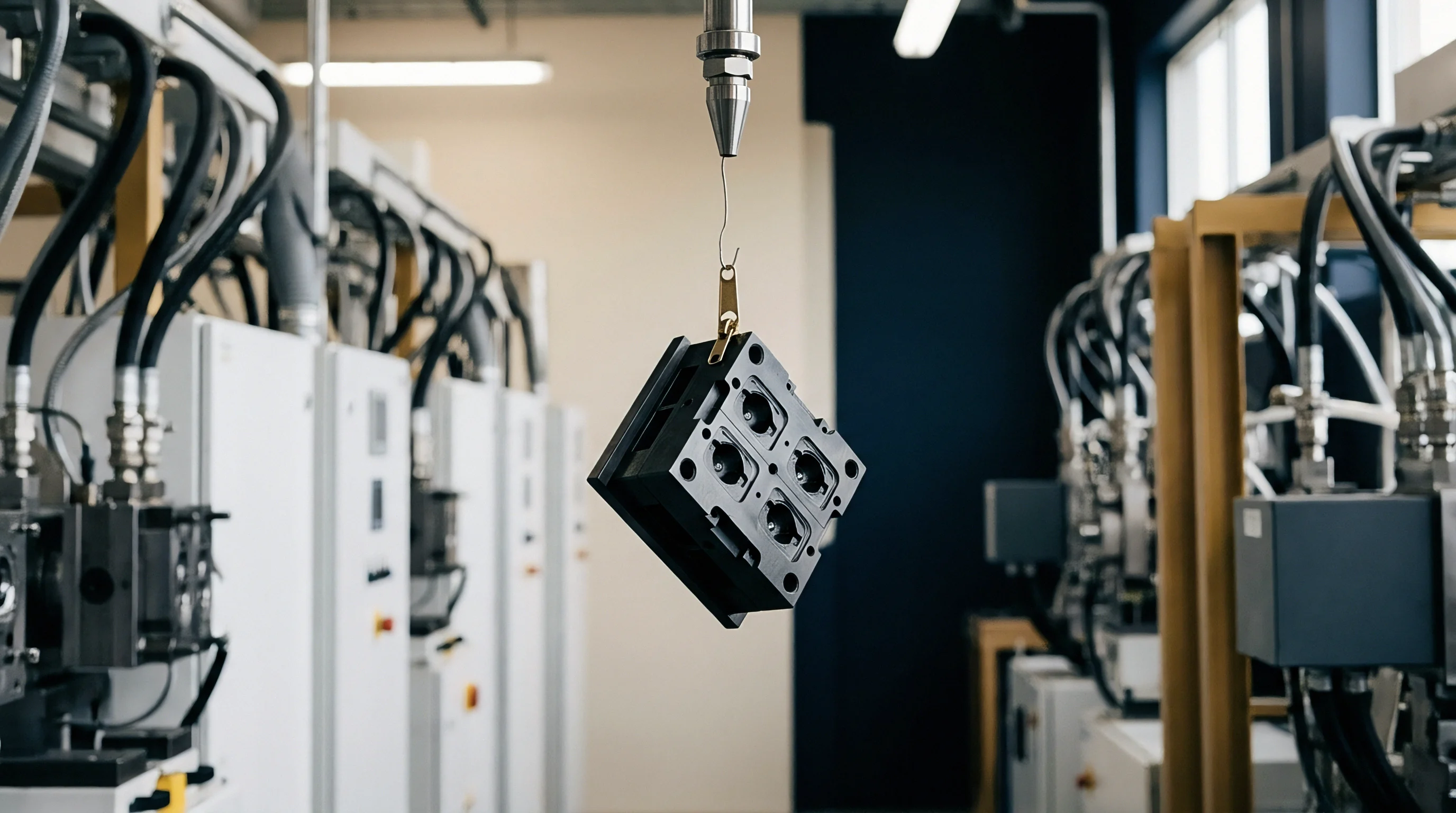
Property rights in tangible personal property are governed by the law of the physical location under the conflicts-of-law rule known as lex rei sitae. A precision injection mold fabricated from AISI H13 tool steel hardened to 52 HRC constitutes tangible equipment subject to the legal jurisdiction of the factory where it runs parts. While a United States purchasing contract may designate Michigan or Delaware law for general commercial disputes, the validity, priority, and enforcement of an artisan or molder lien depend strictly on the physical territory of retention.
State laws within the United States, provincial acts in Canada, and civil codes in Mexico diverge on how these liens form and survive.
Whose Possession Governs Cross Border Recognition?
Physical custody of the injection mold creates the security interest. Custom injection molders and toolmakers spend substantial capital on machining, electrical discharge machining, benching, texturing, and qualifying multi-cavity tooling. When an original equipment manufacturer or Tier-1 systems supplier fails to pay for tool fabrication, engineering changes, or delivered plastic parts, specialized statutory enactments allow the molder to lock the tool in place.
These statutes convert physical custody into a perfected possessory lien that bypasses standard UCC-1 financing statement filing requirements. Possession establishes the statutory lien.
| Jurisdiction | Statutory Authority | Perfection Mechanism | Scope of Secured Debt | Priority Over Prior Secured Lenders |
|---|---|---|---|---|
| Michigan | Special Tools Lien Act (MCL 570.541) | Continuous physical possession plus written notice of claim | Tool fabrication, repair, and engineering modification costs | Superior to prior perfected Article 9 security interests upon notice |
| Ontario | Repair and Storage Liens Act (R.S.O. 1990, c. R.25) | Continuous physical possession of the article | Repair, alteration, storage, and customer-authorized components | Priority over prior Personal Property Security Act security interests |
| Mexico | Código de Comercio (Derecho de Retención) | Physical retention within factory premises under production agreement | Unpaid commercial invoices directly tied to manufactured merchandise | Subordinate to direct fiscal claims, superior to unsecured general claims |
| Germany | Bürgerliches Gesetzbuch (BGB § 647 Werkunternehmerpfandrecht) | Direct possession of manufactured or modified tangible goods | Work performed directly on the tool, excludes trailing part debts | Ranked ahead of blanket non-possessory floating security charges |
The priority assigned to possessory liens under Canadian and United States state laws presents a severe obstacle for Chapter 11 debtors and their senior asset-based lenders. A senior lender holding a blanket floating lien on all inventory and equipment worldwide finds its security interest subordinated to the molder’s possessory claim under Ontario’s Repair and Storage Liens Act. Possession yields super-priority status.
The molder maintains an active right of detention that resists non-possessory commercial claims. Title does not defeat custody.
Molder lien protections break down when custody of the mold becomes fragmented or interrupted across commercial supply chains. The molder loses the statutory lien if physical control slips away before filing formal statutory notices or securing judicial attachments.
- Interrupted physical possession destroys the possessory lien instantly under common law and statutory frameworks when a tool leaves the loading dock for sampling at a third-party qualification center.
- Commingled invoice accounting voids statutory priority if the molder combines unrelated piece-part molding balances with actual tool fabrication and engineering change costs into a single undifferentiated claim.
- Failure to serve formal statutory notices strips the molder of super-priority standing over pre-existing perfected bank security interests within the statutory twenty-to-ninety-day windows.
- Contractual lien waivers signed inside historical global supplier quality manuals bar the molder from asserting detention rights regardless of subsequent payment defaults.
A supplier can preserve leverage by ensuring that master service agreements do not surrender possessory rights through broad boilerplates. Master purchase agreements that contain the phrase “supplier waives all statutory, common law, and possessory molder liens on customer tooling” eliminate the molder’s security interest the instant steel arrives at the facility.
Clamp
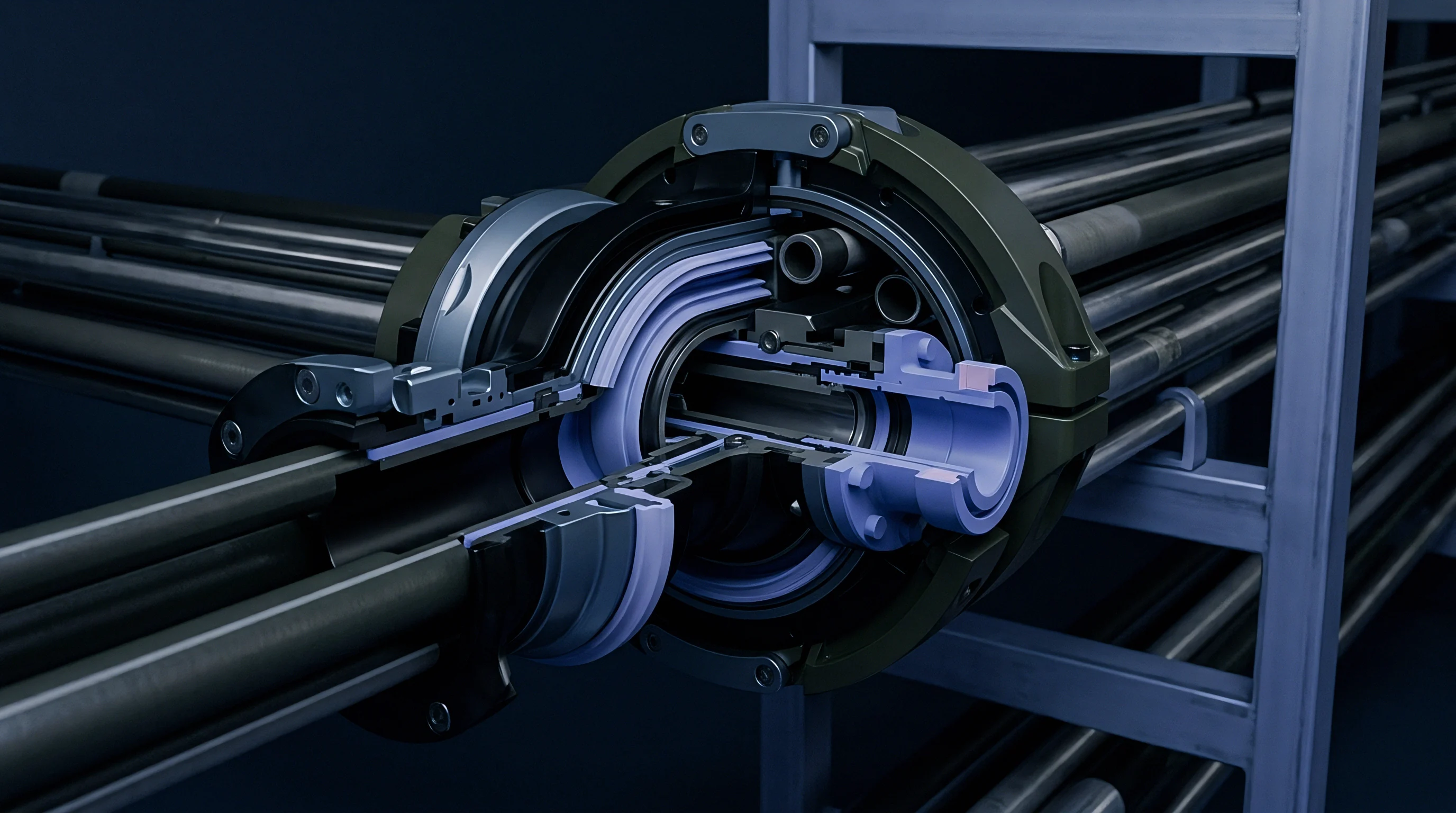
Hydraulic tie bars hold a mold clamped under 4,000 kilonewtons of mechanical force while reciprocating screws inject molten polymer at 180 megapascals. The physical machine setup mirrors the legal entanglement. The mold cannot produce parts without being clamped into a qualified machine platen with validated thermal water channels, core-pull hydraulic circuits, and calibrated hot runner manifold controllers.
The debtor cannot replicate this physical interface on another press across an international border without spending eight to twenty-four weeks running mold-qualification trials under AIAG production part approval protocols.
Physical retention freezes the supply line. When the customer files Chapter 11, the molder’s first action is strictly mechanical: production stops, and technicians lockout the mold. Maintenance teams purge the barrel with high-temperature styrenic purging compound, shut down the chiller loops, disconnect the mold thermocouples, and lock the press electrical disconnects.
The tool remains bolted between the platens or chained within the tool crib. Rigging crews sent by the debtor find the facility doors closed to unauthorized freight forwarders. Unpaid invoices trigger immediate tool detention.
Under Section 542 turnover demands, replacement protection must match the full liquidation value of the retained steel.
The debtor holds bare equitable title. The legal fight centers on who bears the cost of press downtime versus the cost of tool relocation. An eight-cavity injection tool operating at an 18.5-second cycle produces 1,556 parts per press hour across a three-shift day.
Removing that tool from the press causes immediate parts starvation for the automotive assembly plant. The debtor demands turnover of the tool under threat of contempt citations from the bankruptcy court. The molder points to empty logistics bays and unserviced accounts.
When questioned about missing shipping containers, the molder routinely states that the tool is undergoing teardown maintenance and cannot travel until mechanical reassembly finishes.

Comity
Cross-border recognition of United States bankruptcy stays proceeds under domestic statutory mechanisms designed around the Model Law on Cross-Border Insolvency. A Chapter 11 debtor seeking to enforce its worldwide automatic stay in a foreign manufacturing jurisdiction must file an ancillary proceeding seeking recognition of the United States case as a foreign main proceeding. In Canada, the debtor applies under Section 46 of the Companies Creditors Arrangement Act.
In Mexico, the debtor files an application for recognition under Article 280 of the Ley de Concursos Mercantiles. The automatic stay of Section 362 does not apply in foreign sovereign territory on its own power.

What Defeats Foreign Stay Recognition in Tooling?
Recognition of a foreign proceeding does not automatically extinguish valid, pre-existing local in rem encumbrances. While Article 20 of the Model Law provides that an automatic stay applies to debtor assets upon recognition of a foreign main proceeding, that stay is subject to exceptions embedded in domestic law. Canadian courts applying Part IV of the CCAA maintain statutory discretion under Section 52 to attach conditions to any stay order to safeguard the interests of local creditors.
Mexican courts operating under the Ley de Concursos Mercantiles routinely protect valid possessory retention rights against foreign asset recovery efforts. Comity yields to local property rights.
| Insolvency Framework | Extraterritorial Reach Claimed | Treatment of Foreign Possessory Liens | Turnover Requirement for Tooling | Required Creditor Protection Level |
|---|---|---|---|---|
| United States Chapter 11 (11 U.S.C. § 362) | Asserted worldwide over all property interests | Treated as secured claims, stay bars self-help enforcement | Mandatory under § 542 if adequate protection is provided | Adequate protection under § 361 via cash payments or replacement liens |
| United States Chapter 15 (11 U.S.C. § 1520/1521) | Applies stay within territorial United States | Protects domestic possessory liens; permits relief under § 363 | Subject to discretionary turnover orders under § 1521(a)(5) | Sufficient protection standard under § 1522(a) |
| Canada CCAA Part IV (Cross-Border) | Restricted to Canadian territorial assets | Possessory liens under provincial RSLA remain enforceable or secured | Discretionary; court requires security before authorizing removal | Substantial prejudice standard under Section 52 CCAA |
| Mexico Ley de Concursos Mercantiles | Restricted to Mexican territorial assets | Recognizes derecho de retención as privileged possessory guarantee | Barred until underlying commercial manufacturing debt is settled | Full deposit of contested claim value into judicial escrow account |
Foreign courts evaluate specific threshold statutory questions before ordering a domestic molder to surrender possession of detained production molds to a foreign debtor.
- Verification of center of main interests confirms that the debtor’s operational nucleus sits within the jurisdiction issuing the original stay order.
- Evaluation of local public policy conflicts ensures that granting foreign stay enforcement does not violate domestic public policy exceptions established under Model Law Article 6 and United States Bankruptcy Code Section 1506.
- Assessment of creditor prejudice measures whether turning over tooling without full pre-payment of manufacturing invoices leaves the local supplier with an uncollectible unsecured claim in a distant forum.
- Validation of adequate protection mechanisms examines whether the debtor deposited sufficient cash collateral, bank guarantees, or irrevocable letters of credit within the local court’s registry.
Foreign filings alter creditor leverage. If a debtor cannot demonstrate that the foreign molder receives cash security equal to the lien value, foreign courts reject the application to compel turnover. The unresolved legal conflict centers on whether an unexercised possessory lien can be forcibly transformed into an ordinary court-administered secured claim in another country without the lienholder’s explicit consent.
Remedy
Resolving a cross-border tooling custody dispute requires financial settlement mechanisms executed through synchronized orders across both court systems. The Chapter 11 debtor cannot wait six months for appellate review while automotive production lines face component shortages. The custom molder cannot hold an idle mold indefinitely without receiving payments to cover press time, raw resin inventory, and workforce expenses.
Practical resolutions rely on structured cash escrow deposits, Section 363 adequate protection orders, and formal tooling transition protocols.
A structured tool recovery protocol follows an exact commercial and mechanical sequence.
- The debtor and molder execute a formal tool audit reconciling outstanding tool build invoices, pending engineering change orders, and unpaid part deliveries.
- The debtor files an expedited motion under Sections 361 and 363 of the Bankruptcy Code requesting approval of an adequate protection cash stipulation.
- The debtor transfers the agreed disputed lien amount into an independent commercial escrow account held by a neutral financial institution inside the molder’s domestic jurisdiction.
- The foreign court issues a concurrent recognition order confirming that the escrow deposit replaces the physical mold as security for the local possessory lien.
- A joint technical inspection team examines the mold within the press, verifies that hot runner manifolds and core slides are intact, records shot counter values, and supervises crating for transit.
Turnover demands verifiable replacement collateral. If the debtor attempts to substitute unsecured promises or junior equity liens for a perfected possessory molder lien, local courts uphold the molder’s physical detention of the steel. Cash bonds release the clamped steel.
When adequate protection takes the form of an irrevocable letter of credit payable upon presentation of a final non-appealable judgment, risk transfers entirely to financial intermediaries. Tooling transfers terminate ongoing production.
Possession of the steel remains the molder’s absolute commercial defense against uncollectible foreign debts.